Archives: Articles

This is the example article

Oklahoma Sports Betting Bill Moves Forward

The House Appropriations and Budget Committee of Oklahoma has approved HB 3008, which would legalize sports betting at tribal casinos. The vote was 28-3.

The House has until March 24 to pass a version of the bill and hand it over to the Senate. The legislative session ends May 27.

The bill would allow tribal casinos to offer retail sports betting under the existing tribal state gaming compacts—as long as at least four tribes agree. The tribes would pay 10 percent of net sports betting revenue to the state. The bill would become effective November 1.

There are 131 tribal casinos in Oklahoma.

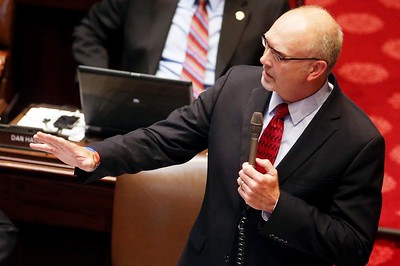
Rep. Ken Luttrell, author of the bill, commented, “I have had conversations with our gaming tribes during the interim to gauge their interest on this topic.” He added, “I feel the time is right for Oklahoma to partner with the tribes and ensure a level, competitive gaming playing field with the surrounding states.”

Luttrell claims sports betting could generate as much as $240 million in revenue for the state.

So far the Oklahoma Indian Gaming Association’s members have not endorsed the bill. Matthew Morgan, chairman of the association, told Play USA: “Almost all of the association is very interested in sports betting.”

He added, “But we do have some folks that are very interested in the mobile aspect of sports betting, which Rep. Luttrell’s bill does not capture. And we also have some concerns from our members on what [the] fee split would look like given the low margin of sports betting. I think they would like to see that reworked in a way that would make them more likely to support something in that way.”

Minnesota Considers Mobile Sports Betting

As Minnesota legislators push for legalizing sports betting, the state’s 11 tribes are pushing back—but with fewer objections than before. State Senator Roger Chamberlain said the tribes want to collectively split revenue over just two or three online sports wagering platforms, and they want exclusive rights to mobile sports betting.

However, Chamberlain said since some of the smaller tribes aren’t interested in sports betting, his Senate File 574 will include a total of four to six mobile licenses, with two for Minnesota horse racetracks. “We can’t just operate on two mobile licenses and give them just to the tribes. From my conversation with sportsbooks and those representing books, that doesn’t work. The odds probably won’t be good, and I don’t think they’ll end up making the money for it to be viable. More licenses get people interested in the market. If not, they’ll continue betting in Iowa and Wisconsin,” Chamberlain said.

He added, “We have to make the market competitive and open while still protecting the interests of the tribes. No one wants to destroy their business model. I’ve been told they made an internal deal and want to get something done this year. So we all want sports wagering and now just have to come up with some agreement. I believe we can get to an agreement and bring it across the finish line.”

Andy Platto, executive director of the Minnesota Indian Gaming Association, said the tribes are ready to work with legislators on sports betting. He said, “The Minnesota Indian Gaming Association and its 10-member tribal nations support state efforts to authorize sports wagering both at tribal gaming properties and through online/mobile platforms and believe tribes are best positioned to offer this new market to the state’s consumers. As gaming experts, tribes stand ready to share this expertise with lawmakers considering the future of sports betting in Minnesota.”

Two years ago, Chamberlain proposed offering a mobile license to each tribe and racetrack, for a total of 13 licenses. He said, “That was my original idea and I think that’s still a good idea. Tribes don’t want 11 licenses. They want only a couple and to share the revenue. That’s their position from what I understand.”

In the House, state Rep. Zack Stephenson introduced a sports wagering bill to allow wagering on college and professional sporting events at tribal casinos or online; it would not allow sportsbooks at Minnesota racetracks or in stadiums.

Stephenson said the bill will be heard in the House Commerce Committee, which he chairs. Stephenson said in the past several months he’s met with leaders of all 11 of Minnesota’s Ojibwe and Dakota bands to develop a “Minnesota-specific model that works with the dynamic that we have here in Minnesota, that’s designed for Minnesotans.”

The House measure calls for a 10 percent tax on net profits from mobile wagers; bets placed at tribal sportsbooks would not be taxed. Stephenson and state Rep. Pat Garofalo estimated the state would receive $20 million a year, with 40 percent directed toward problem gambling services, 40 percent to youth sports, particularly in areas with high juvenile crime, and 20 percent to regulatory oversight and ensuring athletic integrity.

Garofalo said the House bill would transition Minnesota “from the black market of unregulated activity to a regulated market with consumer transparency, consumer protections, as well as defunding organized crime and money laundering.”

In response to the House bill, Chamberlain said, “The House offer in its current form will not give the consumer a good product. We need to expand the options for consumers to have the best possible experience. We’ll have two opposing pieces, and we’ll find out what we can live with and what we can’t. Hopefully we can find a compromise in conference committee.”

Both the Senate and House bills must pass in their respective committees by March 25, although lawmakers can revive a bill that doesn’t pass. A spokesman for Governor Tim Walz said he will sign a sports betting bill into law if it passes the legislature.

Calvin Ridley Suspension Resulted from Betting on Sports

Atlanta Falcons receiver Calvin Ridley is the biggest name to be suspended for gambling since legal sports betting began spreading four years ago.

But he probably won’t be the last.

Preventing players, coaches, officials, and anyone from betting on games in which they participate is a massive challenge, according to ESPN.

The NFL said it found no evidence that any games were compromised or that Ridley used inside information to make his wagers that were placed online in November 2021. At that time, Ridley was away from the Falcons on the non-football injury list and had announced that he was stepping away from football to work on his mental health.

Ridley is the second NFL player to be suspended for betting on league games. The legal market is what identified betting by Ridley and then-Arizona Cardinals defensive back Josh Shaw, who was suspended in 2019 after an NFL investigation found he had wagered on league games. Shaw was reinstated in 2021 but has not been picked up by a team.

Ridley will forfeit his $11.1 million salary next season while suspended.

He placed a three-team, five-team, and eight-team parlay, risking $500 on each. His parlays included the Falcons “to win,” according to sources. The Falcons were small road favorites over the Jacksonville Jaguars. Atlanta covered the spread in a 21-14 win. It has not been revealed to ESPN if Ridley bet on the Falcons on the money line (to win straight up) or with the point spread.

Ridley bet on multiple sports, including the NBA, for much larger stakes than his $500 parlays, upwards of $10,000, according to sources. The NFL gambling policy allows players to bet on other sports besides football with legal operators.

According to multiple sources familiar with the event, Ridley placed the bets on his cellphone but used a betting account not registered in his name with Hard Rock’s Florida sportsbook. Ridley was outside of Florida when he placed the bets, triggering a geolocation violation and leading the sportsbook to investigate further, according to the sources.

Online sportsbooks use geolocation services to track where bets are being placed. The geolocation service collects data, such as IP addresses, from the device being used to place the wager.

After receiving the geolocation notice, the Hard Rock sportsbook notified Genius Sports, an NFL partner that monitors the betting market for the league, prompting the investigation that ultimately led to Ridley’s suspension. Genius Sports is a London-based company that distributes data from leagues, including the NFL, to sportsbooks around the world, while also looking for unusual betting patterns.

What can sportsbooks do to prevent players and other prohibited personnel from betting on their leagues?

Sportsbooks face a significant challenge in preventing a player, coach, or referee from placing bets on their leagues. The professional sports leagues successfully lobbied many states to include regulations prohibiting players, coaches, trainers, and other personnel from betting on their sports.

Jeff Ifrah, a prominent gaming attorney in Washington, D.C., said it is difficult for sportsbooks to identify prohibited bettors, especially if a sports league hasn’t provided a comprehensive list of personnel and identifying data.

“It may be the case, for example, that a football player is betting, but if the NFL hasn’t given their database and integrated it with [a sportsbook] then the sportsbook isn’t going to be able to identify the player,” Ifrah told ESPN.

What can the NFL do to prevent players and other prohibited personnel from betting on the league? The NFL provides gambling education to players and personnel. Signage warning of the consequences of betting can be found in team facilities, and the league distributes educational videos, some featuring Shaw, that teams are required to watch.

Ultimately, though, there is no definitive way to stop players or prohibited personnel from placing bets on the league. Deterrence may be the league’s biggest weapon, and, in Ridley’s and Shaw’s cases, it didn’t stop them. Shaw, who bet on NFL games while on injured reserve for the Cardinals, also received a suspension of at least one year. He was reinstated March 20, 2021 but has not been signed.

The suspension of Calvin Ridley is one reason the NFL has put its plan for a vice president of sports betting on the front burner. Dealing with issues like players betting would fall under the purview of this position, according to Barrett Sports Media.

According to Action Network’s Darren Rovell, the vice president of sports betting will, among other things, protect the integrity of the game, advance the league’s brand and reputation, drive fan engagement, raise the worth of data and intellectual property rights, develop new ways to make money off of betting and deal with the issues like Calvin Ridley and other betting integrity matters.

The NFL planned for this position in 2020, but the Covid-19 pandemic mess resulted in a hiring freeze.

Ontario Regulators Talk Advertising, Unions Want to Delay iGaming

Ontario‘s legal iGaming market is set to launch in early April. Ahead of the start date, regulators held a webinar on March 8, laying out their rules on advertising and marketing, and union leaders raised concerns about possible job losses in the retail sector.

Webinar speakers included Paul Burns of the Canadian Gaming Association and representatives of the Alcohol and Gaming Commission of Ontario (AGCO) and iGaming Ontario (iGO). The latter government agencies will oversee the regulation of iGaming in the province.

According to SportHandle, the “general takeaway from the webinar,” which drew more than 600 participants, is that “the onus is on private operators to interpret and use their judgment regarding AGCO advertising guidelines.” Regulators will not approve or validate advertising and marketing materials before they go live, but will follow up with operators if they have concerns.

“Our job isn’t to find loopholes and to close the loopholes—our job is to communicate intent and objectives and for the industry to act in a compliant way,” said Jay Welbourn, AGCO’s senior manager of technology and compliance. “It’s not our objective at all to become an approval body for all the advertisements.”

Here are the basics:

  • Minors, self-excluded individuals and high-risk players should not be targeted in any iGaming advertising
  • Responsible gaming messages must be included in all advertising, and the iGO logo must be displayed on all websites, advertising channels and social media
  • Operators can’t use public advertising to promote bonuses
  • Players must consent to receive deposit, signup, or bonus offer information
  • Advertising must not appear on billboards or other outdoor displays close to schools
  • Advertising may not use cartoon figures, symbols, role models, and/or celebrity/entertainer endorsers whose primary appeal is to minors, or use young-looking actors in their campaigns
  • Gaming advertising is prohibited on websites and other online media directed primarily to minors
  • Advertising may not exploit the susceptibilities, aspirations, credulity, inexperience or lack of knowledge of all potentially high-risk persons, or otherwise extoll the virtues of gaming
  • Providers must strive to limit marketing communications to known high-risk players
  • Advertisers must not represent gambling as a way to recover financial losses, or present winning as the probable outcome

The launch of a regulated market in Ontario is expected to shift consumers to legal providers, but .net advertising will still be legal under the Canadian Consumer Protection Act. “If [gray market advertising] continues, we may request to repeal the law if we think it’s necessary. If it’s being used to circumvent the marketplace, we’ll continue to monitor that issue,” Burns said.

Some U.S. regulators, problem-gambling experts and even bettors have complained about too much advertising, especially when new markets open up. In Ontario, there are no limits on the volume of sports betting advertising. BetRivers and PointsBet are already running ads across cable networks in the province. BetRivers is using former TSN Sportscentre broadcaster Dan O’ Toole as its brand ambassador, and PointsBet recently aired a commercial with the Trailer Park Boys, characters in a Canadian mockumentary television series. Meanwhile, gray-market sportsbooks Bet99, Bet365 and others have been running ads across cable TV networks and in other media for years in Ontario and Canada.

“Volume can be an issue,” AGCO’s Welbourn said. “We understand that new entrants to the market need advertising, need to get their name out there. There’s a real tension here. We need to think about the broader, public perception, and making sure we’re staying within that kind of acceptable range with brand advertising.”

Catherine MacLeod, president and CEO of broadcaster thinkTV Canada, told webinar participants the network is “working with Responsible Gaming and AGCO and iGO to come to the right spot on this. It’s about our viewers, it’s about reducing the harm.”

AGCO has issued six iGaming licenses in Ontario, to Annexio Ltd. (lottogo.ca); NSUS Ltd. (wsop.ca); PointsBet Canada; theScore Bet; Rivalry Corp.’ and VHL Ltd. (888.ca). Other sportsbooks such as FansUnite have been approved or will be approved prior to the April 4 launch.

Signup bonuses for online casinos will follow all the same rules. “There’s one set of regulatory standards that covers both sports and casino gambling,” Burns said.

Meanwhile, union leaders are looking to the provincial government to ensure casino jobs and revenues at land-based locations such as Caesars Windsor remain protected, according to MSN.

A recent study showed that up to 25 percent of casino jobs may eventually be lost once internet gaming is legalized. At Caesars Windsor, that could mean 100 of 500 gaming-related jobs could be lost.

“We are looking at significant job losses and (an) unfair playing field,” said Chris MacDonald, assistant to Unifor’s national President Jerry Dias.

Ontario Chamber of Commerce President Rocco Rossi raised his concerns about iGaming in a letter to Ontario Attorney General Doug Downey. “Ontario’s approach may come at the expense of current revenue and employment sources our communities depend on,” he wrote.

Critics point out that the government will charge a 20 percent “tax” on all revenue from each online gaming business, while land-based casinos pay more than 50 percent.

Rossi called on the government to “minimize local job losses” and introduce iGaming in a way that will increase jobs in the gaming sector. He called for a “competitive tax rate” for gaming companies that “is fair to land-based casinos.”

“Ontario is not the first jurisdiction in North America to legalize iGaming,” said Rossi in his letter. “Every U.S. state that has introduced iGaming has done so in a coordinated manner with existing land-based casinos.”

Local MPP Percy Hatfield added, “In a good year, we have about 10,000 people working in Ontario’s gaming sector. Covid-19 has left half of the casino workers in Niagara Falls out of work, at Woodbine there are still 500 casino workers laid off and we have 1,000 still unemployed in Windsor.”

“We are trying to get people’s attention to this,” he said. “(The plan) should be adjusted to make the bricks-and-mortar (casinos) more competitive. We would like to see the start date changed and a commitment from (the Finance Ministry) to take a closer look at this than they have so far.”

BetRivers Canada is offering the chance to try out their sportsbook and casino for free with play for fun options. PointsBet Canada has hired Canadian cultural icons the Trailer Park Boys to serve as their brand ambassadors.

BetMGM Canada has named the Edmonton Oilers superstar Connor McDavid as their brand ambassador.

In EU, iGaming Brands Cut Advertising in Half

A new study by the European Union’s Intellectual Property Office (EUIPO) has found a significant reduction in advertising from major gambling brands on websites and mobile apps which infringe on intellectual property rights (IPR).

The study found, during 2021, advertising from major gambling brands, including members of the European Gaming & Betting Association (EGBA), had decreased by 55 percent on IPR-infringing websites in the European Union, despite overall advertising from all sectors increasing by 26 percent.

The study analyzed the amount and type of online advertising found on IPR-infringing websites and apps in the EU, such as streaming sites for sports, movies or TV shows. These websites and apps generate revenue by selling advertising space and, according to EUIPO, advertising from legitimate brands can be placed on these websites or apps unintentionally because of the “very complex internet advertising ecosystem.” The presence of advertising for brands on IPR-infringing websites and apps can confuse consumers and mislead them to believe that the content provided on these websites or apps is legal.

On IPR-infringing websites, EUIPO found a significant 55 percent decrease—from 18 percent in Q1 to 8 percent in Q4—in major gambling brand advertising during 2021, which follows a previous 20 percent decrease in 2020. The study also found that, in 2021, advertising from all gambling brands—including major brands and other brands—had decreased marginally on IPR-infringing websites, from 28 percent in Q1 to 25 percent in Q4. In terms of mobile apps, gambling accounted for less than 1 percent of advertising impressions for apps.

“EGBA welcomes the progress made in recent years to reduce the placement of advertising from major gambling brands, including EGBA members, on IPR-infringing websites and apps,” said the EGBA in a press release. “However, EGBA recognizes that, with gambling representing 25 percent of advertising impressions on IPR-infringing websites, there is still more work to be done by the entire gambling sector to ensure its advertising does not support IPR-infringing online content.”

In recent years, EGBA has been working closely with the European Commission and various cross-industry stakeholders, at EU-level, within the framework of a memorandum of understanding (MoU) which aims to limit IPR-infringing online advertising. The MoU is a voluntary agreement and is facilitated and coordinated by the European Commission. The MoU is open to all partners and EGBA encourages gambling operators to join EGBA and its members in signing up to the MoU and its aims.

“I’m pleased to see consistent and significant, year-on-year progress by Europe’s major gambling brands, including our members, to reduce the placement of advertising on IPR-infringing websites and apps,” said Maarten Haijer, secretary general of the EGBA. “But there is still more work to do, and we encourage Europe’s gambling operators, and their advertising affiliates, to play their part by ensuring their advertising, and its placement, is conducted in a responsible way. We look forward to continuing our cooperation with the European Commission and other stakeholders, at EU-level, to reduce IPR-infringing online advertising.”

French Regulator May Block All Illegal iGaming Sites

The National Gaming Authority of France announced it now can block all illegal gambling websites, whether or not they target French consumers. In a statement, ANJ officials said the change in the law is “a major step forward in the fight against the illegal offer of gambling in France, which the ANJ has made a priority project for 2022.”

The new law, written for the purpose of “democratizing sport in France,” replaces the current procedure for blocking illegal gambling sites with an administrative process. As a result, the ANJ no longer has to prove such sites advertised to French consumers. The new process “will allow the ANJ to prevent, more quickly and more effectively, access to sites which present very high risks in terms of addiction, reliability of gambling and money laundering operations.”

Under the new law, the ANJ president may now order internet service providers to block access to sites providing “an illegal offer of gambling,” if such sites do not respond to a “formal notice to cease this activity” within five days.

The statement said the new law supports “the new cooperation strategy” among search engines, social networks, content exchange platforms and payment solution providers that holds them accountable and decreases illegal offers.”

The new law also requires the ANJ to “centralize and analyze” reports of suspicious betting activity.

888 Wins iGaming License in Ontario

Ontario, Canada, which is preparing to launch its legal online gaming market, has granted operator 888 one of the first iGaming licenses in the province.

Penn National Gaming and theScore Bet will also launch in Ontario next month, having secured the Responsible Gambling Check iGaming Accreditation from the Responsible Gambling Council (RGC).

The license issued by Alcohol and Gaming Commission of Ontario (AGCO), will enable 888 to offer casino games, sport betting and poker online. The operator now holds licenses in 19 locally regulated markets, including seven states in the U,S.

“As a group, our focus is on strengthening our presence and offer to customers across key regulated markets,” said 888 CEO Itai Pazner. “To that end, Ontario represents an attractive long-term growth opportunity for 888 and this is an extremely strategically important milestone for us.

“As we prepare for launch in the coming weeks, we are excited to bring all of 888’s leading products and games to new audiences across the province, providing our unique and differentiated experiences to players.”

iGaming Ontario, the subsidiary of AGCO that will oversee the market, announced in January that the province’s legal iGaming market would launch on April 4.

This will conclude a process that dates back to April 2019, when the province’s government announced plans to end Ontario Lottery and Gaming Corp.’s monopoly on iGaming, opening up the market to private operators, according to Market Watch. It then moved forward with these plans in November 2020, with legislation introduced and passed in 2021.

AGCO released its final iGaming sports and event betting regulatory standards in September of last year, including changes to advertising standards and integrity rules.

Single-event sports betting officially launched in Canada on August 27, but is currently only offered by provincial lotteries.

BetConstruct Delivers Gaming News App

The award-winning software developer BetConstruct has launched an app that promises to deliver a complete A-to-Z guide to the online gaming and betting business via an all-in-one single platform. SpringNews app is designed to keep readers in the loop about the latest updates across the entire iGaming industry.

A large team of industry experts behind this app works hard to entertain and provide its international readership with daily news and information on upcoming iGaming events worldwide, as well as fresh interviews from the industry figureheads. Boasting an elegant and intuitive user interface, the SpringNews app can be used anywhere and anytime.

Available for iOS and Android devices, the app brings you the latest updates from the most trusted sources. The topics include gaming, sports betting, casinos, regulators, hardware manufacturers and more.

Borgata to Invest in Rooms, Casino Floor

Atlantic City’s Borgata may remain the leader in performance, but if it rests on its laurels, Hard Rock and Ocean Resort may well catch up. The competition has spurred Borgata to reinvest.

“I think that’s a healthy thing for us, for the greater overall Atlantic City,” Borgata President Travis Lunn told the Associated Press. “A rising tide carries all ships; I’m a believer in that. This destination could use some reinvestment, and so to see Hard Rock come in and reinvest, and Ocean reinvest in their product, is something I’d leverage.

“I look at Borgata and say, ‘What do we need to do to stay relevant and stay competitive?’” he said.

Lunn’s wish list includes hotel renovations, new slot machines, increased table game tournaments and inviting patrons from other properties owned by parent MGM Resorts International.

Borgata has gone 10 years since its last hotel upgrade. The renovation will address the need for the latest room amenities.

As many as 400 new slot games will replace older models, Lunn said. He has $10 million to update the games. “Our guests come in looking for a certain gaming experience, and we currently don’t offer some of the product that our competitors offer.”

Borgata hopes to offer more blackjack tournaments and other social activities for guests.

“There’s capital available for us to reinvest in our product,” he said. “Part of what I see my job as is to go fight for those dollars.”

In other Atlantic City redevelopment news, Bally’s Atlantic City will reinvent a prime piece of real estate on the Boardwalk between the Dennis Towers to create the Yard, an indoor/outdoor venue. The project doubles the 5,000 square feet of space already there. Look for The Yard to open in early summer, part of a $100 million makeover.

“Atlantic City deserves a beautiful attraction and there is no better place than the center of the boardwalk at Bally’s Atlantic City. Many of us remember the iconic Dennis Hotel’s towers photo that has appeared so many times, and now we are bringing energy to this space like never before,” said Phil Juliano, executive vice president of casino operations & chief marketing officer at Bally’s Corp.

The beer garden-style location will feature live entertainment, a gastro-pub style menu, a curated tap list featuring local and national brewers, and craft cocktails. Other elements include 90’s-themed arcade games, lounge-style seating, and an indoor and outdoor stage for live entertainment.

“The inspiration came from a collection of Philadelphia and New York-style beer halls,” Juliano said.

Weekend Events Bring Crowds Back to Atlantic City

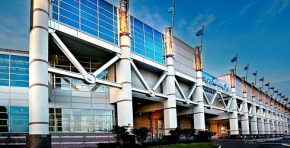
Spectra, which provides Venue Management, Food Services & Hospitality and Partnerships Services to the Atlantic City Convention Center and Jim Whelan Boardwalk Hall, Meet AC, and The Atlantic City Sports Commission are pleased to announce two of the biggest annual events returned to Atlantic City this past weekend with very strong attendance. In total, more than 70,000 patrons attended the New Jersey State Interscholastic Athletic Association State Wrestling Championships and/or the Progressive Insurance Atlantic City Boat Show presented by Discover Boating. In the following weeks, an additional 50,000 patrons are expected to visit the facilities.

Jim Whelan Boardwalk Hall played host the annual NJSIAA State Wrestling Championships from Thursday, March 3 through Saturday March 5. The event opened its doors to athletes from more than 50 High School Wrestling Programs as well as thousands of spectators from across the state of New Jersey. During the high school wrestling competitions, Boardwalk Hall had more than 35,000 guests in attendance.

The Progressive Insurance Atlantic City Boat Show presented by Discovery Boating brought more than 36,000 boating enthusiasts over the course of the five-day event. Show highlights included more than 300 exhibitors with displays of new models and luxury boats, boating equipment and other accessories for marine recreation. New activities helped education and inform Boat Show goers, including the Boat Show “Keeping our Waters Clean: Conservation Village” a mini beach clean-up station from The Clean Earth Project and the first annual “AC Says No to Plastic Clean Water” contest, a virtual fishing simulator, as well as kid-friendly exhibits like paddle boating on the mini indoor lake. The Boat Show also hosted the annual the Captain’s Table Gala benefitting the Community FoodBank of New Jersey.

“Atlantic City and the venues were electric this past weekend,” said Jim McDonald, General Manager of Jim Whelan Boardwalk Hall and the Atlantic City Convention Center. “We at Spectra were happy to welcome back two of the larger annual events hosted in the City and the 71,000 visitors that attended them. Additionally, we look forward to the upcoming events schedule at the facilities starting this week, hosting the 2022 MAAC Men’s and Women’s Basketball Championships and The American Camp Association’s Tri-State Camp Conference. In total, the two Spectra managed venues anticipate over 120,000 visitors through their doors in the month of March.”

“We are seeing great pent-up demand for live business and consumer events this year with a robust schedule of meetings, conventions and sporting events. Atlantic City will continue to see a boosted impact through this healthy tourism influx,” stated Meet AC and Atlantic City Sports Commission President and CEO Larry Sieg.

In the coming weeks, both venues will feature a full schedules of events. Currently, Boardwalk Hall is hosting the 2022 Metro Atlantic Athletic Conference (MAAC) Championships through Saturday, March 12, followed by the sold out Re-Lit in AC concert, featuring rap and hip-hop artists Lil’ Kim, Ja Rule, Ma$e, Fat Joe and more, on Saturday, March 19. Boardwalk Boxing Rd. 1, a new professional boxing series, presented by Rising Star Productions will take place on Saturday, March 26 in the Adrian Phillips Theater.

The Atlantic City Convention Center will be hosting three Trade and Industry Conferences this month: The American Camp Association’s Tri-State Camp Conference March 13-16, the Impressions Expo March 24-26, and Mary Kay Career Conference March 25-27.

Jim Whelan Boardwalk Hall and the Atlantic City Convention Center are owned and funded by the New Jersey Casino Reinvestment Development Authority (CRDA). Spectra provides Venue Management, Food Services & Hospitality and Partnership Services to Boardwalk Hall and the Atlantic City Convention Center.

In Billion-Dollar Deal, Churchill Downs to Buy Peninsula Pacific

Louisville-based Churchill Downs Inc. (CDI) recently announced it has agreed to acquire Los Angeles-based Peninsula Pacific Entertainment (P2E) for nearly $2.485 billion. The deal is expected to close by the end of this year.

P2E owns and operates Colonial Downs Racetrack in New Kent and Rosie’s Gaming Emporiums, which offer historical horseracing machines, in the Virginia cities of Collinsville, Dumfries, Hampton, New Kent, Richmond and Vinton. Altogether, the Virginia Rosie’s locations offer 2,700 HHR machines.

The agreement also gives CDI the rights to develop a Rosie’s Gaming Emporium in Emporia, the seventh historical racing entertainment venue under P2E’s Colonial Downs license, and up to five new Rosie’s locations with up to a combined 2,300 additional machines.

In addition, the deal includes the assets at del Lago Resort & Casino in Waterloo, New York, casino operations at Hard Rock Hotel & Casino in Sioux City, Iowa and the horseracing online betting platform Churchill Downs TwinSpires. Virginia, as well as properties in Iowa and New York.

Also included in the transaction is the $400 million Rose gaming resort, expected to open in 2023 in Prince William County, featuring gaming dining, entertainment, green spaces and more.

In a statement, Churchill Downs said, “The transaction significantly expands the geographic diversity of CDI’s live and historical racing entertainment venues and reinforces CDI’s role as a national leader in historical horseracing. The deal is dependent on usual and customary closing conditions, including the company obtaining approvals from the Virginia Racing Commission, the New York State Gaming Commission and the Iowa Racing and Gaming Commission.”

Churchill Downs Inc. Chief Executive Officer Bill Carstanjen stated, “This unique set of assets expands our geographic footprint and provides additional scale. P2E has done an exceptional job developing and managing this collection of assets, which we are very excited to acquire and plan to strategically grow in the years ahead.”

Analyst Dan Politzer of Wells Fargo said, “The acquisition is strategic and sensible as it strengthens CHDN’s position as a historical racing operator and expands its footprint into Virginia, the second largest historical horse racing market after Kentucky.”

CDI also will acquire the rights to P2E’s ongoing effort to develop the $565 million ONE Casino + Resort in Richmond, Virginia, in a partnership with Urban One. Richmond voters rejected proposed venue in a referendum last year but it’s possible a second vote may be held.

The acquisition excludes P2E’s gaming license in Louisiana, where the company owns the shuttered DiamondJacks Casino in Bossier City, which closed due to Covid-19 in March 2020. Last year, St. Tammany voters rejected P2E’s attempt to move the license to Slidell and open the $325 million Camellia Bay Resort. Afterward, the Louisiana Gaming Control Board gave P2E 60 days to reopen DiamondJacks or sell the license, or risk forfeiture.

P2E recently informed regulators it’s negotiating to sell DiamondJacks to Mississippi-based Foundation Gaming Group, owners of the Fitz Casino and Hotel and WaterView Casino & Hotel.

States Observe Problem Gambling Awareness Month

March is Problem Gambling Awareness Month (PGAM). This is the 18th year of the grass-roots campaign, observed by the National Council on Problem Gambling (NCPG) and 35 state councils. This year’s theme is “Awareness & Action.”

Throughout the month, the campaign will share the signs and symptoms of problem gambling and point to resources, hotlines and treatment centers.

New Jersey

In New Jersey, the Council on Compulsive Gambling (CCGNJ) will host a number of prevention- and treatment-centered activities this month. It will deliver presentations throughout the state, including webinars that explore how gambling affects different populations. It will also raise awareness among lawmakers at the State House in Trenton.

“March welcomes the change of seasons but is also deeply identified with the annual NCAA basketball tournament, known as March Madness,” said CCGNJ Executive Director Felicia Grondin. “For people with a gambling problem or in recovery from this addiction, March Madness is rife with temptation.”

A national hotline, 1-800-GAMBLER, operates 24 hours a day, seven days a week.

“Representatives provide a compassionate, listening ear and information about problem gambling, virtual and in-person Gamblers Anonymous and Gam-Anon meetings, gambling self-exclusion, treatment provider referrals and a great deal more,” Grondin noted.

Pennsylvania

Pennsylvania’s Department of Drug and Alcohol Programs (DDAP) joined representatives of the Pennsylvania Lottery, Pennsylvania Gaming Control Board and others to mark the anniversary of PGAM.

Pennsylvanians spend $1 billion a month gambling, and about 2 percent of those may have a gambling problem, according to Josh Ercole, executive director of the Council on Compulsive Gambling of PA. “Most people who gamble will not experience problems—we know this,” Ercole said. “But some will.”

Among them are Lancaster County’s Robert Grove.

“Over a number of years, I went bankrupt. I couldn’t stop,” Grove told WHTM-TV. Now a vice president at a security firm, Grove acknowledges losing some $1.5 million on gambling over the years. He says he nearly lost his family, and “went about as far as you can go” before seeking help.

He is now in recovery, and calls himself “living proof that the programs work if you work them.”

According to Ercole, calls from Pennsylvanians to 1-800-GAMBLER doubled in 2021, due to the Covid-19 pandemic. Though many people were confined to their homes, they still had easy access to gambling through their mobile devices and computers.

New York

The New York State Responsible Play Partnership (RPP) marked the start of PGAM by announcing new technologies and creative initiatives to awareness of problem gambling and promote access to available prevention, treatment and recovery services.

It has premiered the nation’s first Quick Response (QR) code specifically designed to connect problem gamblers with specially trained clinicians, faster and closer to home than ever before.

State Gaming Commission Executive Director Robert Williams said, “Finding a safe and efficient way to bridge the gap between players looking for help and providing immediate access to that help via a dynamic QR code serves as a timely and necessary extension of New York’s voluntary self-exclusion (VSE) program.”

NCPG Executive Director Keith Whyte recognized the program as “the broadest of its kind in the nation,” and said the QR code offers an overdue solution to an issue faced by many problem gamblers.

“It is very likely that a person actively seeking help for his or her gambling problem is already in crisis or living or working with someone who is,” said Whyte. “New York’s QR code gives that person a chance to find, contact and get help from a trained professional in one discreet step, and increases their overall chances of receiving the help they need.”

Connecticut

Since legal sports betting and iGaming launched in Connecticut last fall, calls to the state helpline have quadrupled, said Diana Goode, director of the state Council on Problem Gambling, in comments to to legisla4tors in January.

According to the New London Day, Goode called on Foxwoods, Mohegan Sun and the Connecticut Lottery Corp. to ramp up their support of problem-gambling initiatives in the state. She noted that Mohegan Sun may fund a problem-gambling treatment program to be developed at Yale University. But it could take up to five years before clinical trials are completed and treatment is available.

“That doesn’t help us when we get calls on Monday morning from people who’ve lost everything on sports betting over the weekend,” Goode said.

Sports betting and online gaming generated $4.2 million for the state in November, their first full month of operation, and $3.9 million in December, the Day reported, with online gaming generating the majority of the total.

“The Connecticut Council isn’t for or against gambling,” Goode said. “We just want to make sure that as gambling becomes easier and more accessible that safeguards are in place to protect those who can’t gamble responsibly and right now they really aren’t.”

Michigan

Michigan legalized mobile sportsbooks and iGaming in 2021. According to MiBets.com, in the past year, calls to the state’s problem gaming helpline have almost tripled.

Easy access to gambling “can lead to severe financial trouble, as well as strained personal and work relationships as people participate in these spaces more than ever before,” said Alia Lucas, gambling disorder program manager for the Michigan Department of Health and Human Services.

To increase awareness, the state held a virtual symposium March 3-4 to share how to spot the signs of a gambling disorder and take steps to help.

Nevada

In Nevada, Governor Steve Sisolak said the goal of PGAM is to “get people talking about this important community health issue that may affect up to 6 percent of Nevada adults—that’s an estimated 142,000 people who may be suffering the negative emotional, financial and personal consequences of a gambling problem.

“The impact of this disorder affects countless others around the gambler: friends, family, children, and all segments of the community,” he said.

Signs and Symptoms

Anyone can develop a gambling problem, but statistics show that 2 million U.S. adults (1 percent) are estimated to meet criteria for severe gambling problems in a given year. Another 4 million to 6 million would be considered to have mild or moderate gambling problems.

The percentage seems small, but the impact on individuals and society is not. According to a study by Baylor University, the social costs of problem gambling and pathological gambling are “immeasurable.” In the U.S., the cost in lost productivity, job losses, unemployment and treatment has been estimated at about $5 billion.

“Direct and indirect costs related to problem gambling could be minimized if this issue were adequately addressed,” the study indicated. “There is a need to screen those who have indicators of problem gambling, and to provide treatment, thus saving valuable resources and minimizing the costs of this problem.”

For some people, the problem brings grave financial and emotional consequences. According to the NCPG, “problem gambling or gambling addiction includes all gambling behavior patterns that compromise, disrupt or damage personal, family or vocational pursuits.”

The symptoms include:

  • An increasing preoccupation with gambling
  • A need to bet more money, more frequently
  • “Chasing” losses (betting even more to try to recoup previous losses)
  • Restlessness/irritability when trying to stop
  • Loss of control manifested by continuation of gambling in spite of mounting, serious, negative consequences

In extreme cases, problem gambling can result in financial ruin, legal problems, loss of career and family or even suicide.

Industry Initiatives

The gaming industry is doing its part to help. Here are just a few examples:

  • On March 1, MGM Resorts International and BetMGM announced the newest evolution of their responsible gaming initiative, GameSense. MGM Resorts’ casino floors now feature slot machines with QR codes that offer access to responsible gaming information and educational materials. And March marks the full integration of GameSense into BetMGM’s desktop and mobile platforms.
  • On March 2, the Entain Foundation U.S. launched the second edition of its responsible gambling app with new features and resources. The first‐of‐its‐kind mobile app, Gamble Responsibly America, provides practical tools, assistance and advice to anyone facing potential issues with problem gambling. Offered in English, Spanish, Cantonese and Mandarin Chinese, it provides self‐assessment tools including a daily gambling diary, and shows how users can access help, including a live chat feature and links to support services and organizations.
  • FanDuel sportsbook has launched a new responsible gaming advertising campaign and new RG-themed content from popular talk radio host Craig Carton, who has been candid about his own problems with compulsive gambling. This month, Carton will reinforce FanDuel’s Play Well messaging, encouraging customers not to chase bets and keep wagering as a form of entertainment. As part of Problem Gambling Awareness Month, FanDuel Group will also make a $100,000 donation to the NCPG.

Global Awareness

Earlier this year, the American Gambling Association (AGA) revealed that the U.S. commercial gaming industry made $53 billion in revenue in 2021, an increase of $23 billion from 2020. That broke the previous record of $43.65 billion set in 2019 by 21.4 percent.

EPIC Risk Management, a global gambling harm-prevention consultancy, is working with Entain, the NCAA, the NFL Players Association and other organizations in the U.S. to discuss how problem gambling “can adversely affect their performance and what measures they should be taking to mitigate such risks,” said CEO Paul Buck.

Buck said it’s vital to “destigmatize issues around problem gambling” to reduce shame around the disorder, enabling more people to consider treatment.

The issue has no borders, and EPIC works across 23 countries to reduce gambling-related harm. In Ontario, a recent poll by the Canadian Mental Health Association found that a third of gamblers in the province reported gambling more since the pandemic began.

To help Canadians make informed decisions about their gambling, the Canadian Centre on Substance Use and Addiction created a set of evidence-informed lower-risk gambling guidelines that may be helpful to gamblers in every market:

  • Gamble no more than 1 percent of household income before tax per month
  • Gamble no more than four days per month
  • Avoid regularly gambling at more than two types of games

Buck noted that gaming operators have “a duty of care” to address problem gambling head on, in March and all year long. For more information about Problem Gambling Awareness Month, visit the NCPG website at ncpgambling.org.

Gaming Companies Rally Around Ukraine

International casino companies are rallying around Ukraine and against Russia over its invasion of the East European nation.

Parimatch, which is based in Cyprus, but was founded by a Ukrainian operator, has announced it will withdraw from Russa for “military aggression of the Russian Federation in Ukraine.”

Parimatch was one of the first gaming operators licensed in Ukraine after it legalized gaming in 2020. The company also plans to restrict the use of its brand in sponsorship contracts, and has created a fund to provide financial support for the Ukrainian armed forces.

U.K. gaming giant bet365 has also stopped offering its services in Russia. Russian customers have been given until March 15 to withdraw their funds.

Polish-based sports data firm Statscore, which provides data for betting companies, has stopped supplying data for Russian and Belarusian sports.

On February 28, Karolina Pelc, founder and CEO of BeyondPlay, announced a fundraiser for Ukraine relief. Pelc stated, “The Gaming Industry for Ukraine initiative aims to raise £250,000 to support Choose Love’s Ukraine Crisis Fundraiser, which supports projects providing vital aid to the refugees that are being created by Russia’s incursion into Ukraine.”

SBC CEO Rasmus Sojmark, also an organizer of the campaign, added, “The global gambling industry is a family, and what has become clear over the past few days is the strength of responsibility it feels in providing assistance to the people of Ukraine. Most organizations employ people from the country, or have done business in the region, shared a drink with them and above all have made friends with them.”

Anton Kuchukhidze, chairman of the Ukrainian Gambling Council (UGC) told CDC Gaming Reports, “All operators and UGC try to help the army in different ways, starting from money support to media activities.”

Gaming consultancy Regulus Partners expects that the boycotts and sanctions imposed on Russia will restrict funds and have an adverse effect on the European gaming industry in general. The consultancy said that “Western sanctions and Sino-Russian countermeasures to Russian military policy are likely to involve restricting the lifeblood of global gambling, either as collateral damage or on purpose.”

Sportsbooks like FanDuel, DraftKings, BetMGM, PointsBet and Caesars Sportsbook have not stopped taking bets on Russian events and teams.

Century Casinos Buys Nugget Casino

Century Casinos (CNTY on the NYSE) has announced the acquisition of Nugget Casino in Sparks, Nevada from Marnell Gaming. The purchase price was $195 million.

The price included half of the real estate the casino sits on for $95 million from Smooth Bourbon LLC, with a five year option to purchase the balance for $105 million. Century will lease the land for $15 million per year.

The purchase is pending regulatory approval.

The announcement caused the immediate jump of CNTY stock by more than 12 percent.

Once the purchase is complete, Century will have a total of 10 casinos, with 6,700 slot machines and 240 gaming tables. The Nugget accounts for 859 slots and 29 tables.

Century Casinos co-CEOs Erwin Haitzmann and Peter Hoetzinger said in a statement: “We believe there is a lot of upside to this transaction and that we identified some areas of improvement to continue the Nugget’s growth.” They continued, “We expect the Nugget to seamlessly integrate and provide added synergies for Century Casinos’ US portfolio.”

They added, “We have been looking at entering the Reno market for a long time, and we believe the Nugget is a perfect fit for our portfolio.”

They said they expect to purchase to increase Century Casinos’ free cash flow and earnings.

Feds, Seminoles Face March 21 Deadline

The U.S. Department of Interior and the Seminole Tribe have appealed U.S. District Judge Dabney Friedrich’s November 22 ruling that invalidated the tribe’s gaming compact.

Recently the U.S. Court of Appeals for the District of Columbia Circuit gave lawyers for the federal agency and the tribe until March 21 to propose how they want to proceed with briefs.

The original lawsuit was brought by West Flagler Associates, operator of Magic City Casino, and Bonita-Fort Myers Corp., operator of the Bonita Springs Poker Room. They sued to stop the tribe’s exclusive right to operate online sports betting. Friedrich ruled the Interior Department should not have granted federal approval for the compact last August, declaring it to be unconstitutional.

Under the compact, the state would have received $500 million in annual revenue sharing. The tribe and state have reverted to the conditions of the 2010 compact, which provides $350 million in annual revenue sharing.

The two appeals, by the Interior Department and the Seminole Tribe, have been consolidated into a single case. Regarding the briefs, the court declared, “The parties are strongly urged to submit a joint proposal and are reminded that the court looks with extreme disfavor on repetitious submissions and will, where appropriate, require a joint brief of aligned parties with words not to exceed the standard allotment for a single brief.”

Because of the compact rejection, the expansions the tribe planned are on hold, including Hard Rock Sportsbook online sports betting.

Meanwhile, the Florida Senate voted 37-2 to establish a state Gaming Control Commission, which was required under the now-rejected compact. The commission will consist of five members, subject to Senate confirmation. The legislation now goes to the House.

Currently the Florida Department of Business and Professional Regulation regulates gambling, but that responsibility would transfer to the new gaming commission. Tribal gambling is regulated by federal Indian gaming laws. to regulate expanded gambling.

State Senator Jeff Brandes was one of the two opposing votes. He said, “What does the gaming commission do now do that there’s no compact? Do they have a real job? Is this the best job in the state of Florida, to be on the gaming commission?”

State Senator Travis Hutson, who led the 2021 legislature’s push to expand gambling, replied, “I think the best job in the state of Florida is to be a Florida senator.” Brandes responded, “You definitely have to do more work as a Senator than you’re going have to do on the gaming commission.”

Hutson then stated, the new gaming commission will supervise the shift of duties from the Department of Business and Professional Regulation. Brandes responded, “Just to be clear, their job now is to move buildings or to create a new division? And manage backroom card games and cockfights in Miami?”

Hutson replied, “They are going to set up that new agency, and then barring pending court decisions, depending on what happens, we’re back under the old compact, so they have to make sure we’re regulating the old compact.”

Seminole Tribe spokesman Gary Bitner said since tribes generally are not subject to state gambling laws, he was unsure how the new gaming commission would affect the tribe’s gambling operations, if at all.

Bill Submitted to Raise Jackpot Limit Reporting

It was back in 1977 when a bill became law in the United States that required casinos to report to the IRS players who win a jackpot of $1,200 or more. In 1977, that was considered a lot of money, but not so much in 2022. Several members of the Gaming Caucus in the House of Representatives have co-sponsored a bill that would raise that limit to $5,000, a figure still not equal to the ’77 level of $1,200 when you account for inflation.

But $5,000 would allow the casinos to avoid the paperwork and red tape that halt a player’s enjoyment of the jackpot with the previous limit, which often can take 30 minutes or more. Last week, Nevada Representatives Democrats Dina Titus and Steven Horsford and Republican Mark Amodei, , were joined by Pennsylvania’s Guy Reschenthaler, and Maryland’s Anthony Brown in introducing the Shifting Limits on Thresholds (SLOT) ACT.

The effort has been a priority of the American Gaming Association for a few years, but it rarely reached the traction that it did last week.

“Today’s legislation is an important and commonsense step to modernize gaming regulations while supporting our industry’s full recovery,” stated American Gaming Association President and CEO Bill Miller. “Representatives Titus and Reschenthaler, along with the Congressional Gaming Caucus, are important champions of our industry and I appreciate their relentless efforts to address this outdated rule.”

Titus said the time has come to update the regulation.

“The current threshold for reporting slot winnings was set at $1,200 in 1977 and has not been updated in the 45 years since. If indexed for inflation, the threshold would be around $5,000. Due to inflation, the number of jackpots hitting that threshold, triggering a shutdown of the machine and necessitating excessive paperwork requirements for the patron, has increased dramatically,” said Titus. “This creates an unnecessary burden on the gaming industry, an economic driver for Southern Nevada and other communities nationwide where slot machines exist. While I believe appropriate taxes should be collected on winnings, raising the threshold would reduce paperwork and ensure this is accomplished more efficiently.”

In Pennsylvania, where gaming has expanded rapidly Reschenthaler says the lower limit hurts his state.

“The 1977 slot jackpot reporting threshold hurts both Pennsylvania’s gaming industry and its patrons,” he said. “Because the threshold has not kept up with inflation, it has resulted in a drastic increase in reportable jackpots, which trigger tax burdens for winners and compliance burdens for casinos. Increasing the threshold will eliminate this onerous red tape, ensuring the gaming industry can continue to support good-paying jobs and foster economic growth in southwestern Pennsylvania and across the country.”

In Nevada, Virginia Valentine, president of the Nevada Resort Association, said the bill would remove friction between the patrons and the casinos.

“It’s incredibly overdue and will be a welcomed move by guests and the resort industry as it reduces paperwork and streamlines the process for certain jackpots,” she said. “Any time you can make a process smoother and more efficient, it enhances the overall customer experience and increases the likelihood of a return visit.”

Conventions Complicate Chicago Casino Plans

Three of the five bids received by Chicago Mayor Lori Lightfoot’s administration for a casino focus on McCormick Place: its North Hall, truck marshaling yards and Lakeside Center, the oldest and least-used campus building. Each proposal would impact the city’s convention business which, according to a pre-pandemic study prepared by the University of Illinois Chicago for McCormick Place, accounted for $1.9 billion in annual economic impact and provided more than 14,000 jobs.

Larita Clark, chief executive officer at the agency that operates McCormick Place, said a customer survey indicated exhibitors and show managers were neutral to supportive of a casino near McCormick Place but doubtful to highly critical of an on-site casino that could lure customers away. Clark added McCormick Place would have to replace any lost capacity, specifically a new $1 billion structure that could take six years to complete.

She noted even the less-used Lakeside Center expects 253 events through 2035. “The reality is if we lost Lakeside Center, we’d need to replace 600,000 square feet and all the critical infrastructure serving McCormick Place,” Clark said. She added a legal principle called public trust doctrine, dating from a 19th century lawsuit over the Illinois Central Railroad’s use of lakefront property, could ban using Lakeside Center by a private venture; litigation could tie up a casino proposal there for years.

Observers said the plan from Neil Bluhm, president and chief executive officer at Chicago-based Rush Street Gaming, in partnership with Related Midwest, seems the best location. The site comprises 62 vacant acres at Roosevelt Road and Clark Street. Bluhm also submitted a separate bid for Lakeside Center.

Casino Re-Vote Delay ‘Shatters’ Richmond Officials

Richmond, Virginia, officials have expressed shock and disappointment that the state Senate budget proposal would block a re-vote on the casino referendum voters narrowly rejected last November.

At stake is the $565 million ONE Casino + Resort, which was to be developed by the media conglomerate Urban One.

The Richmond city council passed a resolution in January asking the Richmond Circuit Court to allow the second referendum in November. They believed a re-vote was on track when the state Senate Finance & Appropriations Committee, in a close vote, rejected state Senator Joe Morrissey’s bill to allow voter referendum on a casino in Petersburg.

However, Morrissey then convinced fellow Democrats to support a study of the feasibility of a Petersburg casino by the Joint Legislative Audit and Review Commission, the investigative arm of the General Assembly. The move would put off the Richmond vote until after the completion of the JLARC study, no sooner than November 2023.

Richmond Mayor Levar Stoney said he was “disappointed” in his fellow Democrats in the Senate for supporting Morrissey’s proposal. “Nonetheless, I remain optimistic something will be worked out between the chambers that will allow for Richmond to pursue this game-changing opportunity again,” he said.

Stoney had said he’d offer city residents 2 cents off the real estate tax rate if voters passed the proposed re-vote, the equivalent of $22 million to $30 million. But the proposed tax cut didn’t appease all city council members. Councilor Stephanie Lynch said, “A proposed tax cut would mean less money in our city revenue and city general fund to be able to support not only our schools but our city service needs. But every year it becomes harder and harder when you are living in a city, a capital city with so much tax-exempt property. It gets harder and harder to generate the revenue that we need to support, to fully fund and support our schools.”

Morrissey, whose Senate district includes all of Petersburg and southside Richmond, said he supported the Richmond casino. But he started promoting a Petersburg casino the day after Richmond voters defeated the referendum, 51 percent to 49 percent. Morrissey’s measure would have allowed the Petersburg referendum while preventing Richmond from voting on a casino again until at least 2026.

Only Richmond, of the five cities approved by the legislature to host a casino, rejected the issue. Bristol, Danville, Portsmouth and Norfolk all overwhelmingly approved having a casino; all are under construction.

Richmond City Councilor Rita Trammell, who led the push for a casino vote do-over, said she believes there were numerous misconceptions about the project that led to its downfall. “My heart is shattered. I hear my citizens every day and night asking, ‘Why did this happen to us?'” she said.

Morrissey argued a re-vote was undemocratic and said the city should not be entitled to a re-vote simply because the outcome was unexpected.

Scientific Games Rebrands as ‘Light & Wonder’

Scientific Games Corp. last week announced a rebranding of its company and its name—it will now do business as Light & Wonder, Inc., “a game company singularly focused on creating great games and leveraging technology to enable a seamless player experience across all platforms,” according to a press release.

It’s not the first rebranding for the company originally known as Bally Manufacturing, Inc. The slot supplier was subsequently Bally Gaming and Bally Technologies before its merger with lottery supplier Scientific Games.

The company is in the process of shedding the lottery business that was the origin of Scientific Games, which was founded in 1973. Last year, SG agreed to sell its lottery business to Brookfield Business Partners for $6.1 billion, and the name of the company was sold too. Gaming CEO Matt Wilson said the decision to re-brand was required since Brookfield valued the brand of Scientific Games in the lottery space.

It is also shedding its sports betting business, to Endeavor Group Holdings for $1.2 billion.

The name change is meant to emphasize its remaining core business of creating game content for brick-and-mortar casinos, online casinos and social casinos through its SciPlay division.

According to the company, Light & Wonder will a deliberate cross-platform approach to bring great game franchises to players anywhere, at any time including games in land-based casinos, online and mobile and in both real money and free-to-play social gaming markets.

“We are thrilled to introduce the world to Light & Wonder, a company that will build great games and franchises that offer players a seamless experience across platforms,” said CEO Barry Cottle, who celebrated the launch with employees at the company’s Las Vegas headquarters.

“Our powerful new strategy required a powerful new identity to distinguish us and our unique offerings and capabilities. Our new name and identity are born from our winning strategy to be the leading cross-platform game company and will inspire our people to make great products for our players.”

The new identity, Light & Wonder, was born out of the company’s strategic vision and input from key stakeholders. It also reflects the company’s focus on creating great content, hardware and systems that connect iconic titles across any place or channel.

Cottle said the new name “evokes the kind of feelings we want to capture in the work we do every day, excitement, inspiration, imagination and maybe even a little bit of magic and certainly a lot of fun.

“We already have a world-class team powered by the brightest game creators in the business, and in transforming into a growth company who invests in our people and products, we will serve our players even better wherever and whenever they play,” Cottle told the Wall Street Journal. “That’s where the world is trending because in iGaming, particularly in the United States, the land-based operators are getting digital licenses, and they want to provide their players 360-degree access to the games that they have.”

As part of the transformation, the company’s new website featuring iGaming and land-based casino products, technology and services will now be lnw.com. This new portal to the company offers a look at player-favorite games, as well as platforms, systems, player account management and hardware.

Light & Wonder will operate under an assumed name until a legal name change is complete in the spring. At that time, the company intends to start trading under a new stock ticker it has registered, LNW, on the Nasdaq.

The rebranding announcement came after Scientific Games’ fourth-quarter earnings call, in which it announced total revenues from continuing operations at $580 million, beating all analyst estimates.

“The better than expected quarter coupled with the announced share repurchase authorization should draw a positive reaction in the shares,” wrote analyst David Katz of Jefferies Equity Research. “Although we are generally maintaining our estimates, we expect that as the pending divestitures close in the coming 1-2 quarters, expectations should solidify and valuation should become clearer.”

Jeffries rated SG stock as a “buy,” with a price target of $96 per share, compared to $62 on the day of the report.

“It’s the way players play these days,” said company Chairman Jamie Odell at the earnings call. “They like to play on phones and play on screens. We’re already seeing increasing examples of where games are being launched, at the same time, across platforms, allowing all that extra dollar to come through and to get extra excitement of playing the same games on different platforms.

“So for us, it’s inevitable that that’s the way that play is going to go, and we’re going to facilitate it with great IP, great processes, great technology, and content, which we deliberately developed to make sure it can work easily across those platforms.”

Cottle added, “Operationally, we are very pleased with the strong performance we achieved in the quarter, which capped what was an outstanding year, as we grew double-digits on both top and bottom line and generated substantial cash flow while laying the foundation for future growth.”

Hawaii Gaming Bill Dead for this Year

Bills to legalize gaming in Hawaii are dead for this session, say Aloha lawmakers. The bills would have authorized casinos, sports betting and a lottery.

The bills suffered a variety of fates in the House of Representatives and the Senate, including being voted down in committee or not even making it to committee but all meant the same thing: DOA.

That has been the fate of gaming bills over the last 20 years. So Hawaii continues to be one of two states (Utah) is the other, where any form of gaming is illegal.

House Vice Speaker John Mizuno, the author of one of the bills, said, “The majority of people in the Legislature do not feel gambling is the way to help Hawaii go forward.”

Gaming opponent Eva Andrade, CEO of the Hawaii Family Forum, commented, “Now it would all be brought to the front door: all the ill effects that come with gambling would be made available to more people. We don’t see that as a positive thing.”

One bill, Senate Bill 2608 and House Bill 1962, would have funded a gaming study for the state Department of Hawaiian Home Lands. It died without any action or hearing.

Senator Kurt Fevella opposed that particular idea and feels that any gaming study should be for the entire state. He would prefer that any gaming start modestly, with either bingo or a lottery.

A bill that would have set up a lottery, Senate Bill 2310, did not get a hearing. Even fantasy sports was killed by the House Economic Development Committee.