Archives: Articles

This is the example article

Caesars REIT Buys Harrah’s Las Vegas

Caesars Entertainment is acquiring 18.4 acres on the Las Vegas Strip for a new convention center as part of a $1.14 billion sale of Harrah’s Las Vegas to VICI Properties, the real estate investment trust spun off in the gaming giant’s bankruptcy reorganization.

The all-cash transaction will see VICI take ownership of the real estate assets comprising Harrah’s, which Caesars will lease from VICI and continue to operate as part of its corporate portfolio, including the casino, the hotel and all other operations. The lease will run 15 years initially at an annual rent of $87.4 million that scales up in subsequent years. Caesars will have the option to extend the lease an additional 20 years in five-year increments.

Proceeds from the sale will supply the bulk of the $1.7 billion Caesars is paying to acquire Centaur Holdings and its two Indianapolis-area racinos, Hoosier Park and Indiana Grand. The acquisition, announced last month, will add 4,000 machine gaming and e-table positions to the two casinos Caesars already owns in Indiana.

Caesars President and CEO Mark Frissora said the twin deals “demonstrate our commitment to pursuing growth opportunities while maintaining balance-sheet discipline”.

The convention center parcel is adjacent to Harrah’s, and the agreement calls for VICI ultimately to buy the convention center and lease it back to Caesars to operate. A 300,000-square-foot facility is planned for the center Strip location, outfitted with the latest technologies and the largest column-free ballroom in the United States.

Support Grows for Third Connecticut Casino

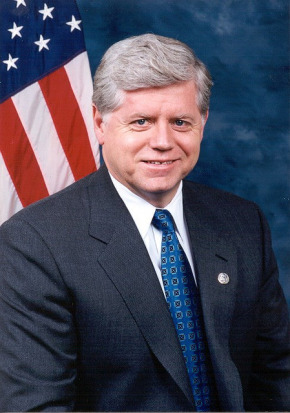
U.S. Rep. John B. Larson, whose district includes East Windsor, has belatedly added his voice to that of Connecticut’s two U.S. senators and Rep. Joseph D. Courtney, asking that the Department of the Interior publish approvals of amendments to the tribal state gaming compact with the Pequot and Mohegan tribes.

The tribes need that approval in order to safely move forward with building the state’s third casino, a satellite casino, and most salient to the point: a commercial casino. It is the commercial nature of the casino that makes it vital for the Interior Department to sign off. If the casino goes forward, it would be the first commercial casino operated by a gaming tribe, or in this case, two gaming tribes. Since the un-amended compact says that if the state allows a commercial casino to operate that would violate the exclusivity clause that guarantees that only Foxwoods and the Mohegan Sun can offer gaming. If that clause is violated they are not required to pay 25 percent to the state.

The Indian Gaming Regulatory Act (IGRA) requires that the Department either approve or reject compact changes within 45 days. If that deadline is not met, the law says the changes are “deemed approved.”

MGM Resorts International has fought a long and bitter battle to prevent the tribes from building a third casino, which is meant to blunt the effects of the MGM Springfield on Indian gaming. It has been lobbying the department to keep it from issuing an approval.

Larson speculated that intervention by the congressional delegation of Nevada, where MGM is based, might also have an effect.

So far, the Department has done nothing.

Before Larson joined the effort, Senators Richard Blumenthal and Christopher S. Murphy, plus Courtney, had sent a letter to Secretary of the Interior Ryan Zinke. Larson excused himself for not writing before by saying that he had been busy fighting the GOP’s tax bill.

Commenting on the hoped-for action, Larson said, “I don’t know why they would hold this up. They should publish these.” He noted that the residents of East Winsor voted to support the casino at a special town meeting. This was followed by a vote of the state legislature. “I totally support the people of East Windsor and the state’s decision, and the two tribes’ compact,” he said.

Pennsylvania County Seeks Mini-Casinos

Curwensville, Reading also seeking satellite facilities

As municipalities across Pennsylvania pass resolutions to opt out of the mini-casino provision in the new gaming expansion law—banning the satellite facilities in their jurisdictions—some areas are actively pursuing the new facilities.

Among the first to court a mini-casino was Lawrence County in the western part of the state, home to the decade-long, beleaguered and ultimately canceled Valley View Downs/Lawrence Downs project. Valley View Downs was among the first batch of Category 1 racetrack casino licenses awarded after the state’s gaming law was passed in 2004. However, following a breakup of the first partnership that was granted the license, the project went through a parade of licensees that failed to arrange financing for the project, located near the town of New Castle. Ultimately, the Pennsylvania Gaming Control Board pulled the license, which ultimately was dubbed Lawrence Downs. The license has yet to be rebid.

A dozen years from the inception of Valley View Downs, Lawrence County officials are putting out the word to the 10 current eligible licensees to submit bids for one of the mini-casinos to be located in the county. “We intend to communicate to those 10 casinos and tell them our community would welcome them,” said Dan Vogler, chairman of the Lawrence County commissioners, in an interview with the Pittsburgh Post-Gazette.

“We want to strike while the iron is hot. Hopefully, our phone will ring, and we’ll welcome any of them with open arms. We’ll take them around and show them potential sites and hope to convince them it will be conducive.”

The mini-casinos under the new law will be bid on beginning January 15 by current Category 1 (racino) and Category 2 (stand-alone casino) licensees. (The two smaller Category 3 resort casinos do not qualify.) Each new facility will serve as a satellite location of the current licensee, with a maximum 750 slot machines and 30 table games. Licenses will be granted by auction, with a minimum bid of $7.5 million. Mini casinos must be located at least 25 miles from any current casino. Municipalities (except for counties) can pass a resolution to ban the satellite casinos by December 31.

Mid-sized cities such as Reading, Lancaster, Altoona, Williamsport, Gettysburg and State College have been cited as possible mini-casino locations. Within Lawrence County, only the small Little Beaver community has opted out. Penn National Gaming, which draws most of its business from outside of the law’s 25-mile buffer zone, is contemplating a lawsuit to block the satellite provision.

Meanwhile, two other municipalities have come out in favor of hosting mini-casinos. Members of the borough council of Curwensville, north of Altoona in west-central Pennsylvania, commented in their meeting last week that several locations within the borough would be perfect for a satellite casino. “There is good and bad with everything,” said Council President Tommy Wingard, addressing potential ill effects of a casino. “If we want business, we will have to deal with it. It would help the town out.”

And the city council of Reading, in the east-central part of the state, is expected to vote today to seek to host one of the mini-casinos. “The administration—I’ve talked with the mayor about it—has no problem with a casino being located within the city,” city Managing Director W. Glenn Steckman III said at last week’s council meeting. “He recognizes, obviously, that there are sometimes social issues that come with it, but he’s also looking for employment opportunities for city residents.”

Sports Betting Battle Begins

Sports leagues soften as stakeholders prepare for legal sports betting

The eyes of the gaming industry are on Washington, D.C., as the United States Supreme Court hears arguments in Christie v. National Collegiate Athletic Association, New Jersey’s appeal in favor of its sports-betting law, which also challenges the constitutionality of the federal ban on sports betting.

The case before the high court is the second appeal from the state of New Jersey after the four major sports leagues sued to block a state-approved law authorizing sports betting at New Jersey casinos and racetracks. The court declined to hear the first appeal, affirming lower-court rulings that New Jersey’s law violated the Professional and Amateur Sports Protection Act (PASPA), the 1992 law that made sports betting illegal in all but four grandfathered states, with only Nevada permitted full-blown sports books.

The current case is the result of a law signed in 2014 by New Jersey Governor Chris Christie repealing the ban on sport betting in favor of self-regulated sports betting at the casinos. The 3rd Circuit Court of Appeals affirmed a lower court ruling that the new law violated PASPA, but in a surprise to many, SCOTUS agreed to hear New Jersey’s appeal, which argues that PASPA itself is an unconstitutional imposition of federal over state authority.

The American Gaming Association, which has filed an amicus brief in favor of New Jersey’s case and has put a repeal of PASPA at the top of its lobbying agenda, joined Spectrum Gaming last week for a preview of the hearing that featured talks from government officials educators, lawmakers and attorneys including Ted Olson, the partner in Gibson, Dunn & Crutcher that will argue New Jersey’s case before the Supreme Court.

Meanwhile, potential stakeholders in a legalized sports betting market publicly offered new opinions on the issue, not the least of which was one of the plaintiffs in the original lawsuit, the National Basketball Association. On ESPN Radio’s Mike Golic and Trey Wingo show last Monday, NBA Commissioner Adam Silver repeated his support of legalizing sports betting in the U.S.

Silver told hosts Golic and Wingo he’s in favor of lifting the federal ban on sports betting, but with a federal law to regulate it. He said any state should be able to decide if they want sport betting, but all under the same federal regulatory framework.

Silver, who first came out in favor of sports betting in a 2014 op ed piece for the New York Times, commented that his view on the subject is different than his predecessors who sued to block the first New Jersey law. “My position, which is a little different than my predecessors, has been that we should regulate it, we should legalize it,” he told the ESPN hosts. “Because it’s not to me an issue of whether I am ‘pro’ or ‘con’ sports betting. We know now that it goes on, largely underground, hundreds of billions of dollars are bet every year just in the U.S. on sports betting…

“It’s legal in most other jurisdictions in the world, particularly in Europe, where people bet on their smartphones throughout soccer games. It’s closely regulated, they can monitor if there’s an irregularity activity—something we cannot do right now because it’s largely all illegal.”

He added that he differs from New Jersey’s position in the current Supreme Court in that he doesn’t feel it’s a state’s rights issue, but in fact it should be under federal control. “I think there should be federal policy; it should be consistent from state to state,” he said. “I think states should be able to elect whether they want to be in or out. If a state doesn’t want to have legalized sports betting they shouldn’t be forced to do it, so I agree it should be a state decision.

“But I worry a little bit in terms of the monitoring of it, the integrity for the sports leagues…that if you have 50 states all competing against each other, it could be a bit of a race to the bottom in terms of ultimately how to do the best job protecting consumers, the people who place the bets, and protecting the integrity of our league.”

Silver’s views on sports betting are indicative of a general softening on the position by major sports leagues—except for the National Football League, which has remained steadfastly opposed to legal sports betting despite locating a franchise in the gaming capital of Las Vegas.

AGA President and CEO Geoff Freeman said in an interview last week with the Associated Press that even the NFL is more open to taking a second look at sports betting laws.

“I think there are multiple signs of the sports leagues, including the NFL, are taking a fresh look at this issue,” Freeman said. “You don’t place a team in Nevada, in Las Vegas, without an understanding that the issue is changing. Frankly, you don’t play games in Wembley Stadium, where most of the people in the stands are betting on their phones during the game, without an understanding that things are changing. For those that want to see sports betting, the trajectory is in their favor.”

Freeman has said a repeal of PASPA is coming soon, even if the Supreme Court rules against New Jersey and upholds PASPA. However, if the court holds that part or all of the sports-betting ban is unconstitutional, several states are expected to rapidly pass laws creating sports-betting programs. Online betting is expected to come with that, so online gaming legalization is likely to follow sports betting in many states.

Although a decision in the case is likely to take several months, some operators are already preparing for the court to dump PASPA by preparing for legalized sports betting.

In New Jersey, Monmouth Park racetrack has reportedly announced a $1 million sports betting lounge, in a deal with British bookmaker William Hill, and MGM Resorts International is planning construction of a $7 million sports book at its Borgata casino in Atlantic City.

At Monmouth Park, at least part of the facility is already built. The racetrack created a sports-betting lounge four years ago, when the first New Jersey sports-betting law was winding its way through the courts. After New Jersey lost the case, the track turned the facility into a sports bar.

Atlantic City Casinos See Strong Third Quarter

Atlantic City’s seven casinos posted $252.5 million in profit for the third quarter, up about 21 percent over 2016.

Gross operating profit reflects earnings before interest, taxes, depreciation and other charges, and is a widely accepted measure of profitability in the casino industry.

According to an analysis by the Associated Press, Tropicana’s earnings were up 67 percent for the quarter, to $46.2 million. The Golden Nugget was up 15.4 percent to $12.8 million, and Caesars was up nearly 11 percent to $29 million.

Bally’s was up 10.7 percent to $18.1 million; Harrah’s was up just under 1 percent to $37.7 million, and Resorts was flat at $10.7 million.

Only the Borgata posted a quarterly loss, at less than half a percent, down to $81.8 million.

Among online companies serving the market, Caesars Entertainment-NJ was up 55.4 percent to $3.7 million, and Resorts Digital went from a $570,000 profit in the third quarter of last year to a $12.1 million profit in the third quarter this year, the AP reported.

Atlantic City’s casinos had an operating profit of $561 million for the first nine months of the year, up 19.8 percent from the same period last year.

Atlantic City’s annual Winter Wonderland Block Party

Atlantic City will hold its Winter Wonderland Block Party for children Saturday, Dec. 23, from 11 a.m. to 2 p.m. in the City Hall courtyard at 1301 Bacharach Blvd. (located between City Hall and the Atlantic City Free Public Library). Tickets are free and required to gain admission.

This seventh annual holiday event is for Atlantic City children ages 3 to 12 and will be held outdoors. The event will include rides, games, arts and crafts, chance to meet Santa Claus and other special guests, magic show, and performances by the Atlantic City High School Choir and Xclusive Drill Team.

Tickets are limited and will be given out on a first-come, first-served basis while supplies last. Tickets will be distributed at City Hall on the following dates: Dec. 5 from 10 a.m. to 12 p.m.; Dec. 6 from 10 a.m. to 12 p.m. and Dec. 7 from 2 to 4 p.m.

Tickets will be distributed only to adults, who must show a proof of Atlantic City residency and photo ID. Each adult can receive a maximum of three children’s tickets.

The Atlantic City Winter Wonderland is presented by the City of Atlantic City, and sponsored by the Atlantic City Free Public Library, Atlantic County Toys for Kids Program, 99.3 The Buzz, 96.1 WTTH The Touch, Serpico Pyrotechnics, Target, The Salvation Army, Toys R Us and Walmart.

For more information please call the City’s Division of Recreation at (609) 347-5643.

EveryMatrix Licensed by Malta

The Malta Gaming Authority has granted iGaming platform supplier EveryMatrix a license to distribute the games of Novomatic subsidiary Greentube to partners operating under Maltese jurisdiction.

Besides Novomatic premium slot games such as Book of Ra Deluxe, Lucky Lady’s Charm Deluxe and Sizzling Hot Deluxe, a wide spectrum of the Greentube’s casino games portfolio is available via the EveryMatrix casino platform under an agreement announced earlier this year.

“Being now licensed in Malta, our company will be able to fulfill the requests it has received for Greentube’s products in the best possible manner,” said EveryMatrix CEO Ebbe Groes. “The recent addition enables EveryMatrix to fully support the continuously growing demand for premium casino content.”

The Greentube game portfolio is part of the EveryMatrix CasinoEngine platform, the largest casino aggregator in the world, integrating more than 60 gaming vendors delivering over 5,000 games that can be plugged remotely in external wallets via a single API, or as part of an EveryMatrix turn-key solution.

“CasinoEngine brings along a wealth of content which permits operators to choose the best for their online casinos,” said Groes. “It can be directly integrated into client platforms and includes a second-generation bonusing tool with unprecedented flexibility, among many other value-added services. By offering such a rich platform, EveryMatrix managed to secure as clients established Maltese-based companies like Tipico or Dragonara Casino, along with other important operators such as Norsk Tipping, 188Bet UK, and K8.”

DraftKings to Offer Live Streaming EuroLeague Basketball

DraftKings announced it will begin offering live sports streaming through its newly-formed partnership with EuroLeague Basketball.

“Our goal is to become the one-stop destination and mobile companion for sports fans globally,” said DraftKings CEO and co-founder, Jason Robins at a conference in Lisbon. “Adding a live streaming component allows us to provide the best and most seamless product for our customers. This is what the future of sports looks like.”

DraftKings will offer the live coverage of EuroLeague games in early 2018 on the DraftKings app, as well as an opportunity to watch multiple games by playing in a $3 and above DraftKings contest.

“We are proud to be breaking new ground with such a forward-thinking partner as DraftKings,” said Jordi Bertomeu, EuroLeague Basketball President and CEO in a press release. “Combining fantasy with live-streamed games is a perfect match, not only for the countless passionate EuroLeague fans we have already, but for the many new ones who will now discover our unique brand of basketball through DraftKings.”

Philippines Becoming Hub for Online Gambling Companies

A report by Colliers International found that offshore online gambling operators made up of 25 percent of all office leasing transactions in the first nine months of 2017 in the Philippines.

The study found 356,000 square meters of office space was leased with demand driven by offshore gambling operators and traditional companies. Colliers said that it expects demand for office space to continue with the country on track to reach 550,000 square meters by the end of the year.

The research firm, however, said it was difficult to gauge the sustainability of demand from offshore gambling firms in the medium to long term “given the wide range of space requirement from players in this sector.”

The Philippine Amusement and Games Corporation has issued 42 Philippine Offshore Gaming Operators licenses since late 2016. Many of these licensees have required 5,000 square meters to 30,000 square meters per site.

“Assuming that the legality of their operations is recognized in the Philippines, notwithstanding cases which have been filed with the Supreme Court questioning PAGCOR’s jurisdiction over POGOs, concerns about potential crackdowns in home countries such as China and Korea persist even over a year into the expanded mandate of PAGCOR to regulate these entities,” Colliers said.

NetEnt Launches Mobile Blackjack

NetEnt, one of the leading online game suppliers in the casino industry, announced the launch of NetEnt Live Mobile Standard Blackjack.

The latest product is a part of company’s efforts to become the leader in the live mobile gaming sector. According to the company, Mobile Standard Blackjack aims to revolutionize the way this popular live-dealer game is played across various handheld devices. Relying on the power of the latest streaming and HTML5 technologies, the game gives players a feeling they are close to the dealers and allows them to see everything going on around them at the table, including bets placed by other players. They can also easily place any side bets and mark their pre-decisions, making this the most immersive mobile experience to hit online casinos yet.

Casinos carrying live NetEnt games include LeoVegas and ComeOn! Casino.

Betfred.com Adds Scientific Games Titles

SG Interactive, a division of Scientific Games Corporation announced that Betfred.com has added Scientific Games’ interactive games portfolio on its Befred.com website in a new partnership.

Betfred.com has added games such as Rainbow Riches Pick n’ Mix, Rainbow Riches Free Spins, Rainbow Riches Reels of Gold, Raging Rhino and MONOPOLY Big Event, the company said in a press release.

Petfre—Betfred’s parent—will continue to launch SG Interactive content on its Betfred.com website in the coming months, including popular themes such as Zeus III, Lucky Tree, 88 Fortunes, and Spartacus. Betfred.com will also launch a number of licensed titles, rounding out the offering with instantly recognizable brands. The SG Interactive library also includes innovations such as Big Bet, portrait mode gaming, and an unparalleled omni-channel offering, the release said.

“We’re thrilled to announce the launch of SG Interactive titles on our site,” said Russell Young, commercial director at Betfred.com. “This will empower us to reach more players and further expand our engaging content in the online gaming space.”

DraftKings to Sponsor WPT Event

DraftKings will sponsor the Season XVI World Poker Tour European Championship in Berlin, Germany in January 2018, marking a return as a WPT sponsor for the first time since 2012.

“It is with great pleasure that we welcome industry leader DraftKings as a sponsor,” said WPT CEO Adam Pliska in a press release. “We look forward to providing a great experience for World Poker Tour players.”

DraftKings was previously the WPT’s exclusive DFS partner for part of its 2012/13 season. DraftKings then moved to the World Series of Poker took in 2014. That deal ended after Nevada ruled that daily fantasy sports was gambling and needed to be licensed in the state.

DraftKings is currently running daily fantasy qualifying contests in which winners will receive entry into the €3,300 buy-in WPT European Championship Main Event as well as expenses for travel and accommodations. The event takes place at the Spielbank Casino in January.

Illinois Online, DFS Gaming Bill Stalls

In Illinois, House Bill 479, which would have allowed online casino games and daily fantasy sports contests, failed to be considered by the House Rules Committee before the legislative session ended. The measure, which passed the Senate earlier this year, will be picked up where it left off in the 2018 session beginning in January.

The measure also would create a new department within the Illinois Gaming Control Board to be responsible for licensing, regulating and taxing online gaming and DFS contests. In addition, the bill would establish a Responsible Internet Gaming Advisory Board to make recommendations to the executive director of the state gaming board regarding the “development of rules and procedures to reduce and prevent problem or compulsive gambling and youth gambling and to ensure the conduct of safe, fair and responsible internet gaming.”

Furthermore, the legislation would require each internet gaming licensee hold no more than two brands in the state.

If the bill passes out of committee and passes a vote on the full House floor, it will require the signature of Governor Bruce Rauner to become law.

‘Loot Boxes’ Become Problem For Vid Games

The issue of gambling within online communities of virtual items found in popular video games has resurfaced with a new name—loot boxes.

Regulators in Belgium and the Netherlands are launching separate investigations into the loot boxes.

Skins betting—the gambling of virtual items such as bonus weapons in video games—has already caused controversy as the items are being traded, and often gambled, for real money. Loot boxes are virtual caches of several such items and extra game features, though exactly what they contain is usually a mystery until purchased. Many recent online games offer loot boxes for sale for either virtual currency or real money. In many games, real money can also be converted into virtual currency.

Since some loot boxes have more valuable items than others, some critics argue that just purchasing or trading them constitutes a type of gambling. Since they can be bought with real money, the gamble is on whether the box contains highly valued virtual items.

However, gaming companies such as Game developer EA argue that since all loot boxes sold in games contain some items of value, buying them cannot be considered gambling. Loot boxes, also called crates, are said to be no different than the for-pay rewards and extras available on social games.

The Dutch Gambling Authority is launching a full investigation into loot box games, and whether they should fall under gambling laws. The Belgian Gambling Commission has issued its own statement saying that it will look into the law surrounding video game reward boxes.

“Games of chance cannot be compared to any other kind of economic services,” the Belgian Commission said in a press release. “A number of protective measures have been implemented to protect players against these sorts of potential risks.”

Though the Belgian investigation is not complete, the country’s minister of justice Koen Geens is already saying that he will try to ban loot boxes completely, according to a report from the news website VTM.

“Mixing gambling and gaming, especially at a young age, is dangerous for the mental health of the child,” Geens said in a press statement.

The issue of loot boxes has also been amplified by their use in the recently released Star Wars Battlefront II from EA. The boxes are used as part of an in-game prize system. The Blizzard game Overwatch has also drawn attention for using the boxes.

“Creating a fair and fun game experience is of critical importance to EA. The crate mechanics of Star Wars Battlefront II are not gambling,” an EA spokesman told Gamespot Magazine. “A player’s ability to succeed in the game is not dependent on purchasing crates. Players can also earn crates through playing the game and not spending any money at all. Once obtained, players are always guaranteed to receive content that can be used in game.”

There has been a call in the online gaming community, however, for game developers to the odds of receiving high value items in purchased loot boxes.

EA and Disney—which owns the rights to Star Wars—have stepped in and removed features that allow players to purchase the games in-game virtual currency for real money in the Star Wars game, but EA has said it plans to re-introduce real money purchases at a later date.

“We’ve heard the concerns about potentially giving players unfair advantages. And we’ve heard that this is overshadowing an otherwise great game,” EA Digital Illusions CE General Manager Oskar Gabrielson said in a press statement. “We hear you loud and clear, so we’re turning off all in-game purchases.”

According to reports, EA stock dipped after the announcement and some investors pulled out of the game after the real-money purchases were removed.

MGM Laying Off Hundreds at Mandalay Bay

As lawsuits spurred by the October 1 mass shooting on the Las Vegas Strip pile up and MGM Resorts International comes under mounting criticism for failing to prevent a lone madman from turning a suite at Mandalay Bay into an arsenal, the company has added to its public relations woes by announcing that it’s laying off workers at the hotel in response to the fall-off in business.

“We have disclosed publicly that occupancy this year at Mandalay Bay will be slightly lower than normal,” said Alan Feldman, the company’s executive vice president of Global Industry Affairs. “We are trying to handle this with the least possible interruption to our employee’s schedules, but in some cases, reduced schedules may not be sufficient. We are striving to impact as few employees as possible.”

Feldman’s second in command, Debra DeShong, said the layoffs will total “several hundred” of the property’s 7,400 employees.

Local news reports said the reductions were greeted with surprise in the wake of statements from MGM Chairman and CEO James Murren that the financial impacts of the tragedy had been limited.

“Cancellations progressively subsided by mid-October and our booking pace remarkably returned to normalized levels almost immediately thereafter, as soon as we turned on our marketing efforts,” he announced on the company’s most recent earnings call. “About half of our cancellations were isolated literally to the month of October. We’ve seen bookings improve, our business improve, here in November.”

Some of that discrepancy can be attributed to seasonal business cycles, the same reports noted. “As you know (staffing adjustments) are made seasonally,” said DeShong.

A representative for Culinary Union Local 226, which represents workers at MGM’s properties and across the Las Vegas resort industry, expressed concern.

“Contracts have seniority language which detail that layoffs must be done in a fair and impartial manner and ensures that when business improves, workers will return to work by seniority,” a spokeswoman said. “The union will be monitoring the situation closely and continue working with affected workers to ensure that the company follows the contract.”

Insurance experts, meanwhile, say the massacre could cost their industry more than $1 billion when all is said and done, with claims from life and health insurance and class-action lawsuits expected to continue for years.

“It doesn’t take long to get to a large number” in claims, said Heidi Lawson, a lawyer at Mintz Levin who specializes in insurance litigation and investigations. “There was a failure to oversee, a failure to supervise, a failure to set up internal security measures.”

MGM said in a recent filing that it expects its insurance to cover liabilities tied to the lawsuits.

The U.S. Treasury Department has a terrorism insurance program to help shield insurers from losses, but President Donald Trump and the Department of Homeland Security have not declared the Las Vegas shooting to be an act of terrorism. The Sept. 11, 2001 attacks, the first to be covered by the program, resulted in $43.6 billion of property, life and liability claims. It was the second-costliest insurance event after Hurricane Katrina, which totaled $49 billion.

Fifty-eight people were killed and around 500 injured when Stephen Paddock, a resident of nearby Mesquite, Nev., and a frequent visitor to Las Vegas, opened fire the evening of October 1 on an outdoor country music festival on the Strip from a suite near the top of Mandalay Bay.

The months ahead will see lawyers for the victims wondering how the hotel could allow Paddock’s room to go unchecked for days while he stockpiled it with 23 guns and how it failed to take note of the unusually large number of bags he brought in.

“Being in a room for three days in a ‘Do Not Disturb’ situation? That would’ve triggered an alarm here,” Wynn Resorts Chairman and CEO Steve Wynn recently told Fox News. “We’d go into the room. We’d want to know more about anybody who was sequestered in a room for more than 12 hours.”

Resorts up and down the Strip and across the city are re-evaluating these and other policies and procedures in the wake of the tragedy.

Boyd Gaming, for one, is now informing guests on check-in that “safety and welfare” checks will be conducted on any room posting a “Do Not Disturb” sign for more than two days in a row, a spokesman said.

Not surprisingly, MGM has declined to comment on its procedures, according to news reports, while other major operators, including Caesars Entertainment, Las Vegas Sands and Station Casinos, likewise have indicated they prefer to keep the wraps on measures they’ve instituted since the shooting to protect their guests and visitors.

FinCEN Slams California Card Club With Huge Fin

Financial Crimes Enforcement Network (FinCEN) last week announced an $8 million civil money penalty against California’s Artichoke Joe’s Casino (AJC). AJC, one of the largest card clubs in California, willfully violated U.S. anti-money laundering (AML) laws from October 2009 to November 2017. During this eight-year period, AJC failed to implement and maintain an effective AML program, and failed to detect, deter, and timely report many suspicious transactions.

“For years, Artichoke Joe’s turned a blind eye to loan sharking, suspicious transfers of high-value gaming chips, and flagrant criminal activity that occurred in plain sight. FinCEN’s $8 million civil penalty results from the card club’s failure to establish adequate internal controls and its willful violations of the Bank Secrecy Act,” said Jamal El-Hindi, acting director of FinCEN. “Casinos, card clubs and others in the gaming industry should consider their risk of exploitation by criminal elements, and understand that they will be held accountable if they disregard anti-money laundering and illicit finance laws. This significant action highlights the need for all entities, including those in the gaming industry, to build a robust culture of compliance into their policies and procedures to ensure they are not facilitating illicit activities.”

AJC, a card club located in San Bruno, California, has been in operation since 1916. In March 2011, AJC was the subject of a raid by state and federal law enforcement which led to the racketeering indictment and conviction of two AJC customers for loan-sharking and other illicit activities conducted at AJC. AJC senior-level employees knew that loan-sharks were conducting criminal activity through the card club and using AJC gaming chips to facilitate illegal transactions. Nonetheless, AJC failed to file any Suspicious Activity Reports (SARs) on this activity. For example, there were several instances in which loan-sharks provided AJC chips to customers on the gaming floor within plain sight of AJC employees.

AJC also failed to implement adequate internal controls, which exposed the card club to a heightened risk of money laundering and other criminal activity. In particular, AJC failed to adopt adequate policies and procedures to address risks associated with gaming practices that allow customers to pool or co-mingle their bets with relative anonymity. Further, AJC did not establish procedures for obtaining and incorporating information from propositional players (players paid by casinos or card clubs to wager at a game) or other employees who may have observed suspicious transactions. AJC also failed to file complete and timely reports on suspicious transactions involving potentially structured chip redemptions and purchases, and redemptions of large volumes of chips with no cash-in or gaming activity. FinCEN’s Assessment of $8 million recognizes the duration and severity of AJC’s violations, the size and sophistication of the card club, AJC’s awareness of criminal activity on its premises, and its deficient culture of compliance.

Acting Director El-Hindi expressed his appreciation to the Internal Revenue Service Small Business/Self-Employed Division, the Federal Bureau of Investigation, the State of California Department of Justice’s Bureau of Gambling Control, and the U.S. Attorney’s Office for the Northern District of California for their support and strong partnerships with FinCEN. This is the third enforcement action against a card club for FinCEN, the only federal regulator with AML enforcement authority over card clubs.

Florida Senator Proposes Limited Gaming Bill

Florida state Senator Travis Hutson, chairman of the Senate Regulated Industries Committee, recently introduced SB 840, which addresses daily fantasy sports contests, decoupling greyhound and horse racing, slot machine taxes and designated player games at parimutuel card rooms. “I am excited to take the lead on gaming for the 2018 session and grateful for the opportunity to build on the efforts of previous leaders on this issue, in particular Senator Bill Galvano. Thanks to the solid foundation left by him and others, I am able to offer a gaming bill more narrow in scope than in the past but no less thorough in detail.”

The bill states daily fantasy sports contests are based on player rather than team performance. Also, individual participants would be exempt from regulation as long as they are not “commissioners” of more than 10 leagues.

The bill also would allow racetrack operators to decouple live racing from other forms of gambling, such as lucrative card rooms. Under Hutson’s proposal, if a track has held a “full schedule of live racing” for 10 consecutive years since fiscal 1996-1997, it can specify in its application for an operating license that it wants to stop offering racing.

In addition, the legislation would lower slot-machine taxes from 35 percent of revenue to 25 percent by July 2020. The bill also would allow

controversial “designated player games” at parimutuel card rooms, as long as they are not more than half of the card room’s offerings.

Hutson stated, “I am confident this bill offers a focused starting point on a limited number of issues from which attainable reform can be enacted and look forward to working with the House of Representatives, the governor, stakeholders and the citizens of Florida to achieve that goal.”

The Seminole Tribe of Florida, which holds exclusive rights to offer blackjack at its casinos, has stated its opposition to designated player games and others it considers similar to blackjack. The issue led to a federal lawsuit that was settled earlier this year. Asked for a comment on Hutson’s proposal, Seminole tribal spokesman Gary Bitner replied, “Thanks for asking, but the tribe doesn’t comment on bills that may or may not become law.”

Massachusetts Casinos Rising Rapidly

Last week 7News got an exclusive tour of the Wynn Boston Harbor construction zone, where on June 24, 2019 the $2.4 billion casino and resort will open. The builders are spending $2.5 million a day in what some have called the largest private development in the state’s history.

Bob DeSalvio, president of Wynn Boston Harbor, hosted the tour, showing reporters the ten thousand pieces of structural steel that are being used in the project, and using enough concrete to create a new Massachusetts Turnpike.

Each week another floor is finished on the 27-floor hotel tower.

The casino will house 3,000 slots and 145 gaming tables.

This is the first time Wynn has developed a casino in New England, which is his home state. He is working to employ features that are popular in the region, such as Italian dining, an oyster bar and craft beer vendor. The casino is rising in Everett, which DeSalvio says is become “a craft beer capital.”

To deal with the traffic issues that critics say are inevitable from such a large, new facility, DeSalvio said one of the things they are doing is “First of all—get people out of their cars,” and onto mass transit such as the MBTA and shuttles, including water shuttles that will run between Everett and Boston, whose skyline can be seen across the Mystic River. It will be a 19-minute trip, says DeSalvio.

Addressing those who fear the casino will raise crime figures, DeSalvio told 7News, “We’re going to run a very tight ship. We want to make sure that we provide a safe and sound environment for our guests.”


MGM Springfield

Meanwhile, the $960 million MGM Springfield, which will open in less than a year, has opened a career center to process the 3,000 hires it expects to make in the coming months.

All of the hiring processes and screenings will be centered in the center, which is next to the casino project. Members of the Massachusetts Gaming Commission last week got a tour of the facility just hours before it opened.

MGM Springfield CEO Michael Mathis told the commissioners, “The career center will be the hub of our hiring activity in the community. It’s a one-stop shop facility for people to come learn about opportunities at the resort, to fill out applications, to meet with our different HR professionals, to do panel interviews, private interviews, drug testing, as well as to meet the regulators and fill out licensing paperwork.” It includes a 20-seat computer lab for applicants to use.

Commissioner Bruce Stebbins commented, “This career center is a great way for them to understand all the career opportunities available to them as well as our licensing for certain employees. It’s a great resource for the community and we’re just happy to be here to applaud this opening.”

Besides applying for jobs, applicants will also be able to learn what casino training is available from the two local community colleges that are working with the center.

Next June the casino will have a hiring event at the MassMutual Center, a few blocks from the casino. The almost 5,000 people who have applied will be invited.

Connecticut Challenges Foxwoods’s Class II Games

The Connecticut government says that the 100 electronic bingo machines sitting unused at the Foxwoods Resort Casino may violate the tribal state gaming compact with the Mashantucket Pequot tribe, which operates the casino.

The state asserts that the “Live Call Bingo” games are not covered by the compact and the revenue sharing section. Normally the tribes pay the state 25 percent of gaming revenues. This year the tribes paid $114 million to Connecticut.

The machines look and sound like typical slot machines, of which Foxwoods has more than 4,000. But they are Class III games, which have been held by the courts to be something that tribe can offer without a compact with the state.

Rodney Butler, chairman of the tribe, says he expects the dispute to be resolved without rancor. “We’re working with the state on an incredible partnership, in fact expanding our wonderful partnership that goes back 25 years,” he told the CT Mirror. “We would never put that in jeopardy.” Butler insists the tribe doesn’t intend to use the machines to go around revenue sharing.

The partnership he refers to is the Pequot and Mohegan tribes’ efforts to build a third, satellite casino in East Windsor to blunt the effects of the MGM Springfield that will open in Massachusetts in less than a year.

Some lawmakers are uneasy that the tribe is nevertheless testing the limits of the “partnership” with the state. Rep. Joe Verrengia, who co-chairs the legislature’s Public Safety and Security Committee, told the Mirror, “I find that the timing of this is very odd. It’s after the fact, after we just spent so much time debating the casino and the financial impact that a new casino would have on the state.” It’s also odd, he says, because the tribes still need help from the state before they can begin building the new casino. At this point the Department of the Interior hasn’t yet issued the endorsement of the amended compact that reflects the new casino, and which makes clear that it would not violate the existing exclusivity clause that protects the two tribes from a commercial casino—which the East Windsor casino would be.

The CT Mirror obtained correspondence that showed that the state Department of Consumer Protection was caught napping by the deployment of the machines until they were on the verge of being deployed on the casino floor. Once the department became aware, it sent a letter to Foxwoods warning that the machines were made by a manufacturer, Video Gaming Technologies, that was not licensed to operate in the state.

The department also asked the tribe to confirm that the machines came under the 1993 compact—which the tribal gaming commission refused to do, claiming that Class III gaming is not covered by the compact.

A state official replied a week ago, “The question of whether these devices are electronic facsimiles of a game of chance or an electronic aid to bingo for purposes of the Indian Gaming Regulatory Act is nuanced and technical in nature.” She added, “I request that you please continue to withhold turning the Live Call Bingo machines on until such time as this issue can be resolved.”

One wrinkle of this situation that doesn’t benefit the tribe: If it is found that the machines are not covered by the compact, that would mean the state could allow commercial operators to offer them without affecting the exclusivity clause of the compact.

Caesars Completes Planet Hollywood Makeover

Caesars Entertainment has completed a $100 million renovation of all 2,496 rooms and suites at Planet Hollywood Resort & Casino on the Las Vegas Strip, the gaming giant announced.

Caesars is in the process of remodeling its entire Vegas hotel portfolio―23,000 rooms and suites in all―a massive undertaking the company expects to have more than 50 percent complete by year end.

As the first to be finished, the Planet Hollywood project represents a “significant milestone” for the company, said Bob Morse, Caesars president of hospitality.

The completion comes as the resort is celebrating 10 years under the Planet Hollywood brand, and the remodeling was designed by Bergman, Walls & Associates to create surroundings “that encapsulate the celebrity lifestyle,” according to David Hoenemeyer, regional president of Bally’s, Paris and Planet Hollywood. Bright colors and bold imagery dominate, along with special touches such as suspended sofas and round beds.

The resort also is showcasing a new 24-hour restaurant, Café Hollywood, which opened earlier this month at the site of the former Planet Dailies. The 5,500 square-foot eatery features an expanded menu and multimedia presentations.