Archives: Articles

This is the example article

MGM Expanding its eSports Offering

Las Vegas’ drive to become a national eSports hub has taken another leap forward with the announcement that MGM Resorts International is partnering with eSports developer Unikrn to bring a slate of real-money tournaments to Level Up at MGM Grand Hotel & Casino.

Rahul Sood, chief executive of Unikrn, a Seattle-based leader in the development of eSports experiences and related wagering platforms, characterized the joint venture as “thrilling”.

“There’s never been a partnership quite like this fusion, and we’re pumped to be in the center of it,” he said. “Traditional entertainment destinations have a lot of room to grow in appealing to eSports and gaming fans, and MGM Resorts International is leading the way.”

The joint venture is tailor-made for Level Up, an innovative lounge-like space that debuted at MGM Grand in December 2016, offering bi-weekly eSports competitions and other skill-based and interactive competitions in addition to a variety of traditional arcade games.

“With our commitment to the future of eSports and increased focus on enhancing our guests’ entertainment experience, we know Unikrn will be a tremendous partner,” said Lovell Walker, executive director of interactive gaming development for MGM Resorts.

The news follows on the announcement earlier this year that 2018 will see the arrival of the Strip’s first dedicated eSports stadium―again courtesy of MGM.

Taking part of its inspiration from the 15,000-square-foot Millennial Esports arena at the Neonopolis on Fremont Street, Esports Arena Las Vegas, a joint venture with Allied Esports, one of the sector’s global giants, will take over the space at Luxor Hotel & Casino formerly occupied by LAX nightclub. Plans call for a multilevel arena spread across 30,000 square feet and featuring a competition stage, LED video wall, special telescopic seating, state-of-the-art streaming at an array of gaming stations and television-quality productions studios. A unique gamer-focused F&B offering with a $9 million construction budget also is planned under the direction of celebrity chef José Andrés, a well-known presence on the Strip dining scene with three locations at The Cosmopolitan and one at SLS Las Vegas.

MGM is making its mark on the eSports in other ways, too, recently investing in gaming studio startup Foundry IV, the brainchild of Tobias Sherman, former global head of eSports at WME | IMG.

The University of Nevada, Las Vegas, is expanding its reach into the sector as well after planting its flag earlier this year by becoming the first major U.S. university to offer an academic course and supporting lab focused on eSports. UNLV is inviting its fellow Mountain West schools to participate in competitive exhibitions when the conference brings its men’s and women’s basketball tournaments to Las Vegas in March.

“They would be played in the Thomas & Mack Center or the Cox Pavilion, with the games shown on the (scoreboard) screens,” said UNLV President Len Jessup. “We’re not sure, but there could be one event or maybe a few rounds in between the basketball games.”

If the event proves a success, the conference might consider taking a page from the NBA and NHL and launch an eSports collegiate league, Jessup said.

“It’s definitely heading in that direction. Several of the Big Ten schools are doing that, and Cal and Utah in the Pac-12 are doing that. I think you’re going to see university-based teams and conference matchups and maybe an even bigger, national matchup.”

Unikrn’s deal at MGM Grand calls for regular weekend tournaments beginning in 2018 with prizes that include cash awards and the company’s UnikoinGold digital currency.

There are no immediate plans for direct wagering on the competitions, according to news reports, but Unikoin would have value in facilitating that because it’s convertible to other virtual currencies, such as Ethereum and Bitcoin, which, in turn, can be exchanged for real money.

Pennsylvania Fines Mohegan $1 Million

The Pennsylvania Gaming Control Board handed down record fines totaling $1 million to Mohegan Sun Pocono.

The casino was levied a fine of $550,000 stemming from an investigation into a scheme aided by a casino executive, a cocktail server and her boyfriend that authorities say stole more than $420,000 from Mohegan Sun Pocono in 2014 and 2015.

Waitress Rochelle Poszeluznyj recorded the names and loyalty club personal identification numbers of players while she served them drinks. Poszeluznyj would then pass on the information to Vice President for Player Development Robert Pellegrini. Pellegrini used the info to print duplicate player club cards. He then loaded them up with free play credits. He would then pass these on to local gambler Mark Heltzel.

All three are serving a prison sentence or are on probation.

The $450,000 fine was for doing business with unlicensed firms that operate restaurants in the casino and sell vouchers for dining and slot play.

In other news involving the casino a county judge ruled last week that the assessed value for the Mohegan Sun Pocono casino property in Plains Twp. should remain $152.5 million, the value determined by Luzerne County assessors.

Both Mohegan Sun and the Wilkes-Barre Area School District appealed the assessment amount, and can appeal Judge Thomas F. Burke Jr.’s decision to a state appellate court.

District Solicitor Raymond Wendolowski said Monday he has not yet received a copy of Burke’s decision and will discuss whether to appeal Burke’s decision with school board members.

Fun in Florida?

Recent developments in Florida gaming include rulings on card rooms, relocating gaming permits, attempts to legalize daily fantasy sports and allow banked card games at parimutuels. Other actions have led the Seminole Tribe of Florida to express concern over its exclusive gaming rights.

Administrative Judge Robert Meale recently ruled the Florida Department of Business and Professional Regulation was wrong to take back a summer jai alai permit it said was issued by mistake. Regulators allowed the Havenick family to move the permit from leased space at Miami Jai Alai to the Casino at Dania Beach, which the family manages. Regulators revoked the permit, claiming they were wrong in approving it to be moved from Miami-Dade to Broward County, because permits cannot be transferred from one county to another.

However, Meale ruled state law does not ban moving permits between counties, as long as they are moved within 35 miles from the original location. The judge accused regulators of trying to change the policy due to political pressure from Fronton Holdings, which owns Miami Jai Alai.

Summer Partners attorney John Lockwood stated, “A government agency cannot just take away a license because they changed their mind. This allows us to continue forward with our planned operations at Dania and upholds the division’s long-standing interpretation of the statute.”

In other developments, the Seminole Tribe filed a lawsuit in the Fourth Judicial Circuit Court of Duval County to shut down 25 internet cafes in Duval County for allegedly violating the tribe’s exclusive rights to casino gaming. The tribe contends the cafes allow patrons to pay money to play various forms of electronic gambling for a chance to win prize money, violating anti-gambling laws under Chapter 849 of Florida Statutes and creating unfair competition.

Tribal attorney Barry Richard said the games simulate slots, card games and other types of gambling. They primarily are located in coffee shops, cafes or restaurants, but state gaming regulators only have jurisdiction over facilities with liquor licenses, which most of these establishments don’t have, Richard said.

The Seminoles if the situation continues they would be within their rights to end the revenue sharing arrangement with the state, under which the tribe has paid more than $1 billion since 2010.

Another issue concerns designated player card games at parimutuels. The Division of Parimutuel Wagering will hold a workshop January 4 regarding a proposal that the designated player, who acts as the bank in player-banked games such as blackjack, must rotate clockwise on a hand-by-hand basis.

Last year Administrative Law Judge E. Gary Early ruled regulators were wrong to do away with a rule governing controversial designated player card games without replacing the regulations. The judge sided with nine operators of card rooms in Miami, Jacksonville and West Palm Beach regarding the popular games, introduced in 2012, which generate $87 million in annual revenue. Last month the Court of Appeals upheld Early’s decision. The state could be on the hook for legal expenses of $450,000 if Early agrees the state must pay the nine defendants’ two attorneys $50,000 per defendant in legal fees.

Regarding gaming legislation, Senate Regulated Industries Committee passed SB 374, exempting fantasy sports contests from state gaming regulations. However, the Seminoles contend allowing fantasy sports would violate their gaming compact and give the tribe the right to stop paying the state $200 million annually.

Bill sponsor, state Senator Dana Young, said the contests are not gambling. She noted an opinion from state Supreme Court Justice Ken Bell stating that passing a DFS bill should have no effect on the tribe’s revenue payments to the state. The House version of the bill is HB 223.

A pre-filed Senate gaming bill, SB 840, would include several issues that were considered last year. It would lower taxes on slot revenue from 35 percent to 25 percent; allow certain types of designated player-banked games at parimutuels; decouple live racing from other gambling at parimutuels; and exempt fantasy contests from state regulation as long as the operator conducted no more than 10 contests in a year.

Meanwhile, the political action group Voters in Charge has submitted more than 574,000 or the required 766,200 valid signatures required to place on the 2018 ballot a constitutional amendment requiring statewide referendums for any future gambling expansion.


Internet Explosion

Florida law enforcement officials have been battling a proliferation of internet cafés since charges were dropped earlier this year against Jacksonville attorney Kelly Mathis, who was convicted in 2013 of racketeering, possessing illegal slot machines and numerous other counts in a $300 million operation.

Volusia County Sheriff Mike Chitwood said, “Once that court case came out, you started to see them become more emboldened by this and they just said, ‘Hey, let’s go.’” This summer his deputies raided the Hot Spot internet café in Ormond Beach and seized $10,000 in cash. Earlier this month in Lake County, after weeks of undercover work, Operation Jackpot resulted in a raid of 10 internet cafes. Officers seized more than $200,000 in cash and arrested four people charged with keeping an establishment for gambling. Lake County officials said as many as two dozen internet cafes operate there.

Chitwood said, “I want the legislature to figure this out for us. Either it’s gambling, in which case you’re going to put tougher penalties and make it worth our while, or you’re going to tax it, regulate it. Everybody is kind of stuck with ‘Which way do we go here?’”

Meanwhile, law-enforcement officials said they have to conduct costly, time-consuming investigations that could be tossed out of court. Internet café owners claim their operations are legal because their slot machines and tabletop games are not based on chance but on a pre-set algorithm, therefore the games are not gambling.

The internet cafes also are magnets for crime. Lieutenant John Herrell said, “People are asking us, ‘Why don’t you hit these places?’” He responds enforcement operations have tapered off due to the lack of “judicial clarification.”

Another issue is the opioid epidemic, said Tavares Police Corporal Sarah Coursey. “We were finding hypodermic needles in the parking lot and getting a lot of drug complaints” outside the Hot Spot internet café on U.S. Highway 441. Tavares police raided the café in November, seizing $52,000 in cash, two weapons and several slot machines. “The ones in Las Vegas and the casinos in Tampa, they’re regulated, they get audited, they get checked. This can be rigged in any way,” Coursey said.

Assistant State Attorney Mark Simpson added, “There’s also the argument, ‘Well, you’re not hurting anybody and it’s a victimless crime, and the bottom line is why are you trying to take the fun away, especially from seniors?’ They’re going to keep pumping money into this to get gambling on every street corner because it’s so profitable.”

Mathis was convicted by a Seminole County jury in 2013 and sentenced to six years in prison. But the judge allowed him to remain free while the case was appealed. The 5th District Circuit Court of Appeal reversed his conviction and ordered a new trial in October 2016. However, this past March the state prosecutor handling the case dropped the charges rather than go to the expense of a repeat trial. Mathis claimed he followed the state’s regulations governing sweepstakes and contests.


Dog Days Done?

One of the proposals being considered by the Florida Constitution Revision Commission would allow voters to end greyhound racing after December 31, 2019. The commission meets every 20 years to review amendments to submit to voters; 60 percent approval is required. The commission chairman said only eight to 16 amendments will advance to the November 2018 ballot.

However, the issue could be determined sooner by the legislature. State Senator Travis Hutson has introduced Senate Bill 840 which would decouple live dog racing from offering other gambling, such as a card room, if the racetrack has held a full racing schedule for 10 consecutive years.

Florida is one of only six states that still allow dog racing; it’s outlawed in 40 states. About 450 racing dogs have died at Florida’s 12 racetracks since 2013, when the state first required mortality data. Between 2008 and 2015, another 13,000-plus greyhounds have been injured, mostly with broken legs, animal welfare groups reported. Additionally, the report said nearly half of the 847 greyhounds who tested positive for drugs were in Florida; 71 tested positive for cocaine.

The report also noted Florida budgets $2.7 million annually for drug-testing racing animals and samples. Experts said without dog racing, these funds could be redirected toward job training for individuals who may lose their job when racing stops.

At the same time, wagering on dog races dropped from $3.5 billion in 1991 to t $500 million by 2014, according to racing association figures. The racetracks are able to stay financially afloat due to poker games and profitable card rooms.

Carey Theil, executive director at Grey2K USA Worldwide, a greyhound advocacy group, said, “Us winning on this issue is inevitable.”

Vegas Christens Newest Pro Sports Team

Las Vegas’ newest pro sports franchise has a new name to go with its new home.

The WNBA’s San Antonio Stars, purchased this fall by MGM Resorts International, will be the Las Vegas Aces when they begin play in 2018 at MGM’s 12,000-seat Mandalay Bay Events Center.

Detroit Pistons great Bill Laimbeer, who has coached in the league for 13 years, will be head coach and president of basketball operations.

Following the NHL’s Golden Knights, the relocation of the NFL’s Oakland Raiders in 2020, the United Soccer League’s Las Vegas Lights FC, and the Las Vegas 51s, a Triple A minor league baseball team, the Aces are the fifth pro team to call Las Vegas home.

The aces plan to spend $10 million to upgrade the Events Center, and WNBA President Lisa Borders said the team is looking forward to playing to full houses.

“That’s the benchmark for success. You’ve seen the Golden Knights come in a few months ago with 18,000 at their game. We’d like to see the same thing at Mandalay Bay. It’s a smaller arena, so obviously you can’t have the same numbers, but you’d like to see a full arena.”

Much of that will depend on the team’s performance, which hasn’t been stellar in San Antonio. The Stars have finished at the bottom of the Western Conference in each of the last three seasons with a combined record of 23-79. But Laimbeer, who has turned around the fortunes of the league’s Detroit Shock and New York Liberty and has three WNBA championships to his credit, said he expects the Aces will generate exciting and entertaining play for Vegas fans.

“This is a natural place for a lot of teams to be,” he said. “It’s the entertainment capital of the world, and we’re all playing a sport, but it’s still entertainment.”

Trump Administration Backs Tip-Pooling

The U.S. Labor Department plans to scrap a regulation that prohibits employers from pooling tips with non-tip employees.

The prohibition, imposed by the Obama administration in 2011, effectively halted mandatory tip-sharing, a controversial practice introduced in the casino industry a decade ago by Steve Wynn that requires dealers to share a portion of their tips with pit bosses, supervisors and other gaming floor staff.

The subject of numerous and conflicting rulings by federal and state courts, the practice isn’t restricted to gaming; it’s popular with employers in other industries as well, allowing them to control tips for distribution among back-of-house workers such as kitchen staff and thereby address pay disparities in conformance with federal minimum wage laws.

“It vests much more discretion in management, and it also gives them a way to basically keep wages where they are and use tips as a way to deal with inherent problems in their own wage structures,” said Ruben Garcia, a UNLV law professor who focuses on labor and employment.

Wynn Resorts introduced the practice in 2006 and it was challenged by dealers through state and federal lawsuits. In 2013, the Nevada Supreme Court upheld the policy. But a ruling handed down in 2016 by the 9th U.S. Circuit Court of Appeals declared mandatory tip-pooling a violation of the U.S. Fair Labor Standards Act.

Given the uncertainties, the Trump administration proposal could prove significant as a way to settle the issue once and for all.

“Are the dealers concerned about that ruling? Yes,” said Joe Carbon, director of the gaming division of Las Vegas’ Transport Workers Union Local 721, which has negotiated contracts on behalf of dealers at Bally’s, Caesars Palace, Harrah’s, Paris and Wynn that either prohibit or limit managerial discretion regarding tips.

Carbon said his union expects casino operators to honor their contractual agreements and not change their policies whatever the Labor Department does.

Likewise, Bethany Khan, a spokeswoman for the Culinary Union, said her members will be largely unaffected by the rule because tip pooling is dealt with in collective bargaining.

Three Way Deal Links Penn, Pinnacle and Boyd

In the latest action by casino operators to expand their market share, diversify their businesses, move into new geographic areas and cut costs, Penn National Gaming recently announced it will purchase Pinnacle Entertainment in a cash and stock deal worth $2.8 billion. Pinnacle shareholders will receive $20 in cash and 0.42 shares of Penn National common stock for each Pinnacle share, for a total of $32.47 per Pinnacle share. Penn National shareholders will own 78 percent of the combined company and Pinnacle shareholders will own 22 percent.

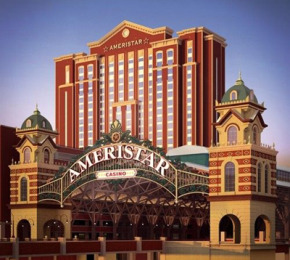
In addition, to avoid objections from antitrust regulators, as part of the arrangement, Boyd Gaming announced it will purchase for $575 million four Pinnacle casinos: Ameristar Kansas City and Ameristar St. Charles in Missouri; Belterra Casino Resort in Indiana; and Belterra Park in Ohio. Also, Boyd will sign a lease agreement with Gaming and Leisure Properties Inc. GLPI expects its total rent to increase by $46.1 million annually. Upon closing, Boyd will operate 28 properties in nine states. And one day later, Boyd Gaming announced it had agreed to purchase the Valley Forge casinos outside of Philadelphia.

Boyd Chief Executive Officer Keith Smith said Boyd will have acquired four high quality casinos in new markets at an attractive price with a potential for high return potential. He noted the purchase adds very little debt and eventually will allow Boyd to return more cash to shareholders.

Officials at Penn National, the leading U.S. regional gaming operator based in Wyomissing, Pennsylvania, said the purchase is expected to close in the second half of 2018. The deal would raise Penn National’s revenue stream by $2 billion and give it 41 properties across 20 jurisdictions in North America, excluding those acquired by Boyd, offering 53,500 slots, 1,300 table games and 8,300 hotel rooms in the U.S. The combined company will have 35,000 employees, up from 19,000, with annual revenue of about $5 billion, making it the third-largest domestic casino operator after MGM Resorts and Caesars, according to SunTrust brokerage.

Penn National Gaming Chief Executive Officer Timothy Wilmott said, “This was a very complex 4-party transaction and we took a look holistically at the deal and what we needed to handle regulatory approval at the state and federal level. By combining our highly complementary portfolios and similar operating philosophies, we will be able to leverage the strengths of both our companies and create an unparalleled experience for our regional gaming customers, while generating significant value for our shareholders and business partners. The combined company will benefit from enhanced scale, additional growth opportunities and best-in-class operations, creating a more efficient integrated gaming company.”

Wilmott added, “Going forward, we will have the financial and operational flexibility to further execute on our strategic objectives, while maintaining our track record of industry leading profit margins and generating significant cash flow to reduce leverage over time. We look forward to welcoming Pinnacle’s talented employees to our team and to further enhancing our status as North America’s leading regional gaming operator.”

Wilmott noted combining Penn National And Pinnacle loyalty programs will allow Penn National to more effectively drive play at its properties, particularly Tropicana Las Vegas and M Resorts.

In a call with analysts, Penn National Chief Financial Officer William Fair said the purchase of Pinnacle will enable the company to benefit from potential tax law changes, leading to additional potential acquisitions. The Pinnacle deal is expected to generate $100 million in annual cost savings within two years.

Penn National Senior Vice President for Public Affairs Eric Schippers stated, “We grew from a single racetrack back in 1972 to what is today the largest regional gaming operation in North America. We’re getting into new states like Colorado, Louisiana and Iowa, which opens up all kinds of new opportunities as we diversify our portfolio.”

Penn National will fund the purchase with cash from the Boyd sale, existing cash and new debt. Goldman Sachs and Bank of America Merrill Lynch have committed to new debt financing. J.P. Morgan served as he adviser to Pinnacle.

The purchase news comes one month after Las Vegas-based Caesars Entertainment announced it would buy Indianapolis-based Centaur Holdings LLC and its Hoosier Park and Indiana Grand casinos and race tracks in central Indiana for $1.7 billion in cash. The deal would give add to Caesars’ portfolio four of Indiana’s top five casinos in terms of gambling revenue. Caesars ready owns two Horseshoe-branded casinos in Indiana. The purchase is awaiting approval from the Indiana Gaming Commission and Indiana Horse Racing Commission.

In addition, earlier this year, Eldorado Resorts, which has a casino in Shreveport, bought Isle of Capri Casinos Inc. and its 14 casinos for $1.7 billion. Gaming and Leisure Properties bought Bally’s Casino Tunica and Resorts Casino Tunica in Robinsonville, Mississippi for $82.6 million.

And to add to its haul, Boyd Gaming announced that it had entered into a definitive agreement with Valley Forge Convention Center Partners, L.P., to acquire Valley Forge Casino Resort in King of Prussia, Pennsylvania, for total cash consideration of $280.5 million.

Located 20 miles west of downtown Philadelphia, Valley Forge will be Boyd Gaming’s first asset in Pennsylvania, the second-largest commercial gaming state in the nation.

The Valley Forge property is one of two Category 3 casinos in the state, which, under the original 2004 state gaming law were limited to 600 slot machines and 50 table games, and were required to be attached to a hotel. The property became more appealing as an acquisition target after the state’s new gaming law eliminated “membership” requirements that imposed an annual entry fee or required that money be spent elsewhere on a property prior to entering the casino. The law also allowed for increases in the slot inventory.

The gaming law offered to eliminate the restrictions for a fee, which Valley Forge paid immediately.

The purchase price represents an implied multiple of 7 times EBITDA, including expected cost synergies and incremental growth from the property’s impending slot floor expansion, and before any operational improvements. Boyd expects the acquisition to be free cash flow-positive and immediately accretive to earnings.

“The acquisition of Valley Forge Casino Resort is another excellent opportunity to further grow and diversify our nationwide portfolio,” said Keith Smith. “With this acquisition, we will expand into the second-largest gaming state in the country, establishing a presence in a densely populated, high-traffic area just west of Philadelphia.

“And thanks to Pennsylvania’s recent passage of gaming expansion legislation, there are new opportunities to drive incremental growth at Valley Forge through the expansion of the property’s slot capacity and the introduction of new forms of gaming.”

Valley Forge features a 40,000-square foot casino with 600 slot machines, 50 table games and nearly 500 hotel rooms. The property also has eight restaurants and bars, and more than 100,000 square feet of meeting, convention and exhibit space. The property is located just two miles north of King of Prussia Mall, one of the largest malls in the United States.

Following the passage of gaming expansion legislation in November, Valley Forge eliminated its customer admission fee, and plans to expand its gaming capacity with the addition of 250 slot machines in early 2018, both of which are expected to drive increased customer traffic. Additionally, the legislation allows the property to offer online gaming within the state of Pennsylvania, as well as sports betting if permitted under federal law in the future, as well as the opportunity to bid on one of the state’s proposed 10 mini-casinos.

Smith added, “With the successful completion of our acquisitions of Valley Forge and the Pinnacle assets, Boyd Gaming will gain direct access to four of the nation’s largest gaming markets—Philadelphia, St. Louis, Kansas City and Cincinnati—with a combined population of nearly 10 million adults. We will expand our nationwide presence, operating 29 properties across 10 states. We believe this expansion will help drive additional growth throughout our nationwide portfolio, as we market our destination properties to these new customers in the Midwest and Northeast.”

The Valley Forge transaction is expected to close in the third quarter of 2018, subject to customary closing conditions and the receipt of all required regulatory approvals. The transaction will be financed with incremental debt financing.

As a result of the company’s substantial free cash flow, Boyd Gaming expects to continue its program of returning capital to shareholders through quarterly dividend payments and share repurchases.

Morrison & Foerster LLP served as legal advisor to Boyd Gaming for the transaction. Moelis & Company LLC served as exclusive financial advisor to Boyd Gaming. Cozen O’Connor served as legal advisor to Valley Forge Convention Center Partners, L.P.

Plousis Named Head of New Jersey Commission

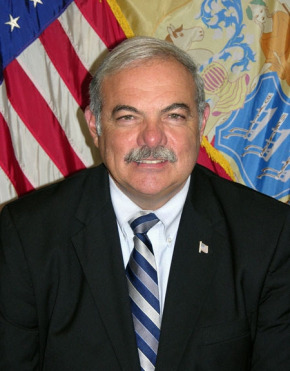
James T. Plousis has been approved by the New Jersey state Senate to become chairman of the state’s Casino Control Commission. Plousis replaces Matt Levinson, whose nomination by Governor Chris Christie was not acted upon by the state Senate. In November Christie withdrew the nomination and substituted Plousis. Levinson’s father, Atlantic City Executive Dennis Levinson, said the withdrawal of his son’s nomination was in retaliation for the county challenging the PILOT program, in which Atlantic City casinos pay a set annual rate in lieu of taxes, with the county not getting an equal share.

Plousis is a former sheriff in Cape May County, as well as a member of the state Parole Board for the past seven years. He promised to uphold the integrity of the gaming industry and work with surrounding communities to draw more tourists to the region. He will serve a five-year term for an agency that has been dramatically cut over the last five years as regulatory reform shifted the power to the state Division of Gaming Enforcement.

Wendy Hamilton to Receive Philly Chamber of Commerce Award

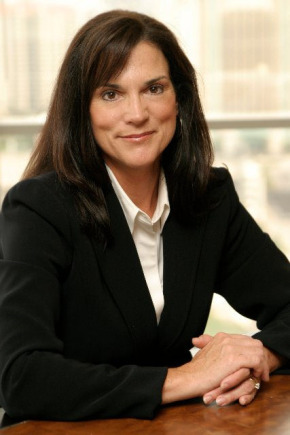
The Chamber of Commerce for Greater Philadelphia (the Chamber) is pleased to announce that Wendy Hamilton, general manager of SugarHouse Casino, will receive the 2018 Paradigm Award, the region’s most prestigious award for businesswomen.

“Wendy is one of our region’s most influential figures and represents our community of outstanding business leaders,” said Chamber President and CEO Rob Wonderling. “She has paved the way for women in business as a successful leader of SugarHouse Casino, both regionally and nationally.”

Hamilton oversees 1,500 employees and all day-to-day operations at SugarHouse, including the property’s gaming repertoire, seven food and beverage venues and the Event Center. In addition to managing all property amenities, Hamilton supervises all human resources, marketing and finance functions.

A Philadelphia native, Hamilton received a bachelor of science in biology from Duke University and a master of business administration in finance from Saint Joseph’s University. Outside of the workplace, she is an active community leader serving on the boards of the Chamber, the Police Athletic League of Philadelphia and Visit Philadelphia.

Hamilton was named a 2017 Emerging Icon by the Philadelphia Inquirer for her outstanding leadership and dedication to making positive community impacts. In 2015, she was honored with the PAL Award from the Police Athletic League and the Cornerstone Award from SmartCEO for corporate leadership.

In addition to these honors, Hamilton has earned numerous leadership awards honoring women, including the Woman Who Empowers Us Award from 95.7 BenFM, and the Women’s Achievement Award from KYW Newsradio.

Under Hamilton’s leadership, SugarHouse has long been the title sponsor of notable city events like the New Year’s Eve fireworks and the Mummers Parade, and has also contributed more than $8 million to local community organizations, including the Penn Treaty Special Services District.

“It’s an incredible honor to receive the Paradigm award,” said Hamilton. “Not only am I proud to join this exclusive club of Philadelphia business leaders, but this award reflects the hard work and dedication the SugarHouse Team Members put in each and every day.”

This award has been given annually since 1992, Ms. Hamilton being the 26th Paradigm honoree. She is joining a distinguished field of past recipients that includes Teresa Bryce Bazemore of Radian Guaranty, Inc.; Emily Bittenbender of Bittenbender Construction LP; Sue Schick of UnitedHealthcare; Mary Stengel Austen of Tierney; Renee Amoore of The Amoore Group; and Judith von Seldeneck of Diversified Search Companies.

Trump Taj Mahal Items Displayed

More than 82,000 people attended Art Basel Miami Beach, up 6 percent from 2017 according to organizers. Among the parties, networking and art, visitors were treated to “Excerpts From the Taj Mahal (The Truth Always Happens”), including discarded pieces from Donald Trump’s former Trump Taj Mahal Hotel and Casino in Atlantic City. The show was curated by artist Peter Tunney, owner of the Peter Tunney Experience gallery at Wynwood Walls, who has recycled Trump’s discards into pieces of art.

Among the works displayed were two golden marquees weighing about 1,000 pounds each, oil paintings, wallpaper torn from the walls, a life-size elephant sculpture, headboards, rugs, construction blueprints and a 30,000-piece chandelier. Some items were installed right on the beach.

Tunney added, “Here was the idea: Make the world’s largest golden-plastic carnival of crap with the most slot machines in the world, borrow a billion dollars in 1990 at 14 percent interest and think you’re gonna kill it. Probably not your greatest idea ever. The truth always happens. It ends up in the garbage can.” He said, “Every square inch of the place was laid out in these plans. And it never worked. It was just a slow grind to the dumpster and basically didn’t serve anybody in any way.”

The former Trump Taj Mahal, which Trump bought for nearly $1 billion, featured an ornate crown of onion domes, a pair of two-ton concrete elephant statues and 17 crystal chandeliers. A little more than a year after it opened in 1987, the Trump Taj Mahal filed for bankruptcy and closed on October 10, 2016.

Pennsylvania Schedules Mini-Casino Auctions

The Pennsylvania Gaming Control Board last week released the schedule for auctions to be held for licenses to operate the 10 Category 4 satellite casinos approved in the state’s new gaming law.

Current casino licensees get first crack at the licenses, which authorize a facility with a maximum of 750 slots and 30 table games, in a location that is not within 25 miles of any existing casino. The minimum bid for a license is $7.5 million.

The initial round of auctions will begin at 10 a.m. on January 10 at the gaming board’s public hearing room in Harrisburg. The second auction will be January 24, followed by two auctions each in February, March, April and May, with the final auction to be held May 16. (The complete schedule is available at the board’s website, gamingcontrolboard.pa.gov.) Licenses not awarded to current land-based casino licensees will be bid out to the general public.

Meanwhile, municipalities across the state are scrambling to meet the December 31 deadline to pass resolutions to ban the mini-casinos in their jurisdictions. As of press time, nearly 200 municipalities statewide had chosen to opt out of the program. The majority of municipalities on the opt-out list are in Eastern Pennsylvania, with Lancaster Chester Counties having the most, at 30 and 24, respectively.

(As December 31 is a Sunday, the actual opt-out deadline is Friday, December 29.)

“This auction process is entirely new in awarding casino licenses, so seeing 200 thus far is something that we’re processing, and obviously we’re going to see more passes,” Gaming Control Board spokesman Doug Harbach told TV station WHYY. “Even with this number of opt-outs, there certainly is a good bit of territory that these casinos could be located in.” There about 2,600 municipalities in Pennsylvania.

Among the more prominent municipalities opting out of the mini-casinos is the city of Philadelphia, where the city council last week voted the satellite facilities down in a preliminary vote. The lawmakers also voted to opt out of the provision of the new gaming law allowing slot machines at truck stops.

In other developments last week, the town of Gettysburg, predictably, voted to ban the satellite casinos, joining 22 other municipalities in Adams County, and the Erie County Council also gave the thumbs-down to mini-casinos.

Atlantic City Casino Revenue Up 4.6 Percent for November

Atlantic City saw a 4.6 percent increase in casino revenue for November bringing in $206.4 million according to figures released by the New Jersey Division of Gaming Enforcement.

That’s an increase over $197.3 million in November 2016 and was led by a 20 percent increase in online gaming revenue to $20.6 million over $17.2 million in 2016. Online gaming revenue has consistently topped $20 million a month for most of 2017.

The figures reflect the first month that revenue from the Trump Taj Mahal—which closed in October 2016—did not figure into the year-to-year comparison.

 “Despite the loss of Taj Mahal, the industry is poised to report the first calendar year increase in casino win since 2006,” said Christopher Glaum, deputy chief of the DGE in a press statement. “Including internet gaming win, total gaming win is on track to have its second consecutive calendar year improvement.”

Two of the city’s casinos reported revenue declines. Bally’s Atlantic was down 4.7 percent to $15.5 million and Harrah’s was down 7.6 percent to $28.4 million. The biggest gainer was Resorts which was up 18.6 percent to $14.9 million.

The Golden Nugget was up 15.2 percent to $23.6 million; Caesars was up 7.7 percent to $22.9 million; the Borgata was up 5.7 percent to $64.2 million; and the Tropicana was up 4.9 percent to $29.6 million, according to the Associated Press.

The Golden Nugget continues to lead Atlantic City’s online gambling market, winning nearly $6.2 million in November, an increase of nearly 63 percent over last year. The Borgata saw a 12 percent increase in online revenue to $4.2 million.

So far for 2017, total gambling revenue is $2.452 billion, up about 8 percent compared with the same period last year.

PENN’s Schippers: New PA Law ‘Money Grab’

Opt-out list up to 400

Eric Schippers, vice president of public affairs and government relations for Penn National Gaming, has been one of the most outspoken critics of Pennsylvania’s new gaming law, particularly the new satellite, or “mini” casinos created by the law, which he says will put his company at a competitive disadvantage.

But in an interview last week with Online Gaming Report, Schippers took aim at the larger gaming law.

“This was a money grab, plain and simple,” Schippers said. “The legislature decided that, rather than being fiscally responsible in cutting programs and spending, it would try to expand its way out of a budget mess. So they’ve done it in a way that will result in significant cannibalization. And the tax rate on online slots is just ridiculous and unprecedented.”

On the satellite casino provision, which authorizes casinos offering a maximum 750 slots ant 30 table games provided they are at least 25 miles from an existing casino, Schippers repeated his complaints that Penn will lose customers, since many of its customers drive to the company’s Hollywood Casino outside of Harrisburg from more than 25 miles away.

Schippers did not rule out Penn bidding on a satellite casino, if only to protect its market share for Hollywood Casino. Bidding begins on January 10 and extends through May the minimum bid is $7.5 million per license, with an additional $2.5 million for table games.

Schippers also slammed the new law’s taxation of online slot revenue at the same rates as brick-and-mortar casinos, 54 percent, noting that it costs more to market online slots than land-based slots.

“We know the tax rate on slot machines doesn’t make sense and will continue to be an advocate for a lower tax rate, but we haven’t ruled anything in or out,” Schippers said.

Meanwhile, the number of statewide municipalities passing resolutions to ban the satellite casinos in their jurisdictions has swelled to 400.

The City Council of Philadelphia, which already hosts a casino with a second set to begin construction, voted unanimously to ban satellite casinos within the city, and also voted to ban video gaming terminals, or VGTs, at truck stops. While the city currently hosts no facilities meeting the law’s requirements for a truck stop, council members told the Philadelphia Inquirer the ban is intended to prevent entrepreneurs from expanding current gas stations to meet the requirements and add the games.

“We sent a strong message,” Councilman Bobby Henon told the newspaper. “It is dangerous to even think about this type of gaming expansion into our neighborhoods. It’s a truck stop today, but it could be stop-and-gos and bars tomorrow. It’s like inviting a vampire into our home and getting bitten.

“A city with 26 percent poverty, 12 percent deep poverty, we cannot afford to take that kind of risk. It would destroy the social fabric of the citizenry.”

On the other side of the state, commissioners in Pittsburgh suburbs Shaler Township, McCandless Township, O’Hara Township and Aspinwall Borough voted to prohibit mini-casinos. And also in Western Pennsylvania, Hollidaysburg Borough Council members voted to opt out of the program. The borough is near the city of Altoona, which has often been named as a potential satellite casino site.

New Owner Could Reopen Revel Atlantic City Casino in May

In another indication that a Colorado-based group is purchasing Atlantic City’s closed Revel casino, Moody’s Investor Services issued a report on the finances of the purchase and plans to reopen the property in May, 2018.

There has been no official announcement of a sale and the current owner of the property—Florida developer Glenn Straub—has denied he is selling the building to the group. However, local media and now Moody’s have been able to trace the sale through various filings with state and regulatory agencies.

According to the Moody’s report, the Colorado-based group AC Ocean Walk LLC will pay $200 million for the property and invest an additional $175 million. The group is planning to reopen the property by May 2018.

In another report from the Associated Press, AC Ocean Walk has also applied for a New Jersey casino license, which includes making a $100,000 non-refundable application fee.

In October, AC Ocean Walk LLC and Polo North Country Club Inc., owned by Straub, filed a notice of settlement for the sale of the property according to the Press of Atlantic City. Straub, however, denied he is selling the property when contacted by the paper. The Press also noted that there is still no record of sale of the casino at the Atlantic County Clerk’s Office.

The Moody’s report is reportedly based on financial documents surrounding the proposed loans needed to finalize the purchase. Last month, the company signed a mortgage committee letter with Deutsche Bank, according to county records. No terms were released in the filing, the Press reported.

According to state business records cited by the Press, AC Ocean Walk LLC is managed by Colorado-based Ten RE ACNJ, run by Colorado-based businessman Bruce Deifik.

The company was formed in April 1990 to handle acquisition, development, asset management, property management, leasing and disposition of commercial properties under the ownership of Deifik and his investment partners.

According to the reports, AC Ocean Walk will operate 100 gaming tables, 2,000 slot machines, 1,399 hotel rooms, pools, a spa, nightclubs and 13 restaurant options at the reopened property as well as 55,000 square feet of retail space and a parking garage with more than 7,000 spaces.

“The property is expected to slowly capture its fair share of the market given the quality of the property, breadth of project offerings and a revamped operating strategy aligned with the demands of patrons in the market,” Moody’s report said.

Straub and Polo North bought the closed Revel out of bankruptcy court for $82 million in 2015. The property cost $2.4 billion to build.

Straub has been unable to negotiate New Jersey’s casino regulations—as well as local building regulations—and has missed several announced dates to reopen at least parts of the property.

If Revel should re-open, it will complement other developments to revitalize the resort’s northern Boardwalk, which was hit hard by the casino closings of the Trump Taj Mahal, Showboat casino and Revel. Resorts casino was the only property in the casino cluster that did not close.

However, the Showboat has reopened as a non-casino hotel and Hard Rock International has purchased the former Taj Mahal and expects to reopen the totally renovated property in the summer.

Part of Hard Rock’s plans were announced as the company wants to build a gas station at the property’s entrance at the corner of Pacific and Virginia avenues. The plans were filed with the New Jersey Casino Reinvestment Development Authority which oversees the city’s casino and tourist districts.

Rockstop Gas & Wash would include a convenience store, gas pumps and a car wash. In June, Hard Rock opened its first gas station in Northfield, Ohio, as part of its Hard Rock Rocksino, according to the Press.

“The gas station is just one of many exciting things to come,” said Liz Thomas, a spokeswoman for the developers. “We’re so pleased to partner with Hard Rock during this renaissance in Atlantic City that wouldn’t be happening without the cooperation and support of the state of New Jersey.”

Hard Rock investors Jack Morris and Joe Jingoli are spending about $500 million to renovate the Taj. The company expects the project to generate more than 1,000 construction jobs and 3,000 permanent jobs, the Press reported.

Atlantic County Says It Lost Under State Casino Tax Plan

A state-imposed payment in lieu of taxes plan for Atlantic City cost its home county about $5 million in taxes, Atlantic County officials say.

The county is challenging in court the tax plan for city casinos that was approved by the state legislature to help shore up Atlantic City’s finances and stop expensive tax appeals by casinos.

The county received about $100,000 more from the casinos in 2017 than it did in 2016, but officials said the program—which removed the casinos from tax rolls—lowered the entire Atlantic City tax bill.

The tax bill for all of Atlantic City, including the casinos, was $24.9 million in 2016 before the PILOT. In 2017 that same tax bill was $19.9 million.

According to the county and reported by the Press of Atlantic City, the loss of ratable value caused by removing the casinos from the tax base lowered the resort’s share of county taxes by more than could be corrected by only receiving a 10.4 percent share of the Pilot funds. While the casinos paid more, the city as a whole paid nearly $5 million less in 2017.

Representatives from the state Division of Consumer Affairs told the Press that the county is playing politics and maintain there was no need for a county tax increase this year.

“The county received more money under the casino PILOT payments this year than it would have received under ad valorem taxes,” Lisa Ryan, a spokeswoman for the DCA told the paper. “So, the county’s argument against the PILOT law is strictly political in nature and has no basis in reality.”

The county maintains that taking casinos out of the tax base under the PILOT legislation resulted in a loss of $3.2 billion in ratables or about 10 percent of the county’s tax base. The loss of that 10 percent affects every other municipality as the county equalizes property values as part of its process of setting one county tax rate for every municipality.

That means taxpayers outside of Atlantic City pay more.

“We received $7 million from non-casino taxpayers in Atlantic City, which is substantially less than in the past,” said Keith Szendrey, assistant to the Atlantic County tax administrator. “By taking the casinos out of the tax base, it decreased the value of Atlantic City. When the value of one town drops, the others have to make up for it.”

The county sued the state of New Jersey in the spring over the PILOT bill, claiming it is unconstitutional under state law. The case is pending a decision in Superior Court.

New Jersey Regulators Approves Hard Rock Management Agreement

Atlantic City’s new Hard Rock casino will operate under a management agreement within the Hard Rock organization between a company that owns the property and one that operates the casino.

The New Jersey Casino Control Commission has approved the agreement.

According to the Press of Atlantic City, under the terms of the agreement, HR Atlantic City, part of Hard Rock International, will serve as the casino operator for the property. The property is owned by Boardwalk 1000, which includes Hard Rock International and investors Jack Morris and Joe Jingoli.

State criteria require that the casino manager own at least 10 percent of the property and that each party holds a casino license. Both HR AC and Boardwalk 1000 have applied for casino licenses, the press reported.

Hard Rock and investors are spending about $500 million to renovate the casino, which was the former Trump Taj Mahal. The company expects the project to generate more than 1,000 construction jobs and 3,000 permanent jobs.

Hard Rock also announced it is launching a program for about 15 local youth to be trained for construction jobs at the site.

Hard Rock sponsored the program in partnership with local neighborhood group “Friends In Action” that helped identify promising candidates.

“This initiative doesn’t just prepare students for construction jobs in Atlantic City,” said Matt Harkness, president of the Hard Rock casino. “It prepares them for meaningful careers in the building trades.”

The students will learn construction math, and learn the basics of heating, ventilation and air conditioning; electrical work and job site safety, the Press reported.

In another Atlantic City note, a proposed skywalk connecting the former Chelsea hotel and Tropicana Atlantic City is expected to open in the spring.

City Council has approved an ordinance granting air rights for the connector. The project is expected to cost more than $5 million, according to the Press.

“It’s already under construction. We are really excited about this addition. It gives us 330 rooms that have a boutique hotel feel that gives you access to all of the variety that Tropicana has to offer,” Tony Rodio, president and CEO of Tropicana Entertainment Inc. told the paper.

New North Jersey Casino Referendum Not Likely in 2018

New Jersey State Senate President Stephen Sweeney has said that he doesn’t think supporters of expanding casinos in the state outside of Atlantic City will make a push for a new referendum in 2018 or 2019—covering his new term as Senate president.

“I don’t see it anytime soon, if ever,” he told the Associated Press.

Voters in 2016 overwhelmingly defeated a referendum to allow two casinos to be built in North Jersey. The referendum lacked specifics, but sites at the Meadowland and in Jersey City were considered the leading contenders. Nearly 80 percent of voters opposed the plan.

Under state law, supporters of the plan could put a new referendum before voters as early as 2018.

“I don’t see any way it comes back,” Sweeney told reporters. “It was crushed.”

New Jersey’s incoming Governor Phil Murphy has said he favors building casinos in Northern New Jersey, but referendums must originate in the legislature.

However, Jeff Gural, the owner of the Meadowlands Racetrack—a key site for a proposed casino—said he is prepared to wait five years or more before asking voters again.

“I don’t want them to put this on the ballot again until we know it’s going to win,” he told the AP. “If it loses again, it will never happen.”

Gural wants to wait New York state moves on plans to allow three casinos in the southern part of the state. That could take up to five years, he said.

“However long I have to wait, I’ll wait,” he said. “As soon as New York opens the three downstate casinos, the argument will no longer be about saving Atlantic City. New York and New Jersey will need revenue after this federal tax bill passes, and the one thing a Meadowlands casino would do is send $500 million a year to the state.”

Gural has partnered Hard Rock International on the Meadowlands casino project. Hard Rock is currently renovating the former Trump Taj Mahal in Atlantic City and plans to re-open it in the summer.

Gural also said any new referendum should not include aid for Atlantic City, which he said is “is doing fine on its own.”

That’s a marked change from the previous referendum, which included a provision that revenue from the new casinos would be targeted to aid the struggling resort. Opponents of the referendum argued that new competition would hurt Atlantic City’s remaining casinos.

However, profits are up at the city’s seven remaining casinos in 2017 and the market appears to have stabilized. Sweeney also noted that Atlantic City’s casino market has been recovering, however, that also means the need for more casinos in the state to help the resort has become less urgent, he said.

Atlantic City officials reacted favorably to Sweeney and Gural’s comments.

Frank Gilliam Jr., a Democrat who will take over as Atlantic City’s new mayor on Jan. 1, called the news “an early Christmas present.”

“That’s music to my ears,” he told the wire service. “As an incoming mayor, to know we won’t have to worry about having two sets of casinos at opposite ends of the state for at least five years gives me a greater opportunity to have a strong relationship with the casino industry.”

New Jersey’s Pallone Introduces PASPA Repeal

Dallas Cowboys’ Jones supports legal sports betting

As the gaming industry awaits the U.S. Supreme Court’s decision in Christie v. the National Collegiate Athletic Association, which could overturn the federal ban on sports betting, the U.S. House of Representatives could begin debate on a bill that would render that decision moot.

On December 4—as oral arguments were being given in Christie v. NCAA—U.S. Rep. Frank Pallone of New Jersey introduced the Gaming Accountability and Modernization Enhancement Act, or GAME Act, which would allow states to legalize sports betting inside their borders. If passed, the bill would repeal the Professional and Amateur Sports Protection Act (PASPA), the 1992 law at the heart of the state of New Jersey’s effort to pass its own law legalizing sports betting. PASPA was the basis of the major sports league’s lawsuit blocking New Jersey’ 2014 sports betting law.

New Jersey has argued before the high court that PASPA is an unconstitutional overreach of federal authority over the sates.

The GAME Act explicitly repeals PASPA, and asserts that anyone who wagers on sports in a state where sports betting is legal would not be subject to federal authority. It also provides for specific consumer protections that would be required within states where sports betting is legal. Daily fantasy sports—which didn’t exist when PASPA was passed—also is specifically authorized under the bill.

The bill also provides protections to promote responsible gaming, authorizing creation of a committee to research gambling addiction and providing that the national Centers for Disease Control establish a surveillance system for gambling addiction.

As Congress may or may not take up the sports betting issue (most expect lawmakers will not, at least for now), the Nevada delegation is cautioning colleagues to leave the federal handling tax currently charged to Nevada sports books out of any new legislation. Nevada Rep. Dina Titus last week sent a letter to congressional leaders advising that the 0.25 percent federal handling tax on sports wagers in the state—established under a 1951 law, it results in around $10 million a year going to federal coffers—simply emboldens illegal bookies, who are able to offer bettors a better deal as a result.

“In theory, the law is a noble one,” she wrote in the Dec. 12 letter. “In practice, the tax has sucked money out of Nevada without ensuring the state receives the benefits outlined by Congress.”

Longtime Las Vegas oddsmaker Vic Salerno further outlined the problem with the tax to CDC Gaming Reports.

“The imbalance caused by burdensome taxation and payments to all the entities seeking entitlements, or ‘slivers,’ will cause New Jersey sports book operators to move from the existing 11/10 relationship to betting odds that are 12/10 or even 13/10,” he wrote. “The probable result of such a decision to change the sports betting odds will embolden illegal bookmakers to market their business in a more aggressive manner, offering the customer a better deal at the old $11 rate. In this scenario, the black market will flourish, and the casinos will flounder under the crushing weight and open palms.”

Meanwhile, more support for legal sports betting came last week from none other than the National Football League, in the person of Dallas Cowboys owner Jerry Jones.

During his weekly radio spot on Dallas sports talk station 105.3 The Fan, Jones opined that his league’s steadfast opposition to legal sports betting as potentially damaging the integrity of the sport is misplaced.

“I don’t see that gaming compromises the integrity of the game,” Jones said The Supreme Court will likely rule on the New Jersey case this spring, and if New Jersey prevails, other states could move to allow sports gambling, which is estimated to be a $150 billion industry — and all but a small percentage of that are from legally placed bets.

If there was a negative outlook last week on the possibility of legal sports betting, it came from an op-ed by University of Iowa Professor Jonathan Yates. In an op-ed for the Des Moines Register, Yates wrote that SCOTUS justices could be influenced by an FBI investigation into a college basketball recruiting scandal.

In late September, the FBI went public with its investigation into corrupt college recruiting, arresting assistant coaches and others. Yates wrote that the case “could easily derail the efforts of New Jersey and other states to host betting on college games.

“FBI headquarters is an easy stroll from the Supreme Court,” Yates wrote. “Obviously, the FBI knew that the court would hear Christie before it started arresting coaches and others as the opening salvo. The major issue is why the FBI did not wait until after the court ruled on Christie. After all, the case has been going on for years; and there is, unfortunately, no danger of corruption in sports going away before the court renders its verdict early next year.”

If nothing else, the FBI case could give support to calls for an NCAA “carve-out” in state bills legalizing sports betting, in the event PASPA is repealed.

27th Annual Polar Bear Plunge

The Atlantic City Polar Bears will make their 27th annual plunge into the Atlantic Ocean in front of Resorts Casino Hotel at noon on New Year’s Day. This year’s plunge will benefit the Multiple Sclerosis Association of America, MSAA.  Monetary donations can be made by visiting atlanticcitypolarbearclub.com or by purchasing a T-shirt at the event.

The Polar Bears will ‘swim’ whether there is rain, sleet, snow or hail. To join them for the big New Year’s Day Plunge, come in a bathing suit (no wet suits allowed – that’s cheating). Everyone who jumps into the icy ocean will receive a Finisher’s Certificate.

Take the Plunge for the Multiple Sclerosis Association of America at the 27th Annual Atlantic City Polar Bear Plunge

WHEN: Monday, January 1, 2018
10:30 AM – Registration, live radio broadcast from 100.7 WZXL, and pre-party
12:00 PM – Plunge!
12:15 PM – After-party at Landshark Bar & Grill with JoJo and Scotty broadcasting live and food/drink specials

Soccer Comes to Atlantic City

Soccer is coming to the Shore and Tropicana Atlantic City is lending a hand.

The Atlantic City Football Club (ACFC) has joined the National Premier Soccer League (NPSL) as a new expansion team and is partnering with Tropicana casino to bring world class sporting events to the local community.

“Atlantic City is a tremendous market for soccer and we’re glad to have ACFC as part of the NPSL family,” said Joe Barone, NPSL chairman.

The ACFC is the first semi-pro soccer team to represent Atlantic City. The team will operate its program out of nearby Stockton University, which has a natural grass field and bleacher seating for over 2,000 people. The team will be part of the Keystone Conference and will face 9 other teams in their division. With approximately 26 players—mostly college athletes— the ACFC is looking to turn each home game into a community event.

“We want our games to be community events,” Nicholas Bilotta III, the co-owner and COO of the team, said at a recent press conference.

Bilotta emphasized the wider impact of the games, which will include free youth soccer clinics, a food truck festival, a farmer’s market and other music and art exhibits to turn each home match into a family-friendly experience. For the 2018 season, which begins in early May and runs into August if the team makes the playoffs, the club will play 10 to 14 games, with half of them on their home turf. The ACFC is also planning a shuttle service using local jitneys to ferry people the 15 miles from Atlantic City to Stockton.

“We believe the NPSL embodies a lot of what we want to bring to Atlantic City,” said Bilotta. “Successful teams like Detroit City FC, Kingston Stockade, New Orleans Jesters, Elm City Express, and many others offered a tremendous source of inspiration for us. The community focus, the exciting experience, and the player development were all very attractive factors in our decision.”

Tropicana Atlantic City has signed on as the premier corporate sponsor and was instrumental in the team’s creation. Tropicana General Manager Steve Callender has a personal connection to the sport, having been a soccer player and a coach.

“Soccer is the fastest growing sport in the country,” said Callender. “We are happy to bring more fun and excitement to the local community and our guests as a proud sponsor of the Atlantic City FC. “

Along with financial support, Tropicana will house a number of the athletes in their newly acquired Chelsea Tower, as well as assist players in getting local jobs. The casino is also looking for players to host interactive events with their customer base.

Callender said one of the reasons Tropicana was partnering with the team was because the ACFC was “up to speed” on their social media campaigns and it was a good way to enhance both the club and the casino’s brands.

Though no current games are scheduled to be played in Atlantic City, Bilotta said that is something the ACFC would like to do in the near future. The team would like to be part of any redevelopment plans at Bader Field, although right now it is too costly to renovate the closed Surf Stadium to make that a reality. The ACFC hope to showcase their youth soccer clinic with a tournament on the Atlantic City beaches in 2019.

The team has deals to broadcast home games on WOND Radio 1400-AM. Tickets to games will be priced at $11, with one dollar of each ticket sold going to charity.

Atlantic City Convention Center Chefs Join Forces to Prepare Christmas Dinner

Spectra by Comcast Spectacor is once again giving back to the Atlantic City community this holiday season. Spectra’s Executive Chef George Fisher, his staff, and a team of volunteers including chefs from the local casinos and members of the Professional Chefs Association of South Jersey will be assisting with the dinner preparations to serve to local community members in need including nearly 500 homeless at the Atlantic City Rescue Mission, 500 others at the Salvation Army located on Texas Avenue.  In addition, these ‘Chefs on a Mission’ will prepare meals for Sister Jean’s Kitchen and the Ronald McDonald House in Philadelphia.

For the past four years, Spectra’s Fisher has led the charge preparing Thanksgiving dinner at the Convention Center for the Atlantic City Rescue Mission in addition to the Salvation Army, Sister Jean’s Kitchen, and the Ronald McDonald House most recently.  This year, an overwhelming number of donations were received from local casinos, food vendors, and Spectra Food Services & Hospitality to prepare the Thanksgiving dinner; thus providing the group the opportunity to extend their charitable efforts to prepare the first annual Christmas Dinner at the Convention Center.

The cooking begins on Tuesday, December 19 and will run through Thursday, December 21. Meals will be delivered to each entity Friday, December 22.

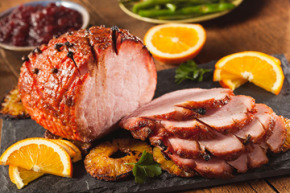
The team will prepare Tequila lime grilled Tuna with Mango Salsa, Glazed Smoked Ham, Chicken Pot Pie, Mashed Potatoes, Stuffing, Rice Pilaf, Vegetables, Dinner Rolls and Dessert.

“We are very excited to prepare a Christmas meal for the Atlantic City Rescue Mission, the Salvation Army, Sister Jean’s Kitchen, and the Ronald McDonald House in Philadelphia,” said Fisher. “Last year we had extra food donations from Rastelli Meats so we donated it to the AC Mission directly for them to prepare their Christmas dinner.

“This year the donations were such in abundance, we have enough food to prepare 1,800 meals for Christmas.  Viking Village in Barnegat Light donated 1500 lbs. of tuna. Today, we have chefs though out the city breaking them down and making tuna steaks. Rastelli Meats donated 700 lbs. of smoked hams. We will be slicing them on Tuesday. Spectra is donating 80 gallons of chicken pot pie, which will be made on Thursday. Golden Nugget donated 250 lbs. of Green beans and Tropicana donated mashed potatoes and stuffing. Minos and Classic Cakes donated the desserts while Valenti’s bakery donated dinner rolls.”

“Volunteers have been great for the Christmas dinner just like Thanksgiving. This holiday spirit keeps growing every year.  It is an honor to be a part of this great event working with all the great volunteers, chefs, casinos, and vendors to make all of this happen. A special thanks to everyone here at the Convention Center that supports this event.”

For those looking to prepare unique menu items for their own families and friends this holiday season, Chef Fisher has created ’12 Days of Recipes’ that are currently being featured on the Atlantic City Convention Center and Boardwalk Hall Facebook Pages.  On Wednesday, December 20, all 12 recipes culminate in a Recipe Book that can be downloaded from www.BoardwalkHall.com.

To support this initiative and other events throughout the year please visit the “AC Chefs on a Mission” Facebook page which has been created to help promote and generate awareness for donations and volunteers. Contributions can be made to the Atlantic City Rescue Mission online at www.ACRescueMission.org and food donations can be made to the Mission at 2009 Bacharach Blvd. in Atlantic City.