Archives: Articles

This is the example article

Atlantic City Casino Revenue Takes Big Hit in January

The weather can be a major factor in Atlantic City’s fortunes and a cold January marked by a major blizzard early in the month contributed to a 10 percent drop in casino revenue for January.

According to figures released by the New Jersey Division of Gaming Enforcement, the city’s seven casinos won $184.3 million in January, down 9.9 percent from January 2017.

The Golden Nugget was the only casino with a monthly revenue increase, up 1.7 percent from last year.

“What a difference a blizzard makes,” said James Plousis, chairman of the New Jersey Casino Control Commission in a press release. “When people are stuck in their homes by more than a foot of snow and temperatures are dipping into single digits, they don’t come to Atlantic City. So, it comes as no surprise that casino revenues were down last month.”

New Jersey and neighboring states were impacted by a major blizzard on January 4 that dumped as much as 2 feet of snow in many areas. There were also some stretches in the month where temperatures hovered in the single digits.

Despite the weather’s impact, analysts are still expecting a strong year for the city despite the January fall in revenue. Two new casinos—a Hard Rock casino and the re-opening of the former Revel casino as the Ocean resort—are scheduled for the summer.

According to an analysis by the Associated Press, Caesars Atlantic City had the largest monthly revenue decline, down 23 percent to $21.7 million; Harrah’s was down 16.3 percent to $23.5 million; Borgata was down 10.2 percent to $57.7 million; Bally’s was down 8.8 percent to $12.7 million; Resorts was down 6 percent to $11.6 million; and Tropicana was down 4.4 percent to $26.1 million.

The weather did not, however, negatively affect the resort’s online gaming numbers as online revenue was up 16.7 percent to about $22 million.

The Golden Nugget remained the leader in the market taking in $7.3 million in January, an about 53 percent from a year ago. The Golden Nugget’s numbers—which represent revenue for its own online brand as well as the Betfair and Sugarhouse casino brands—appear to be a record for a casino’s single-month online revenue.

‘Integrity Fee’ Becoming an Issue in Sports Betting Legalization

Silver: 1 percent fee would pay league for “intellectual property”

Major League Baseball last week joined the National Basketball Association’s lobbying effort to create sports betting regulations that include a 1 percent “integrity fee” on all wagers paid to the league sponsoring the games. However, NBA Commissioner Adam Silver may have thrown a monkey wrench into the leagues’ argument for the fee.

MLB lobbyists drafted a bill to be introduced in the Missouri legislature that would regulate sports betting should the federal ban on wagering be lifted through repeal of the federal ban imposed by the 1992 Professional and Amateur Sports Protection Act (PASPA)—either through congressional action or a ruling favoring the state of New Jersey in NCAA V. Christie, now before the U.S. Supreme Court. It is one of 20 state-level bills to legalize and regulate sports betting on the demise of the federal ban.

As the NBA promoted in arguments before the West Virginia legislature, MLB’s proposed bill would impose a 1 percent integrity fee—a tax on all wagers placed on each league’s games, payable to the league regardless of the results of a game. As the NBA previously described it, the fee would be used for increased technological and other safeguards to ensure the integrity of games and of the sports-betting operation in general.

However, just as the MLB was making its argument in Missouri, NBA Commissioner Adam Silver changed the argument for the fee in comments that make it look much more like a money grab than anything related to the integrity of the sports. In comments at an NBA All-Star Weekend press conference, Silver referred to the potential fee not as integrity insurance, but as a royalty to the league for wagers on its “intellectual property.”

“I would only say from the NBA’s standpoint we will spend this year roughly $7.5 billion creating this content, creating these games,” Silver said. “Those are total expenses for the season. So this notion that as the intellectual property creators that we should receive a 1 percent fee seems very fair to me.”

The revealing comments only stand to fuel the controversy already surrounding the proposed fee, which has been assailed by gaming lobbyists led by the American Gaming Association as unworkable. As the AGA has pointed out, legal Nevada sports books already pay a 0.25 federal excise tax on revenues, in addition to a 6.75 percent tax on gross gaming revenues—a GGR tax that is sure to be much higher as sports betting is approved by states seeking to close budget gaps.

Legal books end up with an average 3 percent profit margin, which means a 1 percent fee would prevent them from offering odds to compete with the illegal bookmaking that already accounts for the vast majority of sports wagering in the U.S. The AGA has taken the position that the integrity fee would doom legal sports betting before it begins.

Back in West Virginia, one of the sponsors of the sports betting legislation there spoke out against the proposed integrity fee. “I think the 1 percent integrity fee is an absolute joke,” said Rep. Shawn Fluharty, lead sponsor of West Virginia’s sports-betting bill, speaking to WVNews. “Nevada doesn’t even pay them. I can’t help but see the irony that MLB won’t let Pete Rose in the Hall of Fame because he bet on sports, yet now the league wants to make money on sports betting.”

Meanwhile, states where college sports reign are fighting against legal sports betting even beginning. In Mississippi, Rep. Roun McNeal has introduced a bill that would ban sports betting in the state, should the federal ban be overturned. “We don’t want to be caught with our pants down” if the federal ban is overturned, McNeal told NBC News.

A spokesperson for the NCAA—the lead plaintiff challenging New Jersey’s 2014 sports betting law before the U.S. Supreme Court—joined the Mississippi lawmaker in speaking out against any legal betting on college games. “The NCAA opposes all forms of legal and illegal sports wagering, which has the potential to undermine the integrity of sports contests and jeopardizes the welfare of student-athletes and the intercollegiate athletics community,” the NCAA posted on its website.

“There are some deep-seeded feelings that this is a particularly delicate situation in the college arena,” said Tom McMillen, president and CEO of the NCAA Division 1 Athletic Directors Association, in an interview with NBC. “These kids are on scholarship. Listen, we’ve seen point-shaving scandals before. We’re concerned.”

Any decisions on the bills, of course, will likely come after the Supreme Court issues its decision in the New Jersey appeal, which is expected this spring.


Rhode Island

In Rhode Island, Major League Baseball and the National Basketball Association have hired a lobbying firm to carry their message on sports betting. They seek legislation that would put them in control and obtain the profits from sports betting.

A decision lifting the ban by the U.S. Supreme Court would be needed first. Two months ago, Senate President Dominick Ruggiero introduced a bill that would allow the state’s two casinos, both owned by Twin River, to offer sports betting if the 1992 Professional and Amateur Sports Protection Act (PAPSA) is ruled unconstitutional.

NBA and MLB have hired former state Senator Stephen Alves, who once chaired the Senate Finance Committee, for $5,000.

Mike Bass, a spokesman for the NBA, issued this statement, “We’ve dedicated years to carefully studying the issue of legalized sports betting and we agree the time has come to give sports fans a safe and legal way to bet on sports while protecting the integrity of our games. We look forward to working with the governor and the legislature on a framework that includes appropriate safeguards.”

The NBA seeks a 1 percent “integrity fee,” which works out to be a fifth of what a sportsbook operator charges, and to be able to control data used by sportsbooks to set wagers and odds.


West Virginia

The West Virginia Senate, in a 25-9 vote, approved SB 415, allowing betting on professional and collegiate sports contests. The bill now will go to the House of Delegates. State Senate Finance Chairman Craig Blair said, “The bill gives casinos one more tool to be able to provide entertainment. All our bordering states are considering this as well, so we need to remain competitive.”

Under SB 415, the West Virginia Lottery Commission would have the authority to regulate sports betting in the state, including authorizing online and mobile betting. Operators of the state’s five gaming facilities — four horseracing tracks and the Greenbrier– could offer legal sports betting on both collegiate and pro events to those 21 and older, after paying up to $100,000 for a 5-year sports betting operator license. They would pay 10 percent tax on gross betting revenue. Senators estimated legalized, regulated sports betting could generate $5 million in revenue in its first year.

State Senator Michael Romano, who voted against the bill, expressed concern that sports betting could lead to problems among the state’s 1.8 million residents; 18 percent live below the poverty line. He said, “When you make betting no harder than going down to your corner pizza place or beer joint and gamble, and you make it no harder than holding your phone in your hand to gamble, you’re taking a big risk with our citizens. Do we want to be a part of that?”

Romano added he did not believe the state would get an adequate return on its investment. But state Senator Mike Woelfel said $5 million in first-year revenue is probably a conservative estimate. “Based on my research, the five million is about half of what it’s going to be the first year. I think it’s going to be closer to nine or ten. And I’ll bet on it.”

Woelfel added he attended a Super Bowl party where people used their phones to place wagers. “They didn’t have to go to a track. So this is going on and this is a fact of modern society. And it’s a stream of potential tax revenue that I don’t think we can ignore. I see us capturing activity that’s already going on in our state and capturing tax revenue that’s going to be spent for good reasons.” He also pointed out sports betting would create new jobs.


Illinois

In Illinois, state Senator and former National Football League linebacker Napoleon Harris III recently introduced SB 3432, which would legalize sports betting in Illinois in anticipation of the U.S. Supreme Court lifting the federal ban. Harris’ Sports Wagering Act includes an integrity fee provision.

With about 30 lobbyists in 16 states, the MLB and NBA are actively promoting the integrity fee, as well as for provisions allowing the leagues to control the data a sportsbook uses and the right to limit wagers sportsbooks can offer.

Harris, who was drafted by the Oakland Raiders in the first round in 2002, spent seven years in the NFL, playing for four teams. He won the 15th district seat and took office in 2013. The district covers parts of Cook and Will counties south of Chicago.

Harris’ bill would allow in-person and mobile gaming at licensed facilities or through licensed operators. Operators would pay an initial fee of $10,000 and a 12.5 percent tax on gross sports wagering revenue—compared to the 6.75 percent rate in Nevada and the 10 percent rate proposed by SB 415 in West Virginia.

The NBA and MLB claim they need the integrity fee to protect consumers and monitor activities such as preventing players from betting on their own sports. The leagues said casinos must be required to share real-time betting information, report abnormal betting and cooperate with league investigations. Proposed sports betting legislation in West Virginia and Iowa does not include the fee. In Illinois, only MLB—not the NBA—has a registered lobbyist, according to Bloomberg Law.

Other bills working their way through the Illinois legislature include:

• The Sports Betting Consumer Protection Act, sponsored by state Senator Steve Stadelman, would require a state agency to oversee rules, regulations and licensing of sports wagering. The bill, assigned to the Gaming Committee, does not include an integrity fee.

• SB 3125, sponsored by state Senator William E. Brady, would allow the Illinois Racing Board to adopt rules authorizing sports wagering by organization licensees and inter-track wagering location licensees.

• Also named the Sports Wagering Act, HB 5186, sponsored by state Rep. Tim Butler, would create the Division of Sports Wagering within the Illinois Gaming Board to issue licenses. The bill, moved to the House Rules Committee, does not include the integrity fee or other restrictions imposed by the leagues. It also states, “A tax of 30 percent is imposed on the adjusted gross receipts of sports wagering and shall be collected by the Board and deposited into the Capital Projects Fund.”


Iowa

And in Iowa, the House Government Committee in a 16-7 vote recently passed HSB 592 which would legalize sports betting. The next step for the measure is the Ways and Means Committee, then the full House floor. The bill does not include the 1 percent integrity fee proposed by the NBA and MLB. Observers said, Iowa lawmakers reviewed the talking points and memos circulating around the U.S. from NBA and MLB lobbyists but felt the fee was not appropriate for their state.

The bill, sponsored by state Rep. Ken Rizer, would require a tax of 5 percent on the first $1 million of adjusted gross receipts, then 10 percent on the next $2 million. Rizer noted that’s slightly higher than the 6.75 percent tax on Nevada sportsbooks in Nevada, significantly lower than the 12.5 percent tax being considered in Illinois and lower than the 10 percent tax proposed in West Virginia. The bill would require operators to pay a $25,000 licensing fee.

Iowa Racing and Gaming Commission Chief Executive Officer Wes Ehrecke stated, “I think a lot of people enjoy sports, watching sports and the opportunity to bet on it. Especially in a legalized environment, and set the standards by our Racing and Gaming Commission and high levels of integrity, assure that you’re going to be paid and to have it here, I believe will be a positive.”

New Jersey Appoints Special Atlantic City Counsel

Governor Phil Murphy and the Department of Community Affairs have appointed Jim Johnson, a former U.S. Treasury undersecretary, as special counsel within the state’s oversight of Atlantic City specifically to provide “recommendations for the process of returning the city to local control.”

Johnson will work with the state attorney general and review ongoing litigation in Atlantic City, according to the announcement. He will be paid $1 per year for his work.

The announcement does not affect the state-appointed position of Jeffrey Chiesa, a former U.S. senator, who has been overseeing the city’s finances since November 2016. Chiesa’s firm has charged several million dollars to oversee the city government.

New Governor Means New Attitude on Atlantic City Takeover

New Jersey is still in control of Atlantic City’s finances, but city officials are welcoming a new approach on the issues from the state’s new Governor.

Governor Phil Murphy—who succeeded former Governor Chris Christie last month—has already met with Atlantic City’s Mayor Frank Gilliam to discuss the city’s status.

According to the Press of Atlantic City, Gilliam said following his meeting with Murphy that the governor assured him Atlantic City was a “high priority.”

However, no timetable has been set for the new governor to decide on whether to continue or end the state’s control of the city. The state took over the city’s finances in November 2016. During his campaign, Murphy said he wanted to end the takeover.

Meanwhile, representatives of the Governor’s Office met with the union that represents city’s fire department. John Varallo Jr., president of the union, told the Press the meeting was productive.

“The approach that they are using feels different than in the past,” Varallo said. “It’s a more positive approach. They are taking time to consider everything. There is no political agenda.”

In January, Superior Court Judge Julio Mendez ordered both the state and union to attend two-court mandated mediation sessions to try to resolve issues regarding salary cuts and a possible 10 to 12 more layoffs. The sessions have since been put on hold as the new administration reviews the case, the Press reported.

Poll Finds New Jersey Voters Still Overwhelmingly Against North Jersey Casinos

A new poll finds New Jersey voters are still soundly against the building of new casinos in the northern part of the state more than a year and half after overwhelmingly defeating a referendum on the plan in 2016.

According to a scientific poll paid for by Trenton’s Bad Bet—a non-profit organization which was initially formed to oppose the referendum—voters overwhelmingly support three key ideas to raise revenue in the state proposed by new Governor Phil Murphy. They include the legalization and taxation of marijuana, a millionaire’s tax, and closing corporate tax loopholes.

However, only 34 percent of voters approve of raising revenue by opening casinos outside of Atlantic City.

“By nearly a two to one margin voters prefer a millionaire’s tax or legalized marijuana over expanding casinos in North Jersey,” a message on the poll reads. “In fact, voters believe Gov. Murphy should heed the will of the people on casino expansion.”

Murphy supported the 2016 referendum. Though the referendum did not name specific sites, new casinos proposed for the Meadowlands Racetrack and another in Jersey City were considered the leading contenders.

During his campaign, Murphy said he still supports the plan, but said it would be up to the state legislature to bring back a referendum. However, New Jersey Senate President Stephen Sweeney has said such a move was unlikely since the referendum was defeated by a nearly 4 to 1 margin.

Atlantic City area legislators, however, fear that the idea could gain momentum again.

 “Voters are still tired of Trenton’s broken promises and believe North Jersey casinos are a bad bet,” the polling message reads. “Even after hearing the best arguments for North Jersey casino expansion, voters believe casinos could harm existing Atlantic City casinos and that Trenton politicians will fail to keep their promises.”

Hard Rock Atlantic City Emphasizes Community

Hard Rock Atlantic City—which is scheduled to open this summer on Atlantic City’s Boardwalk—has been making an effort to engage the resort’s largely minority community through hiring programs and other forms of outreach.

The city’s predominantly black community has long felt excluded from the economic benefits casino gambling has brought to the region.

Hard Rock officials, however, have begun holding community meetings—scheduled to be held every three months—for residents in the area around the casino and implemented programs to hire more locals for casino jobs.

The casino has also announced programs to train local youth children for careers in the industry, set aside free or discounted concert tickets for city residents and hire people who graduate from a drug offense court diversion and treatment program.

More than 100 people attended an initial community meeting with the company’s top management and discovered they will receive free coffee for the rest of the year once the casino opens, according to a report by the Associated Press.

“It’s extremely important to dispel the perception of the casinos living on their own island, isolated from the community,” said Jim Allen, CEO of Hard Rock International. “We want to reach out to our neighbors and make sure they know who we are. We believe it’s important to make sure there’s a true partnership.”

For many Atlantic City residents, there has been a perception that casinos in the resort care only about their own bottom lines and not in benefitting the community as a whole.

 “There was a time when the casino industry, our primary industry, was isolated from the community,” said Bishop James Washington, of the New Shiloh Baptist Church, which hosted the meeting with Hard Rock. “Each one was concerned about their individual business interest. The interest of the community may have been secondary. What Hard Rock i s doing is fantastic. They’re looking to invest in our community and opening their property and giving employment to people.”

Hard Rock, its local investors and a community group have started a program to train young city residents for careers in the construction trades. Hard Rock is also in the process of hiring a needed 3,000 employees for its opening, which is now slated for June.

Allen is also proposing a citywide program in which executives from each Atlantic City casino would staff and fund a program to train high school students for careers in their city’s main industry.

“We want to create a curriculum to teach your children the business, just like I learned it,” Allen told residents. “We have to teach people the business from the ground up. There’s a way to clean a room and deal cards and greet a guest.

“Give us a chance,” Allen asked residents. “We have to make money. There can’t be animosity if the casino makes money. But we have to give back.”

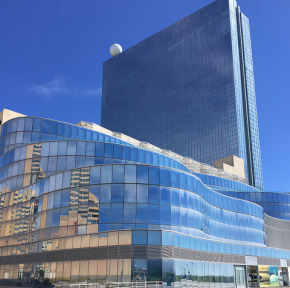
The meeting also underscores how the Hard Rock, along with the neighboring Ocean Resort—scheduled to also open this summer on the site of the former Revel casino—will have to complete hiring in time for their announced openings. The Ocean Resort also needs to hire about 3,000 people.

The New Jersey Division of Gaming Enforcement has been working with both properties.

“The division is working closely with both operators as they go through the regulatory process in preparation for the expected casino openings this year,” David Rebuck, director of the DGE said in a press statement. “This includes actively working on licensing matters as well as ensuring operational systems such as floor layouts, gaming equipment, security, surveillance and staffing meet our regulatory standards.”

New Jersey Encouraging Early Licensing for Sports Betting

New Jersey has been waiting to offer sports betting for years and as a decision on the state’s latest sports betting law from the U.S. Supreme Court draws near officials are advising sports-betting firms to move quickly to apply for licensing.

The court is expected to rule on the state’s challenge to a federal sports betting ban in the next few months, and could rule on the issue in early March. New Jersey wants to allow sports betting at its Atlantic City casinos and also at the state’s racetracks.

Ahead of the decision, the New Jersey Division of Gaming Enforcement is encouraging businesses and individuals interested in sports betting to apply for a casino service industry license.

“The Division of Gaming Enforcement recognizes it needs to be prepared to investigate and license businesses and individuals seeking to enter the New Jersey gaming market should the Supreme Court issue a favorable decision authorizing the state to legalize and regulate sports wagering,” David Rebuck, director of the Division of Gaming Enforcement, said in a statement to ESPN. “Under existing law, any business or individual anticipating entering into a commercial transaction with a casino must be licensed or approved by the division. Many companies have inquired as to the State’s licensing requirements in the event they are able to engage in sports wagering operations with our casino industry. The division has encouraged these companies to commence the application process.”

New Jersey has been trying to overturn the Professional and Amateur Sports Protection Act—which bans sports betting in all but four states—for more than five years. This is actually the second time the state has challenged the ban after a first attempt was blocked in federal court. The Supreme Court did not hear the state’s first challenge.

In its second attempt, the state sought to bypass the federal restriction by allowing self-regulated sports betting at casinos and racetracks. Federal courts blocked that bill as well, but the Supreme Court then decided to hear the case. The Court could back New Jersey’s second sports betting law, but could also choose to strike down PASPA completely.

Still, the current state law being reviewed by the Court allows sports betting without licensing, but did restrict that sports betting to already licensed casinos and racetracks. That would mean that businesses working with casinos would need casino service licensing.

Operators already licensed in New Jersey are also preparing for the ruling. Monmouth Park racetrack has partnered with UK bookmaker William Hill and plans add a Las Vegas-style sportsbook on the grounds. The Borgata casino in Atlantic City has also named a location for a sportsbook in its casino.

Showboat Atlantic City Owner Seeks Casino Eligibility

Philadelphia developer Bart Blatstein re-opened the closed Showboat casino as a non-casino hotel in 2016 saying he had no plans to operate a casino at the site.

But now, Blatstein has petitioned the New Jersey Division of Gaming Enforcement for a statement of compliance, a determination that he controls a property that could be used as a casino. The division will also investigate if Blatstein meets the criteria for casino licensing. Seeking the statement is the first step in applying for a casino license.

Blatstein told the local Press of Atlantic City that he is just “starting the process” for licensing, but is keeping his options open for the property.

The Showboat is part of a former four-casino cluster on Atlantic City’s Boardwalk that saw three casinos close. This summer, however, two of the three casinos are scheduled to re-open with casino gaming. The former Trump Taj Mahal is scheduled to re-open as a Hard Rock casino and the former Revel casino is set to re-open as Ocean Resort. Resorts casino also sits in the cluster, though that casino has never closed.

The re-openings would leave the Showboat as a non-casino hotel in the midst of three casinos. Blatstein did acknowledge that the area is seeing an economic rebirth.

“There is over a billion dollars worth of investment in that part of the town, that should not be ignored,” Blatstein told the paper.

Jersey Shore Wine Festival at Tropicana

Sample over 150 of New Jersey’s finest wines at the Jersey Shore Wine Festival at Tropicana Casino in Atlantic City.

Taking place over 2 days, Feb. 24-25, 2018. the festival features artisan crafters, hand-painted glass and live entertainment. Ticket will include tasting glass, wine seminars, cheese & fruit plate. Purchase by the bottle or case! Must be 21 or older.

Saturday February 24 – Sunday February 25, 2018
Saturday 2:00 PM – 8:00 PM
Sunday 12:00 PM – 5:00 PM
 
Tickets: $25 In Advance $30 At the Door
Tropicana Box Office or Ticketmaster.com
Phone: 609-340-4000 or visit: https://tropicana.net

Men R’ Cooking’

2018 South Jersey’s Men R’ Cookin

Boy & Girls Club of Atlantic City proudly presents its 17th annual South Jersey’s Men R’ Cookin’ event on Febraury 21, 2018. Host Sponsor is Caesars Entertainment, offering their newest state-of-the-art Conference Center located at Harrah’s Atlantic City.

South Jersey’s Men R’ Cookin has become one of the region’s favorite signature events drawing participants and guests throughout Atlantic County and beyond. This meaningful event uses the symbolic theme of men as cooks to raise funds to support the Boys & Girls Club, which is Atlantic County’s largest youth development organization. Our Club has been serving the children of Atlantic City for over 43 years with over 1,100 members attending our after-school programs and summer camp. South Jersey’s Men R’ Cookin is a relaxed evening of great food and entertainment. With a wide array of appetizers, soups, salads, entrees, desserts, & beverages of every kind. This event has something for everyone!!

Tickets in advance are $60/ea and at the door $70/ea.

For details visit: http://menrcookin.org

Mayor Gilliam’s Inaugural Gala

Atlantic City will celebrate its new Mayor, Frank Gilliam, with the 2018 Inaugural Gala to be held on March 2 at Resorts Casino and Hotel.

Proceeds from the event will benefit Connecting The Dots Inc., a non-profit organization that underwrites a variety of programs throughout the Atlantic City community, including college tours for high school seniors, SAT/ACT boot camps, college seminars, food and clothing drives and tutoring programs for children ages 7 through 15 years, to name just a few.

VIP Reception – 6-7 PM
Lavish hors d’oeuvres & cocktails

Inaugural Ball – 7-11 PM
Sit-down dinner, black tie. Entertainment and dancing.

After Party – 11 PM
Golden Nugget – Haven Nightclub

For information or RSVP contact: MayorGilliamGala2018@gmail.com


Atlantic City Mayor and Lawmakers Fact Find on Legal Pot in Nevada

Atlantic City is exploring how legalized marijuana could help Atlantic City’s economy as the city’s mayor and state lawmakers take a fact-finding trip to Nevada.

Many in the state are expecting the state Legislature and new Governor Phil Murphy to fulfill promises to legalize marijuana for adults. So, the New Jersey Cannabis Industry Association and Nevada lawmakers coordinated the 2-1/2-day trip for government officials and business leaders.

Atlantic City Mayor Frank Gilliam told NJ.com that he believes legalization could “jumpstart” the city’s economy.

“The key for me is to get more knowledge on how they rolled out the process and understand the pros and cons,” Gilliam said. “They have gaming like we do, so I want to figure out how those things coexist, and figure out to make it work for Atlantic City.”

Gilliam—who said he is paying for the trip out of his own pocket—told the website he’s informally spoken to the governor about allowing Atlantic City to permit sales and consumption under a temporary or pilot program.

“He was very open to it, although he did not give any commitment,” Gilliam said.

According to a letter from Nevada Senate Majority Leader Aaron Ford and Assembly Speaker Jason Frierson, the itinerary would include a visit to a cannabis production facility, a retail shop, and meetings with state and Las Vegas officials to discuss “developing regulations and a taxation scheme, business investment, licensing, public safety considerations and marijuana-related criminal justice reforms.

Several New Jersey lawmakers and business leaders are also scheduled to attend.

Hard Rock Announces Online, Social Gaming Partners

Hard Rock International will partner with Gaming Innovation Group to power its new online casino offering in New Jersey.

Hard Rock is already seeking online licensing in the Garden State as it prepares to open its new Hard Rock casino this summer in Atlantic City. New Jersey requires online casino sites to be partnered with resort casinos.

GIG also announced it has applied to New Jersey regulators for an online service provider license. It’s the first move into the U.S. market for the Malta-based company.

GIG also recently announced that it has signed partnership with digital sports content and media group Perform to strengthen its sports book offerings. The move positions GIG to handle an online Hard Rock sportsbook should New Jersey prevail in the U.S. Supreme Court in its current challenge of a federal sports betting ban.

“Hard Rock has an ambitious plan to become a global leader in the international online gaming space,” said Kresimir Spajic, SPV, online gaming at Hard Rock. “We are confident that, together with GiG, we can disrupt the market, through product innovation and unique user experience.”

GIG will provide Hard Rock with its digital consumer portal as well as the back-end platform to manage the operations. The online casino will be developed by GIG’s design and development team in collaboration with Hard Rock, the companies said in a press release. The online product is expected to launch later this year.

“We are excited to be part of Hard Rock International’s inspiring and innovative plans to become a global leader in the international online gaming space,” says Robin Reed, CEO, GiG. “The online casino will be a stand-out product with the sizzle of the Hard Rock music, entertainment and lifestyle brand.”

Hard Rock International is spending $500 million in Atlantic City as it refurbishes the former Trump Taj Mahal casino on the resort’s Boardwalk.

In another move, Hard Rock has announced an agreement to utilize the Greentube Pro marketing platform in order to power all of the social casino offerings attached to its Hard Rock and Seminole Gaming-branded properties throughout North America.

Hard Rock said the deal is designed to have all of its social online casino products “powered by customized frameworks” that have been “developed specifically” for each venues’ “distinctive business strategies and requirements.”

“Continual customer engagement is important to casino operators who can maximize marketing opportunities as part of the social games,” read a separate statement from Spajic. “Our goal is to deliver one-of-a-kind immersive experiences and we believe this game will allow us to unite the online and offline experiences that the Hard Rock and Seminole Casino brands offer.”

On the side of social gaming, Hard Rock International and Seminole Gaming, both owned by the Seminole Tribe of Florida, have debuted online social games featuring Hard Rock- and Seminole Casino-branded versions of social casino games developed as part of a contract with Greentube Internet Entertainment Solutions, a subsidiary of Novomatic Group.

The games will run on the Greentube Pro platform, and will be available in both desktop and mobile versions.

“Continual customer engagement is important to casino operators who can maximize marketing opportunities as part of the social games,” said Spajic. “We are constantly looking for opportunities to increase and deepen brand affiliation among Hard Rock’s millions of loyal fans around the world, and we are excited to bring them these new games, which will also allow us to unite the online and offline experiences that the Hard Rock brand offers.”

Free games include social versions of popular slot machines and table games, such as blackjack and roulette. Players also have the option of linking their social games play to their Hard Rock Wild Card rewards account or linking to other Hard Rock properties’ rewards programs to earn more points for merchandise or casino dining rewards and other prizes and gifts.

Players link to their favorite Seminole Casinos in Hollywood, Coconut Creek, Immokalee or Brighton. They can play as guests or complete an easy registration process.

“We partnered with Seminole Gaming and Hard Rock International because of their desire to provide one-of-a-kind experiences for each of their properties,” said Thomas Graf, CEO of Greentube. “This project has brought Greentube Pro to the next level in meeting the demands of a very competitive market, with new functions and features that enhance and maintain our leadership position. We will work on it well into 2018.”

Spajic echoed the potential for the new enterprise to rapidly improve and expand, as more games and entertainment options are added.

“Social games have a huge future potential for casino companies like Hard Rock International and Seminole Gaming, and the launch is only just the beginning of many more games to come,” Spajic said.

Steve Wynn Steps Down

Wynn Resorts investors are taking heart in the appointment of Matthew Maddox, the company’s president and one of its longest-serving executives, as CEO, replacing disgraced Chairman and Chief Executive Steve Wynn, who resigned as chairman and CEO amid allegations that he’d been sexually harassing and coercing female employees for years.

The shares (Nasdaq: WYNN) soared more than 9 percent in the hours after the board of directors gave Maddox the job last Tuesday.

CFRA analyst Tuna Amobi reiterated a “buy” on the stock, saying that while the departure of the “visionary” Wynn “could leave an irreplaceable void,” it will also remove an overhang that had resulted in the loss of more than $3 billion from the company’s market value after dozens of people came forward in a January 26 story in The Wall Street Journal to tell of their victimization by the casino mogul, among them a former Wynn Las Vegas manicurist who was secretly paid $7.5 million in hush money.

Wynn has denied the allegations, calling them “preposterous” and blaming them on the machinations of ex-wife Elaine Wynn, a former Wynn director with whom he’s embroiled in a post-divorce court battle over their respective shareholdings in the company.

Investigations into the charges have been launched in his home state of Nevada, in Macau, where the company derives 60 percent of its revenues, and Massachusetts, where its license to open a $2 billion resort near Boston next year, a project that suddenly looked to be in jeopardy.

“In the last couple of weeks, I have found myself the focus of an avalanche of negative publicity,” the 76-year-old billionaire said in a statement released the day Maddox’s appointment was announced. “I have reached the conclusion I cannot continue to be effective in my current roles.”

Wynn had previously resigned as finance chairman of the Republican National Committee.

His departure is expected to take some pressure off the board, which could face liability in the event of a barrage of shareholder lawsuits—the first of which was filed last week—and individual executives, if it was found they were aware of sexual misconduct on Wynn’s part and did nothing about it.

In the manicurist’s case, she did inform her supervisor, she said, who in turn told the Journal she filed a “detailed” written report to the hotel’s human resources department. There was never any follow-up, she said.

The $7.5 million settlement she received has come under particular scrutiny. It was funneled through a limited liability company created with the aid of Wynn’s outside counsel and kept separate from Wynn Resorts, according to the Journal, citing sources that include court filings in the Wynn v. Wynn case. The money was paid out of Wynn’s pocket, lawyers representing the gaming magnate in the case have said.


Massachusetts Mess

Sources tell GGB News that regulators in Massachusetts, who have the power to revoke the company’s license there if they determine Wynn isn’t a “suitable” operator, were the determining factor in his resignation. The settlement itself wasn’t the issue, it was an apparent attempt to conceal it that was a “critical element” of their review.

Karen Wells, who directs the Investigations and Enforcement Bureau at the state’s Gambling Commission, said neither Wynn nor the company disclosed the payment before the commission granted Wynn a license in September 2014.

The issue could impact the board of directors, as well as senior executives like Maddox and Kim Sinatra, Wynn Resort general counsel. They will have to convince the Massachusetts board that either they had no knowledge of the settlement or were not required to report it as company “litigation” required under the license application.

Of all the potential ramifications of Wynn’s resignation on the Massachusetts gaming scene, the most calamitous is that it might leave his “half built” $2.4 billion Wynn Boston Harbor unfinished, putting thousands of workers into limbo.

The investigators by the Massachusetts Gaming Commission to review the 15-year license that has allowed Wynn to build what the state says is the largest private project in the history of the Bay State. It is employing 4,000 construction works and will employ 4,000 permanent workers when it opens in Everett, a town that sits across the Mystic River from Boston.

U.S. Rep. Michael Capuano speculated about the impact of Wynn’s departure on Boston Herald Radio.

“If they pull the license, it’ll be a big question and they’ll have to make a determination, what to do with a building that’s half-built and what to do with all the people that are working there,” he said. “I know that’ll be a factor in the decision-making too, the state is not blind to that aspect of it.”

He added that he feared that the town, which is part of his congressional district, might have “an empty building for the next 10 years while regulators figure out what to do.”

Despite Wynn’s exit, construction on the Wynn Boston Harbor remains on schedule to open in about 18 months.

Commission Chairman Stephen Crosby went out of his way to reassure construction workers that their jobs were safe—for now.

“For the time being, everybody who’s got jobs in Everett should go about their business and feel fine. This is not the first time there have been allegations of misconduct against major players in the casino business,” said the chairman. “We will resolve this one way or another. I can’t predict what the outcome will be, but for now these folks should feel fine doing their jobs.”

But he added, “Now is a critical moment to find out whether the board conducts itself with appropriate best practices and lives up to its fiduciary obligations.”

In a report to the commission Executive Director Edward Bedrosian that his investigators are “aggressively” conducting the investigation of the $7.5 million settlement Wynn did not disclose when it was bidding for the license in 2013. Bedrosian said he was also interested in finding out how much influence the former CEO will continue to have in the company he founded.

Wells added, “We will be looking at how the company, from the board on down, handles the allegations.” Noting that at no time did the casino developer disclose the settlement before the license was granted in September 2014, Wells said, “This was a private agreement and steps were taken to keep it from the public domain.” She added that “intense review” was warranted by the reports.

Wynn Resorts counters that such information wasn’t requested as part of the application process. “It was a personal settlement and was not a matter of litigation.”

Meanwhile the casino developer who lost out to Wynn Resorts, Mohegan Sun, is demanding that the license be withdrawn.

Attorneys for Mohegan Sun went to Suffolk Superior Court last week to ask that the license awarded to Wynn be revoked. This was the latest maneuver in a lawsuit the tribe has pursued ever since Wynn won the license. The tribe’s lawsuit asserts that the commission was unfairly biased in favor of Wynn, that “the deck was stacked from the start.” The motion argues, “The entire licensing proceeding was infected with bias toward Wynn, thus the Court must vacate the entire process, and order MGC to begin the process anew.”

The commission, which is the defendant in the case, countered that it followed the procedure set out by the law. “That the commission’s licensing decisions were somehow ‘shot through with bias’ towards Wynn is pure fiction,” said the commission’s brief.

The motion filed by the Mohegans also asserts that the commission removed the company it contracted to investigate Wynn Resorts and conduct the suitability check—Spectrum Gaming, at Wynn’s request.

The 2011 gaming expansion act that authorized three casino resorts and one slots parlor also requires the MGM to take into account the “integrity, honesty, good character and reputation of the applicant” when awarding licenses and requires that licensees “shall have a continuing duty to maintain their integrity and financial stability.”

Spectrum Gaming was removed after a Wynn attorney sent an email asking that Spectrum be removed, claiming that it had a conflict of interest. Spectrum also played a major role in producing a report on Caesars Entertainment that caused that company to withdraw its license application in Massachusetts.

However, the commission asserts that it didn’t remove Spectrum because Wynn asked it to, but because Spectrum had previously worked for Wynn. The commission then hired the law firm of Michael & Carroll to do the vetting.

Clyde Barrow, a professor at the University of Texas, who is frequently consulted on the New England gaming scene, told the Boston Herald that the tribe might be able to use the $7.5 million settlement to its advantage in the lawsuit.

“I would assume that could eventually play in to it,” he said. “I suspect what they might be able to do is tack this on as an example of a failure to conduct a thorough investigation.”

The $7.5 million first came to light when it was mentioned in a lawsuit filed by Wynn’s ex-wife, Elaine, who sought to end restrictions on her ability to sell Wynn stock. Apparently this mention caused Journal reporters to dig deeper. Wynn paid off the claim from personal resources, not company money.

The road has never been an easy one for Wynn Boston Harbor. As soon as it won the license it was subjected to several lawsuits, including a protracted battle by the mayor of Boston which stretched out for many months—as well as the continuing lawsuit from Mohegan Sun, which has never accepted that the bidding process was conducted legitimately.

The company expects the mega casino to generate $252 million in gross gaming revenue each year by 2020, which will be the first full year of operation. To put that in perspective, that would represent about 9 percent of the company’s worldwide holdings. It has already spent $1.13 billion on the project.

The Bay State could also be rocked financially if the project dies on the vine. The state was projecting that it would make $150 million in taxes from the Wynn in 2020.

This is largely uncharted territory. No one knows precisely what would happen if Wynn’s license were to be revoked, leaving an unfinished casino.

Last week Massachusetts Governor Charlie Baker weighed in on the issue, calling the allegations against the casino mogul “appalling and disgraceful,” on a Boston radio program. He said that if the allegations turned out to be true that the casino company wouldn’t meet the state’s “suitability standard.” “The allegations are serious, they should be taken seriously,” he said, although he admitted that the commission operates independently of the governor.

Many politicians, mainly Republican, who have taken donations from Wynn, are returning them. The Wall Street Journal has reported that the Republican Governors Association has promised to return $100,000 it received from Wynn, and cancelled a meeting it planned to hold at Wynn Las Vegas next year. The RGA has also donated a total of $2.2 million to Baker’s reelection campaign.


Cotai Control

In Macau, on the other hand, J.P. Morgan analyst D.S. Kim said Wynn’s resignation will have “surprisingly limited” implications, although he agreed that it removes the risk that the company will have its license pulled. He reiterated Hong Kong-traded Wynn Macau as a “buy” with a price target of HK$31, 24 percent above last week’s trading levels.

Amobi concurred. “Over time, we see investors’ focus reverting to healthy fundamentals in Macau/China, where WYNN derives the bulk of its operating cash flow.”

UBS analysts said that even if regulators were to find Wynn personally unsuitable to hold a gaming license, they would typically seek a solution that would not hurt other shareholders. Wynn’s own articles of incorporation include a provision that shares controlled by a person deemed unsuitable can be redeemed by the company at a value no higher than the closing price of the day before a redemption notice, and can be paid by promissory note.

The prominence of the Wynn brand, with the giant signature atop every resort, helped the casino magnate win a gaming concession in Macau in 2002. Wynn Resorts now operates two casino resorts in the world’s No. 1 gaming destination: Wynn Macau, which opened in 2006, and Wynn Palace, which opened in the Cotai district in August 2016.

He’s been successful in the jurisdiction. According to UBS analysts, Wynn Macau claims 17 percent of the market, though it has just 10 percent of the gaming tables. With the opening of Wynn Palace, the company generated $683 million in operating profit from its Macau operations in 2017, more than twice the $285.7 million it raked in during 2016, the Nikkei Asian Review reported.

But in just two years, Macau’s Big 6 gaming concessionaires—Wynn, MGM, Sands China, SJM Holdings, Galaxy and Melco—will see their licenses start to expire, in a process that will continue through 2022. On January 22, just days before the Wall Street Journal published itsfirst report on the allegations, Wynn seemed certain he would again be blessed by the government.

“We’ve been given reason to have confidence that our businesses will continue after the initial concession expiration dates,” he said.

That may be true. Credit Suisse analysts doubt the turmoil around Wynn will have much impact on his Asian business. “The gaming concession was granted by the Macau government to Wynn Resorts Macau S.A., not Steve Wynn himself personally. As such, his departure will not affect the gaming license,” wrote Credit Suisse analysts Kenneth Fong and Lok Kan Chan in a research note. An unnamed Hong Kong-based gaming analyst told the Review, “It would be ridiculous for the Macau government to take away the license because of the conduct of one individual.”

JP Morgan analyst DS Kim wrote that Wynn’s exit “actually removes the potential risk related to a Macau gaming license as the ‘suitability’ test only applies to the directors or shareholders with 5 percent or above.” The note said Wynn himself does not hold a direct stake in Wynn Macau.

“We don’t want to downplay Wynn’s importance to the group’s strategic decision and vision, but we see limited impact on Wynn Macau’s fundamentals,” Kim wrote. “We don’t expect negative impact on its patronage, as Wynn Macau doesn’t have MICE or corporate events exposure to begin with (unlike Wynn Resorts), while gambling patrons are unlikely to be affected by such reputational issues.”

But David Katz and Khoa Ngo of Jefferies took a different position, saying in a note, “Mr. Wynn’s value to the company is unarguably profound as its chief visionary and diplomat. As such, we do not believe the company can grow at the same trajectory nor can it maintain its cutting-edge position.”

And the Sanford Bernstein team wrote, “The overhang of both Steve Wynn’s holdings in Wynn Resorts (12 percent of the shares) and Elaine Wynn’s (9 percent) will concern some investors. The speculation surrounding whether Wynn Resorts will survive on its own without Steve Wynn’s leadership or whether the company could be acquired will certainly grow. At this time, though, we cannot discuss potential outcomes.”

Also in light of the scandal, Wynn Resorts may have a tougher go winning an integrated resort license in Japan, which legalized casino gaming in December 2016 and continues to hammer out its regulatory structure.


Management Changes

Boone Wayson, a member of the Wynn Resorts’ board and before that Mirage Resorts, will become its non-executive chairman. Hong Kong businessman Allan Zeman, a director of Wynn Macau, will become non-executive chairman of Wynn Macau. Maurice Wooden, the president of Wynn Las Vegas, will join the Wynn Macau board.

Wayson called Wynn “an industry giant.”

Wynn issued a statement in support of his successor, Matt Maddox. “With Matt, Wynn Resorts is in good hands,” he said. “He and his team are well positioned to carry on the plans and vision for the company I created.”

Prior to joining Wynn, Maddox was employed by Bank of America and Caesars Entertainment. Masslive.com reported that he joined Wynn Resorts in 2002 as vice president of investor relations and treasurer and helped develop Wynn’s presence in Macau.

According to a 2013 report from the Massachusetts Gaming Commission,Maddox has been described by his references as having a Type-A personality with a tremendous work ethic. One of his references indicated that he earned his position within the Wynn organization with much hard work and dedication. He is considered by his references to be very intelligent with an even-keeled personality, unquestionable integrity and honesty.”

Brokerage Sanford C. Bernstein gave Maddox a thumbs-up. “Maddox has a good grasp of Macau operations and frequently visits the operations on the ground there. Further, he has been one of the closest executives to Steve Wynn and will likely try to maintain his vision and attention to hospitality and customer experience.”

However, the brokerage added, “The shoes of Steve Wynn will not be easy to fill. Even with Maddox at the helm, Wynn will likely become a somewhat different operation, but time will tell.”

Though only 42 Maddox’s tenure with Wynn Resorts stretches back 15 years to its founding days, and he rose through the ranks to become chief financial officer in Macau and then president of the parent company in 2013.

An Arkansas native, he studied finance at Southern Methodist University and worked as an investment banker before joining Park Place Entertainment, the predecessor of Caesars Entertainment.


His employment agreement signed last year called for a base annual salary of $1.5 million and a grant of 200,000 shares of restricted stock worth $33 million based on last Tuesday’s closing price of $163.22.

“There is not a more trusted confidant than Maddox inside that company. He knows every inch of Wynn Resorts,” a Wall Street analyst said, speaking on condition of anonymity.

A former Wynn employee agreed, saying Maddox and Sinatra, the company’s general counsel, are the executives closest to Wynn.

Elsewhere, though, the allegations continue to reverberate negatively against the billionaire.

The University of Pennsylvania said it is stripping his name from a campus plaza he donated $7.5 million to build and revoking an honorary degree he received in 2006. It’s the first time in a century the school is revoking such a degree. The last time was in 1918 when the school withdrew degrees from German Kaiser Wilhelm II and the country’s U.S. ambassador at the time, Johann Heinrich von Bernstorf.

Penn also is removing Wynn’s name from a scholarship fund established through a $2 million donation he made in 2008.

“The nature, severity, and extent of these allegations, and the patterns of abusive behavior they describe, involve acts and conduct that are inimical to the core values of our University,” Penn President Amy Gutmann and Board Chairman David L. Cohen wrote in a note to the staff and student body.

Wynn is a graduate of the school’s Wharton School of Business and a former trustee of the university.

Also last week, the University of Iowa announced it was removing the name Stephen A. Wynn from its Institute for Vision Research.

“It is incongruous with the university’s values to maintain the Wynn name on our program and building,” President Bruce Harreld said in a statement.

The school named the institute after Wynn, who suffers from a degenerative eye disease, committed $25 million toward research to cure hereditary blindness. He has donated $20 million to date, the school said.

New Atlantic City Casinos Plan to Join New Jersey Online Gambling Market

When the Hard Rock casino—formerly the Taj Mahal—and Ocean Resort—formerly Revel Atlantic City—re-open this summer on the Atlantic City Boardwalk, they will move to join New Jersey’s online gaming market.

Owners of both casinos have applied for online gambling licenses with New Jersey regulators. The state requires online sites to partner with Atlantic City casinos. The casinos can offer their own branded sites or partner with other operators. Currently five Atlantic City casinos are partnered with 23 online gambling websites.

Officials for the state Division of Gaming Enforcement confirmed to the Associated Press that both companies have applied for the licensing.

The UK gambling technology company GAN recently said in its annual report that has signed a multi-year agreement with AC Ocean Walk LLC, the owners of Ocean Resort to provide an online gaming platform. The company expects an online site to go live in the second half of 2018, according to the AP.

GAN is already licensed and operating in New Jersey. GAN currently powers Betfair NJ’s software. Several other U.S. casino sites, including the Borgata casino in Atlantic City, also use the company’s services.

The report also said GAN will offer sports betting under the agreement if the U.S. Supreme Court rules in favor of New Jersey’s challenge to a federal sports betting ban.

Further, the company said it expects to offer online gambling in Pennsylvania when online gaming begins there. The company’s software is used at Parx Casino’s social gaming site.

Hard Rock International has not released any details of its online plans.

Online gambling brought in $245 million in New Jersey for 2017, up nearly 25 percent over the previous year. Online revenue now represents about 9 percent of casino revenue for Atlantic City, according to the AP.

In another story, Hard Rock has begun hiring ahead of its planned summer opening. The company began by holding a two-day career fair that focused on rehiring former Taj Mahal employees. The casino invited about 1,600 former Taj employees to the event and about 1,400 attended on the first day of the job fair, according to the AP.

However, despite the closing of five city casinos since 2014, labor experts are warning that Hard Rock might have trouble filling the about 3,000 open positions at the casino. Ocean Resort is also expected to need about 3,000 employees.

Though the city lost about 10,000 jobs due to the casino closings, many of those workers have left the area—some to take jobs at new casinos such as MGM National Harbor in Maryland. Other workers have also found new employment in different fields.

“Believe it or not, it’s going to be very difficult to fill those jobs,” Bob McDevitt, president of Unite Here Local 54, the city’s largest casino union told the Press of Atlantic City. “This is the tightest job market that I have seen. A lot of people pulled up their stakes and left. Also, young people are not staying around here. They don’t see a ton of opportunity here.”

It’s estimated that the city’s existing casinos already have about 1,000 unfilled positions available, the Press reported.

Wine Tasting Art Show

Come out to the 10th Anniversary At the Shore Wine Tasting Art Show. Proceeds will benefit Local Hospitality Students from Stockton, Atlantic Cape. Here’s everything you need to know about this exciting community event.

When: Wednesday February 7, 2018
Time: 5:00 PM – 8:00 PM

Where: The Noyes Arts Garage of Stockton University
Fairmount and Mississippi ave
Atlantic City, NJ

Free Parking Wave Parking Garage

Scholarship Fund Raiser – 50 Students have received over $64,500 in Scholarships in 9 years.

Ticket Price: $25 in Advance $30 at the Door

Wine Tasting • Art Show • Appetizers • Live Music • Raffles

20 + Local and Regional Artists

Tickets:katz@atlantic.edu  (609) 576-1676 or online at eventbrite.com

FAQs

Are there ID requirements or an age limit to enter the event?

21 years of age and up

What are my transport / parking options getting to the event?

Free Parking at the Wave Parking Facility at the Noyes Museum Arts Garage 

Where can I contact the organizer with any questions?

katz@atlantic.edu  (609) 576-1676

Is my registration / ticket transferrable?

Yes, anyone may use your ticket 

Do I have to bring my printed ticket to the event?

Please bring your printed ticket to the registration booth inside the main door the night of the event!

Atlantic City Fashion Week

Founded in 2011, Atlantic City Fashion Week is an event that rivals the likes of fashion week NYC, Paris and Milan. Twice a year thousands descend on America’s playground to take part in a high fashion event that includes fashion shows, seminars, celebrity appearances, retail events and industry parties.

This year’s Fashion Week will take place February 14-17 at the Showboat Hotel on the Atlantic City Boardwalk. ACFW is presented in part by fashionSTYLE Magazine and KingBee Media. ACFW is a multi-day showcase of Ready to Wear and Couture Fashion. It also includes a vendor exhibition, and pre-networking events for VIP guest.

For show information and tickets visit: www.atlanticcityfashionweek.com

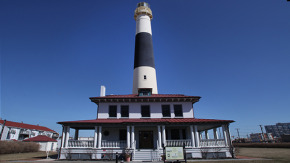
Group Vow Renewal Valentine’s Day Absecon Lighthouse

Absecon Lighthouse is hosting its annual “Evening of Romance & Renewal” on Valentine’s Day, Wednesday, February 14th.  Couples are invited to take part in a group Vow Renewal ceremony by a non-denominational minister in the Keeper’s Cottage at 6pm, followed by a champagne toast of congratulations and romantic dancing to the beautiful sounds of classic songs and standards, performed by vocalist Lisa Camp and her keyboardist.  

What better way to set the mood for a romantic dinner out in Atlantic City afterward?  Plus, couples have a chance to win a future overnight stay and dinner at the Golden Nugget, Atlantic City.  A donation minimum of $40 per couple includes the ceremony, tower climb, live music & dancing, and champagne toast, but couples are asked to “give from the heart,” as this is a fundraising event.  Doors open at 5:30pm – the event concludes at 7:00pm.  You are invited to make a reservation by calling the lighthouse at 609-449-1360

DeLIGHTful Date days:  Saturday & Sunday, FEBRUARY 10 & 11:  YOU AND YOUR DATE CLIMB FOR THE PRICE OF ONE! 

Absecon Lighthouse is a state-owned historic property administered by the non-profit Inlet Public/Private Association. Located at 31 So. Rhode Island Avenue in Atlantic City, it is open to visitors Thursday through Monday from 11 a.m. to 4 p.m. Absecon Lighthouse received a general operating support grant from the New Jersey Historical Commission, a division of the Department of State. For more information about Absecon Lighthouse and its programs call (609) 449-1360 or visit us on the web at www.abseconlighthouse.org.

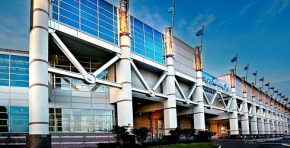
Atlantic City Convention Center and Boardwalk Hall to Host Nearly 100,000 Visitors in February

The month of February will be buzzing with activity as the Atlantic City Convention Center and Boardwalk Hall welcome more than 100,000 attendees during several consumer shows throughout the month.

This Saturday, February 3, Easyriders Bike Show Tour will return to the Atlantic City Convention Center for its second year in Atlantic City. Easyriders is the most anticipated custom motorcycle show circuit of its kind in the country, uniquely offering local “backyard” builders a forum to compete and show their works of artistry with some of the biggest names in the custom motorcycle world.

On the Boardwalk this weekend, Spirit Unlimited, Battle at the Boardwalk will take over Boardwalk Hall with over 275 teams competing for the U.S. Finals Qualifier.

In the following weeks, the Atlantic City Convention Center will welcome the Atlantic City Classic Car Show, February 9-11, the Atlantic City RV and Camping Show, February 16-18, U.S. Futsal Northeast Championship, February 16-18, and the Progressive Atlantic City Boat Show, starting February 28 and concluding March 4.

Atlantic City businesses are expected to greatly benefit from the activity at both venues. The combined estimated economic impact is expected to reach more than $20 million with more than 7,450 hotel room nights contracted over the course of the month.

“Local businesses, restaurants and residents will be able to witness the impact these venues have on our local economy in the month of February,” said Spectra’s Dean Dennis, General Manager of the Atlantic City Convention Center. He continues, “It should be a great month for Atlantic City.”   

For additional event information, please visit: www.meetac.com.

Mike Tyson: Undisputed Truth: Round 2

Mike Tyson, presents the reinvention of his one-man show Undisputed Truth Round 2. This one man show features the world’s most illustrious heavyweight boxing champion Mike Tyson. The sports icon returns to the stage with real life untold stories, focusing on the ups and downs of his tumultuous and ultimately triumphant, post-boxing life.

Tickets start at $59 – $79.
Visit: https://www.theborgata.com/shows/events/all-events