Archives: Articles

This is the example article

New Virtual Reality Experience Expands Meet AC’s 2018 Marketing Strategies

Meeting planners, brands, and prospective visitors can now experience everything Atlantic City’s convention scene has to offer from the comfort of their chairs, thanks to a new virtual reality (VR) experience created through Meet AC’s partnership with YouVisit.
 
The YouVisit experience will ultimately assist the Meet AC sales team to meet their yearly room night goals, while focusing on bookings at the Atlantic City Convention Center, newly opened properties and re-branded products. The YouVisit experience will offer meeting planners a clearer, more immersive view of Atlantic City as they virtually experience the Convention Center and surrounding destinations using this engaging and effective technology.
 
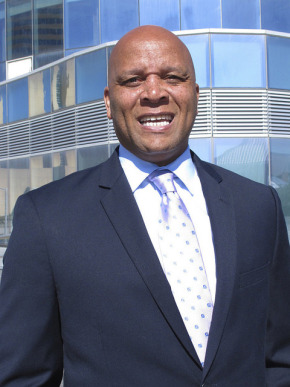
“We are thrilled to partner with YouVisit and make full use of their advanced virtual reality technology. Meeting planners will have the opportunity to not only virtually experience the Atlantic City Convention Center from any device, but will also be able to experience Atlantic City’s iconic sites throughout the experience,” said Jim Wood, president and CEO of Meet AC. “Meeting planners have evolved a new outlook when it comes to site selection, and this platform of virtual interaction will make their decision easier.”
 
YouVisit creates virtual experiences for businesses and institutions around the world that can be viewed from multiple platforms, including leading virtual reality headsets, mobile devices, and web browsers. YouVisit’s virtual experiences are designed to replicate and enhance real-life experiences through rich media, including professional photos, videos, 360-degree panoramas and much more.
 
“With a picturesque seaside location and an award-winning convention center, Atlantic City is one of the premiere meeting and events destinations in the world. It was a true pleasure for our team to bring all the sights and sounds to life in live 360° and VR,” said Gordon Meyer, director of marketing of YouVisit. “Event planners’ choice of Atlantic City will be made even easier now that they can explore it for themselves in 360° without ever having to leave the office.”
 
In addition, another component of Meet AC’s interactive floorplans is an App that can be found in the Apple iTunes Store or Google Play Store titled Meet AC. The viewer will experience a custom virtual reality app of our interactive experience at the Atlantic City Convention Center, Boardwalk Hall and surrounding area.
 
View the “Meet Atlantic City Experience” at: www.youvisit.com/tour/meetac. For more information regarding Meet AC, please visit, www.meetac.com.

It’s Only Just Begun: Atlantic City Revel Casino Finally Sold

The sale of the former Revel casino in Atlantic City to Colorado developer Bruce Deifik has finally been announced after months of denials that the sale was imminent.

Deifik announced the sale for $200 million from Florida Developer Glenn Straub, who had a stormy tenure as the property’s owner since purchasing it for $82 million out of bankruptcy court in 2015.

Straub has denied the sale was in the works for months despite a clear regulatory paper trail that it was underway. The announced sale is officially to AC Ocean Walk, a group led by Deifik through his company Integrated Properties Inc.

Moody’s Investors Service issued a research note late last year that outlined the group’s plans to spend $175 million to refurbish the property. The note was tied to Deifik’s plan borrow some $255 million to put toward acquisition and renovation costs

Deifik in a press statement said he hopes to re-open the property this summer, which would be about the same time that Hard Rock International plans to re-open the former Trump Taj Mahal casino. The two casinos—along with Resorts—would essentially restore the casino cluster at the north end of the city’s Boardwalk which saw three casino closings since 2014. The closed Showboat casino has already been re-opened as a non-casino hotel.

Revel—which was renamed Ten by Straub—will be renamed again as the Ocean Resort Casino, Deifik said, calling the purchase “a dream come true.”

“We are incredibly excited that we were able to take advantage of the opportunity to acquire this tremendous property at a time when Atlantic City is seeing great economic strides,” Deifik said in a press statement. “Now the city has a number of exciting new projects with our property and the Hard Rock, as well as Stockton University’s new campus and the expansion of the medical center.”

“The former Revel property opened at a time when Atlantic City was still in economic recovery, and operationally it just did not cater to the customer base for this destination,” the statement added.

While not confirmed by any of the press releases or media contacts, GGB News has learned that Mark Juliano, a seasoned Atlantic City casino executive, has been president of the property since the summer, directing its revival and redesign inside. Juliano has previously been leader of the Trump and Caesars properties in Atlantic City, is a former president of Caesars Palace in Las Vegas and an executive with Las Vegas Sands in Singapore at Marina Bay Sands. Most recently, he was president of Sands Bethlehem in Pennsylvania.

Still, many analysts are worried that the opening of two major casinos will upset the city’s casino market, which stabilized in 2017 after seeing five casinos close starting in 2014. The city’s casino market has performed well with seven casinos, but two more could stretch the resort’s player base and reduce profitability across the board.

Others, however, feel the city has been making strides in attracting new customers by broadening its entertainment options and should be able to absorb the new properties. The success of the two new properties could be contingent on what non-casino amenities they bring to the resort and whether they can generate repeat visits.

“It is our mission and vision to fully serve the customer base of Atlantic City. In that regard, we are working to bring back some of the restaurants that were successful at the property and we have worked diligently to create some specialized new venues including a top Asian noodle bar and a high-end players club. Our investment in this property will make certain there is something for everyone at the Ocean,” Deifik said.

The group also plans to offer a sports book facility at the property if New Jersey wins its U.S. Supreme Court case to legalize sports betting. That case is awaiting a ruling by the Court.

“Atlantic City is coming back with a vengeance, and with the groundwork for the legalization of sports betting, we foresee a great opportunity to bring a state-of-the-art sports book to a city, which caters to a large and diverse sports market,” Deifik said.

Deifik said the casino will employ 2,500 to 3,000 people and will increase its room count to 1,399 (several hotels floors remained unopened and unfinished during the previous operations). The gaming floor will offer 100 table games and 2,200 slot machines. The re-opening of about 1,400 hotel rooms and the site’s about 6,500 parking spaces was also touted as a positive for the resort by some analysts.

The Ocean Resort Casino will also maintain 165,000 square feet in meeting and convention space, as well as the 5,700-seat concert hall with space for potential future expansion.

According to the Associated Press, Deifik is president and CEO of Integrated Properties Inc., which owns 103 commercial properties in five states, including the Hyatt Grand Champions Resort in Palm Springs, California, and several office and retail centers in the Denver and Phoenix areas.

Deifik is also co-founder of Las Vegas-based Fifth Street Gaming LLC, operator of properties including the Downtown Grand Las Vegas, formerly the Lady Luck Hotel & Casino, which is owned by development giant CIM Group, based in Los Angeles.

Revel cost $2.4 billion to build and opened in 2012, but lasted only two years and went through two bankruptcies. Straub purchased the property out of bankruptcy court for $82 million. While a bargain, Straub has been paying to keep the property heated and up to city’s building codes—including buying the site’s separate power plant for $30 million.

Straub also announced several dates for re-opening at least parts of the property, but found himself battling state regulatory agencies and never met one of the announced opening dates.

The most notable dispute was his contention that he did not need full casino licensing in the state since he planned to lease the casino portion of the property. The state Casino Control Commission ruled otherwise and Straub has been battling the ruling in court.

Straub released a statement through his Polo North Country Club Inc. saying that he bought Revel “to keep and not to sell” after the sale was announced, but blamed New Jersey’s regulatory climate for frustrating his plans to spend hundreds of millions of dollars to help redevelop Atlantic City.

Straub said he retains more than 60 Atlantic City properties, with which he plans to “be a spark for catalyzing positive economic movement in Atlantic City.”

Meanwhile, city officials took the sale as another positive sign that the resort is turning its fortunes around.

“It’s like having Christmas in January,” new Atlantic City Mayor Frank Gilliam said. “This is a sign to the market that Atlantic City is well on her way back the prominence that she once had.”

Wing Wars in Atlantic City

Wing Wars return to the Golden Nugget Atlantic City, Saturday January 26, 2018, from 1:00 pm – 4:00 pm.

Eighteen South Jersey eateries, bars and restaurants will compete for the ultimate wing supremacy at Atlantic City Weekly’s Wing Wars II Noon to 4 p.m. Saturday, Jan. 27, and all-you-can-eat wing extravaganza, presented by 103.7 WMGM Rocks.

Tickets for the 1 to 4 p.m. session are just $25, and admission includes unlimited wings and dipping sauces from all 18 restaurants, live music from LeCompy – provided by 103.7 WMGM Rocks – killer drink specials, giveaways, contests and much, much more!

The $40 VIP Session includes early access from noon to 1 p.m. and a very clucking cool Wing Wars T-shirt.

Visit: www.goldennugget.com

Atlantic City Opera Presents IL TROVATORE

The Atlantic City Opera will perform IL TROVATORE Giuseppe Verdi’s Timeless Work, Sunday January 14, 2018, 4:00 PM at 1617 N. Mississippi Avenue Venice Park, Atlantic City, NJ.

Enjoy a champagne celebration of Atlantic City Opera Theater’s fourth season!

Admission is $25. and includes this great operatic performance in a Gatsby-Style Villa, pasta dinner with salad, dessert, coffee, tea, sherry and of course champagne! You’ll also have an informal opportunity to meet the wonderful cast. For more information call 215-224-0257.

Dr. King Read-In

The Atlantic City Free Library presents its Fourth Annual Martin Luther King Read In, Saturday January 13, 2018, at 1:00PM at the Main Library.

Come celebrate the life and legacy of Dr. Martin Luther King, as special guests and Library staff members read some of Dr. King’s work and stories inspired by him. In addition, the program will feature musical interludes by the Atlantic City High School Choir.

Beach Bash at the Tropicana

Beach bash at the Tropicana is just around the corner. Join the fun Jan.12 – Feb.28 and beat the winter blues with summer themed displays including a giant sand sculpture at Palm Walk, a free concert featuring Mark Diomede & The Juggling Suns Project, Tropicana’s Jersey Shore Wine Festival plus retail, dining and nightlife specials throughout the property.

If you are a TROP ADVANTAGE member, you can participate in the Guess the Number of Beach Balls displayed above the Palm Walk for a chance to win $1000 of Free Slot Play. . To enter guests must visit the display in Palm Walk and submit a one-time guess at any TROP ADVANTAGE® comp kiosk machine Jan. 12 – Feb. 24. The winner will be announced Feb. 24 at 9 p.m. at the Beach Bash Balloon Drop in Palm Walk. Guests do not have to be present to win.

Visit: tropicana.net


Miss America Pageant Under Fire for Casino Reinvestment Funds Subsidy

An email scandal that led to the resignation of several top Miss America pageant officials may also hurt the pageant’s relationship with Atlantic City.

The Miss America Organization receives a $4 million subsidy from the state Casino Reinvestment Development Authority to hold the pageant in the resort. The recent scandal has caused several Atlantic City area lawmakers to question the deal and whether the resort is getting its money’s worth.

State Assemblymen Chris Brown and Vince Mazzeo, state Senator Colin Bell, and Atlantic City Mayor Frank Gilliam have all called on the authority to get out of the final year of the agency’s contract, according to the Press of Atlantic City.

“Renewing the multimillion-dollar Miss America contract with CRDA was never the right move,” said Mazzeo. “It’s time to end the handout and move on. Atlantic City has too many good things happening in the future to be stuck on an event that has only brought in a respectful return in the distant past.”

The pageant found itself embroiled in controversy after leaked emails by pageant officials—including former CEO Sam Haskell—making derogatory and lewd comments about past pageant winners. Several members of the pageant’s board have resigned and Dick Clark Productions—the pageant’s TV partner—cut ties with the Miss America organization.

Former Miss America Gretchen Carlson has been named the new chairman of the pageant’s board and several other former pageant winners have also been named to the board.

“Everyone has been stunned by the events of the last several days, and this has not been easy for anyone who loves this program,” Carlson said in a press statement. “In the end, we all want a strong, relevant Miss America and we appreciate the existing board taking the steps necessary to quickly begin stabilizing the organization for the future.”

But the controversy has also re-ignited a long-standing local debate of the pageant’s importance to Atlantic City. The pageant originated in Atlantic City in 1921 and was a mainstay in the resort for decades, especially during its heyday in the 50s and 60s. However, the pageant left the resort in 2005 and was held in other cities for 10 years before returning. When the pageant returned, it negotiated a subsidy with CRDA.

According to the Press, the Miss America Organization and the authority signed its latest three-year deal to keep the pageant in the resort through 2018. Under the contract, the organization was to receive about $11.9 million in casino reinvestment funds over the three years.

“The CRDA finds the reports of the Miss America Organization and the behavior of its leadership troubling,” Christopher Howard, executive director of the CRDA, said in a press release. “The CRDA is working with our legal counsel to undertake an immediate review of its contract with the Miss America Organization and Dick Clark Productions to assess what steps we may need to take.”

Much of the rationale for the subsidy has revolved around the publicity the city receives for hosting the pageant. As part of the contract, the Miss America Organization is required to promote the resort during the opening of the pageant’s ABC telecasts.

Dick Clark Productions also agreed to include a live performance in Atlantic City in its annual “New Year’s Rockin’ Eve” shows through 2019, but no performances from the resort have ever been included in that show.

Gilliam, the resort’s incoming mayor, said the split with Dick Clark Productions should be a deal breaker.

“It’s a great opportunity to pull out of the contract,” Gilliam told the Press. “Now that the television has gone, it’s not what we are paying for. I’m not one of the biggest fans of Miss America, because we don’t get back compared to what we give.”

Even after changes were made to the organization’s board, criticism over whether the pageant lived up to its end of the authority deal continued.

John Palmieri, a former head of CRDA also told the Press that the pageant no longer deserved the reinvestment funds. Palmieri left the authority in 2016 and helped negotiate the Miss America deal two years ago.

“Miss America Organization did very little to market and promote the pageant,” Palmieri told the paper. “They were supposed to do that. They kept coming to us asking us for money.”

Assemblyman Chris Brown said the authority should look at spending its money on events or projects that benefit Atlantic County residents.

“Which is why it doesn’t make sense to keep throwing taxpayer dollars trying to promote the resort through an event whose marketing ability and TV audience gets smaller and smaller each year,” Brown told the Press.

Observation Wheel Attraction Opens in Atlantic City

Despite a severe cold snap along the East Coast, Atlantic City’s Boardwalk opened a new Ferris wheel attraction at the city’s Steel Pier.

The $14 million, 227-foot attraction is designed to give riders views up and down the Atlantic coastline, said operator Anthony Catanoso.

“Seems like you can see forever, you can see all the way down to Sea Isle, all the way up to Barnegat,” he told the Press of Atlantic City. “Beautiful views.”

Catanoso said the Ferris wheel should operate about 300 days a year or whenever the temperature is above 38 degrees. The wheel’s gondolas are both heated and cooled.

“The wheel is going to be a perfect opportunity to have events there, groups, parties, weddings,” he said. “We already have two weddings scheduled for the wheel already.”

The project was partially funded with casino reinvestment dollars and is part of an effort to diversify tourist attractions in the resort beyond casino gambling.

It’s the third-largest wheel in the U.S. The High Roller in Las Vegas is the largest.

Atlantic City Has a New Mayor

Frank Gilliam Jr., 47, an Atlantic City native and former councilman-at-large, was sworn in as the resort’s new mayor succeeding Don Guardian, who served a single term.

At a swearing-in ceremony, Gilliam said he wants to make the city the “shining star of New Jersey.”

“It’s a surreal feeling. I feel very proud,” Gilliam told the Press of Atlantic City after the ceremony.

Gilliam was elected to the resort’s City Council in 2009 and was re-elected to his at-large seat in 2013.

Gilliam described his vision for the city following the ceremony, saying his ability to unify and bring in new ideas will help to foster the change the city needs during his term.

“We can expect progressiveness. We can expect open ideas. We can expect the question, ‘Why not? Why not Atlantic City?’” Gilliam said.

He said his first order of business as mayor will be to sit down with New Jersey state officials to discuss a future “partnership,” the Press reported. The state is currently in control of all city finances, but incoming Governor Phil Murphy has said he wants to end the state takeover.

Meanwhile, Guardian has accepted a job as municipal administrator for Toms River in Ocean County New Jersey.

In another story, former state Casino Reinvestment Development Authority Director John Palmieri and been named Newark deputy mayor for economic growth.

Palmieri was appointed CRDA director in 2011 and stepped down at the end of 2016. He oversaw $1 billion in redevelopment initiatives and investment in the city.

“This is my home state. I’m really happy to be able to remain in the state,” Palmieri told the Press. “The challenge of continuing to advance the mission of development in Newark was quite appealing.”

Palmieri will oversee non-real estate economic growth, such as infrastructure, transportation and development, helping to “shape the city’s multi-billion-dollar revitalization,” according to a press release.

New Jersey’s Brendan Byrne Dies

One of the first politicians to support the legalization of gaming outside of Nevada died last week. Former New Jersey Governor Brendan Byrne backed South Jersey politicians in 1974 that wanted to bring gambling to Atlantic City to revive the down-on-its-luck resort.

The referendum in 1974 allowed any community in New Jersey to legalize casinos with a local option. That vote went against legal gambling, so the wording was changed to allow casinos in Atlantic City only in 1976. It passed by a 55-45 margin.

When Resorts International opened its doors on Memorial Day 1978, Byrne showed up to cut the ribbon, warning organized crime to “keep your filthy hands off Atlantic City.”

While the regulatory scheme set up under the Byrne administration proved to be unwieldy and oppressive, it did manage to keep organized crime at bay. But the adversarial relationship between the regulators and the industry prevented Atlantic City from benefiting substantially from the casino industry.

Democrat Byrne was elected governor in 1974 and served until 1982, following a career as a hard-charging prosecutor. In addition to legalizing gaming, as governor he signed into law a state income tax for the first time, and created the state Department of Energy.

A graduate of Princeton, Byrne served in World War II in the Army Air Corps and was awarded the Distinguished Flying Cross and other honors. He later earned his law degree at Harvard University.

Caesars REIT To Go Public

Caesars Entertainment’s Vici Properties real estate investment trust will launch an initial public offering to help pay down debt and finance more acquisitions along the lines of the company’s recent deal with Caesars to buy Harrah’s Las Vegas.

Vici, created as part of the Chapter 11 reorganization of Caesars’ largest resort operating unit, will trade on the New York Stock Exchange under the symbol VICI, according to documents filed with the Securities and Exchange Commission.

A time frame for the IPO and the offering size had not been disclosed as of last week, although reports are that Vici will use a portion of the funds to pay down more than $4 billion of debt.

Created for the purpose of buying resort assets and leasing them back to their former owners to operate, REITs are an increasingly popular mechanism for companies looking to acquire existing casinos and/or develop new ones. Regional casino giant Penn National Gaming has spun off its resorts into publicly traded Gaming and Leisure Properties. MGM Resorts International has done the same with MGM Growth Properties, which went public last year. GLP owns 38 casinos, MGM Growth Properties, 12.

The Vici REIT was a key component of the bankruptcy settlement Caesars ultimately reached with holders of more than $18 billion of Caesars Entertainment Operating Co. debt. Creditors received shares in Vici, which currently owns 19 Caesars casino hotels in nine states.

Harrah’s Las Vegas, which Vici is leasing back to Caesars for $87.4 million a year, was purchased in December for $1.14 billion. Caesars used a portion of that to buy 18.4 acres of undeveloped land behind The Linq Hotel and Harrah’s for a $375 million convention center which in all likelihood will also be sold to Vici and leased for operational purposes.

Vici raised $1 billion in a private placement partly to fund the Harrah’s purchase, selling 54 million shares at a price of $18.50 each. The company now has some 300 million shares outstanding and a market cap of around $6 billion.

As it stands currently, Vici can count on $630 million a year in rental income, which will increase to $670 million in seven years, according to the SEC filing. But the company has incurred some $4 billion of debt in the three months since its creation. And the buying spree is far from over. Harrah’s Atlantic City, Harrah’s New Orleans and Harrah’s Laughlin are all slated to be added to the portfolio.

Caesars, meanwhile, has completed another key portion of the bankruptcy settlement, merging 13 casinos belonging to Caesars Entertainment Resort Properties and Caesars Growth Properties into a new entity called Caesars Resorts Collection.

Caesars also is refinancing all of the debt incurred by the new company via a $5.7 billion senior secured credit facility consisting of a $4.7 billion term loan and $1 billion of revolving credit.

The merger and refinancing is expected to slash Caesars’ annual interest expense by $290 million a year, the company said.

eSports Revenue at $1.5 billion in 2017

ESports revenue has reached $1.5 billion for the year according to a report by research firm Superdata.

The report expects revenue will grow 26 percent by 2020 fueled by a growth in viewership of 12 percent each year as well as a “swelling” number of third-party investments.

Superdata said that the opportunities for revenue streams are also growing, with direct revenue from sponsorship sales, advertisements, ticket sales and team merchandise increasing. Investment in eSports is also increasing with $750 million in investment being made in the market this year.

The study also found that fans predominately used Twitch.tv and YouTube to consume gaming content, with the vast majority using both.

FanDuel Lays Off Workers

Daily fantasy sports giant FanDuel has restructured its workforce—including layoffs—after the resignation of CEO Nigel Eccles.

Eccles announced he was leaving the company last month. Details of the layoffs were not released, but a spokesman for the company told Legal Sports Report that the company had restructured its workforce.

“With the Supreme Court hearing oral arguments regarding PASPA and audiences increasingly watching sports through alternative platforms like ours, FanDuel restructured the operational functions within its core business yesterday to enable employees to maximize product innovation and delivery, and capitalize on the momentum across the sports tech industry,” the company said in a statement to the website.

FanDuel has become the No. 2 power in DFS behind DraftKings. The two companies had planned a merger, but it fell through after opposition from regulators.

Legal Sports Report also pointed to a recent audit by a UK firm that questioned FanDuel’s economic position and ability to raise more funds.

Most of the layoffs appear to have come on the product side of the company and reach as high as the vice president level, the website reported.

eSports Joins the Academy at University of Akron

The University of Akron, Ohio is joining a growing number of universities offering eSports varsity programs. Like students participating in traditional sports programs, students at Akron will be able to earn scholarships for playing sports-related video games.

This reflects the increasing popularity of electronic sports on college campuses.

The University of Akron will be the first university in northeast Ohio to create such a program. However, the Miami University was the first in the Buckeye State to offer an eSports program last year.

The structure of the program will closely follow traditional athletic programs to the extent of offering tryouts, students wearing uniforms and taking part in scheduled practices. Teams of up to 35 students will take part.

The program will be housed in an “arena” in the Williams Honors College.

President Matthew Wilson in a statement said, “Embracing eSports allows the University to continue attracting top students while providing an innovative pathway for students to flourish academically, socially and professionally.”

Under newly hired eSports director and head coach Michael Fay Jr., the university’s eSports teams will compete with other colleges in games such as League of Legends, Rocket League and Hearthstone.

The college also feels the eSports program will provide students an opportunity to collaborate and be leaders and help them to develop marketable job skills.

The program will also involve students from other disciplines. Engineering and computer students will build the terminal machines at the arena, communications students will broadcast the games and graphic design students will create the uniforms. Not to mention recruiting students in health majors to work as personal trainers, among other things.

Sports Betting Up in Denmark

Sports betting fueled growth in Denmarks’s gambling market with a 9 percent rise in the latest quarter through September to about $92 million according to Danish regulator Spillemyndigheden.

Mobile betting accounted for 51 percent of gambling revenue compared to 33 percent for land-based betting and 16 percent for online desktop betting. Mobile platforms accounted for 54 percent of all stakes in Denmark, with desktop at 22 percent and 24 percent with land-based bookmakers.

Overall revenue from both online and land-based sources came to DKK1.497 billion, up 9.3 percent from the same period last year and up 2.4 percent from the second quarter of 2017.

Denmark’s regulated online casino (including poker) revenue was at DKK456 million, up nearly one-fifth year-on-year but almost identical to the second quarter figure. Online poker revenue totaled just DKK31.7 million, down 6 percent year-on-year and a fourth straight quarter of decline.

Lawmaker: Rhode Island Would Consider Online Sports Betting

Add Rhode Island to the list of state’s that would consider legalizing sports betting if the U.S. Supreme Court strikes down a federal ban.

The court is currently deliberating on a case brought by New Jersey and its horseracing industry to allow unregulated sports betting in the state. However, many analysts feel the court could move to strike down the Professional Amateur Sports Protection Act—which bans sports betting in all but four states—as infringing on state’s rights to administer their own gambling laws.

Rhode Island state Sen. William Conley—the chair of the state’s Senate Finance Committee—said he thinks the court will strike down the ban and he expects the state will move quickly to consider sports betting legislation.

Asked by WPRI-TV, whether he would support sports betting, Conley said “Absolutely, I do think that the Senate president thinks that that’s something that we should look at seriously, and that it will bring in revenue.”

Conley said the sates could pass legislation as soon as its next session, though the Supreme Court could take months to issue a ruling.

Michigan iGaming Bill Adds Sports Betting

Three measures that would establish a framework to legalize and regulate online gambling and sports betting recently passed the Michigan House Regulatory and Reform Committee in a 12-3 vote. HB 4926, sponsored by state Rep. Brandt Iden, would allow and license internet gaming, create the Division of Internet Gaming in the Michigan Gaming Control Board, impose a tax of 10 percent on gross gaming revenue on licensed internet gaming, establish the Internet Gaming Fund and specify civil sanctions and criminal penalties for Act violations. It recently was amended to include sports betting.

Iden’s original bill received a hearing with the same House committee in September. But the measure stalled there, partly as a result of a lack of support from Detroit’s three commercial casino operators and strong opposition from the state’s tribal gaming operators.

The legislation now is headed to the full House for consideration in the 2018 session. Michigan would be the fifth state to legalize online poker if the bills pass.

HB 4926’s sports betting amendment states an internet gaming licensee may “conduct internet wagering under this act on any amateur or professional sporting event or contest, if that internet wagering is not prohibited by federal law.” Iden said, “That language is in there to start the next round of conversations. I don’t want us to get ahead of ourselves, but we know that is coming. The repeal of the Professional and Amateur Sports Protection Act is likely coming in the spring and we want to put Michigan in position to put our best foot forward as it related to sports gaming.”

Iden added, “A number of casinos have reached out to me and expressed interest in opening up a sportsbook, and we want to make sure they not only have the opportunity to do that in the brick-and-mortar casino but with hand-held devices and online as well. I think this is a good first step in that direction, but we have to get this component done first. We’ll make sure we can shepherd through and get to the governor’s desk an agreement to do online gaming, and I think from there the next step will be sports gaming.”

Iden also introduced a companion bill, HB 4927, which would clarify that gambling activities conducted in accordance with HB 4926 would not fall under earlier laws included in Michigan’s penal codes. State Rep. Klint Klesko sponsored HB 4928, outlining civil and criminal punishments for online gaming violations, if Iden’s two bills would take effect.

Under the proposed laws, any existing Michigan casino property would be eligible to apply for an online license for $200,000 plus a $100,000 annual renewal fee. Software platform providers would pay an application fee of $100,000 plus $50,000 per year thereafter. Ancillary services also would be licensed.

Besides including sports betting, the changes to Iden’s legislation also requires online gambling servers to be located on casino property, to cover any concerns over the Michigan state constitution’s requirement that casino gambling take place “in the casino.” Observers said this change was made to appeal to Sheldon Adelson’s Coalition to Stop Internet Gambling.

Another change reduces the online gambling tax rate from 15 percent to 10 percent. That rate could drop to as low as 6 percent, Michigan Gaming Control Board deputy director David Murley warned, because the state’s 12 tribal gaming compacts will have to be renegotiated.

The changes were enough to convince Michigan’s three major commercial casinos to support H 4926. Tribal operators still remain neutral or strongly opposed. They could be licensed for online gaming directly through the state by negotiating existing or new compacts. Six of Michigan’s 12 federally recognized tribal nations currently operate one or more land-based tribal casinos and pay taxes of 4-12 percent of gross gaming revenue. Under Iden’s bill, “Tribal casinos that currently make revenue sharing payments could choose to withhold payments if they deem online gaming to be an expansion of gaming. Each tribe would have to determine whether revenues generated from online gaming would exceed revenues saved from withholding state payments.”

Iden stated, “What’s going to be acceptable to some tribes isn’t going to be acceptable to all. I’m willing to work to get common-ground language with as many as I can, and others will continue to be in opposition. You can’t always get every stakeholder’s support.”

State Senator Mike Kowal found that out earlier this year when his SB 203 passed the Senate Regulatory Reform Committee but tribal operators’ concerns slowed it down. Kowall met with various parties to discuss possible changes in the bill.

Iden said he plans to keep the momentum for internet gambling going in January. He said he will hold meetings with stakeholders in January and February with the goal of getting a House vote in first quarter 2018.

New Jersey Assembly Passes Bill for Online Gambling Cafes at State Racetracks

New Jersey’s Assembly has approved a bill to allow racetracks to offer online betting facilities in partnership with state licensed online casino sites.

The tracks would be specifically exempted from state law banning “internet cafes” that offer real-money gambling.

The plan would be contingent on online gambling sites being willing to enter into the partnerships. Online gamblers can place a bet anywhere within the state’s borders, but supporters hope Atlantic City’s casinos and affiliated online sites will see the track facilities as a way of creating new business.

“It would bring more traffic into the racetracks, and they need it desperately,” said Democratic Assemblyman Ralph Caputo according to the Associated Press.

Supporters say they hope track patrons would place online casino bets between races. The track would be compensated by the casino for attracting new business under terms negotiated between the sites and the tracks.

 “The casinos should realize that absolutely nothing will happen unless they agree to allow it through an agreement with a track,” Dennis Drazin, chairman and CEO of the Monmouth Park racetrack in Oceanport NJ told the wire service. “Nobody is forcing anything on them. This is really a win-win for the racing industry and the casino industry.”

Casino officials in the state have not weighed in on the plan. The bill also has to be approved by the New Jersey Senate, which has not scheduled a vote on the bill.

Online gambling has been averaging over $20 million a month in revenue this year and is on pace to bring in about $250 million for the year, according to the AP.

In another matter, the Senate has approved the appointment of James T. Plousis—a former Cape May County sheriff—as chairman of the state Casino Control Commission for a five-year term.

Plousis will replace Matthew Levinson, son of Atlantic County Executive Dennis Levinson, in the $141,000-a-year position. Dennis Levenson has charged that his son was not re-appointed by Governor Chris Christie as retribution for legal action the county has taken challenging the state’s payment in lieu of taxes plan for Atlantic City casinos. Atlantic County is seeking a larger percentage of those funds

Plousis said during his nomination hearing that the primary goal of the commission is “to uphold the integrity of the gaming industry,” and that he wants to work with local officials to resolve friction within the county, according to the Press of Atlantic City.

Also, a bill that would allow Atlantic City casinos and racetracks to remain open throughout a state government shutdown was approved by a state senate committee. An identical bill has been introduced in the assembly, but a committee hearing there has not been scheduled, according to the AP.

Current state law allows casinos to remain open for only seven days during a government shutdown.

Catskills Opening Pushed Up to February

New York’s Resorts World Catskills is moving up its opening date from March to mid-February to take advantage of the Lunar New Year festivities, a peak gambling season for the Asian clientele the property is targeting.

The fourth of the state’s new commercially owned casino hotels, and the largest of the four, has a slate of attractions planned for the occasion.

“We accelerated for the Lunar New Year,” said Executive Vice President Charles Degliomini. “We’re building a lot of amenities that cater to the Asian gaming market, and we didn’t want to miss that opportunity to surprise and delight our guests just by two weeks.”

The marketing will include luxury accommodations, authentic Asian cuisine, a full menu of baccarat and pai gow games, private salons for high rollers and a feng shui area for good luck.

In all, the $1.2 billion resort will feature 100,000 square feet of gaming, a 332-room hotel, a golf course and will sponsor charter jet service from Asia via the region’s Stewart International Airport.

Publicly traded Empire Resorts, which is developing the property and owns the nearby Monticello racetrack and racino, is majority held by Genting Group, the Malaysia-based conglomerate with deep roots in Asian gaming by virtue of large-scale integrated resorts in Malaysia, Singapore and the Philippines.

Tax Exemption Saved for Vegas Stadium Bonds

Las Vegas dodged a potentially costly bullet last week when a provision was dropped from the Republicans’ $1.4 trillion tax overhaul that would have eliminated tax-exempt status for bonds used to finance construction of professional sports stadiums.

The exemption, which was included in the Senate’s version of the bill and agreed to by House leaders last week on the eve of the bill’s final passage, will save the Las Vegas Stadium Authority millions of dollars when it goes to market to borrow the lion’s share of the funding for a $1.9 billion domed stadium for the NFL Raiders. Plans call for the Authority to float bonds covering $750 million of the stadium’s cost backed by an increase in the Clark County hotel room tax.

Similarly, the Southern Nevada Tourism Infrastructure Committee is relying on the tax-exemption to keep a $1.4 billion expansion and renovation of the Las Vegas Convention Center affordable.

The original House proposal had called for elimination of the exemption to partially offset the massive tax cuts the bill provides for corporations and individuals.

Though support for the tax bill in Congress broke strictly along party lines, both Republicans and Democrats in Nevada lobbied hard to keep the exemption.