Archives: Articles

This is the example article

AGA Releases New Responsible Gaming Code

Effort focuses on best practices

Officials of the American Gaming Association gathered at Stockton University outside of Atlantic City last week to announce a new responsible gaming code of conduct, to help casinos spot and prevent problem gambling. The announcement was part of the organization’s 20th Responsible Gaming Education Week.

The AGA’s code of conduct for responsible gaming has been republished in each of the past several years to mark the education week. It is designed to help raise awareness within the industry of problem gambling and help casinos shape responsible gaming efforts.

“This is a voluntary measure that we (in) the industry put together that really dictates how we work with our customers to protect them,” said Geoff Freeman, president and CEO of the American Gaming Association. “We have an obligation to protect them, make sure that they know the odds, make sure they know where to get help, give them the tools they need to protect themselves, and, in those instances where appropriate, to stay out of the casino environment.”

The event was moderated by David Rebuck, director of the New Jersey Division of Gaming Enforcement. “Our goal today is simple: to educate the public, policymakers and media on all the responsible gaming programs that the industry is dedicated to year-round, both here in New Jersey and in all other U.S. jurisdictions,” said Rebuck.

“We want to move away from just doing what we’ve done in the past or just doing small incremental improvements,” Freeman said of the newly revised code of conduct. “We need to move rapidly toward a deeper understanding of how we can make a more meaningful impact in fostering responsible gaming… This is a shift from the longstanding approach that focused exclusively on the prevention of problem gambling. The industry today is better positioned to go beyond an exclusive focus on prevention and promote responsible gaming practices.”

On a practical basis, Rebuck said, that means more training. “The industry will have the responsibility for training all of its employees to identify behavioral traits, and quite honestly, when you’re in a casino or at a racetrack, over time you begin to identify individuals you suspect may be having problems.”

Freeman said the new code is more deliberate and specific than past efforts. “For any regulated industry you can sit back and wait for regulators to tighten the screws or you can take the lead on your own, and that’s what the gaming industry has done here,” he said.

Russell Sanna, executive director of the National Center for Responsible Gaming, further explained the need for best practices to address responsible gaming. “What we really need to recognize in the context of responsible gaming is that responsible gaming practices and techniques are really for everyone in the industry,” he said, according to CDC Gaming reports. “As we take on new forms of gaming, we need to further that research to understand where there are risks and where there are not risks.”

Rebuck hosted an hour-long roundtable discussion as part of the event, which included Freeman, Sanna, Dean Hestermann, corporate director for issue management at Caesars Entertainment; and Patrick Harris of MGM Resorts International.

The organization hosted a similar roundtable discussion on responsible gaming Thursday in the Casino Lab at the University of Nevada, Las Vegas. That panel included Elizabeth Cronan, senior director of gaming policy, AGA; Congresswoman Dina Titus, Nevada’s 1st District; Alan Feldman, executive vice president of MGM Resorts International; Tim Richards, senior vice president of payment innovation, Everi Holdings; Dan Shapiro, vice president of strategy and business development, William Hill; Clark County Commissioner Chris Giunchigliani; Nevada Gaming Control Board member Terry Johnson; and Bo Bernhard, executive director of UNLV’s International Gaming Institute.

“The AGA is proud to be the leading voice behind the gaming industry’s continued commitment to responsible gaming,” said Freeman. “AGA members have made responsible gaming a year-round commitment, and will continue to train their employees in the most effective practices to ensure all our customers enjoy the casino gaming industry responsibly.”

New Jersey Proposes Keno

Legislation has been introduced in the New Jersey Assembly to block the state lottery from offering a keno-style game.

Assemblyman Vince Mazzeo, who represents Atlantic County, said the Quick Draw lottery game steps on Atlantic City’s casino games and violates the state’s gambling restrictions.

“The state lottery is grossly overstepping their authority by essentially expanding casino-style gambling to bars and restaurants outside of Atlantic City,” Mazzeo said in a press statement. “Having keno drawings every 5 minutes is a clear end around the spirit of the 1970 State Lottery constitutional amendment.”

Quick Draw was approved by the Lottery Commission as a game to be played primarily in bars, restaurants, bowling alleys and other locations where players spend time dining or socializing according to the Press of Atlantic City. Mazzeo’s bill would limit lottery drawings to twice a day for each game.

New Jersey Settles Atlantic City Casino Tax Appeals

Atlantic City may be out from under one of its biggest financial drains as the state announced it has settled all of the resort’s pending casino tax appeal cases.

Governor Chris Christie said the state—which controls the city’s finances—has settled tax cases with seven of the city’s casinos. They are Bally’s, Caesars, Harrah’s, the Golden Nugget, Tropicana and the shuttered Trump Taj Mahal and Trump Plaza casinos.

The amounts of the settlements were not released, but Christie said an $80 million bond ordinance adopted by Atlantic City will cover the costs.

Christie, who pushed for the state’s takeover of the city’s finances late last year, called the settlements proof of the takeover’s effectiveness saying they were “the culmination of my administration’s successful efforts to address one of the most significant and vexing challenges that had been facing the city.”

“Because of the agreements announced today, casino property tax appeals no longer threaten the city’s financial future,” Christie said.

The settlements come about six months after the state settled the largest of the tax appeal cases with Borgata casino. The casino was owed $165 million in tax judgements, but settled for $72 million.

As the city’s casino industry started to decline in the late 2000s due to increased competition in neighboring states, tax appeals by city casinos became a major draw on the city’s finances. Both lost ratables and judgements to repay back taxes contributed to the city amassing about $500 million in debt.

Jeffrey Chiesa, who was appointed by Christie to oversee the city’s finances, said Atlantic City was “overwhelmed by millions of dollars of crushing casino tax appeal debt that they hadn’t unraveled” when the state took control in the fall. He said the city now has “a plan in place to finance this debt that responsibly fits within its budget,” according to a report at NJ.com.

Atlantic City Mayor Don Guardian told NJ.com that the settlements were “more good news for Atlantic City taxpayers that we have been working towards since 2014. When everyone finally works together for the best interest of Atlantic City’s taxpayers and residents, great things can happen.”

MGM Online Casino Goes Live In New Jersey

There’s another new online casino site in New Jersey and this one bears the name of MGM Resorts International.

PlayMGM.com launched in conjunction with MGM’s Borgata casino in Atlantic City. New Jersey online casinos must be partnered with an Atlantic City casino. The casino also offers two Borgata branded online sites as well as partnerships with PartyPoker and Pala casino’s online sites.

The playMGM brand is also active in Nevada through a sports betting app.

The New Jersey site is powered by GVC, which provides the software for the company’s Borgata branded sites. The new site is available through pc browsers as well as apps for iOS and Android.

The site has launched with casino games and slots, but also includes an online poker room which will share players with Borgatapoker.com and PartyPoker.

The site is also launching with an impressive 100 percent deposit match up to $2,000 on first deposits. The site carries a rewards program linked to the Borgata, but is not connected to MGM’s Mlife rewards program for its land-based casinos, according to a report at onlinepokerreport.com.

Borgata’s online sites were the early leaders in New Jersey’s iGaming industry, but recently Atlantic City’s Golden Nugget casino and its partnered sites have taken the lead in the state.

In another story, New Jersey State Sen. Raymond Lesniak said he plans to introduce a bill to allow gamblers in foreign countries, as well as Nevada and Delaware, to place internet bets in New Jersey.

Lesniak told the Associated Press that while the bill has not been written yet, he will propose that people in jurisdictions where online gambling is already legal be able to make online bets in New Jersey. The bill would also allow international operators to base their operations in New Jersey, and remove a requirement that computer servers be located within Atlantic City.

Lesniak said the move would enable other jurisdictions to pool their players with New Jersey and expand both markets.

“I’ve changed my mission from making New Jersey the Silicon Valley of Internet gaming to the Mecca of Internet gaming,” Lesniak told the AP. “Online gaming has helped Atlantic City to revive its casino sector with a success that we can expand in ways that will generate more revenue, create jobs and fuel technological innovation in gaming.”

Rum Month at Cuba Libre

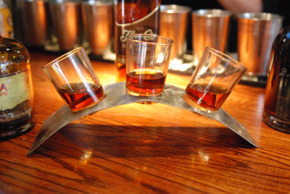
In honor of National Rum Day on August 16, Cuba Libre Restaurant & Rum Bar, located in The Quarter at Tropicana Casino & Resort, will dedicatethe entire month of August to its favorite spirit with its annual Rum Month celebration, featuring special rum tasting flights available from August 1 to 30 during dinner and weekend brunch.

Then, on National Rum Day, all rums, rum flights, and rum cocktails will be offered at half-price at Happy Hour from 5 to 7 p.m. at the bar.

Cuba Libre has hand-selected two special rum flights in celebration of Rum Month, each consisting of three 1 oz. pours. The restaurant’s rum list showcases more than 90 varieties from Guyana, Haiti, Nicaragua and Tortola, and includes dark, light, spiced and aged rums for every taste. Guests looking for a particular flavor profile can ask their server for recommendations.

Cuba Libre’s special Rum Month tasting flights include:

Black Jack ($16)
Featuring dark, Navy style and spiced rums

  • Gosling Black Seal, Bermuda: Rich intricate molasses flavor that is well-balanced and nuanced with caramel, butterscotch, and vanilla.
  • Cruzan Black Strap, St Croix, Us Virgin Islands: Dark, navy-style rum with light undertones of licorice and black coffee featuring faint notes of vanilla and cinnamon.
  • Kraken Black Spiced, Trinidad & Tobago: High-proof, dark, aged rum. Rich brown color. Blended with 11 secret spices. Molasses, licorice, vanilla, and holiday baking spices.

Caribbean Stud Poker ($20)
Tasting flight of aged rums from the Caribbean

  • Ron Matusalem Gran Reserva, Dominican Republic, 15 Year: Aromas of oak, banana and orange peel with flavors of sweet butterscotch, vanilla, and brown sugar.
  • Zaya, Trinidad And Tobago, 12 Year: Complex aromas of vanilla and caramel with rich nutty flavors.
  • Barbancourt Estate Reserve, Haiti, 15 Year: Hints of clove and orange peel with subtle flavors of butterscotch and toffee accented by sandalwood and oak.

Cuba Libre’s special rum flights are available August 1 through 30 in the dining room and in the bar area beginning at 4 p.m. Monday-Friday, and 11:30 a.m. Saturday and Sunday. The half-price rums, rum flights and rum cocktails will take place on Wednesday, August 16 from 5-7 p.m. and are available in the bar area only.

Cuba Libre Restaurant & Rum Bar is located in The Quarter at Tropicana Casino & Resort in Atlantic City, NJ; Phone: 609-348-6700; for more information, visit www.CubaLibreRestaurant.com


Revel: Sale or No Sale?

Multiple sources told GGB magazine last week that the sale of the former Revel in Atlantic City was concluded and that only the fine print needed to be worked out. The same sources said that the resignation of Sands Bethlehem President Mark Juliano was directly related to the sale, and he would be brought in to run the property.

The name of the buyer was being withheld, but it is not a major casino company and is more likely an investment bank or hedge fund. Revel was built by Morgan Stanley at a cost of $2 billion and it closed less than two years after opening when it became clear that it was a money pit. Reasons for the failure were many, but a onerous energy payment from a plant not owned by Revel, but specifically built by Revel, was a major problem.

After the property closed in 2014, it languished for a year until Florida developer Glenn Straub bought it for $82 million in bankruptcy court, with high hopes to reopen the facility. Straub had proposed multiple uses for the property until settling last year on “Ten,” a hotel resort—complete with casino gambling—that never opened.

Straub has refused to file for a casino license, contending he is simply planning to lease the casino out to a third party to run. Straub, however, wants a cut of any casino revenue brought in, and also is ignoring New Jersey gaming law that stipulates owners of properties where casinos are located are required to obtain a casino license.

The recent sale rumor came on the heels of a report in early July that a mysterious New York private equity firm, Digital Launch, had made a $220 million offer on the property, a claim that Straub denied.

He recently admitted that he would be willing to sell “Ten”.

While research about the identity a Revel buyer has been elusive, Juliano’s participation is solid, according to sources. Juliano is former head of Caesars Atlantic City and Trump Taj Mahal, and is a former president of the Atlantic City Visitor and Convention Authority. He has vast experience in the industry, with additional roles at Caesars Palace in Las Vegas, and Marina Bay Sands in Singapore.

Atlantic City Airshow 2017

Now celebrating its 15th year, the 2017 Atlantic City Airshow will return to the skies above the beautiful free beaches and Boardwalk in Atlantic City on Wednesday, August 23, 2017. GEICO will return as the presenting sponsor of this event, as announced by Greater Atlantic City Chamber President Joe Kelly, the show’s organizer.

The USAF Air Demonstration Squadron (“Thunderbirds”) is the air demonstration squadron of the United States Air Force (USAF). The Thunderbirds are based at Nellis AFB, Nevada and perform aerial demonstrations in the F-16C Fighting Falcon, and they also fly two F-16D twin-seat trainers. Much of the Thunderbirds’ display alternates between maneuvers performed by the diamond, and those performed by the opposing solos, all with magnificent accuracy and precision.

Free Admission – VIP Seating Available

2017 Airshow Lineup

Wednesday 23 August 2017

Time   Act
1030     Airspace Closes for Airshow, TFR in Effect
1140     US Army Golden Knights Flag Jump w/National Anthem
1148     US Army Golden Knights Mass Exit Show
1154     Rob Holland MXS Aerobatic Teaser
1158     NJ ANG 177th FW F-16 Flyby
1159     NJ ANG 108th WG KC-135 Flyby
1201     USAF 305th AMW C-17 Flyby
1203     USAF 305th AMW KC-10 Flyby
1205     NJ ANG Composite Wing Flyby (KC-135 & (2) F-16s)
1207     USAF 436th AMW C-5M Super Galaxy Flyby
1209     6ABC Chopper Flyby
1211     Medical Helicopter Flybys
1213     NJ State Police A139 Flyby
1215     Jim Beasley Jr. SNJ Aerobatics
1225     Customs & Border Patrol HH-60 & Fast Boat Demonstration
1235     US Navy T-6B Texan II Flyby
1237     US Navy MH-60S Seahawk Flyby
1239     US Navy E-2C Hawkeye Flyby
1241     US Navy MH-53E Super Stallion Flyby
1243     US Navy F/A-18C Hornet Demonstration
1258     US Coast Guard MH-65D Demonstration
1308     DE ANG 166th AW C-130H Hercules Flyby
1310     NJ-ArNG/NJ-ANG UH-60 Fast Rope Insertion & Extraction System Demonstration
1322     GEICO Skytypers
1340     Miss Geico Speedboat vs. GEICO Skytypers Race
1349     Jim Beasley Jr. P-51 Mustang Demonstration
1401     Army Golden Knights Mass Exit Show
1421     Randy Ball MiG-17 Demonstration
1436     Rob Holland MXS Demonstration
1450     USAF Thunderbirds Enlistment Ceremony
1455     USAF Thunderbirds
1700     Airspace Re-Opens, TFR Ends

Schedule is subject to change without notice due to mechanical considerations, weather conditions,
and other factors beyond the control of the Airshow.

Australian DFS PlayUp, Wants To Go International

PlayUp, an Australian daily fantasy sports (DFS) site is seeking $10 million in funding so it can expand its unique model of a site that relies solely on advertising for its revenues.

Players can play for free and can win “prize money” redeemable at an online store. They can purchase products from Play Up’s commercial partners, which include Rebel Sport, BCF and others.

And there WILL be players. Currently 100,000 have signed up, which exceeds initial expectations. Moreover, the players are returning, drawn by the competition and prizes, according to founder Daniel Simic.

DFS allows players to “bet” on teams or players and earn points at the end of the day. In many ways, it mimics legal online sports betting. So much so that many jurisdictions are fighting it, claiming that it is actually gambling.

PlayUp is different. The most obvious difference being that players don’t actually “bet” any of their own funds. It currently offers contests in NRL, AFL and international cricket. Simic wants to add NBA, A-League, EPL, T20 cricket, Kabaddi and eSports.

Simic told Online Casino: “Millions of new daily fantasy sports players have come into the market in just the past few years alone. By making it more accessible and offering the opportunity to win real prizes, without any entry fees, we hope to take fantasy sports to the next level in Australia and around the world.”

UK Warns Unauthorized Fantasy Sports Sites

The UK Gaming Commission is warning fantasy sports sites—both season-long leagues and daily fantasy sports sites—to acquire proper authorization and licensing if charging entry fees.

The commission issued guidelines just ahead of the British soccer season for fantasy leagues “run through the course of a business.” The guidelines say that operating, or even advertising, a fantasy contest could require a pool betting license in the country. The guidelines do not apply to privately run leagues among friends.

The commission also warned that promoting a fantasy sports contest—even on social media—could also require licensing. The commission said gambling advertising includes doing anything that encourages someone to gamble, or provides information about gambling facilities so that it will increase use. This also includes Twitter or Facebook posts, whether public, or private or within groups.

“Fantasy football is no doubt a popular pastime for many during football season and many will be thinking about setting up their own league this summer,” said Ben Haden, program director of the commission in a press release. “We want to ensure that those organizing these leagues—whether it’s between friends, work colleagues or otherwise—are aware of the legalities and do not breach gambling rules.”

The commission published these questions for businesses to ask themselves to determine if they need licensing:

• Does it look and feel like commercial gambling?

• Is it run for profit?

• Is there any deduction for running costs?

• Is the source of participants beyond a genuine circle of friends and relations?

• Is advertising used to obtain participants?

• Is the size of the league beyond what is normal for a private league?

• Can any member of the public view or join the league?

• What is the level of activity required in running the league?

• Are there any wider revenue sources?

PokerStars Leads Italy’s Online Market

PokerStars has grabbed the top spot in Italy’s online gambling market passing the national lottery Lottomatica with 8.85 percent of the market according to June figures released by Italy’s gaming regulator Amministrazione Autonoma dei Monopoli di Stato.

PokerStars has been expanding its offerings at its Italian site and just launched a Stars Rewards program in the country as well as in Spain and Portugal. The new program offers features from its former VIP Club, along with a flexible points system based around poker fees and access to special games and events. The new system also offers daily rewards as opposed to monthly rewards under the old system.

In sports betting, PlanetWin365 and bet365 Italy are vying for top spot in the sports betting market, while Sisal and Eurobet are pushing for a stake among casino competitors. Bookmaker William Hill is also performing well in the Italian gambling market, with a 5.8% share of the play.

Italy has generated €575m in online gambling revenue in the first half of 2017.

In another matter, things are much different for PokerStars in the South American country of Colombia.

PokerStars was one of 325 unlicensed online gaming operators that were blocked last week by Colombia’s regulator Coljuegos. The company now says it is exiting the Colombian market and will no longer accept players from the country.

In an email to players, PokerStars said it was leaving the market due to the regulatory changes in the country and because it does not hold a license there. However, the company did say it may seek a license in Colombia, which is the first South American country to regulate online gaming.


India Sports Ministry Considers Legalized Online Sports Betting

India’s Sports ministry has been holding consultations about a possible legalization of online gambling according to the Indian Express newspaper.

The paper cited an unnamed source as saying that several different government administrations have been approached with a proposal and informal consultations have been held. The discussions were characterized as the early stages of developing an online framework and it could take as long as two years for a final proposal to emerge.

The source said the country is looking to the UK’s gambling framework as a model and seeking advice from the UK Gambling Commission.

Reports also say that the country’s Sports Secretary Injeti Srinivas is currently in England to discuss the terms of a possible Memorandum of Understanding with the commission. Online sports betting will be one of the important points in that memorandum, the unnamed source told the paper.

Sports betting is illegal in India, but betting on horse racing is allowed. Horse racing bets are taxed at 28 percent.

The country’s illegal sports betting market is valued at $150 billion according to a report by India’s International Centre for Sports Security. The country has also seen a strong market for online poker and several sites—including PokerStars—have been looking to expand into India.

Michigan Lawmaker Amending Gambling Bill

In Michigan, legislators continue to make changes to Senate Bill 203 as they attempt to integrate current state and federal laws with Native American tribal law regarding online casino operations. The changes could delay the bill’s start date by months, said Senate Majority Leader Mike Kowall, who sponsored the legislation.

Originally SB 203 allowed tribes to apply for online casino licenses, which would be commercially operated and taxed, and be subject to state regulation. Recently, Kowall added an amendment stating Michigan’s 12 casino-owning tribes may operate online casinos only if existing gambling compacts are amended. As a result, tribes would regulate their online like they do their land-based casinos. If the tribes comply with this part of the bill, they would have to agree to share up to 10 percent of casino revenue with the state.

Kowall said the changes to the legislation are being made at the request of the tribes, who felt the bill challenged their sovereignty and gave commercial casino operators an unfair advantage. Several tribes previously opposed to the bill are said to support it now. Detroit’s three commercial casinos, however, have said the tribes would have a competitive advantage under the bill.

The measure still needs to address legal issues such as anti-tax provisions and whether tribes can accept bets from beyond reservation borders. Some tribal members claim the Indian Gaming Regulatory Act does not permit taxes.

Opponents also have said the bill also could be in violation of both the Unlawful Internet Gambling Enforcement Act and the Wire Act. In that case, the U.S. Department of Justice could get involved.

Ayre Pleads to Misdemeanor, U.S. Drops Felony Charges

Federal prosecutors have dropped all felony charges against Calvin Ayre and his Bodog online gambling site in an apparent plea bargain that saw Ayre plead guilty to a misdemeanor charge.

The charges stem from 2012 when the U.S. Attorney for the District of Maryland indicted Bodog, the site’s founder Ayre and three other individuals on charges of illegal gambling and money-laundering conspiracy. The indictment alleged Bodog illegally offered gambling services to U.S. customers from June 2006 to January 2012. The U.S. Department of Justice charged that Bodog transmitted more than $100 million in gambling proceeds to U.S. players.

Ayre’s website calvinayre.com reported that Chief Judge Catherine Blake of the US District Court for the District of Maryland accepted a resolution that dismissed all of the felony charges against Ayre and Bodog. Charges against the other individuals had previously been dismissed.

Ayre pleaded guilty to a misdemeanor accessory after the fact charge related to the transmission of gambling information in violation of the federal Wire Act. He was sentenced to one year of unsupervised probation and a $500,000 fine. Ayre also agreed not to make any claim against $66 million that was seized by federal prosecutors from payment processors in a forfeiture proceeding related to the case.

“Ayre personally ensured that any Bodog brand player was made whole,” according to a court document filed by federal prosecutors.

Ayre made the plea by telephone and the Canadian citizen never actually came to the U.S. to answer the charges, according to published reports.

Ayre said in a statement that the settlement would not cause him to change his current lifestyle, saying he planned to carry on his role as an online gaming industry analyst, tech investor and philanthropist. “But most importantly, I’m just going to continue enjoying life to the fullest.”

Ayre also reacquired the Bodog domain name—also seized by federal prosecutors –for $100,000, the report said.

In court papers on the plea agreement filed jointly by federal prosecutors and Ayre’s lawyers, prosecutors clearly wanted to end the case after nearly five years.

 “The proposed plea agreement best serves the interests of justice while taking into account the practical realities that the case presents,” the sentencing memo says as reported by Forbes magazine. “Even with vigorous attempts to extradite Mr. Ayre, it would take years to conclude this case absent a plea agreement. The proposed resolution accordingly provides for a finality that would otherwise prove elusive.”

DraftKings CEO Discusses Future After Merger Collapse

With its announced merger with FanDuel on the scrap heap, DraftKings CEO Jason Robbins said his company is preparing to move forward with an emphasis on attracting new, casual daily fantasy players.

DraftKings and FanDuel announced earlier this month that they would not fight a move by the Federal Trade Commission to block a planned merger between the two on anti-trust grounds.

Jason Robins, speaking during a Facebook Live session, said the company is ready to move forward on its own and will offer a simplified DFS game for the upcoming NFL season along with it regular games.

The game will be fashioned like Arcade Mode, which DraftKings introduced for the Major League Baseball season. Arcade contests have smaller rosters of players, higher scoring and is aimed at attracting recreational players.

“I’ve heard a lot of really great feedback about Arcade Mode, and looking at the numbers lots of people are playing it, which is great,” Robins said as reported by Legalsportsreport.com. “Definitely a more casual game, that I think if you don’t have as much time, or you just want something that’s a bit higher-scoring, it’s great for those types of players.”

Robins said he expects an arcade version for each sport including the hockey and basketball.

Robins also implied that DraftKings will offer a contest with a $1 million prize this NFL season in a number of “Millionaire Maker” contests for its traditional games.

The company also won’t be offering contests for college sports—which has been banned by several states passing DFS legislation—but does plan to include more sports in its games such as boxing, tennis and EuroLeague basketball. The company also hopes to expand internationally, he said.

Evolution Debuts Live Studio

Latvia-based online gaming operator Evolution Gaming announced the launch of a studio in the Georgian capital of Tbilisi that the operator says will evolve into a fully independent major central live casino studio providing live-dealer table games to multiple Evolution licensees.

A statement from Evolution says the new studio is needed because of “strong and steady growth and continuing achievements that set the company apart from other live casino providers.”

“The past 12 months have seen Evolution launch new tables and dedicated environments across all of our studios at an intense rate,” said Evolution Gaming Group CEO Martin Carlesund. “There is no sign that this fast pace, and the demand for our live casino services, will let up. Therefore, as part of our commitment to ever improving our service to our licensees and ever increasing our lead over our competitors, we are delighted to announce our next major studio in Tbilisi, Georgia. From this studio, we will continue to expand, offering our services to additional customers and markets.

“The new studio is scheduled to launch in early 2018, and will help Evolution to achieve its ambitious growth and development plans. It will also provide further solid career opportunities, both among our existing staff and new employees. Tbilisi is a beautiful city with a population of over 1 million people, and offers strong development and investment opportunities.”

Pennsylvania’s Mt. Airy Casino Launches Social Casino App

Mount Airy Casino Resort in Pennsylvania’s Pocono Mountains has launched a new social casino site and app with Greentube Pro providing the software platform.

In a press release, casino officials said they looked to Greentube to create a customized solution that enabled players to experience the resort online. The platform provides a true branded experience that reflects the physical appearance of Mount Airy Casino Resort including a virtual rendition of the property’s lobby and main casino.

The site also offers popular games from Greentube and other leading providers as well as on-site promotions for the casino, the release said. The site is available on PC, tablet or mobile device.

 “Our goal was to build a social platform that delivered part of the Mount Airy Casino Resort experience into players’ homes and hands,” said John Culetsu, executive vice president and general manager for Mount Airy Casino Resort. “We are proud to offer this platform to our regional players as well as casino enthusiasts throughout the country.”

ESIC Releases eSports Rule Recommendations

The independent eSports Integrity Coalition is making a bid to become the watchdog and disciplinarian for the large number of eSports leagues around the world by offering a set of rules and a disciplinary rule board.

Towards that end, the coalition recently released results of an industry wide survey on how to punish players that cheat or league’s that run corrupt games.

“eSports is primarily about the community around each game—the players, fans and teams that participate and watch—and it was entirely appropriate for us to consult those communities about how its cheats and frauds should be punished,” said Ian Smith, integrity C=commissioner for the eSports Integrity Coalition. “Following the conclusion of the survey, I am very thankful to the community for their enthusiastic participation; particularly the CS:GO community, who responded in the thousands.”

The coalition had previously issued a position paper saying that the eSports industry needs a consistent, fair and proportionate approach to how it deals with cheating, both to win and to lose (match-fixing), the release said.

Among the coalitions finding from the survey were:

Many respondents felt “lifetime” bans of players in eSports leagues were too harsh. The coalition recommends that current lifetime bans be lifted as rules surrounding eSports were not clear and had not been publicized.

The coalition expressed concern that match-fixing in eSports contests is not being significantly addressed. The survey found that the eSports industry is not focused on the dangers of betting fraud and match manipulation. The coalition feels match-fixing offences should attract at least the same level of punishment as cheating offences based on the experiences of traditional sports, especially as gambling on eSports continues to expand.

The coalition recommends leagues adopt the ESIC Anti-Corruption Code which sets out clear rules about betting and corruption. It’s ESIC Disciplinary Procedures also set out fair and independent procedures for dealing with alleged offences and allows players the right to defend themselves against cheating charges.

Sets out penalties for various offenses with most first-time offences carrying a five-year ban with harsher—and possibly lifetime bands—for subsequent offense.

The coalition says it aims to be the recognized guardian of the sporting integrity of eSports and to take responsibility for disruption, prevention, investigation and prosecution of all forms of cheating, including, but not limited to, match manipulation and doping.

The survey results come as Las Vegas has begun to embrace eSports competitions. The city already hosts one eSports arena and a larger one in being planned by MGM Resorts. That has led to concerns over properly regulating bets on eSports competitions, including side bets among players and spectators.

“Generally speaking, it is not illegal to wager socially, unless somebody is taking a cut,” AG Burnett, chairman of the Nevada Gaming Control Board recently told the Las Vegas Review-Journal.

Burnett said the board plans to hold discussions between casinos and tournament organizers to clarify betting regulations in the state for eSports contests.

“If anything inappropriate is going on, then we will certainly delve into that very deeply,” he told the paper.

Israel Passes Online Censorship Law

The Israeli Knesset has passed a law that allows its courts to block websites promoting illegal activities—a move that includes blocking illegal online gambling sites.

The law allows authorities to block or remove sites promoting criminal terror activities, including prostitution, drugs and gambling. It specifically targets illegal gambling, prostitution and child pornography advertisements, online dealing of drugs and synthetic cannabinoids and the websites of terror groups.

“We are closing an enforcement gap of many years during which the existing law was disconnected from the migration of crime to the internet,” said Public Security Minister Gilad Erdan.

In cases where the owner of a website is Israel-based, the court may order the provider to seek the website’s removal, rather than merely restricting access. The courts may also order search engines to remove the websites from their search results and may rely on classified government testimony to make their decision.

Efforts to protect “innocent’ websites were written into the law, according to a report at haarets.com. Sites can only be blocked by a specially trained district court judge, who must take a number of factors under consideration when making that decision. Representatives of the public will also be allowed to appear in court to defend the interests of the general population of internet users who might be affected by limitations on access, the report said.

In a similar story, a Dutch court has upheld the right of the Netherlands gambling regulator Kansspelautoriteit to fine foreign online gambling providers offering their products and services to players in the country without a local license.

A District Court in The Hague ruled that the regulator has the legal authority to sanction international casino operators that violate local laws. The regulator levied six-figure fines on Co-Gaming Limited based in Malta, and ONISAC Limited and Mansion Online Casino Limited, both based in Gibraltar.

The companies are believed to have already paid the fines but still chose to also appeal their cases, local reports said.

According to a statement released by Kansspelautoriteit, the court accepted that offering gambling online is prohibited in the Netherlands and that the gaming authority is empowered to act against it. It said this prohibition and enforcement of the gaming authority in accordance with the court is in line with European Union law.

New Hampshire Legalizes Daily Fantasy Sports

New Hampshire has joined the ranks of 13 states—and the third this year—to pass a daily fantasy sports law.

The law, now signed by Governor Chris Sununu, is unusual as it does not charge DFS companies a licensing fee or tax their revenue. It does, however, put consumer protections in place.

Previous versions of the bill had included a licensing fee and a proposed five percent tax on gross revenue, but state officials said they wanted to promote competition in the industry.

“In some jurisdictions, the rate of tax was so high as not to allow other businesses to do it, other than the giant companies, so a lack of tax and fee structure actually allows more competition,” Charlie McIntyre, head of the state lottery said in a press statement.

Under the law, the New Hampshire Lottery Commission will regulate DFS sites and will be able to create rules overseeing contests. Operators have to apply for registration in order to provide services, but any already in operation may continue to offer services as the law takes effect. The rule applies to any organization organizing fantasy sports leagues or contests.

Consumer protections in the law include DFS site employees being banned from game play, a requirement that player funds remain segregated from operational funds and an age restriction for those under 18.

Also, “highly experienced” players who played in more than 1,000 fantasy competitions, or have won three or more contests with prizes totaling more than $3,000 from the same game operator must be identified on sites in a way that other players would be able to see, according to a report by NH1.com.

The law also outlines rules for “scripts,” or lines of code, that allow for people to automate and sometimes create an unfair advantage over other players, the report said.

In Massachusetts, the Special Commission on Online Gaming, Fantasy Sports Gaming and Daily Fantasy Sports is recommending that the Bay State’s legislature legalize DFS as a form of “online gaming.”

Although the official report isn’t complete yet, a draft of the final report has been released.

In one section the commission writes: “At this time, the Special Commission recommends legalizing DFS as a subset of online gaming and enacting legislation that would put into law the proposed regulatory, governance, and taxation system described above.”

It recommends that the legislature, “work to balance regulation with innovation and develop a robust framework as to how all online gaming should be governed, taxed, and regulated generally.”

The commission doesn’t recommend legalizing other online gaming, such as poker or online casinos as a consideration to the two casinos that haven’t opened yet: MGM Springfield and the Wynn Boston Harbor. It wants time to figure out what impact online gaming might have on their operations.

There is no unanimous policy among the states as to whether DFS is gambling or not. The Bay State appears to be taking the position that it is.

DraftKings, the largest DFS operator in the U.S. swiftly reacted against the definition that what it is doing is “gaming” rather than a game of skill. A spokesman, James Chisholm, declared, “We fundamentally disagree with some of the recommendations in the Commission’s draft report, particularly its proposal to define fantasy sports as ‘online gaming,’ ” adding, “No other state in the country has characterized fantasy sports this way.”

He added, “DraftKings is proud to call Boston and Massachusetts home. We have more than 300 employees from 79 cities and towns across the state, and while we are committed to growing and innovating here, this provision, if adopted, could impact our ability to do that,”

The legislature empaneled the special commission last year to look into all of the issues of online gaming. The report states: “Legalizing DFS as a subset of online gaming and enacting legislation that would put into law the proposed regulatory, governance and taxation system.”

The report has not yet been officially adopted by the commission. A final vote is scheduled for July 31.

The report reflects the view of the state gaming commission chairman Stephen Crosby that the state should, whenever possible, sidestep the question of whether games or skill or luck based gives regulators the most flexibility in dealing with new technological developments by taking in a large field of activities and dubbing them “gambling.”

He said recently, “There have been millions of dollars spent litigating whether DFS is a game of skill or a game of chance, and if it’s some skill is it enough skill to make it avoid the regulations of games of chance. That just makes no sense to me.”

The legislature has until July 21, 2018 to adopt regulations pertaining to DFS, a deadline lawmakers set themselves when they authorized the ad hoc commission.

The legislature may need to address the one online activity it left off the commission’s plate: the lottery, before it turns to the panel’s recommendations. State Treasurer Deborah Goldberg has said repeatedly that giving the lottery the ability to sell online tickets is vital to maintaining its current profitability.

In June Goldberg declared: “The reality is that if anybody is going to get any kind of online capacity, it needs to be the Lottery before any kind of other gambling would be online. We don’t think that casinos and those folks should be online and then keep us out. We really need to be owning our marketplace in Massachusetts and interacting with people who are our customers.”

What might prompt the Massachusetts legislature to act with alacrity is the fact that neighboring Pennsylvania is mulling a bill that would legalize both online gaming and DFS while authorizing online lottery sales. New Hampshire just legalized online lottery and keno sales.

SugarHouse Debuts Online Everi Game

PlaySugarHouse.com, the New Jersey online casino site run by Philadelphia’s SugarHouse casino, has debuted one of the most popular slot games from Everi Holdings for real-money wagering via mobile and desktop devices.

Rush Street Interactive (RSI), which operates PlaySugarHouse.com, has launched Royal Elephant for the first time to the real-money online gaming market, after huge demand on RSI’s social casino site (www.sugarhouse4fun.com). Two more Everi favorites, Jackpot Inferno and Mata Hari, will also soon be available to SugarHouse Online Casino players this summer.

The games are proven and popular in land-based casinos in the U.S. and internationally. From the graphic animation to game play and bonus features, players will experience the same feel and fun as with the land-based slot machines.

Royal Elephant takes players on a prosperous trip to India on its five-reel, 40-line video game that offers Festival Multipliers where up to a 100X could be revealed. Jackpot Inferno features a five-reel, 50-line game with a chance with its “Jackpot Jump” feature to win a progressive jackpot. Mata Hari is a five-reel, 40-line game with a bonus featuring up to 70 free games.

“These slot games are some of the most popular in land-based casinos in the U.S. and internationally, and PlaySugarhouse.com is excited to be the first to bring Royal Elephant to New Jersey’s online market for real-money wagering,” said Mattias Stetz, chief operating officer of Rush Street Interactive. “We want to continually offer our loyal players new and exciting entertainment, and these Everi games will keep players on the edge of their seats.”

“Gaming entertainment continues to evolve and expand,” said David Lucchese, executive vice president of Everi in charge of digital and interactive games. “We’re delighted to join with Rush Street Interactive to be a part of that evolution by offering our fan-favorite slots to online players who want to play the games they enjoy anytime, while wagering real money on their mobile devices, desktop platforms and multiple internet browsers.”