Archives: Articles

This is the example article

DraftKings Suffers DOS Attack

Daily fantasy sports site DraftKings says it suffered a denial of service attack in August and has sought a court order allowing it to search out the identities of the attackers.

A federal judge in Massachusetts issued an order allowing DraftKings to seek the identities of those who launched the attack. The company says it has traced the IP addresses of the attackers and can now subpoena the service providers for those addresses.

The company says the attack overwhelmed its site for more than 20 minutes with three times the number of requests for information it normally receives.

The company said the attack does not seem to be connected to its recent launch of a sports book in New Jersey and that no confidential customer or company information was stolen.

In another story concerning the company, reports have surfaced that DraftKings is close to completing a $200 million investment round, but no details have been released. The influx of cash would come as the NFL season gets underway, which is the busiest time for daily fantasy sports play as well as for its new sports book.

Casinos Seek to Stop Pennsylvania’s iLottery

Seven Pennsylvania casinos have asked a court to block the state’s new iLottery system from offering online games that are similar to online casino games.

The complaint was filed against the state Revenue Department, which includes the Pennsylvania Lottery.

“All of the iLottery games feature the same user interface as a slot machine, and have the same interactive appearance, feel and play experience that a player would expect from land-based and online slot machines,” the complaint filed in Commonwealth Court read. “These features include graphics, animation, suspenseful music, flashing lights, bells or sounds played when combinations are hit, and similar visual and auditory features.”

The owners of the seven casinos, including Penn National Gaming Inc. and Caesars Entertainment Corp., said the state Gaming Act limits casino games to those who hold a slot machine license and table games certificate. The casinos argue the iLottery program “is a direct incursion by the state into the exclusive market of the licensed gaming operators.”

The other casinos filing the complaint are Parx Casino; The Meadows Casino Racetrack Hotel; Stadium Casino; Valley Forge Casino Resort; and Mohegan Sun Pocono.

A Pennsylvania Lottery spokesman told the Associated Press that officials had not reviewed the lawsuit.

“It is important to note that Act 42 authorized the lottery’s new games, which are part of an effort to continue delivering to our customers games that they want and where they want while generating the additional funds to stabilize the Lottery Fund and provide vital services to older Pennsylvanians,” lottery spokesman Gary Miller told the wire service.

The state began iLottery games in May, with prizes up to $250,000.

Florida Court Rules Pre-Reveal Games Are Slots

In Florida, a three-judge panel of the 1st District Court of Appeal upheld a circuit judge’s decision that so-called pre-reveal games are illegal slot machines, since they include an element of chance. The ruling was a victory for the Florida Department of Business and Professional Regulation’s Division of Alcoholic Beverages and Tobacco. Earlier it had ordered two businesses to remove the machines. As a result, Blue Sky Games, developers of the games, and Gator Coin, of Jacksonville, which leased the games to businesses, filed a lawsuit.

Supporters of the games, which also are known as Version 67, said the machines are legal since they include a preview feature that indicates the outcome of the games. However, regulators and other opponents said the preview feature is irrelevant because the games’ random number generator make them games of chance, or slot machines.

The appeals court ruling upholds last year’s decision by Leon County Circuit Judge John Cooper. He originally sided with Blue Sky Games and Gator Coin but later reversed himself when the Seminole Tribe of Florida demonstrated the games to him.

The appellate panel wrote, “We hold that the trial court was correct in determining that Version 67 is a slot machine because the element of chance is inherent in it given that it has a preset win/loss ratio and that the game outcomes are determined by the machine by chance, via a random number generator and there is nothing the user can do to affect the outcomes.” Judge Joseph Lewis and joined by judges James Wolf and Stephanie Ray, concluded, “Furthermore, Version 67 is a slot machine for the additional and independent reason that also inherent in it is an outcome unpredictable by the user.”

Casino Group Eyes Vacant Virginia Mall

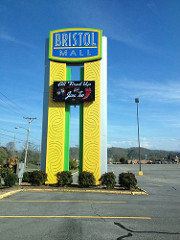
Although casino gambling is illegal in Virginia, the new owners of the vacant 450,000 square foot Bristol Mall want to turn it into a casino resort. The group, headed by Clyde Stacy, hired lobbying and public relations firm Alliance Group Ltd., based in Richmond. An electronic sign on the property already reads, “We’re betting on Bristol!”

Alliance Group President and Chief Executive Officer Rob Jones said, “We want to bring jobs to the city and the region. The team is excited to grow the economy across Southwest Virginia.” Jones said the project could create up to 2,000 “good paying” jobs.

Jones said in addition to a casino, the complex would offer multiple entertainment options and restaurant. He said a study showed the resort could attract 80 percent of its visitors from outside Virginia.

Bristol City Manager Randy Eads said the city council has been working with the group for the past three months. He stated he has had positive feedback from most city council members. Eads added now is the time for Virginia to approve casino gambling, since it has been losing tax revenue to other states where it’s legal. He also noted casino tax revenue could help the city’s large budget debt, with many residents living in poverty.

State Senator Bill Carrico, who opposes casino gambling, said gaining approval from lawmakers could be a challenge. He said he would prefer a city-wide referendum on gambling before the issue reaches the legislature.

Bristol Mayor Kevin Mumpower said, “I’ve not had a single conversation about it, but on the surface, I think it sounds positive, obviously if the state approves legislation. I don’t know what the prospects of the legislators backing it are.”

He added, “We’re one of the few states that does not have approved gambling, so there is a lot of infrastructure the state would have to set up, like regulations, the tax rate, permits. I haven’t taken the temperature of most people in the community, but I think most people would support it as long as it’s done properly and regulated. I think most would be OK with it.”

Councilman Bill Hartley noted, “From a conceptual idea, it’s definitely thinking big, thinking outside the box. The real hurdle is going to be getting it through the General Assembly.” Councilman Neal Osborne added, “I’d like to see exactly what the plans are, but, on the face of it, it’s a big opportunity and kind of a game-changer long term. It could be a lot of tax revenue and a lot of jobs created, and I’m not opposed to that. We have to see if the positives outweigh the negatives. From what little I know, it seems like they probably will.”

Bristol Chamber of Commerce President and Chief Executive Officer Beth Rhinehart said a casino could help the city, which is going through “a very unique financial quandary right now.” She noted, “It’s going to take some of those out-of-the-box ideas to be brought to the table and be implemented to get it back on steady feet. Not focusing just on casino dollars, I think of the complement it could provide to the speedway or Bristol Rhythm & Roots and our music heritage or outdoor recreation. It would, without question, be a draw not only in itself but as a complement to those other things.”

MGM Springfield Opening Exceeds Expectations

The first three days opening of the $960 million MGM Springfield, the first true Las Vegas style resort casino in Massachusetts, drew more than 150,000 people, greatly exceeding expectations, according to the casino’s President Michael Mathis, who called it “tremendously successful.”

The Friday debut began with a large crowd congregating in the streets near Main Street and State Street as a parade of construction workers, casino employees, a university marching band and the Budweiser Clydesdales trooped up to the entrance.

Mathis told the Republican that the casino hotel and restaurants with the 14.5 acre footprint were “fully booked” and said he expects the average daily attendance to be around 15,000. Free parking at 3,400 spaces will accommodate them, as well as anyone in the downtown area.

The casino also paid for free shuttle service from free parking at the city’s Eastern States Exposition fairgrounds, the “Big E” and to West Springfield parking lots.

Planning by local agencies for dealing with the expected traffic worked out well, according to Springfield Police spokesman Ryan Walsh. “The traffic plan worked incredibly well and we now know it can be replicated for any surge events in the future,” he said. “Friday morning’s traffic flow was smooth and when there was a Friday night blitz, MGM helped ease any potential extended congestion by re-upping their agreement with the Big E through the weekend.”

Mathis lauded the assistance of the state and city police and the Springfield Department of Public Works and added, “We are also grateful for the hard work and commitment of our dedicated employees and the ongoing enthusiasm and support of the entire Springfield community.”

The outdoor Armory Plaza featured its first performance, to a capacity crowd, by Boston band Dropkick Murphys doing a benefit concert. This was followed on Saturday by musical legend Steve Wonder. There were also concerts and appearances by the Blue Man, Darik and Fun Bags.

By Sunday the press to enter the casino had subsided somewhat, although the gaming floor was still very crowded.

The 2-million square-foot complex includes gaming, dining, a hotel, spa, cinema and retail. The casino itself has 2,550 slots, 120 table games, a high limit area and a 23-table poker room.

The hotel boasts 250 rooms and suites, including three bars and lounges and 34,000 SF of meeting space.

When you play hard, you want to eat, and the casino provides plenty of outlets for that, with dining venues circling the gaming area. The Chandler steak and chop house, named for the iconic hotel that stood at the very same location many years ago, offers fine dining and Cal Mare serves traditional Italian. There is also a pizza restaurant while the South End Market has a variety of restaurants ranging from Jack’s Lobster Shack to Asian. The Taps Sports Bar features a 10-lane bowling alley and arcade.

Union Gaming Group analyst John DeCree enthused, “Almost everything about MGM Springfield ties into the city’s history, including an Indian Motorcycle retail outlet and a plethora of Massachusetts sports memorabilia decorating the sports bar. No detail was too small for MGM Springfield, and the attention to local history is sure to be a continuous draw for local residents.”

The casino instantly became the city’s largest taxpayer, expected to pay at least $17.6 million and possibly as much as $26.2 million, according to Moody’s, which considers this a “credit positive” for the city, which, it wrote has been weighed down by its 30 percent poverty rate and “limited flexibility in raising revenue.”

The city gets its largest revenue from the state, 65 percent, followed by property tax. Its largest property taxpayer has been Western Massachusetts Electric Company, which paid $11.7 million in the just ended fiscal year. The casino will not be paying property taxes but has a payment-in-lieu-of-taxes agreement with the city, plus community impact payments based on casino revenue, which are estimated to be $479.5 million.

Moody’s added that the casino’s development has increased the city’s tax base in the surrounding area in the past five years. It has also increased overall tax revenues for the city by employing 35 percent of its workforce recruited from the city, making it one of the largest employers in Springfield.

The casino’s location in the city was a direct result of a devastating freak tornado that ripped through the South End seven years ago. The opening of the casino showcases the city’s recovery. Springfield Mayor Domenic Sarno, who lobbied extensively for the casino’s location in the city told reporters, “This has helped put us on the map,” adding, “Cities such as Springfield have gone through some tough times – the economy, things changing and people going to the suburbs and rural areas. … It’s a redefining time, a re-establishment of core urban cities, and MGM has played a pivotal role in that.”

MGM saw the regional market as somewhat underserved. MGM President Bill Hornbuckle told USA Today, “We got quickly focused on western Massachusetts. We thought there was an opportunity there. We think the market capture is substantive in terms of location and appeal, the uniqueness of the resort and offerings. They have been grossly under-leveraged for years. We can be a catalyst for the city.”

An example of this is the $15 million Hilton Hotel that will be opening near the MGM Springfield with five stories and 100 rooms. Demolition of a vacant warehouse is expected to begin by early October. The new hotel will be dubbed Home2 Suites.

Developer Louis Masaschi told the Republican “I think it’s a great project. I look forward to it being up and built. I think it’s a big bonus to the downtown area. Having MGM there makes it very attractive to me and the Hilton.”

MGM also found the city’s proximity to various transportation hubs attractive, including being 80 miles from Boston, with access to Interstate 91, the Massachusetts Pike and Bradley International Airport.

Springfield is also amidst an area that includes 32 universities and colleges, plus Six Flags New England.

Mary Kay Wydra, president of the Greater Springfield Convention and Visitors Bureau told USA Today “Springfield is the urban center, but this is going to impact all of Western Massachusetts as a destination. We’re a compact area. We sell a region. We don’t sell a city. MGM is going to be a lure and has a brand and marketing budget that is really going to help all of Western Massachusetts.”

MGM has worked to incorporate the city’s history as the birthplace of basketball and of the first American-English dictionary into the casino’s décor, but also to help promote the area’s attractions. It incorporated historical buildings, such as the National Guard Armory and First Congressional Church, into its design.

MGM is paying for a free shuttle service called “The Loop” that showcases museums and attractions in the downtown.

The developer has teamed up with Springfield Museums, a consortium of five museums, to display some of those museum’s exhibits in the casino itself. Including a 1925 Edison Western Union Stock Ticker, a 1915 Telegraphone, made in the city, and an 1895 Edison Home Phonograph.

Greg Procino, vice president of the Basketball Hall of Fame, commented, “It appears that they paid a tremendous amount of attention to the historic significance of our area. There is a sense of pride in the city that Springfield is taking a big step forward.”

MGM’s host agreement prevents it from opening its own standalone performance center to compete with existing venues, and also to partner with those venues, such as the 8,000-seat Mass Mutual and 2,500-seat Symphony Hall.

Sarah Moore, vice president of brand activation and retail for MGM, told USA Today “We purposely sought out not to build everything on property. People don’t understand the profound history of this city. So much has happened here. It was once a thriving economy. The infrastructure was there. The bones are there, and we’re bringing it back to life.”

John DeCree, gaming analyst for Nevada-based Union Gaming, things MGM’s approach may be a game changer for the industry. “We spent several days in Springfield ahead of the opening, touring the new facility and getting a sense for local expectations,” he said in an August report to investors.

“Two things were apparent,” said DeCree. “First, local residents are truly proud of the development; and second, MGM’s design and development team just gave the company a big boost in the race for licenses in new jurisdictions like Japan. The meticulous attention to detail, unique integration of local history, and success in restoring key historical landmarks like the 130-year old First Spiritualist Church and 123-year old State Armory, won’t go unnoticed by new jurisdictions considering MGM for new gaming and (integrated resorts) licenses.”

The city has spent $3.7 billion to recover from the tornado. The casino has been one of the prime drivers of that recovery.


Changing Gaming Market

The opening of the MGM Springfield signals what will eventually be an entirely changed gaming landscape for New England.

The previous weekend Tiverton Casino opened in Rhode Island, signaling that that state wouldn’t voluntarily surrender its patrons to the Bay State. Besides the impending opening of the $2.5 billion Encore Boston Harbor next spring with 671 hotel rooms and 13 restaurants, New York’s Resorts World Catskills and Schenectady’s Rivers Casino are building up steam.

CDC Gaming Reports quotes Jefferies gaming analyst David Katz as saying, “There is certain to be competitive pressure in this area.” Noting that Connecticut’s well-established Indian casinos, the Mohegan Sun and Foxwoods, are “well-established” with “considerable scale” as they are less than 70 miles south of the MGM Springfield.

But the MGM Springfield and Plainridge Casino, the slots parlor that was the Bay State’s first casino to open, have advantages in that MGM and Penn National Gaming have large national customer bases.

That helped Plainridge Park to establish itself quickly when it opened three years ago with 1,500 slot machines. Said Katz, “The property’s appearance and the evident high level of customer activity indicate that the property may have distinguished itself in a defensible manner in the face of new competition.”

Plainridge General Manager Lance George, facing competition from the Tiverton casino, told the North Attleboro Sun Chronicle, “We look forward to further developing our marketing program and competing to the best of our abilities.”


Encore Boston Harbor

Like a Sword of Damocles, the impending investigation on former Wynn casino mogul Steve Wynn is expected to be delivered to the Massachusetts Gaming Commission by the end of this month.

The MGC will then face the decision of whether to continue to allow the supposedly new and improved Wynn Resorts Ltd. corporate management to keep its license, finish building the Encore Boston Harbor, and open it next spring.

The investigation explores the former CEO Wynn’s alleged sexual indiscretions and rape accusations, but, more to the point, how the corporate structure reacted to it when executives found out about it—and whether they tried to keep that information away from the MGC when it was deciding whether to grant Wynn the Boston metro license in 2014.

MGC Chairman Stephen Crosby announced last week that the investigators are nearing the end of their work. When they do, the panel will review their results and decide what to do.

One thing they might do is call officials of the company to appear at a hearing.

The $2.5 billion Encore Boston Harbor is scheduled to open next June. The commission could suspend its license, or levy fines. It will decide whether the company is “suitable” to operate in the Bay State.

Wynn Resorts recently concluded its own internal investigation and handed the results over to the MGC.

A January report by the Wall Street Journal that unveiled years of alleged sexual misconduct against Wynn quickly led to his fall, including his surrender of all corporate offices and the sale of all shares of the company that bears his name. Through it all, Wynn has stoutly maintained his innocence of any wrongdoing.

In its efforts to expunge the former CEO’s taint from the current project, Wynn renamed the casino from the Wynn Boston Harbor to the Encore Boston Harbor.

Massachusetts’s gaming regulators aren’t the only ones investigating Wynn. So is the Nevada State Gaming Control Board. Its investigation is also nearing completion, a spokesman told the Las Vegas Review-Journal last week.

During this nail-biting time for Wynn, the company is reportedly considering selling the 3 million-square foot Everett casino, which overlooks the Mystic River and the Boston skyline.

The report comes from Focus Gaming News, which says that Wynn CEO Matt Maddox has had informal talks with a possible buyer. The company talked to potential buyers, such as Caesars Entertainment and MGM Resorts in the spring, but nothing came of it.

Crosby told the Review-Journal “The last element in our investigation was their own internal investigation I think by the end of this month or shortly thereafter, our investigation will be completed.”

He said the commission would probably allow Wynn to respond to the reports before adjourning to decide the company’s fate in the Bay State.

One Down…

A week ago, MGM Springfield opened its doors in Massachusetts. A lot of the focus of recent meetings of the Massachusetts Gaming Commission (MGC) was on the various logistics of proper regulatory oversight of a casino opening. Now that the jurisdiction has two operating facilities open (MGM and Plainridge), it will turn its attention to two potential other casino projects in the coming months. The decisions it makes will have an enormous impact on the success of commercial gaming in the state for years to come.


Wynn Suitability Investigation

One difficult issue the Commission will grapple with will be how to deal with Wynn Resorts and the allegations of sexual harassment that arose earlier this year against founder Steve Wynn. Since the time the issues first became public, another set of allegations arose regarding a (now former) member of the Massachusetts team that resulted in the filing of a lawsuit. Since the initial disclosure of these issues, the “Wynn Boston Harbor” project has been renamed the “Encore Boston Harbor” casino. Work on the construction of the facility has continued and remains on a timetable for a mid-2019 opening.

The Investigations and Enforcement Bureau of the MGC (IEB) has been conducting an in-depth investigation of the issues. At the most recent MGC public meeting, MGC Executive Director Ed Bedrosian stated that the IEB is entering the final stages of its investigation. He noted that one of the four primary elements of the IEB’s review centers on an assessment of Wynn Resorts and the board’s response to the findings of the company’s own independent review. He said that they will be reviewing the steps that the Wynn Resorts board has taken and will evaluate additional information and “expect to conclude their work by the end of this month.”

After the IEB issues its report, if the MGC acts in a way consistent with its past precedent and the applicable administrative rules, it will schedule an adjudicatory hearing to review the report, take testimony and ask questions of key witnesses, and for the full Commission to make a decision on whether Wynn Resorts is still “suitable” to be a casino operator in the state.

While to some extent this is new territory for the MGC, it does have precedent from a strikingly similar situation that might provide some insight into what Wynn Resorts can reasonably expect to face at this hearing phase of the process.

The MGC conducted an adjudicatory hearing in a prior case regarding a qualifier that the IEB conditionally recommended be found suitable (Ourway Realty). The Ourway case contains many striking parallels to the Wynn developments. Just like in Wynn, one of the key executives was accused of misdeeds (in Ourway’s case, it involved taking numerous routine withdrawals from the cash room). A second key executive abruptly resigned immediately prior to the adjudicatory hearing and requested a withdrawal of his qualifier status. Just like Wynn’s situation, Ourway didn’t discover the alleged misdeeds through its internal controls but rather were made aware and acted only after an external investigation brought them to light.

At the adjudicatory hearing, the MGC sharply criticized the company for failing to discover the misdeeds on its own and only realizing the issues when an investigation brought the matter to Ourway’s attention. It also questioned what had changed and whether simple assurances that internal controls would be better and better processes put in place was enough.

Ultimately, the MGC determined that Ourway Realty was not suitable. In its decision, the MGC indicated: “The investigation unearthed a number of practices engaged in by (the former CEO) that were deeply troubling. Though he is no longer part of the organization, we must consider the systemic issues that allowed those practices to take place, what has been done to remedy those deficiencies… It is noteworthy that all of the adjustments, including the removal of the (former CEO) took place only after the Bureau brought the issues outlined in the Report to light. They were not detected by the principals of the organization itself.” The MGC also expressed concern that “too much authority was vested in the hands of one individual with no checks and balances in place.” It also noted “there was apparently a culture in place that would have dissuaded anyone from brining problematic issues to the principals’]attention.”

It will be interesting to see how the MGC utilizes its past treatment of similar issues in reaching a resolution regarding the suitability of Wynn Resorts going forward.


Region C Application Reconsideration

In addition to the Wynn suitability investigation, the MGC decided in late July that it would postpone its determination of whether to revisit the denied proposal in Brockton. It was originally in April 2016 that the MGC rejected the application of Mass Gaming & Entertainment, a subsidiary of the Rush Street Gaming, owned by billionaire Neil Bluhm, to construct a $700 facility in Brockton, citing concerns with the design and failure to connect more closely with the surrounding community.

The MGC also expressed fairness concerns with allowing the construction of the Brockton casino to move forward when the Mashpee Wampanoag tribe’s land-in-trust application had been approved by the federal government for land and a casino in Taunton. Subsequent to 2016, a federal district judge upheld challenges from local residents, reversed the federal government’s decision to allow the land-in-trust, and sent the decision back to the Department of Interior for reconsideration.

But just last week, the DOI said there was no reason to grant the land-into-trust application for the tribe.

“Because the tribe was not ‘under federal jurisdiction’ in 1934, the tribe does not qualify under the IRA’s first definition of ‘Indian.’ Nor does it qualify under the second definition, as that definition has been interpreted by the United States District Court for the District of Massachusetts,” Assistant Secretary of Indian Affairs Tara Sweeney wrote in a letter to tribal Chairman Cedric Cromwell.

Mass Gaming & Entertainment brought a petition for reconsideration before the MGC in June seeking approval of the Brockton casino. In delaying a decision in July, the MGC indicated it must establish a process for reconsideration requests—including public input—that would recognize the many changes in the gaming industry since its 2016 decision. MGC staff recommended reviews of the gambling market in the Northeast and Mid-Atlantic regions. The MGC indicated that preliminary staff review might occur before possibly taking the issue back up in September.

It should be an extremely busy and eventful fall for the Massachusetts gaming industry and the MGC.

R.I.’s Tiverton Casino Hotel Cuts Ribbon

The Tiverton Casino Hotel opened over the Labor Day Weekend just across the state line from Massachusetts; with hundreds of patrons waiting in line many hours for doors to swing open at 10 a.m. on Saturday. The ribbon cutting actually occurred on Thursday.

The new $140 million 85,000 square foot casino on 21 acres has 1,000 slots, 32 gaming tables, dining and an 84-room hotel, and is expected to generate much needed commercial activity in the small town. It will employ about 600 workers. There is also a small racebook with 12 terminals. Sports betting may be added in a few weeks.

Twin River Management Group spokesman Patti Doyle declared, “I loved that moment when we opened the doors, and the staff was all here, from the president of the company on down.” She added, “There was obviously a certain sense of excitement and anticipation, and it’s nice that the day is finally here.”

The opening coincided with the closing of the Newport Grand after 42 years of operation, also owned by Twin River, which also operates the much larger Twin River Casino in Lincoln. Closing that casino two days before allowed the company to transfer its license 17 miles away to Tiverton.

For part of its history, before becoming a slots parlor, the Newport Grand offered Jai Alai. Arthur Paiva, who has come to the casino ever since it opened in 1976, told WPRI “I would come for the jai alai games. I said what the heck, I was here on the first day I may as well be here on the last day.” All 160 employees of the Newport were offered the option of working at the Tiverton casino; 141 took the offer.

Pearl Gonzalez, who used to go the casino on Friday nights, told the Newport Daily News, “Newport is going to miss the revenue.”

Sally Dwyer who had visited the casino since it was the Newport Jai Alai fronton, said “Jai alai was so much fun,” but when slots were added in 1992 she played them.

John Taylor, Twin River board chairman, commiserated with patrons of the old casino, and invited them to see the new one. “We have some players there who have been going there a long time who feel disappointed in the fact that we’re not going to be there anymore. But I hope and expect that once they see what we’ve done here, they’re going to love it and they’re going to enjoy it and feel comfortable coming.”

Twin River hopes to attract many of its players from Massachusetts residents living in Fall River and New Bedford.

Tiverton is a small town of about 15,000 that dates back to the 1600’s. It sits overlooking Narragansett Bay. The new casino doesn’t exactly scream “casino!” with its somewhat modest signs and architecture that blends in with the surroundings.

Joe Moore, vice president and general manager, told Casino City, “No, there’s no glitz and glamour here, and that’s exactly how we wanted it,” adding “Three years ago, when we had our original conversations with the people of Tiverton, there were worries about the casino having flashy neon signs and big spotlights all over the place. But we told them, that’s not us. That’s not what we want. That’s what we promised them.”

Moore added, “Tiverton is a convenience casino. It’s in a much more convenient location, just off the highway, and it’s on a significantly larger footprint. And we’ve added a hotel, which we didn’t have to offer to our guests in Newport . . . We’re confident we’ve given everyone involved exactly what we promised.”

The ribbon cutting came a month earlier than originally projected.

Bucking a trend among new casinos, smoking will be allowed throughout most of the Tiverton facility, courtesy of a high-tech ventilation system. The one exception is a glassed in area with 48 slot machines, and several food options.

Fine dining revolves around Chef Luciano Canova’s Trattoria Romana, but there is also the smaller Tuscan Chophouse, open on weekends. The casino’s center bar, which is located near the casino floor, aspires to become a popular local hangout, with live music, and a new iPourit system offering 24 taps, where patrons can serve themselves wine and craft beer.

The hotel lobby is just inside the casino’s entrance.

Doyle told the Providence Journal that Twin River has no “set projections or expectations.” “We just want to make sure that each and every guest who walks through these doors has a positive experience. The crew here, it’s all-hands-on-deck ready to receive guests all day and all night long.”

The casino was authorized by a statewide vote in November 2016 that coincided with a vote by Tiverton voters, who only narrowly approved it, by 400 votes. This followed a hard fought local campaign in which Twin River spent $4.6 million.

Doyle described it to the Providence Journal: “It was a very high touch campaign. We tried to reach as many Tiverton residents as we could, through social media, public information sessions, even backyard meetings.”

They asked residents what they wanted and in many cases factored their preferences into the final design.

This effort followed up the final efforts by Twin River to persuade the residents of Newport to authorize table games at the Newport Grand. When that failed, Twin River put all its efforts behind relocating and persuading both the state and the town to authorize them to do so.

No Tiverton Casino and Stop Predatory Gambling had nothing approaching Twin River’s resources to spend fighting the casino measure.

The casino will offer a self-exclusion problem for problem gamblers, who can ask the casino to kick them out for six months, a year, or even permanently.

Preserving Tribal Culture

In May Twin River sold the Newport Grand property to the Rhode Island-based Carpionato Group for $10 million. CEO and Chairman Alfred Carpionato declared, “This is a once-in-a-generation opportunity to creatively reimagine this signature property as the gateway into Newport.”

The day before the casino opened the Pocasset Tribe of the Pokanoket Nation and Twin River finalized an agreement on the casino’s use of land that the tribe considers significant because it was originally deeded to it in the 1660s. The tribe was later forced to move to land in Fall River.

The site, which was the location of a significant battle during King Philips War in 1675, is considered significant by the tribe.

Chief George Spring Buffalo of the tribe issued this statement: “Our history in Rhode Island is long and respected.” He continued, “The tribe itself has been a significant factor in the history of the formation of our country. There have been many books written about the Pocassets and its woman chief, Weetamoe, and all of the happenings surrounding the King Philips War, and our intent is to ensure that our culture and heritage shall be maintained in perpetuity.”

Under the agreement Twin River will erect and monument and fund a land trust for an undisclosed amount so that the tribe can buy land to reestablish its cultural heritage.

Patti Dolye, Twin River spokesman, said “We’re pleased to reach this agreement with the Pokanoket tribe with respect to land we purchased for the Tiverton Casino Hotel. Twin River undertook extensive archaeological and historical review of the land and we remain highly confident in its findings. We look forward to a continued good working relationship with the Pocasset Tribe of the Pokanoket Nation.”

Landowners near the casino are realizing something of a windfall with its opening. One restaurant owner told the Providence Journal, “It doesn’t get any better than this. It’s prime, prime, prime.”

About 15,000 vehicles are expected to drive by one intersection: William S. Canning Boulevard and Stafford Road. Add to that at least 3,000 visitors a day to the casino.

Mark DeMello, who owns 1.3 acres across the street from the casino entrance, declared, “Look where I’m at. What’s that famous saying? Location, location, location.”

It will be remarkably easy to persuade DeMello to sell and relocate his business if the price is right. He already knows what the right price is: $1.9 million. Until he gets that price he will be making some extra money leasing his land to Twin River for additional parking.

A local Realtor, Carl Dansereau, who represents DeMello and other nearby landowners, estimates that parcels have quadrupled in value. He told the Journal: “We just think the whole area is going to be transformed into something better. A lot of people were against it but it will bring new businesses.”

The city where the old Newport casino, which has now closed, was located, now faces the obverse of that equation.

Start with the $800,000 that Twin River will no longer pay to the city of Newport. Mayor Harry Wintrop told the Newport Daily News, “It’s not catastrophic, but it’s not easy. In the short run, we are cutting some expenses, but we’ll have to work to replace those revenues in the coming years.”

Add to that the $311,853 in taxes the city collected last year from Twin River. The city began preparing for the losses by adjusting its $97 million budget.

City Manager Joseph J. Nicholson Jr. commented, “Is it concerning? Sure. But is it the end of the game? No. We’ve worked through bigger problems.”

The Newport Grand also employed 225 city and area residents. If it had persuaded voters in 2014 to authorize gaming tables, it estimated it would have doubled the number of those employed.

Why CBS Won’t Mention NFL Point Spreads During Games

With legal sports betting having spread to four states after the US Supreme Court struck down a federal ban—along with Nevada which had sports betting—the networks that broadcast the NFL are faced with a challenge.

Do they finally acknowledge betting point spreads on games or do they stick to a policy of not mentioning gambling factors in their coverage?

For now, CBS president Sean McManus told Sports Illustrated that the network will maintain its policy of not mentioning point spreads.

“We’re not going to be doing it in our NFL coverage right now,” he said. “The ruling has only affected a small handful of states so we don’t think it affects the audience greatly, so right now we’re not going to be talking about point spreads with our NFL coverage.”

Since the high court ruling, Delaware, New Jersey, Mississippi and West Virginia have launched live sports betting in the respective states. Nevada was grandfathered from the federal ban and has operated sports books for decades.

Meanwhile, Fox Sports is launching its first show dedicated to covering gambling on its FS1 cable network. The show is titled “Lock It In” and will premiere September 10, with Rachel Bonnetta as host.

“We’re thrilled to expand our FS1 studio slate with the addition of a one-of-a-kind gambling show, ‘Lock It In,’ which will showcase the biggest topics in sports through the eyes of captive fans and new co-host Marcellus Wiley to a now 90-minute ‘Speak for Yourself,’” said Mark Silverman, president, national networks, FOX Sports in a press release.

“These additions align with our overall strategy to deliver unparalleled programming headlined by the premier talent in the business,” he said.

Also, longtime sports radio talk show host Mike Francesa, speaking to CNBC predicted that sports betting will fundamentally change the way sports is vowed in the U.S. with bettors watching more games and seeking more information on teams.

“Companies like Boyd Gaming and MGM are going to do really well,” he said. “States are not going to re-vet people. They’re going to deal with people who already have licenses. And that’s why casino companies are going to do really well around the country. The smart [gaming companies] are going to get in there and make a big stand in the big states. I think that’s going to be a very big part of their business.”

Francesa was promoting a new sports information app he is launching and said he is negotiating with several companies to expand the app to include gambling information.

Parx Casino Applies for Pennsylvania Sports Book

Philadelphia’s Parx Casino has applied to the Pennsylvania Gaming Control Board for a sports betting license joining Penn National’s Hollywood Casino.

Greenwood Gaming & Entertainment, which operates Parx casino, also applied to the board to launch sports betting at the South Philadelphia Turf Club, an off-track betting facility. That would give the company two retail sports betting facilities along with online gaming.

“This collective past experience and success clearly renders GGE qualified to conduct sports wagering,” the company said in its application. “Based on its performance to date, there can be no doubt that the conduct of sports wagering by GGE will significantly expand the positive economic impact the casino currently provides to the commonwealth, its municipalities and residents.”

The application also asks the regulatory body to move quickly to allow the company to open during the current NFL season. However, state officials are unlikely to approve any applications before October.

Parx said it wants to operate “a combination of land-based, mobile, and interactive sports wagering.”

Greenwood also owns two other OTBs in the state, but no petitions for those locations were submitted according to LegalSportsReport.com.

Owners of Pennsylvania’s 12 casinos can seek a sports betting license for $10 million. There has been concern that the high licensing fee and a proposed about 36 percent tax on sports books was causing many casino companies in the state to balk at pursuing a license.

In a report in the Pittsburgh Post Gazette, Penn National company senior vice president Eric Schippers said the company decided to make the first application for a sports betting license despite its concerns.

“While we continue to have concerns about the tax rate, we ultimately decided to make a go of it, while continuing to educate the Legislature on the importance of a competitive tax rate,” he told the paper. “We felt the best way to do that is to share our firsthand experience with them.”

There were also signs that Valley Forge Casino will apply for a sports betting license as reports emerged that daily fantasy sports operator FanDuel Group will strike a partnership with the casino to offer a sports book.

The casino has not applied for a license, but the website PlayPennsylvania reported the two companies are close to a deal.

FanDuel Group is now part of Paddy Power Betfair and operates the sports book at the Meadowlands Racetrack in New Jersey. It also has partnerships with two West Virginia casinos. It also recently announced a partnership deal with Boyd Gaming.

Jack For Sale?

Dan Gilbert, the founder of Quicken Loans and the owner of the NBA’s Cleveland Cavaliers, has reportedly put Jack Entertainment, which has interests in six casinos and racetracks, up for sale. In a Bloomberg reports, Gilbert has been negotiating with former partner, Caesars Entertainment. He entered the gaming industry in 2006 as a local partner for a Cleveland casino, once called the Horseshoe, and now Jack Cleveland.

While Bloomberg gave no reason for the sale, Crain’s Business reported that Gilbert may be interested in buying the Detroit Tigers, his hometown team and the headquarters of Quicken Loans. Major League Baseball has a rule prohibiting ownership by anyone with gambling interests. The Tigers were bought by Mike lllitch, the founder of Little Caesars Pizza in 1982, but when Mike died in 2017, he passed the team to his son, Chris, rather than his wife Marian, because she owns Motor City Casino in Detroit. While the Illitch family says they are not interested in selling the Tigers, Marian owns the NHL Detroit Red Wings, and has delivered four Stanley Cup championships since buying them.

The Tigers are valued at $1.2 billion, well within Gilbert’s budget.

In addition to the Cleveland Casino, Jack Entertainment also owns casinos in Cincinnati and Detroit (Greektown), a partial interest in Horseshoe Baltimore (with Caesars), Jack Thistledown, a racino near Cleveland, and Turfway Park, a horseracing track in Kentucky.

Jack is reportedly working with Deutsche Bank and Credit Suisse in the sales process, but neither Jack, the banks nor Caesars would comment on the Bloomberg report.

Survey Predicts NFL to Reap More Than $2 Billion From Legal Sports Betting

Despite efforts to make states pony up “integrity fees” a new study by the Nielson Group revealed that a fully mature sports betting industry in the U.S. would contribute as much as $2.3 billion just to the National Football League. Commissioned by the American Gaming Association, the study estimated that media rights payments would soar by18 percent, sponsorship fees would be up 7 percent and ticket sales would increase by 6 percent. All these increases would be due to increased fan interest, which would spur these higher payments.

The study ignores integrity fees, which the sports leagues are pushing for in states now considering legalized sports betting—fees as much as 1 percent of the sports betting handle, the money wagered on sporting events, not the win of the casino.

“So much time has been spent on talk over integrity fees,” said Sara Slane, the senior vice president of public affairs for the AGA. “We think these numbers are conservative and show that the league is frankly tripping over dollars to pick up pennies.”

“Legal, regulated sports betting will create huge new revenue opportunities for sports leagues – and the NFL could be the biggest winner of all,” said Slane. “Once legal sports betting expands across the country, the NFL could take in more than $2 billion a year, reinforcing how much sports leagues stand to gain from increased viewership and private partnerships with sports betting operators.”

And it’s not only the NFL that will benefit. Slane says that Major League Baseball, the NBA, the NHL and the PGA will also make more money because of advances in sports betting technology.

“The next frontier for all these leagues is in-play betting,” she said. “That is the mechanism that keeps that bettor engaged throughout the game. Some of this just doesn’t exist and it hasn’t existed yet. That is some of the product development we hope to see over the course of the next couple of years.”

As if to prove a cozier relationship with gaming, the National Football League’s Business Ventures Committee will now allow teams to join with casinos in sponsorship agreements.

News sources said that under a rule change approved by the 10-member committee, teams can feature advertisements from casino sponsors and daily fantasy sports sites during pre- and post-game shows and during preseason games, including using each other’s logos in their respective advertising.

The amended policy will also reportedly allow clubs to negotiate stadium naming-rights deals with casinos, which removes an obstacle that prevented Hard Rock Hotel & Casino Atlantic City from opening a sports book. Hard Rock International owns the naming rights for the Miami Dolphins’ stadium.

Casinos will not, however, be permitted to explicitly advertise their sportsbooks with the teams they’re partnered with. Also, teams cannot claim shares of revenue from any business that’s driven to their partners’ betting sites.

The move appears to signal a softening of the NFL’s traditional antipathy to gambling, with several factors possibly playing a role. One is the Raiders’ move from Oakland, Calif., to Las Vegas in 2020. Another is the $25 million partnership recently concluded between the National Basketball Association and MGM Resorts International, which includes access to official league data. Thirdly, there appears to be growing confidence among the major pro sports leagues and the NCAA that federal regulation is on the way that largely will favor their agenda, particularly their desire for a cut of the national betting largesse in the form of royalty payments for use of official league data in settling wagers.

The first NFL team to take advantage of this new rule was the Dallas Cowboys, who reached a deal with WinStar World Casino in Oklahoma, owned by the Chickasaw Nation, granting the casino official designation as the team’s exclusive partner, and exclusive use of the team’s logos and trademarks.

Cowboys’ owner Jerry Jones announced the partnership in Dallas last week.

“The Dallas Cowboys take great pride in aligning themselves with the best brands in the world,” Jones said. “It is a privilege to stand shoulder to shoulder as partners with such a prominent entertainment brand like WinStar World Casino.”

Chickasaw Nation Governor Bill Anoatubby said WinStar has always had a close relationship with Dallas and North Texas.

“Hundreds of Chickasaws live in the Dallas area and the Dallas Cowboys are a vital part of the community,” said Anoatubby. “While this partnership is a great business deal, that is only one of the reasons we are excited to be involved with the Dallas Cowboys and the Jones family.”

Federal Betting Oversight Gets Real

Bipartisan support is mounting in Congress for lawmakers to take up the question of whether to regulate sports betting at the federal level.

With statehouses across the country moving quickly to legalize the industry after the Supreme Court in May struck down a decades-old federal ban, New York Democrat Charles Schumer, the Senate’s minority leader, has joined Utah Republican Orrin Hatch, who chairs the Finance Committee, in proposing that Congress intervene to protect vulnerable consumers and shield sports contests from the threat of gambling-related corruption.

Since the high court’s ruling, Delaware, New Jersey and Mississippi have legalized, while West Virginia, Pennsylvania and Rhode Island could have regulations on the books before the end of the year. A study from Eilers & Krejcik Gaming expects as many as 30 states to be on board in the next five years. The boon to operators in the form of revenues could hit $10 billion, according to Barclay’s.

“The stakes are too high—legal sports betting laws must be crafted and executed in a careful and thoughtful way,” Schumer said in a statement. “The integrity of sports is too precious to not protect as best we can.”

Hatch, a co-author of the 1992 ban the Supreme Court axed, took to the Senate floor late last month to warn of the risks of game-fixing. Citing a 2017 World Cup qualifying match between Senegal and South Africa that had to be replayed after the referee came under suspicion, he announced that he’s drawing up a regulatory bill for introduction in the Senate in the coming weeks.

With nearly one-third of the Senate up for re-election in November it’s not expected that any such legislation will be considered before 2019. But Schumer has followed with an outline of the provisions he would like it to contain.

For starters, he wants betting limited to adults 21 and older and a ban on betting advertisements targeting young people.

Athletes, coaches, game officials, teams and league representatives would be prevented from taking a financial stake in a wager. This could force several owners with investments in daily fantasy provider DraftKings, among them Jerry Jones of the Dallas Cowboys and Robert Kraft of the New England Patriots, to sell their stakes as DraftKings transitions from fantasy sports to bookmaking.

Schumer also is calling for mechanisms to be put in place to combat money-laundering and other criminal activities that could arise as sports books spring up from state to state.

“As a New York sports fan—especially my Yankees and Giants—and a senator, my priority is making sure the integrity of the games we love is preserved, that young people and those suffering from gambling addiction are not taken advantage of, and that consumers that choose to engage in sports betting are appropriately protected.”

Other, more controversial proposals include granting sports leagues a say in the kinds of bets operators may accept and requiring that they use only official league data in determining wagering outcomes, which is likely to cost them in the form of royalty payments to the leagues, although Schumer’s plan doesn’t specifically mention these.

Not surprisingly, his proposals are getting a thumbs up from the sports world.

“As legalized sports betting spreads across the states there is a need for consistent, nationwide integrity standards to safeguard the sports millions of fans love,” the NBA, Major League Baseball and the PGA Pro Tour said in a joint statement. “We strongly support the legislative framework outlined by Senator Schumer, and we encourage Congress to adopt it.”

Operators, on the other hand, and many state lawmakers, oppose the involvement of sports organizations in critical aspects of their business. New Jersey, for one, specifically rejected giving the leagues an official role when it legalized in June.

“In New Jersey, it’s working OK. Why do we need federal legislation?” said Jeff Gural, owner of Meadowlands Racetrack, which opened its sports book in August.

“If you look at wagering on horseracing, there is no federal legislation. Every state regulates it,” he said. “Every state has its own rules for lotteries.”

He argues, moreover, that as in-game wagering becomes more widespread, leagues will find they are making out better than ever.

“You’re going to see TV ratings and ticket sales rise dramatically. The leagues are going to be very happy.”

The idea of federal oversight also riles the American Gaming Association, a trade group representing the land-based casino industry in Washington.

“The casino gaming industry shares Senator Schumer’s goal in preserving the integrity of sporting events and providing consumer protections,” said Sara Slane, vice president of public affairs. “Federal oversight of sports betting was an abject failure for 26 years, only contributing to a thriving illegal market with no consumer protections and safeguards. New federal mandates are a non-starter.”

She added, “The casino industry is working with stakeholders to ensure the proper protections for consumers, and the integrity of bets and sporting contests are included in state policy, universally implemented by all operators in those states and overseen by effective state and tribal gaming regulators.”

Most observers don’t think that anything will come of this federal effort, but when you add in the Senate’s newest member, Jon Kyl, who was named last week to replace the recently deceased John McCain, there could be some doubt.

Kyl was one of the prime movers in the passage of the Unlawful Internet Gambling Enforcement Act through Congress in 2006. The UIGEA bill made it a crime to solicit online gambling in the U.S. and forced many of the larger online gaming sites to withdraw from the U.S. However, it eventually set the stage for the legal online gaming that is now being conducted in Nevada, New Jersey and Delaware—and soon Pennsylvania.

Sports Books Explosion Continues in New Jersey

Three more online sports books have gone live in New Jersey ahead of the start of the NFL season.

William Hill, which runs the sports book at Monmouth Park racetrack and the Ocean Resort casino (and soon the Tropicana) in Atlantic City, and FanDuel, the operator at the Meadowlands Racetrack sports book, both launched sites, as well as the new online sports book opened by Caesars Entertainment.

“Since New Jersey decided to allow mobile sports betting, we have been working diligently to create the most engaging and fun mobile platform which provides users with the ability to place bets on their favorite sporting events,” said Mark Frissora, CEO and president of Caesars Entertainment.

The Caesars app is provided by Scientific Games. The two companies now have the ability to provide a full-service offering to bettors that includes the sportsbook platform, player account technology, and engaging customer touchpoints across in-venue screen solutions, point of sale terminals and the digital portal.

“We’re thrilled that Caesars mobile sports betting is live in New Jersey, enabling players to bet on their favorite sports teams today. We’re very proud of delivering a quality mobile betting platform, which truly rounds out Caesars’ sportsbook experience, and the speed with which we were able to launch this offering in this exciting new market,” said Keith O’Loughlin, SVP sportsbook for SG Digital. “We’re also proud of our Caesars partnership and their activation of a turnkey sports betting solution players will enjoy.”

Online sports books have already been launched by the Borgata casino in Atlantic City—under the playMGM brand—daily fantasy sports operator DraftKings—through a partnership with Resorts casino—and the PlaySugarHouse online casino site, which is branded to the Sugar House casino in Philadelphia but partnered in New Jersey with the Golden Nugget Atlantic City. The online sites join live betting sports books at the two racetracks and six Atlantic City casinos.

New Jersey gambling outlets took in $40.6 million in sports wagers in July, the first full month it was legal. Results for August have not been released, but both summer months are considered a slow time for sports betting. The real test of the state’s market will come with the NFL now underway.

Still, officials for the Sugar House casino say that early trends at their online site show bettors have been interested in baseball and action at the U.S. Open tennis tournament.

“It seems that our sports bettors really started exploring our live in-game offer last night, with both Serena Williams and Rafael Nadal playing prime time at Arthur Ashe Stadium in New York. 70 percent of wagers on tennis are live in-game already,” Mattias Stetz, COO of Rush Street Interactive, the company that operates Playsugarhouse.com, told casinojournal.com about the opening night of the online sports betting.

Also, DraftKings online sports book, which launched in early August, has already announced a promotion as it closes in on its 1 millionth bet. The site has passed 800,000 bets and will offer promotional bonuses totaling $35,000 for bets between 900,000 and 1 million. The 1 millionth bet will win a $10,000 bonus.

Meanwhile, two Atlantic City casinos—the Golden Nugget and Ocean Resort—have unveiled their permanent live betting sports books. Most of the resort’s casinos began betting in temporary spaces as they work to complete their permanent facilities.

The facility at Ocean Resort features 360-degree video walls, dozens of viewing screens, two bars, lounge seating with individual charging stations, seven ticket windows and self-serve betting kiosks, according to the Press of Atlantic City. The casino scheduled a ribbon-cutting celebration for September 6, the opening day of the NFL season.

“It’s different than a Las Vegas sports book but I like to think it’s the best of what a sports book can be,” casino owner Bruce Deifik told the Press.

Golden Nugget has opened The SportsBook featuring 2,500-square foot of space in the casinos former poker room. It features four big screens plus 53 smaller televisions, nine betting kiosks and four ticket windows, according to the Press.

“There couldn’t be a better time for The SportsBook’s debut,” said Tom Pohlman, general manager of Golden Nugget in a press release. “Just in time for one of the busiest weekends of the year, players will feel like they are watching their favorite sporting event live from the comfort of the most luxurious setting New Jersey has to offer.”

Beer Festivals Coming to Atlantic City in September

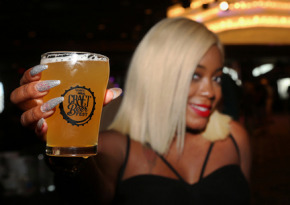
Not one but two outstanding beer festivals will take place in Atlantic City in September 2018 when Resorts Casino and the Golden Nugget each host a craft beer event sure to please the most discerning ale lovers.


The 6th Annual Resorts Atlantic City Beerfest
Saturday, September 15, 2018 • 4 PM • Resorts Ballroom

Beer lovers and enthusiasts can rejoice as Resorts Casino Hotel hosts their Annual Craft Beerfest September 15 in Atlantic City.The 6th Annual Craft Beerfest will feature more than 70 different craft beers from around the country with local and regional breweries.

Guests will receive a complimentary souvenir sampling glass to try top-notch craft beers including: Fat Tire, Elder Betty, Tropical Torpedo, Jersey Juice, Funnel Cake, Black Chocolate Stout, 1911 Blueberry Cider Ale, Sea Quench Ale, J.A.W.N, Philadelphia Pale Ale, Snack Session IPA, Longboard, Matilda, Cruiser IPA, Golden Monkey & More!

Live entertainment by Weird Science. Array of classic “beer food” favorites available for purchase.

Tickets only $30
Visit: https://resortsac.com/entertainment/atlantic-city-beerfest/


Craft Beer Festival at Golden Nugget AC
Saturday, September 29, 2018 • 7 PM 


Crack open a cold one at Golden Nugget Atlantic City’s Craft Beer Festival on Saturday, September 29, 2018.


Sample over 99 varieties of seasonal craft beers from over 30 different breweries with chef-inspired appetizers, and enjoy live entertainment by Seven Stone. In addition, your ticket includes over $75 worth of exciting Golden Nugget offers and a souvenir glass.

Tickets are $69.00 from 7:00 – 11:00pm or $59.00 from 8:00 – 11:00pm.
Visit: www.goldennugget.com


An Evening with Jason Alexander and the Bay Atlantic Symphony

Long before he became “Seinfeld’s” George Costanza, the vastly talented Jason Alexander was a Tony Award-winning Broadway musical star. This fall, he brings his Broadway tribute stage show to Atlantic City for an evening of song and comedy with the Bay Atlantic Symphony

Bay Atlantic Symphony’s Annual Gala Concert is now in its 11th year and serves as the symphony’s largest fundraiser of the year. Proceeds benefit the symphony’s free music education programs for S. Jersey school students. 

VIP tickets for the event, taking place Saturday, September 29 at the Borgata Casino Hotel & Spa, include a  Cocktail reception with open bar, dinner, the concert and post concert dessert reception (Black Tie Optional).

Tickets for the concert only are also available.

Visit http://bayatlanticsymphony.org for more information on music education outreach programs as well as concert tickets and VIP Packages.

For concert only tickets visit theBorgata.com or by call 866-800-9849.

Atlantic City Comedy Festival

The 9th Annual Atlantic City Comedy Festival returns to Boardwalk Hall for two days Saturday, October 6 and Sunday, October 7 at 8:00p.m.

Enjoy a night out filled with jokes and laughter when comedian icons Mike Epps, Rickey Smiley, Lavelle Crawford and more take the stage at Boardwalk Hall for a comedy show you don’t want to miss. The lineup for each show is as follows.

Saturday, October 6th, 2018
Sommore
Bruce Bruce
Earthquake
Guy Torry
Buck Wild
 
Sunday, October 7th, 2018
Mike Epps
Rickey Smiley
Lavelle Crawford
Jay Pharoah
Tony Robert

Tickets:  $59.00 – $125.00

Visit: www.boardwalkhall.com/events   

Atlantic City Comedy Festival

The 9th Annual Atlantic City Comedy Festival returns to Boardwalk Hall for two days Saturday, October 6 and Sunday, October 7 at 8:00p.m.

Enjoy a night out filled with jokes and laughter when comedian icons Mike Epps, Rickey Smiley, Lavelle Crawford and more take the stage at Boardwalk Hall for a comedy show you don’t want to miss. The lineup for each show is as follows.

Saturday, October 6th, 2018
Sommore
Bruce Bruce
Earthquake
Guy Torry
Buck Wild
 
Sunday, October 7th, 2018
Mike Epps
Rickey Smiley
Lavelle Crawford
Jay Pharoah
Tony Robert

Tickets:  $59.00 – $125.00

Visit: www.boardwalkhall.com/events   

Miss’d America Pageant

Come check out the Miss’d America Pageant where competitors compete for one of the most prestigious titles in drag on Saturday, September 22 in the Event Center at the Borgata Atlantic City.

This is a not to be missed entertainment event where contestants perform and entertain to prove why they deserve the crown.

The Miss’d America Pageant started in 1994 at a local Atlantic City club and was created as a spoof of the world-famous Miss America Pageant to raise funds for a local charity. It took place annually on the night after that famous beauty pageant, the joke being that the drag performers ‘missed’ getting into the real pageant at Boardwalk Hall. It ended in 2005 and was absent from Atlantic City for nearly five years, before making its triumphant return on January 31, 2010 and has grown larger and more spectacular every year since.

Carson Kressley returns again as the host of this year’s pageant along with the incredible Miss’d America Dancers, Special Musical Guest Frankie Z, Miss’d America 2018 Pattaya Hart and the Melanie Rice Orchestra. The show will be once again written and directed by the talented Mark Dahl.

Portion of the proceeds from the 2018 Miss’d America Pageant will go to the Greater Atlantic City GLBT Alliance who will distribute to various LGBTQ and LGBTQ supportive charities. Since its inception, the pageant has donated over $300,500.00.

Tickets:  $35.00 – $100.00

Visit: www.theborgata.com

Atlantic City Ballet Presents “Swan Lake”

Atlantic City Ballet brings the ballet classic Swan Lake to the stage at Caesar’s Maximus Theater on Saturday, September 8th at 7:00 p.m.

Of all the great classics, Swan Lake remains the quintessential ballet of all time. A story of romance, sorcery and betrayal, and centered on one of life’s most recognizable themes – the struggle between good and evil. Artistic Director Phyllis Papa infuses Atlantic City Ballet’s production with a new passion that embodies all the beauty, strength, and grace of classical ballet.

The performance will be held at 7:00 p.m. at Caesars Circus Maximus Theater. Tickets are $20.00 – $45.00.

Visit: http://www.acballet.org/attend

2019 Miss America Parade & Competition

Miss America celebrates its 98th Anniversary this year, with some groundbreaking changes announced by the Board of Trustees of the Miss America Organization. The Board declared that the 51 women representing their home states and the District of Columbia will no longer be judged on outward physical appearance.

Not sure how that’s going to work but despite the changes and the recent controversy, Miss America is a time-honored tradtion in Atlantic City and a much anticipated event for locals.

Preliminary competitions run September 5–7 from 7:00 p.m.-9:00 p.m. at historic Boardwalk Hall. The Show Us Your Shoes Parade, one of the most beloved Atlantic City traditions, takes place on the famed Atlantic City boardwalkon on Saturday, September 8 from 5:00 p.m.-7:00 p.m. The procession starts at New Jersey Avenue and travel down the Boardwalk ending at Albany Avenue—rain or shine.

The Miss America Competition will take place at Boardwalk Hall on Sunday, September 9, 2018, from 9:00 p.m.-11:00 p.m. and airs live on the ABC Television Network.

For tickets and information visit: www.boardwalkhall.com