Author: Casino Connection Staff

Poll Finds New Jersey Voters Still Overwhelmingly Against North Jersey Casinos

A new poll finds New Jersey voters are still soundly against the building of new casinos in the northern part of the state more than a year and half after overwhelmingly defeating a referendum on the plan in 2016.

According to a scientific poll paid for by Trenton’s Bad Bet—a non-profit organization which was initially formed to oppose the referendum—voters overwhelmingly support three key ideas to raise revenue in the state proposed by new Governor Phil Murphy. They include the legalization and taxation of marijuana, a millionaire’s tax, and closing corporate tax loopholes.

However, only 34 percent of voters approve of raising revenue by opening casinos outside of Atlantic City.

“By nearly a two to one margin voters prefer a millionaire’s tax or legalized marijuana over expanding casinos in North Jersey,” a message on the poll reads. “In fact, voters believe Gov. Murphy should heed the will of the people on casino expansion.”

Murphy supported the 2016 referendum. Though the referendum did not name specific sites, new casinos proposed for the Meadowlands Racetrack and another in Jersey City were considered the leading contenders.

During his campaign, Murphy said he still supports the plan, but said it would be up to the state legislature to bring back a referendum. However, New Jersey Senate President Stephen Sweeney has said such a move was unlikely since the referendum was defeated by a nearly 4 to 1 margin.

Atlantic City area legislators, however, fear that the idea could gain momentum again.

 “Voters are still tired of Trenton’s broken promises and believe North Jersey casinos are a bad bet,” the polling message reads. “Even after hearing the best arguments for North Jersey casino expansion, voters believe casinos could harm existing Atlantic City casinos and that Trenton politicians will fail to keep their promises.”

New Governor Means New Attitude on Atlantic City Takeover

New Jersey is still in control of Atlantic City’s finances, but city officials are welcoming a new approach on the issues from the state’s new Governor.

Governor Phil Murphy—who succeeded former Governor Chris Christie last month—has already met with Atlantic City’s Mayor Frank Gilliam to discuss the city’s status.

According to the Press of Atlantic City, Gilliam said following his meeting with Murphy that the governor assured him Atlantic City was a “high priority.”

However, no timetable has been set for the new governor to decide on whether to continue or end the state’s control of the city. The state took over the city’s finances in November 2016. During his campaign, Murphy said he wanted to end the takeover.

Meanwhile, representatives of the Governor’s Office met with the union that represents city’s fire department. John Varallo Jr., president of the union, told the Press the meeting was productive.

“The approach that they are using feels different than in the past,” Varallo said. “It’s a more positive approach. They are taking time to consider everything. There is no political agenda.”

In January, Superior Court Judge Julio Mendez ordered both the state and union to attend two-court mandated mediation sessions to try to resolve issues regarding salary cuts and a possible 10 to 12 more layoffs. The sessions have since been put on hold as the new administration reviews the case, the Press reported.

New Jersey Appoints Special Atlantic City Counsel

Governor Phil Murphy and the Department of Community Affairs have appointed Jim Johnson, a former U.S. Treasury undersecretary, as special counsel within the state’s oversight of Atlantic City specifically to provide “recommendations for the process of returning the city to local control.”

Johnson will work with the state attorney general and review ongoing litigation in Atlantic City, according to the announcement. He will be paid $1 per year for his work.

The announcement does not affect the state-appointed position of Jeffrey Chiesa, a former U.S. senator, who has been overseeing the city’s finances since November 2016. Chiesa’s firm has charged several million dollars to oversee the city government.

‘Integrity Fee’ Becoming an Issue in Sports Betting Legalization

Silver: 1 percent fee would pay league for “intellectual property”

Major League Baseball last week joined the National Basketball Association’s lobbying effort to create sports betting regulations that include a 1 percent “integrity fee” on all wagers paid to the league sponsoring the games. However, NBA Commissioner Adam Silver may have thrown a monkey wrench into the leagues’ argument for the fee.

MLB lobbyists drafted a bill to be introduced in the Missouri legislature that would regulate sports betting should the federal ban on wagering be lifted through repeal of the federal ban imposed by the 1992 Professional and Amateur Sports Protection Act (PASPA)—either through congressional action or a ruling favoring the state of New Jersey in NCAA V. Christie, now before the U.S. Supreme Court. It is one of 20 state-level bills to legalize and regulate sports betting on the demise of the federal ban.

As the NBA promoted in arguments before the West Virginia legislature, MLB’s proposed bill would impose a 1 percent integrity fee—a tax on all wagers placed on each league’s games, payable to the league regardless of the results of a game. As the NBA previously described it, the fee would be used for increased technological and other safeguards to ensure the integrity of games and of the sports-betting operation in general.

However, just as the MLB was making its argument in Missouri, NBA Commissioner Adam Silver changed the argument for the fee in comments that make it look much more like a money grab than anything related to the integrity of the sports. In comments at an NBA All-Star Weekend press conference, Silver referred to the potential fee not as integrity insurance, but as a royalty to the league for wagers on its “intellectual property.”

“I would only say from the NBA’s standpoint we will spend this year roughly $7.5 billion creating this content, creating these games,” Silver said. “Those are total expenses for the season. So this notion that as the intellectual property creators that we should receive a 1 percent fee seems very fair to me.”

The revealing comments only stand to fuel the controversy already surrounding the proposed fee, which has been assailed by gaming lobbyists led by the American Gaming Association as unworkable. As the AGA has pointed out, legal Nevada sports books already pay a 0.25 federal excise tax on revenues, in addition to a 6.75 percent tax on gross gaming revenues—a GGR tax that is sure to be much higher as sports betting is approved by states seeking to close budget gaps.

Legal books end up with an average 3 percent profit margin, which means a 1 percent fee would prevent them from offering odds to compete with the illegal bookmaking that already accounts for the vast majority of sports wagering in the U.S. The AGA has taken the position that the integrity fee would doom legal sports betting before it begins.

Back in West Virginia, one of the sponsors of the sports betting legislation there spoke out against the proposed integrity fee. “I think the 1 percent integrity fee is an absolute joke,” said Rep. Shawn Fluharty, lead sponsor of West Virginia’s sports-betting bill, speaking to WVNews. “Nevada doesn’t even pay them. I can’t help but see the irony that MLB won’t let Pete Rose in the Hall of Fame because he bet on sports, yet now the league wants to make money on sports betting.”

Meanwhile, states where college sports reign are fighting against legal sports betting even beginning. In Mississippi, Rep. Roun McNeal has introduced a bill that would ban sports betting in the state, should the federal ban be overturned. “We don’t want to be caught with our pants down” if the federal ban is overturned, McNeal told NBC News.

A spokesperson for the NCAA—the lead plaintiff challenging New Jersey’s 2014 sports betting law before the U.S. Supreme Court—joined the Mississippi lawmaker in speaking out against any legal betting on college games. “The NCAA opposes all forms of legal and illegal sports wagering, which has the potential to undermine the integrity of sports contests and jeopardizes the welfare of student-athletes and the intercollegiate athletics community,” the NCAA posted on its website.

“There are some deep-seeded feelings that this is a particularly delicate situation in the college arena,” said Tom McMillen, president and CEO of the NCAA Division 1 Athletic Directors Association, in an interview with NBC. “These kids are on scholarship. Listen, we’ve seen point-shaving scandals before. We’re concerned.”

Any decisions on the bills, of course, will likely come after the Supreme Court issues its decision in the New Jersey appeal, which is expected this spring.


Rhode Island

In Rhode Island, Major League Baseball and the National Basketball Association have hired a lobbying firm to carry their message on sports betting. They seek legislation that would put them in control and obtain the profits from sports betting.

A decision lifting the ban by the U.S. Supreme Court would be needed first. Two months ago, Senate President Dominick Ruggiero introduced a bill that would allow the state’s two casinos, both owned by Twin River, to offer sports betting if the 1992 Professional and Amateur Sports Protection Act (PAPSA) is ruled unconstitutional.

NBA and MLB have hired former state Senator Stephen Alves, who once chaired the Senate Finance Committee, for $5,000.

Mike Bass, a spokesman for the NBA, issued this statement, “We’ve dedicated years to carefully studying the issue of legalized sports betting and we agree the time has come to give sports fans a safe and legal way to bet on sports while protecting the integrity of our games. We look forward to working with the governor and the legislature on a framework that includes appropriate safeguards.”

The NBA seeks a 1 percent “integrity fee,” which works out to be a fifth of what a sportsbook operator charges, and to be able to control data used by sportsbooks to set wagers and odds.


West Virginia

The West Virginia Senate, in a 25-9 vote, approved SB 415, allowing betting on professional and collegiate sports contests. The bill now will go to the House of Delegates. State Senate Finance Chairman Craig Blair said, “The bill gives casinos one more tool to be able to provide entertainment. All our bordering states are considering this as well, so we need to remain competitive.”

Under SB 415, the West Virginia Lottery Commission would have the authority to regulate sports betting in the state, including authorizing online and mobile betting. Operators of the state’s five gaming facilities — four horseracing tracks and the Greenbrier– could offer legal sports betting on both collegiate and pro events to those 21 and older, after paying up to $100,000 for a 5-year sports betting operator license. They would pay 10 percent tax on gross betting revenue. Senators estimated legalized, regulated sports betting could generate $5 million in revenue in its first year.

State Senator Michael Romano, who voted against the bill, expressed concern that sports betting could lead to problems among the state’s 1.8 million residents; 18 percent live below the poverty line. He said, “When you make betting no harder than going down to your corner pizza place or beer joint and gamble, and you make it no harder than holding your phone in your hand to gamble, you’re taking a big risk with our citizens. Do we want to be a part of that?”

Romano added he did not believe the state would get an adequate return on its investment. But state Senator Mike Woelfel said $5 million in first-year revenue is probably a conservative estimate. “Based on my research, the five million is about half of what it’s going to be the first year. I think it’s going to be closer to nine or ten. And I’ll bet on it.”

Woelfel added he attended a Super Bowl party where people used their phones to place wagers. “They didn’t have to go to a track. So this is going on and this is a fact of modern society. And it’s a stream of potential tax revenue that I don’t think we can ignore. I see us capturing activity that’s already going on in our state and capturing tax revenue that’s going to be spent for good reasons.” He also pointed out sports betting would create new jobs.


Illinois

In Illinois, state Senator and former National Football League linebacker Napoleon Harris III recently introduced SB 3432, which would legalize sports betting in Illinois in anticipation of the U.S. Supreme Court lifting the federal ban. Harris’ Sports Wagering Act includes an integrity fee provision.

With about 30 lobbyists in 16 states, the MLB and NBA are actively promoting the integrity fee, as well as for provisions allowing the leagues to control the data a sportsbook uses and the right to limit wagers sportsbooks can offer.

Harris, who was drafted by the Oakland Raiders in the first round in 2002, spent seven years in the NFL, playing for four teams. He won the 15th district seat and took office in 2013. The district covers parts of Cook and Will counties south of Chicago.

Harris’ bill would allow in-person and mobile gaming at licensed facilities or through licensed operators. Operators would pay an initial fee of $10,000 and a 12.5 percent tax on gross sports wagering revenue—compared to the 6.75 percent rate in Nevada and the 10 percent rate proposed by SB 415 in West Virginia.

The NBA and MLB claim they need the integrity fee to protect consumers and monitor activities such as preventing players from betting on their own sports. The leagues said casinos must be required to share real-time betting information, report abnormal betting and cooperate with league investigations. Proposed sports betting legislation in West Virginia and Iowa does not include the fee. In Illinois, only MLB—not the NBA—has a registered lobbyist, according to Bloomberg Law.

Other bills working their way through the Illinois legislature include:

• The Sports Betting Consumer Protection Act, sponsored by state Senator Steve Stadelman, would require a state agency to oversee rules, regulations and licensing of sports wagering. The bill, assigned to the Gaming Committee, does not include an integrity fee.

• SB 3125, sponsored by state Senator William E. Brady, would allow the Illinois Racing Board to adopt rules authorizing sports wagering by organization licensees and inter-track wagering location licensees.

• Also named the Sports Wagering Act, HB 5186, sponsored by state Rep. Tim Butler, would create the Division of Sports Wagering within the Illinois Gaming Board to issue licenses. The bill, moved to the House Rules Committee, does not include the integrity fee or other restrictions imposed by the leagues. It also states, “A tax of 30 percent is imposed on the adjusted gross receipts of sports wagering and shall be collected by the Board and deposited into the Capital Projects Fund.”


Iowa

And in Iowa, the House Government Committee in a 16-7 vote recently passed HSB 592 which would legalize sports betting. The next step for the measure is the Ways and Means Committee, then the full House floor. The bill does not include the 1 percent integrity fee proposed by the NBA and MLB. Observers said, Iowa lawmakers reviewed the talking points and memos circulating around the U.S. from NBA and MLB lobbyists but felt the fee was not appropriate for their state.

The bill, sponsored by state Rep. Ken Rizer, would require a tax of 5 percent on the first $1 million of adjusted gross receipts, then 10 percent on the next $2 million. Rizer noted that’s slightly higher than the 6.75 percent tax on Nevada sportsbooks in Nevada, significantly lower than the 12.5 percent tax being considered in Illinois and lower than the 10 percent tax proposed in West Virginia. The bill would require operators to pay a $25,000 licensing fee.

Iowa Racing and Gaming Commission Chief Executive Officer Wes Ehrecke stated, “I think a lot of people enjoy sports, watching sports and the opportunity to bet on it. Especially in a legalized environment, and set the standards by our Racing and Gaming Commission and high levels of integrity, assure that you’re going to be paid and to have it here, I believe will be a positive.”

Atlantic City Casino Revenue Takes Big Hit in January

The weather can be a major factor in Atlantic City’s fortunes and a cold January marked by a major blizzard early in the month contributed to a 10 percent drop in casino revenue for January.

According to figures released by the New Jersey Division of Gaming Enforcement, the city’s seven casinos won $184.3 million in January, down 9.9 percent from January 2017.

The Golden Nugget was the only casino with a monthly revenue increase, up 1.7 percent from last year.

“What a difference a blizzard makes,” said James Plousis, chairman of the New Jersey Casino Control Commission in a press release. “When people are stuck in their homes by more than a foot of snow and temperatures are dipping into single digits, they don’t come to Atlantic City. So, it comes as no surprise that casino revenues were down last month.”

New Jersey and neighboring states were impacted by a major blizzard on January 4 that dumped as much as 2 feet of snow in many areas. There were also some stretches in the month where temperatures hovered in the single digits.

Despite the weather’s impact, analysts are still expecting a strong year for the city despite the January fall in revenue. Two new casinos—a Hard Rock casino and the re-opening of the former Revel casino as the Ocean resort—are scheduled for the summer.

According to an analysis by the Associated Press, Caesars Atlantic City had the largest monthly revenue decline, down 23 percent to $21.7 million; Harrah’s was down 16.3 percent to $23.5 million; Borgata was down 10.2 percent to $57.7 million; Bally’s was down 8.8 percent to $12.7 million; Resorts was down 6 percent to $11.6 million; and Tropicana was down 4.4 percent to $26.1 million.

The weather did not, however, negatively affect the resort’s online gaming numbers as online revenue was up 16.7 percent to about $22 million.

The Golden Nugget remained the leader in the market taking in $7.3 million in January, an about 53 percent from a year ago. The Golden Nugget’s numbers—which represent revenue for its own online brand as well as the Betfair and Sugarhouse casino brands—appear to be a record for a casino’s single-month online revenue.

New Jersey Considers Changing Keno-style Lottery Game

The New Jersey Lottery’s Quick Draw game is too quick for many state lawmakers who see the keno-style game as a threat to Atlantic City casinos.

So, the New Jersey State Assembly is considering a bill that would drastically reduce the number of daily drawings of the game from about one every five minutes to just twice a day.

The Assembly gaming committee began hearing testimony on the legislation. Quick Draw was introduced by the lottery about six months ago with estimates it would bring in about $20 million in revenue by the end of the state’s fiscal year in June.

But committee chairman Ralph Caputo said the former administration of Governor Chris Christie—who left office in January—gave very short notice to the state legislature of the game’s introduction before it was launched and they now have concerns the game will cut into Atlantic City’s revenue.

“It’s a sensitive issue. We’re talking about market share in gaming,” said Caputo, a co-sponsor of the bill to alter the game. “Anytime there’s a new game, it could take market share away from an existing casino.”

The Christie administration announced the game last April, and playing began in bars and restaurants in August. Through December it has brought in under $5 million, according to state figures.

Within the bill to limit drawings, Caputo wrote, “Quick Draw was approved … as a game to be played primarily in bars, restaurants, bowling alleys, and other locations where players spend time dining or socializing. This game is fundamentally different from lottery games as contemplated by the framers of the lottery amendment of the State Constitution.”

In the opening hearing, the committee heard from just two witnesses as lottery and state Treasury officials did not attend.

According to the Associated Press, Bob Marshall, the legislative affairs director of the Greater Atlantic City Chamber of Commerce, supported the bill to reduce drawings saying the game essentially expands casino-style gaming.

Diane Weiss, executive director of the New Jersey Licensed Beverage Association, however, opposed the bill, saying the game has had a good response at bars and restaurants and has encouraged people to order more food and drinks at restaurants where it’s played.

Christie and the Legislature transferred the lottery, valued at about $13 billion to the state’s public pension fund last year. The move was designed to lower the pension’s unfunded liability, which the Christie administration estimated at around $50 billion. The move means that the lottery is indirectly helping public pensioners, according to the AP report,

Players can purchase a Quick Draw play for between $1 to $10. Prizes range from $1 up to $1,000,000 depending on the purchase amount. Players select from 1 to 10 numbers out of a pool of 80 numbers. The odds and potential prizes are determined by the quantity of spots selected. Players win by matching some or all of their numbers to the 20 numbers drawn.

Full Speed Ahead, Says New Wynn CEO

Newly appointed Wynn Resorts CEO Matt Maddox is spending his first days on the job assuring the gaming giant’s employees that the company is moving confidently forward toward completion of the major resort projects launched by his disgraced predecessor.

In a series of town hall-style meetings with members of a corporate-wide workforce of 25,000 people, the 42-year-old executive also affirmed the company’s commitment to gender equality and a “zero-tolerance” policy toward sexual harassment.

Declining to specifically address issues related to Steve Wynn, who earlier this month resigned as chairman and CEO of the company he founded in the wake of a Wall Street Journal exposé detailing years of alleged sexual harassment and coercion on the part of the casino tycoon, Maddox said he is prepared to answer any questions put to him by investigators looking into the accusations.

Wynn has vehemently denied the claims of his accusers, although his lawyers have admitted that he privately paid a former Wynn Las Vegas manicurist a $7.5 million settlement

He has blamed the Journal story on a campaign instigated by his ex-wife Elaine Wynn, with whom he is embroiled in a three-way court battle along Wynn Resorts co-founder Kazuo Okada over control of a potentially decisive chunk of the company’s stock.

Okada, a billionaire from Japan who made his fortune in machine gaming, was ousted from the board of Wynn Resorts in 2012 and stripped of his sizable shareholding amidst reports of bribery in connection with a gaming development in the Philippines. He is suing the company to regain the shares.

Elaine Wynn was removed from the board in 2015 after she went to court to challenge the divorce settlement that granted Wynn control over her stock, a settlement reputedly obtained by Wynn to outmaneuver Okada’s influence in the company.

Subsequent to Wynn’s resignation the board of directors, which could face a barrage of shareholder lawsuits in connection with his alleged sexual misconduct, has created a committee to investigate the accusations and review the company’s internal policies and procedures to ensure a “safe and respectful workplace for all employees”.

The allegations also are under investigation by gaming regulators in Nevada and Macau, Wynn’s principal markets, and in Massachusetts, where the company is developing a $2.4 billion casino hotel slated to open next summer outside Boston.

Maddox, who does not sit on the board but has served in executive roles since the company’s founding in 2002, has denied any personal knowledge of misconduct by his former boss.

He said also that people should “hold off making any judgment until the investigations into the accusations are complete.”

In the meantime, he appears determined to lay to rest reports that the board is considering changing the company’s name.

“My thoughts are that our brand stands for excellence, high quality and service and all 25,000 of us are proud of that,” he said.

In meetings with employees he has steered a decided tack toward the future, announcing measures that include a corporate task force focused on gender equality, led by General Counsel Stacie Michaels and Chris Flatt, who heads hotel sales and marketing. A new policy is being rolled out providing employees with newborn children with six weeks of paid parental leave. The company also is establishing a merit-based scholarship fund.

“I’m going around in the town halls explaining not only is the company stable, it’s strong. So, all of you are safe,” he said. “We are going to keep executing what we do. And I’m pointing out at each town hall that this is a zero-tolerance company.”

As for the company’s multibillion-dollar project pipeline, Maddox vowed that it’s full-speed ahead with the heralded design team behind The Mirage, Treasure Island, Bellagio and Wynn Las Vegas intact, led by architects Roger Thomas and DuRuyter Butler, and bolstered by a new “innovation advisory team” he is assembling.

“The idea is that our future projects are going to continue to be leading in innovation and creativity,” Maddox told The Associated Press. “We are continuing to move forward as fast as we can.”

Speaking of Paradise Park, the massive hotel and entertainment enclave on the site of a former golf course the company owns just behind the Las Vegas Strip, he said construction has begun on a 400,000-square-foot convention facility adjacent to a planned lagoon, and the company has already begun booking conventions there for its scheduled completion in two years.

He said development of the so-called Wynn West hotel project on 38 acres across the Strip from the Wynn Las Vegas “is still in the top of the first inning” and is proceeding as planned.


Boston Bashing

In Massachusetts, however, there is a question than whether the company that bears his name will even be allowed by the Massachusetts Gaming Commission to finish the $2.4 billion mega-casino.

The commission is concerned not so much with his misconduct, as for the fact that the company actively kept his $7.5 million settlement with one of the women he allegedly harassed from the commission when Wynn was applying for the Boston Metro casino license.

The commission could revoke or suspend the license or levy a large fine.

Investigators gave commissioners an update on the month-long investigation last week. The commission has termed the investigation “a priority.”

Commission Chairman Stephen Crosby, asked by reporters if the panel would make a decision soon, replied, “This is one of these things where investigations are complicated, the stakes are big, and we need to do it carefully and right. And we’re giving the investigations and enforcement bureau the time and the space to pursue whatever they think is appropriate.”

At this point Wynn Boston Harbor, which is actually being built in the city of Everett, is still heading toward a June 2019 opening.

Crosby said, “I think what people should do, would be just to sit tight and see what happens,” adding “We’ve said that for the time being everybody at the Wynn facility should go about their business and feel fine about it. And we will eventually figure out what we need to figure out, as I’ve said before, what the hell happened here.”

He added, “A central question is, what did the board of directors and staff know and when did they know it, about the settlement and the associated allegations.”

The chairman said he was happy Wynn resigned his leadership, and if the board covered up the allegations or if the “entire company is tainted” it would be appropriate to yank the license.

The casino construction has made great strides in cleaning up what was once a toxic waste hazard contaminated by many decades of chemical plants operating along the river, returning it to close to its state of nature two centuries ago.

Meanwhile candidates for public office are weighing in on the issue, with the importance of saving local jobs rising to the top of their public concerns, by vying with a concern for victims.

Congressman Michael Capuano, who is running for reelection, and whose primary challenger is Boston City Councilmember Ayanna Pressley, made it clear during a talk with reporters that his priority is the 4,000 construction jobs and the equal number of permanent positions that will be created when the casino opens.

“Everything they do from this point forward has to have an eye towards those jobs as far as I’m concerned,” he said, “Simply closing it down is not an answer.”

Pressley has a slightly different emphasis. “From the beginning, I have never been a fan of gaming as an economic development strategy, however, there are many workers who did nothing wrong that stand to lose their livelihood without development on that site, not to mention the permanent jobs,” she said, but added, “Regardless of what happens with the site, whether it becomes a casino or larger mixed development, I will continue to advocate for the mitigation funds to create real, concrete job training pipelines for permanent jobs on site and within the district.”

Taking up some of the issues the commission is wrestling with, Capuano said, “If the entire board has been implicated in this wrongdoing, that is a real serious problem and I think that the state should take action,” but added that the commission couldn’t simply pull the license and leave an unfinished casino in limbo.

Both candidates agree that Wynn’s name is toxic, and that the casino should not bear that name.

Pressley declared, “If the Gaming Commission does decide to keep this casino, under no circumstances should the Wynn name be emblazoned on its facade,” Pressley said. “It sends the message to survivors that fame and power are more important than them and their healing.”

State Attorney General Maura Healey has also called for expunging Wynn’s name from the resort. On a radio show last week she echoed Crosby’s concerns. “We need to know from, not just Steve Wynn, but more importantly the entire Wynn enterprise, all Wynn companies—we need to know what they knew, when they knew it, what they chose to disclose, what they chose to withhold from the state of Massachusetts when applying for this license and going through the suitability review.” Healey opposed the 2011 law that authorized casinos in the state.

Pressley is worried that Wynn himself remains a factor in the company. “I think it was appropriate for Steve Wynn to step down – but I remain concerned that even with Wynn stepping down, he still wields influence over the Wynn company and their internal procedures,” her statement said.

The Boston Globe last week called for the memory wipe of the Wynn name, but didn’t stop there. “Renaming the company is another needed move, so that his disgraced name never rises over the Boston skyline. But those are first steps, not final ones. So what if the $2.4 billion Wynn Boston Harbor casino is half built? Wynn Resorts’ suitability to operate remains an open question.”

Wynn’s victory over Boston and its mayor, Marty Walsh, after a bitter battle, left a bad taste in the mouths of many Bostonians, so the paper’s attitude is not unexpected.

The people in Boston may not share those ill feelings. A poll by MassINC of the 7th Congressional District, which includes Boston, showed that 50 percent of all Democratic voters agree that the construction of the resort should continue now that Wynn is no longer connected with it. Twenty-three percent said the project should continue, but that another developer should complete it. Twenty percent called for killing the project, with 7 percent stating no opinion. A second question asked whether the casino should be renamed, with 64 percent saying yes and 21 percent saying the name should be retained.

As this discussion continues, Bay State officials have proposed a plan for building a 780-foot pedestrian bridge to cross the Mystic River and link Somerville and Everett, connecting the Assembly Square Orange Line stop and the casino. Wynn Resorts has agreed to pay for a $250,000 feasibility study and some of the $23 million cost of designing and building the bridge.

Will support for working with Wynn now evaporate?

The bridge would be the longest such structure in the Greater Boston area. It would make it possible to walk ten minutes to cross from Boston to the casino.

The agency responsible for building such a bridge, the Department of Conservation and Recreation, says it is searching for funding for it. It won’t be eligible for federal funding until there is a more concrete proposal, and some serious commitments by private and public entities.

Since no public agency is jumping up and down to volunteer funds, officials may be forced to ask for more money from Wynn at a moment when the urge is to shun it. But at the same time the company may be wanting to do everything it can to build up political points.

The bridge has been proposed for many years before the Wynn casino was ever thought of—as a logical feature to serve a fast-growing part of the city.


Macau Moves

In Macau, the company owns two parcels totaling 11 acres near the Wynn Palace property that opened in 2016.

“We’re in full design mode there to present to the government a plan for additional hotel rooms, suites and some really exciting new entertainment, food and beverage concepts,” Maddox said.

A full-time design group has been dedicated to Macau, led by Chris Gordon, a 20-year lecturer from the Massachusetts Institute of Technology Center for Real Estate and one of the Boston Harbor design leaders.

Maddox also has traveled to Japan on and off for the past eight years, establishing contacts in the company’s bid to become one of the first holders of a gaming license there, a process expected to progress to the end of this year.

He knows the Far East markets well, having worked for Wynn Resorts in Macau before returning to Las Vegas in 2006 to take up the position of chief financial officer and later president.

He said the board of directors had been developing a succession plan for roughly four years and Wynn’s resignation merely accelerated its implementation.

“They, along with Steve, decided to make me the president of Wynn Resorts with the idea that eventually, assuming things continue to work well, I would become the CEO,” he said.

Caesars Announces Room Check Policy in Wake of Vegas Shooting

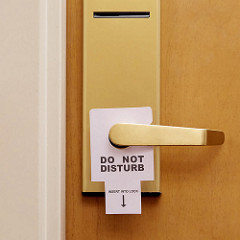
Caesars Entertainment will introduce a new policy to enter guests’ hotel rooms every 24 hours, regardless of whether the occupants have hung out a do not disturb sign.

Caesars plans to implement the policy at all of its 47 properties. The company may also provide staff with ‘panic buttons’ allowing them to promptly summon assistance should they feel threatened, the company said.

Company spokesperson Noel Stevenson told the Associated Press the new policies were a direct response to “recent tragic events,” referencing last October’s mass shooting at an outdoor concert on the Strip that left 58 concert-goers dead. To protect hotel staff from potential harm, Caesars said security guards will conduct the checks on rooms displaying do not disturb signs.

Caesars is the latest casino company to tighten its oversight of goings-on by its guests, including Boyd Gaming, Wynn Resorts and MGM Resorts.

MGM’s new policy authorizes hotel security to enter a room if its guest has not interacted in person or over the phone with hotel staff for a period of 48 hours. The Vegas shooter amassed a cache of weapons and eventually fired from MGM’s Mandalay Bay after several weeks in a room with a do not disturb sign on the door.

Nevada Fighting Trump Bid to Cut Tourism Marketing

Major U.S. tourist destinations such as Las Vegas could be in for some pain under a proposal in President Donald Trump’s 2019 budget which calls for killing a program that markets tourism to the U.S. abroad.

The provision marks the second time the Trump administration has sought to eliminate funding for Brand USA, as the program is called. The 2018 budget contained the same provision, but Congress disregarded it.

Republican Congressman Mark Amodei, whose 2nd District includes the tourist region encompassing Reno and Lake Tahoe, said that as a member of the Appropriations Committee in the House of Representatives he wasn’t concerned.

“It’s good that they are watching the budget, they should,” he told the Las Vegas Review-Journal. “But last year’s budget axed a lot of things and the House systematically put almost all of them back in.”

Rossi Ralenkotter, chief executive officer of the Las Vegas Convention and Visitors Authority, was less sanguine. He noted that since Brand USA was renewed in 2014­

Sands Sevens Out in Pennsylvania

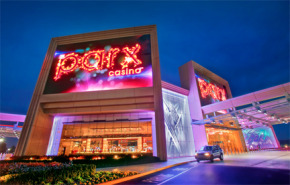
The Pennsylvania Gaming Control Board awarded the state’s fourth Category 4 mini-casino license to Greenwood Gaming and Entertainment, owner of Parx Casino in Bensalem, for a facility in South Newton Township, Cumberland County, in the southeastern part of the state.

Greenwood got the license after the board invalidated what was thought to be the winning bid from Las Vegas Sands for a satellite casino in Mercer County near the Ohio border.

Greenwood’s bid of $8.1 million secured a location for placement of a Category 4 casino in a 15-mile radius area with a center point in South Newton Township. It is Greenwood’s second venture in the satellite casino area and third Pennsylvania property overall, as the company is a partner with Cordish Companies in Stadium Casino, which is building the second casino in Philadelphia and secured the license for a mini-casino in Westmoreland County.

The $9.9 million bid by Las Vegas Sands, which owns the Sands Bethlehem casino, was thrown out after it was determined the location’s 15-mile buffer zone overlapped the zone of the mini-casino license previously won by Mount Airy Casino Resort. The gaming expansion law, enacted in November, requires each mini-casino license to pinpoint a spot surrounded by a 15-mile radius where no other casinos may be located. That radius cannot overlap another casino’s buffer zone.

Sands picked Hempfield Township in northwestern Pennsylvania, which falls within the 15-mile buffer zone created for Mount Airy’s casino near New Castle in Lawrence County.

Category 4 casinos are permitted 750 slot machines, and the owners can add up to 30 table games for an additional $2.5 million fee. The bids, which start at $7.5 million, will be entertained in biweekly auctions being held through May 16. The first three satellite casino licenses were awarded to Penn National Gaming for York County, Stadium Casino (a partnership between the Cordish Group and Greenwood Gaming) and Mount Airy.

The $8.1 million winning bid illustrates how the price of the mini-casinos has been dropping—Penn’s bid for the first satellite facility was more than $50 million, Stadium’s bid was $40 million and Mount Airy’s bid was $21.2 million.

Sands will be eligible to submit a new mini-casino bid at the next auction, being held March 7.

Greenwood and Sands were the only bidders for last week’s auction. The law permits the gaming board to entertain bids from outside operators for any licenses not taken by current casino licensees.

That could be a likely possibility due to an extra amount of caution with respect to competition, wrote analyst Thomas Zitt of The Innovation Group.

“For operators, the strategic implications are complex,” Zitt wrote. “Do you play defense and protect your local market, like Penn National when it snatched up York? Or expand your territory like Cordish and Mount Airy and bid on the opposite side of the state? How do you value the market potential of a location without knowing what the competitive landscape will ultimately look like? You won’t even know where previous winning bids will be developed.”

Zitt noted that only four bids were submitted for the first two mini-casino license, three for the third and two for the fourth.

A Clouded First Year for N.Y. Casinos

It was a disappointing first year for New York’s fledgling commercial casino industry.

Rivers Casino in Schenectady, del Lago Casino in Finger Lakes and Tioga Downs Casino in the Southern Tier collectively missed their first-year revenue forecasts by approximately $230 million 39 percent below what they told the state to expect in 2014 when they beat out 11 other proposed casino projects in a highly competitive bidding process in which only four licenses were awarded.

The shortfall came as no surprise. It’s been heavily reported when it became apparent after a few months of operations that Tioga Downs, which opened in December 2016 as a converted racino, and del Lago and Rivers, which opened the following February, were not attracting gamblers in New York’s crowded gaming market in the numbers they expected.

To be fair, neither del Lago nor Rivers had hotels until last summer, and at Tioga Downs not until December, six months behind schedule.

“Our projections assumed the hotel. That would skew the numbers pretty dramatically,” said owner Jeff Gural.

In the final tally, Tioga Downs generated $74 million on the casino floor, 28 percent shy of the $103 million initially forecast. Rivers Casino projected $222 million and delivered $139 million, a 37 percent difference. del Lago was off by 44 percent, ending its first year at about $147 million, more than $115 million below its forecast.

Analysts expect the shortfalls to continue, with Standard & Poor’s questioning the properties’ “long-term revenue stability,” and Moody’s issuing a report last month cautioning that while the new casinos juiced total state gambling revenues by 30 percent the increase largely came at the expense of existing operators.

“This trend, where newcomers are stealing share from incumbents, is consistent with what has been occurring throughout U.S. gaming markets, particularly in the Northeastern portion of the U.S.,” the agency said.

Earlier this month, New York hosted the opening of the largest of the state’s new commercial casinos, and the closest of the four to New York City Resort World Catskills, and March will see the Oneida Indian Nation open Point Place, its third central New York casino and the seventh tribally owned casino in the state, which also is home to seven slots-only casinos at racetracks.

S&P warns that proliferation in neighboring states—notably in Massachusetts and Pennsylvania—will exacerbate the competitive pressures.

“In our opinion, commercial casino gaming expansion in the region may provide short-term economic and budgetary gains, but is unlikely to improve state credit quality and may prove a long-term credit risk for states in the region,” the agency said in a new report.

Maryland Governor Supports Education ‘Lockbox’

Maryland Governor Larry Hogan responded to plans in the state General Assembly to pass a bill requiring that all casino taxes be placed in a “lockbox” for education, announcing plans to increase state spending on public education by $4.4 billion over the next decade from dedicated casino revenue.

The so-called “lock” was proposed earlier this year by Democratic lawmakers, who complained that revenue from a casino industry legalized for the purpose of supporting education was routinely siphoned off for other state programs, or for the general fund.

Hogan said his proposal would use roughly $450 million a year in casino revenue that does not currently go to the K-12 education funding formula, funneling some $100 million a year to school construction. “I believe every child in Maryland deserves access to a world-class education, no matter which neighborhood they grow up in,” he told the Sun.

Education advocates expressed skepticism last week in interviews with the Baltimore Sun. “It means that somebody’s going to have to find some more revenue or cut the budget a whole lot,” said Warren Deschenaux, the assembly’s recently retired head of legislative services.

Hogan said the current legislation will fix a flaw in the original gaming bill enacted in 2007, which created an Education Trust Fund but did not forbid the casino money from being used for other purposes.

“The people of Maryland and our children should not have to wait for another election or another referendum in order to fix this important issue,” he said.

Mount Airy Wins Third PA Mini-Casino

Lawrence County to get long-sought casino

The third license for a Pennsylvania Category 4 mini-casino was awarded to Mount Airy Casino Resort for a bid of $21.18 million. Mount Airy, the licensee currently operating a casino in the Pocono Mountains resort region in the eastern part of the state, pegged its Category 4 bid for New Castle, Lawrence County, in the western part of the state around 50 miles northwest of Pittsburgh.

The Category 4 license, created by the massive gaming expansion law signed in November by Governor Tom Wolf, authorizes a mini-casino with a maximum of 750 slot machines and, for an extra $2.5 million license fee, up to 30 table games. Mount Airy’s winning bid of $21.2 million was the lowest so far. Although the minimum bid is only $7.5 million, Penn National Gaming won the first Category 4 license for York County with a bid of $50.1 million, and Stadium Casino LLC won the bid for a casino near Greensburg, Westmoreland County, for $40.1 million.

Casinos can be located anywhere within a 15-mile radius of the bid location. In Mount Airy’s case, the location of New Castle is significant in itself as Lawrence County has sought a casino for around 14 years. Originally granted a Category 1 racino license, a project known for most of its life as Lawrence Downs went through several owners, none of which was able to arrange financing, before the state Gaming Control Board rescinded the license, which has yet to be re-bid.

County officials were delighted with the choice. “Lawrence County is surrounded by five counties,” County Commissioner Dan Vogler said in an interview with CBS Pittsburgh. “Three in Pennsylvania—Mercer, Butler, Beaver—and two in Ohio, Mahoning and Trumbull. When you take those five counties’ populations and add Lawrence, you’ve got a million people.   

“I’m hoping we an see a replication of what we’re seeing in Washington County with the Meadows,” he added, referring to the creation of several new housing developments surrounding that casino south of Pittsburgh. “There’s been a lot of growth around the Meadows.”

The award is the third of 10 mini-casino licenses to be bid in auctions being held every two weeks through mid-May. Current licensees such as Mount Airy get first crack at the new licenses, which cannot be located within 25 miles of a current casino. Any licenses going without bids will eventually be offered to outside operators.

The license won by Penn National for the first mini-casino was seen as a defensive move by the operator, which filed a lawsuit to block the satellite casino provision on the basis it put Penn’s Hollywood Casino outside Harrisburg in an unfair competitive position. Last week, Wolf asked a federal judge to dismiss the lawsuit.

According to a report on the Penn Live website, the governor joined with the Gaming Control Board to ask U.S. Middle District Judge Yvette Kane to throw out Penn’s lawsuit, which contends the expansion provision is unfair because most of Hollywood’s customers come from outside the 25-mile radius specified by the law. In a motion before the court, Wolf and the gaming board said Penn’s casino is in no more of an unfair competitive position than others, particularly those near state borders.

“Hollywood Casino’s 25-mile protective zone in all directions is more than a casino like Presque Isle or the Meadows receives due to competition in neighboring states,” the motion said, adding that Hollywood “cannot demonstrate that it was intentionally treated differently than other casinos” by the Category 4 provision.

As the auctions for Category 4 licenses proceed rapidly, other elements of the massive Pennsylvania expansion law face much more uncertainty. Applications have been available since the beginning of the month for licenses to operate online gaming and for video gaming terminals to be placed at truck stops, but there has been no news from the gaming board on any bidders for those licenses.

The 60-page applications for iGaming licenses will be available until April 2, when the board will officially accept them, and applications for VGTs at truck stops will be collected May 7. However, there are few other details available from the gaming board. “We will continue to provide updates on the next steps for all the various gaming expansion initiatives,” Gaming Control Board spokesman Douglas Harbach said in a statement published by the Philadelphia Inquirer.

Iowa Casino Anticipates Sports Betting

Opened in 2005 in Burlington, Iowa, Great River Entertainment has grown to include Catfish Bend Casino, Fun City and Pzazz, offering a water park, hotels, a spa, convention center, restaurants and more. The company has 600 employees. General Manager Rob Higgins said, “It’s not necessarily one thing that brings everybody here. The key to it in our mind is that it is a matter of making everything flow together and work together, so they all kind of feed off of each other.”

Chief Executive Officer Gary Hoyer added the entertainment complex offers southeast Iowa resident choices typically found in larger cities. He said Catfish Bend Casino attracts 600,000 visitors annually, and more than 1 million people visit the complex each year. He said 80 percent of visitors come from within a 50-mile radius of Burlington.

Hoyer said if sports betting becomes legal, Catfish Bend Casino has plans to create a new sports betting facility with big screen TVs in a sports bar atmosphere. “If sports betting becomes the case, then yeah, we would definitely be interested in trying to pursue that as we move forward. No question about it,” Hoyer said.

Higgins added, “Sports betting is appealing to our company not only from a revenue standpoint, but it will end up bringing a different type of person to the facility. It will bring probably a younger type person on a regular basis, and it also brings more people to the facility.”

Hoyer said attracting millennials continues to challenge the industry. He stated that generation has grown up playing video games “based on real-time skill level” and they don’t care for slot machines and other games of chance. “The industry is working to develop slot machines that include skill components that impact the odds and game results to try to make the experience similar to a video game,” he said.

Live! to Open Maryland’s First Gaming and Smoking Patio

Cordish Companies’ Live! Casino & Hotel, in the Baltimore suburb of Hanover, announced plans for the Orchid Gaming & Smoking Patio, Maryland’s first and only outdoor gaming area, featuring both table games and slots. Scheduled to open mid-April, Orchid is also the first in the state to offer ticket-in/ticket-out (TITO) table games, enabling players to move between slots and table games without carrying chips to the main cage.

“Orchid is the latest in the evolution of Live! Casino & Hotel, as we continually strive to create an environment that is engaging and welcoming for our guests,” said Rob Norton, president of Live! Casino & Hotel. “With Orchid, we are offering them visually stunning space to enjoy an extensive collection of cigars and spirits, while seamlessly moving between their favorite table games and slots.”

Orchid will feature 12 live table games, including blackjack, baccarat and roulette, plus 28 electronic table positions, including “Dealer-Assist” blackjack, baccarat, craps and roulette, and bar-top terminals. In addition, more than 150 of the latest slot machines, including video poker, will be available in denominations ranging from pennies to $10.

The gaming zones are interspersed among visually stunning features representing the four elements: earth, air, fire and water. Orchid’s exclusive bar will feature lounge seating and an extensive collection of spirits, including special barrel-aged cocktails. Specially built humidors will house premium cigars curated by Orchid’s cigar specialists.

MLB Supports Legal Sports Betting—With Conditions

Another party was heard from last week when Major League Baseball produced a draft bill that may be considered in Missouri, which is in the early stages of considering legalization of sports betting. It’s the first solid evidence that MLB supports the legal sports wagering, but like the NBA, it comes with serious caveats.

Like the NBA proposal, the MLB draft includes a 1 percent integrity fee that would grab that percentage of the money wagered. Experts have pointed out that fee would take 20 percent of the potential sports betting profits from the companies that run the system. And it is before taxes and fees that any jurisdiction would charge. In Missouri the effective gaming tax is 21 percent. So when you include an integrity fee as proposed, the tax rate tops 40 percent.

But in addition, MLB wants to limit who can play. According to the draft, as published by LegalSportsReport.com, the following people would be prohibited from making bets:

2. Sports wagering operators shall employ commercially reasonable methods to:

(1) Prohibit the operator, directors, officers, owners, and employees of the operator, and any relative living in the same household as such persons, from placing bets with the operator;

(2) Prohibit athletes, coaches, referees, team owners, employees of a sports governing body or its member teams, and player and referee union personnel from wagering on any sporting event overseen by their sport’s governing body. In determining which persons are excluded from placing wagers under this subsection, operators shall use publicly available information and any lists of such persons that the sports governing body may provide to the commission;

(3) Prohibit any individual with access to non-public confidential information held by the operator from placing wagers with the operator;

(4) Prohibit persons from placing wagers as agents or proxies for others…

The draft neglects to outline who would pay for a system keeping these potential players out, but apparently the onus would be on the operator.

The MLB proposal would also allow the leagues to tell the operators that they could not offer bets on specific games. It would also require the operators to purchase data from only league-sanctioned suppliers. And the league could also demand to see betting information from individual bettors. While the operators would be responsible for the confidentiality of that information, the leagues would not.

Earlier in the week, MLB weighed in by opposing a bill to regulate sports betting in West Virginia,

MLB—the victim of the worst sports gambling scandal in history with the fixed 1919 World Series—issued a statement to West Virginia’s MetroNews Radio opposing a bill in the state legislature to regulate sports betting, saying the bill lacks adequate protection to the integrity of baseball.

“Any sports betting legislation must include clear, robust, enforceable protections to mitigate any possible risks to our game,” the MLB statement said. “The law quickly advancing in West Virginia unfortunately falls short of meeting those critical standards. We are hopeful the legislature will complete a significant overhaul of the law and bolster protections. We would be happy to work with legislators and the Lottery Commission to improve the current language.”

The statement complained that the bill does not provide for the state to use “official league real-time data” for betting outcomes, nor does it prevent certain types of wagers, such as the many real-time proposition bets now available to legal sports books in Nevada and elsewhere.

Current MLB Commissioner Rob Manfred has said the league is “re-examining” its stance on sports betting, and has said the leagues need to be part of the larger debate on legalization.

The West Virginia Lottery Sports Wagering Act recently has been approved by the state House and Senate Judiciary Committees. The bill now will move to the House Finance Committee. State House Delegate Riley Moore said, “We could really be the first mid-Atlantic state to have sports betting, rather than being a state that follows suit.”

Previously, state House Delegate Shawn Fluharty stated, “People are already gambling. Everybody and their mother is basically gambling at this point on sports. But yet we’re not making a single penny off of it at the state level or at the federal level. Why would we not take advantage of this opportunity to regulate something that’s already taking place?”

The bill would allow all five of the state’s casinos to open sportsbooks on land and online through mobile devices approved by the Lottery Commission. It would apply a 10 percent tax rate on gross gaming revenue, compared to Nevada’s 6.75 percent.

West Virginia Lottery Commission General Counsel Danielle Boyd said, “You know, anything that would go higher would not make it profitable for the properties essentially.” It does not include the so-called integrity fee of 1 percent of all bets placed, promoted by the National Basketball Association and Major League Baseball and included in Indiana’s proposed sports betting legislation. Analysts said the fee actually amounts to a 20 percent cut of sportsbook operator revenue.

Regarding the economic impact of sports betting, Boyd noted, “We’re trying to be conservative about the expectations here, because we do recognize that sports betting is probably not going to be a huge windfall of gaming revenue, but it’s an amenity that the casinos can offer that will bring people in and be an economic driver.” However, she said studies indicated sports betting could generate $9 million – $17 million in revenue, and that “would continue to increase until about year three, and then stabilize, but increase just a little bit more until the fifth year after implementation.”

Boyd said about 10 million people live within 90 miles of one of the state’s five casinos. “So there’s a great potential to drive that traffic into West Virginia, which obviously is going to put a lot more money into our economy than just the gaming revenue.”

She added, “Our properties have been very successful at attracting out-of-state client-base, they already have the existing databases and I think that with the ability to use the mobile apps and cross market, we could really see a big impact on the economy of West Virginia. It’ll just be really good for the state.

In Iowa, the House Commerce Committee approved a sports betting bill, although it’s expected to amended substantially. State Rep. Jake Highfill said, “This is not the bill. We will keep working on this bill as we move forward.”

The measure was introduced by state Rep. Ken Rizer, who said it was left vague on purpose to start discussion on the subject. It would allow in-person sports betting at casinos as well as mobile betting by phone or apps. It leaves regulatory details to the Iowa Racing and Gaming Commission.

Amendments have been proposed by the NBA and MLB jointly as well as the Iowa Gaming Association. The leagues, which are interested in the integrity fee, which is not included in the proposed legislation, have registered against the Iowa bill.

Previously, NBA spokesman Mike Bass said, “We support legislation that includes comprehensive protections for the integrity of our sport. We look forward to working with legislators in Iowa and elsewhere to ensure that sports betting laws include these protections.”

Virginia House Approves Historical Racing

In a 79-21 vote, the Virginia House of Delegates approved HB 1609, legalizing historical horserace wagering at the shuttered Colonial Downs track near Richmond and at off-track betting parlors. The measure previously passed the Virginia House of Delegates, and now will advance to the Senate for further consideration. State Delegate Michael Webert, the measure’s sponsor, said, “This bill is Virginia’s opportunity to revitalize and restart an industry that is about as old as the commonwealth itself, if not older. The biggest winner will be Virginia.”

Originally, language to legalize historical racing was included in former Governor Terry McAuliffe’s proposed budget. But House Speaker Kirk Cox, an opponent of the bill, demanded it be filed as a standalone. Cox spokesman Parker Slaybaugh said, “We just thought it was a big deal, something that didn’t belong solely in the budget and should be argued on its merits.”

The Virginia Racing Commission and New Kent County economic development officials expressed their support of the legislation. A report commissioned by the Virginia Equine Alliance, representing the state’s various horseracing groups, stated historical racing is a “top priority.”

Chicago-based Revolutionary Racing, expected to purchase Colonial Downs this year, made it clear that the deal depends on legalizing historical racing. The company released an economic analysis indicating historical racing would generate 80 percent of the revenue at a reopened racetrack. The report said the when the revitalized Colonial Downs reaches “full capacity” in 2022, it could generate an annual economic impact of $349.1 million, create 1,407 jobs and produce $41.7 million in state and local taxes.

Colorado-based Jacobs Entertainment, the current Colonial Downs owner, recently surrendered its operating license after feuding with groups representing thoroughbred horse owners, trainers and breeders. Chairman and Chief Executive Officer Jeffrey Jacobs stated, “Virginia thoroughbred racing is well on its path to demise.” Colonial Downs closed after the summer 2013 racing season.

Family Foundation Vice Chairman Bruce Kemp spoke in opposition to the historical racing bill, stating it allows players to bet “more often and faster, which is what gambling addicts need.”

Fremont Street Experience Set for $28 Million Revamp

The overhead light and sound show that stretches the length of Fremont Street in Las Vegas is being revamped to the tune to $28.5 million.

The Fremont Street Experience, which operates and markets the high-tech canopy and related attractions along the Downtown casino corridor, said the show’s massive LED screen will be brightened from 4.2 million pixels to 16.4 million and upgraded to allow smartphone users to display personal messages via a free downloadable app, which also will feature a jukebox system so viewers can vote to select what content will be played next on the big screen.

The canopy, which debuted in 1995, hasn’t been upgraded in 14 years, said

Patrick Hughes, FSE president and chief executive officer.

“We think the interactive element will be a game-changer,” he said.

Illinois-based Watchfire Technologies will perform the work, which is slated to begin later this year.

The city of Las Vegas, which owns the attraction, and the Fremont Street Experience are footing the bulk of the cost with help from the Las Vegas Convention and Visitors Authority, which is contributing $9.5 million.

Parx Chimes in on iGaming Regs

Pennsylvania’s most profitable casino wants a say in the creation of regulations for the state’s nascent online gaming industry, for which the board only recently made applications available.

The Pennsylvania Gaming Control Board is just beginning to draft regulations for the state’s online casino operators. Last week, Bensalem’s Parx Casino sent a request to the board for several specific regulatory restrictions on licenses to operate iGaming in the state.

As reported by LegalUSPokerSites.com, the requests include the following:

• Casinos Can Only Be Associated with One Skin

“The Board should establish a limitation on the number of interactive gaming skins an Interactive Gaming Certificate Holder may operate, and that limitation should be one skin per Certificate Holder, with the different categories of interactive games the Certificate Holder is authorized to offer on that single skin limited to the different categories of interactive games approved in its Interactive Gaming Certificate(s).”

• Site Names Must Include Property Names

“The Board should require that any branding associated with a skin match, or be predominantly the same, as the brand of the Certificate Holder as noted on the Interactive Gaming Certificate.”

In other words, 888poker.com would be Parx888poker.com; Party Poker would be ParxPartyPoker.com, etc. This part of the request is clearly aimed at Caesars’ WSOP.com, the company’s leading poker website, which would be required to be branded as a Harrah’s name since the only casino owned by Caesars is Harrah’s Philadelphia.

• Everything Must Be Located in Pennsylvania

“The Board should require Interactive Gaming Employees and Interactive Gaming Devices and Associated Equipment to be located within Pennsylvania.”

• Revenue Sharing Agreements Should Be Allowed

“The Board should permit Certificate Holders and IGOs to enter into revenue sharing arrangements with providers of interactive gaming content.”

• Synchronize Start Dates

“The Board should establish a synchronized start date for the commencement of interactive gaming operations by Certificate Holders that apply within a particular application window.”

This would prevent one casino from partnering with someone like 888poker, which has already established itself in other states and would likely be ready for launch sooner than another brand like Pala.

The application window goes until April 2; the board will consider regulations as the process moves forward.

No Online Poker Bill Likely in California

With the deadline to file bills rapidly approaching there appears to be little likelihood of the California legislature taking up online poker this year.

For the first time in five years Rep. Reggie Jones-Sawyer won’t be authoring a e-poker bill.

If online poker has been killed, the hand holding the knife appears to belong to a coalition of powerful gaming tribes called the “Morongo Coalition” which wants PokerStars to be allowed to operate in the state, because it has a business arrangement with the largest online poker provider in the world and an opposing tribal “Pechanga Coalition,” which doesn’t want to let PokerStars in the market, because its members don’t have a deal with it.

Jones-Sawyer told Online Poker Report: “The process was very contentious, and some people still need some time to heal. The best thing that came out of those discussions was the fact that we were discussing it. People were very open and honest about their feelings for online poker. I think we provided, here in our office, a safe place to express their feelings.”

He added, “This would not be a good year to put something controversial in. I think the ability to work out something next year has a bigger chance if we do some of the come-together healing things right now.”

Jones-Sawyer said that lawmakers are keenly watching the possibility that the U.S. Supreme Court might lift the ban on sports betting. If that happens, he hopes the two issues could be bundled into a bill.

In anticipation of such an action, Rep. Adam Gray, who is also known for introducing gaming bills year after year, proposed a bill that would put to the voters whether to amend the state constitution to allow sports betting.

However, without the online poker bill dominating the discussion, another powerful coalition of tribes have moved to block any gaming bills until the state acts on their growing frustration with a lack of enforcement of state law that forbids banked games at the state’s 66 cardrooms.

That includes action on online poker and sports betting.

At the California Nationals Indian Gaming Association (CNIGA) meeting in February, several tribal leaders said it is time to sue the state. They point out that the compacts all of them have with the state guarantee exclusivity on most form of gambling.

At the recent ICE London 2018, Debbie Thundercloud, chief of staff of the National Indian Gaming Association told attendees about Indian gaming and the vast array of compacts between states and tribes.

“Some of those contracts may be exclusivity clauses, so that’s where it complicates how sports betting might get rolled out in the United States within tribal gaming, because those tribes have exclusive jurisdiction within those states to have gaming and there may be commercial forces that want to participate in that, but because of those exclusivity clauses it makes the political dynamics a little bit different,” she said.

She added, “In terms of the National Indian Gaming Association and our sports betting efforts, I am overseeing a work group that has looked at some of the opportunities and challenges that face Indian country, in terms of approaching the sports betting market.”

NIGA plans to hold regional meetings to educate gaming tribes so that they are armed with information as they decide whether to get involved in sports betting.

Some observers of Golden State politics have ventured another theory about why online poker and now sports betting are dead in the water: some tribes privately oppose them as possible threats to brick and mortar casinos, but don’t want to show their hands.

They point out that every time it looked like a deal was going to be reached on e-poker that a new issue emerged to complicate it.

As Steve Ruddock of U.S. Poker wrote in 2016: “Whenever a potential solution is put forth the coalition not only finds fault with the current proposal, but starts raising questions about other aspects of the bill. The coalition frustratingly keeps calling for more discussions—more discussions on an issue that has been debated for 10 years.”