Author: Casino Connection Staff

Pennsylvania Sports Betting Expectations Low

Pennsylvania is not expecting a huge windfall from sports betting or online gaming, according to initial estimates reported for inclusion as revenue line items in the state budget.

According to a report in the Associated Press, negotiators working on a final state budget to be completed by next month estimate just $100 million in revenue from both new verticals—a far cry from the billions in revenue many sources have predicted.

The reason is cost—sports-betting licenses bring a $10 million initial fee, and the state plans to tax betting revenues at 36 percent, a figure deemed unworkable by many potential stakeholders. For online gaming, the $10 million full licenses have not drawn any takers so far, and the tax rate for online slots is a whopping 54 percent.

While some land-based casinos are expected to create sports books under the law, they are predicted to be loss-leaders in revenue, meant to being new players into the casino. Few casinos are expected to touch the costly online slot licenses.

What Next for Sports Betting in N.Y.?

The future of legal sports betting in New York is in limbo after bills providing a regulatory framework died in the Senate and Assembly when the legislature adjourned for the year last Wednesday.

It’s still possible the state Gaming Commission will craft rules to allow the state’s four new commercial casinos to open sports books, which the commission may do under provisions in the 2013 amendment to the state Constitution that authorized the casinos.

However, extending those operations to satellite sites at racetracks, racinos and OTBs and to mobile devices, which the Senate and Assembly bills provided. Face a raft of legal and political obstacles.

For one thing, the 2013 amendment has no provision allowing online gambling. As Bennett Liebman, a legal expert who previously served as the state deputy secretary for gaming and racing, put it, “There are real issues as to whether or not under the existing Constitution you can expand sports gambling to sites other than the physical locations of the casinos.”
The state’s gaming tribes present another sizable obstacle.

The Oneida Indian Nation, for one, has stated it will offer sports betting at its three central New York casinos if it is legalized at the commercial casinos. But it will oppose any competitive intrusion, whether via the internet or satellite venue, in the exclusivity zone guaranteed the tribe under its federally mandated gaming compact with the state. The zone covers a 10-county region for which the tribe pays the state and its host counties 25 percent of its machine gaming revenues, a sum amounting to around $200 million over the last five years.

“There are serious questions that must first be addressed before legalizing mobile sports betting,” said Oneida spokesman Joel Barkin.

There is precedent for New York’s tribes to withhold revenue-sharing if they feel their compact rights have been violated. The Seneca Nation, which operates three casinos in western New York, stopped making roughly $100 million in annual payments to state in 2017. The Senecas argue the payment requirement expired under the terms of its compact. But the state’s decision to license one of the commercial casinos within a few miles of the Senecas’ exclusivity zone may have factored in the tribe’s decision.

“It’s pretty simple math to realize that losing that $200 million in return for something less even if $10 million to $30 million is a conservative guess is not a good deal,” said Clyde Barrow, an industry expert and professor at the University of Texas Rio Grande Valley. “The tribes are going to argue that (violating exclusivity) is exactly what you’re doing (with mobile betting).”
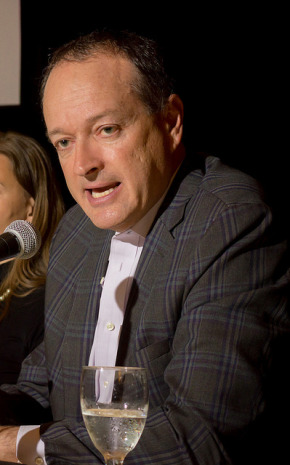
The future of legal sports betting in New York is in limbo after bills providing a regulatory framework died in the Senate and Assembly when the legislature adjourned for the year last Wednesday.

It’s still possible the state Gaming Commission will craft rules to allow the state’s four new commercial casinos to open sports books, which the commission may do under provisions in the 2013 amendment to the state Constitution that authorized the casinos.

However, extending those operations to satellite sites at racetracks, racinos and OTBs and to mobile devices, which the Senate and Assembly bills provided. Face a raft of legal and political obstacles.

For one thing, the 2013 amendment has no provision allowing online gambling. As Bennett Liebman, a legal expert who previously served as the state deputy secretary for gaming and racing, put it, “There are real issues as to whether or not under the existing Constitution you can expand sports gambling to sites other than the physical locations of the casinos.”

The state’s gaming tribes present another sizable obstacle.

The Oneida Indian Nation, for one, has stated it will offer sports betting at its three central New York casinos if it is legalized at the commercial casinos. But it will oppose any competitive intrusion, whether via the internet or satellite venue, in the exclusivity zone guaranteed the tribe under its federally mandated gaming compact with the state. The zone covers a 10-county region for which the tribe pays the state and its host counties 25 percent of its machine gaming revenues, a sum amounting to around $200 million over the last five years.

“There are serious questions that must first be addressed before legalizing mobile sports betting,” said Oneida spokesman Joel Barkin.

There is precedent for New York’s tribes to withhold revenue-sharing if they feel their compact rights have been violated. The Seneca Nation, which operates three casinos in western New York, stopped making roughly $100 million in annual payments to state in 2017. The Senecas argue the payment requirement expired under the terms of its compact. But the state’s decision to license one of the commercial casinos within a few miles of the Senecas’ exclusivity zone may have factored in the tribe’s decision.

“It’s pretty simple math to realize that losing that $200 million in return for something less even if $10 million to $30 million is a conservative guess is not a good deal,” said Clyde Barrow, an industry expert and professor at the University of Texas Rio Grande Valley. “The tribes are going to argue that (violating exclusivity) is exactly what you’re doing (with mobile betting).”

Sports Teams ‘Inundate’ William Hill

The chief executive officer of William Hill’s U.S. Division, Joe Asher, recently said the bookmaker has been “inundated” with inquiries from teams in the National Football League, Major League Baseball, the National Basketball Association and the National Hockey League. In fact, he said, “One of the most prominent franchises in the country” has expressed interest—and that was before the U.S. Supreme Court repealed the federal ban on sports betting in May.

Analysts believe legalizing sports betting will increase fan engagement and, as a result, boost revenue for the Big 4 leagues. The leagues also have been seeking a so-called “integrity fee” of 1 percent of all bets placed because they claim widespread sports betting will put their games more at risk of corruption. Most states have rejected including those fees in legislation to authorize sports betting.

Asher said although bookmakers, casinos, state regulators and the leagues have frequently disagreed over revenue and data sharing, “the leagues and the teams are interested in doing commercial deals.” However, individual teams are prohibited from making deals with bookmakers like William Hill. MLB Deputy Commissioner and Chief Legal Advisor Dan Halem said, “We have been informed that club television and radio rights holders are being approached by sports books to place advertising/enhancements. Pursuant to MLB policy, clubs must inform their rights holders that they are presently not permitted to accept such advertising. Clubs may not at this time enter into any relationship with a pure sports book, or with a casino. Commissioner Manfred intends to develop appropriate policies in this very complicated area.”

According to NFL policy, “gambling-related advertising” is included under its Prohibited Advertising Categories. However, tourism destinations like Las Vegas and horse racetracks are exempt.

The NBA has been more open about potential sponsorship deals in a regulated market under the right conditions.

William Hill recently opened a sports book at the Monmouth Park Racetrack in New Jersey, and later this month will add a second, 7,500 square foot location at the Ocean Resort Casino in Atlantic City, the former $2.4 billion Revel. William Hill and Monmouth Park together opened a $1 million sportsbook at Monmouth Park 2014, which served as a sports bar until last week when the first bets were taken.

Meanwhile, the Las Vegas Lights Football Club of the United Soccer League, a professional organization a tier below Major League Soccer, announced it teamed with bookmaker William Hill as its “exclusive sportsbook partner to create an enhanced match day experience in 2018 and beyond for fans. We are excited to partner with Lights FC. Las Vegas is truly a sports destination, and the Lights FC have been a great addition to the city. We look forward to seeing their continued success both on and off the field,” Asher said.

Lights FC owner and Chief Executive Officer Brett Lashbrook added, “William Hill is an ideal partner for a pro sports team in Las Vegas. The $5 Free Sports Bet is one of the greatest sports promotions of all time. What other pro sports teams pays its fans when it wins?”

Delaware House to Scale Down Casino Relief

Two months after the Delaware State Senate approved a bill to aid the state’s three struggling racinos with $20 million in annual breaks on taxes and fees, the speaker of the state House is finally ready to move on the package—well, on half of it.

Delaware House Speaker Pete Schwartzkopf, one of the lawmakers who has been at the center of delays to the aid package—which many call a “bailout” for private industries—last week reiterated that he is not convinced the tax breaks are a wise move, but that he is willing to move the bill to a vote if the chamber passes an amendment to slash the relief package in half.

“Surrendering that much money to three private institutions means there would be less money for various programs benefiting seniors, students and people with disabilities, as well as adequately supporting correctional officers, probation and parole officers and other state workers,” Schwartzkopf said in a statement last week.

“But despite my reservations, I have to balance those concerns against the simple fact that the state of Delaware is a business partner with these casinos. They employ thousands of workers, which means thousands of families would be impacted if they are forced to close or lay off people.”

Senate Bill 144, approved by the upper chamber in April, would change the state slot revenue tax from 43 percent to a sliding scale ranging from 32 percent to 43.5 percent, slash the revenue tax on table games from 29.4 percent to 15 percent, and eliminate the annual $3 million table-game licensing fee.

The amendment to the bill filed last week by Schwartzkopf would cut the table-game tax to 15.5 percent, and eliminate the table licensing fee, but would leave the slot tax, one of the highest in the nation, untouched. The total relief to casinos would end up around $10 million annually. Schwartzkopf said he feels this would be sufficient, considering the addition of full-blown sports books, which went live this month.

“With this structural change and the addition of sports betting, which should attract more patrons and provide even more revenue for the casinos, there would be no reason for them to seek additional relief for years to come,” Schwartzkopf said.

The three racinos have been begging the state for tax relief for years, as they have been struggling against new competition in Maryland and Pennsylvania. So far, the legislature has shot the request down every year since the formation of a blue-ribbon panel of state and industry officials first proposed the tax breaks four years ago.

Poll: Majority Of Florida Voters Support Amendment 3

A poll conducted in late May and early June by the Florida Chamber of Commerce indicated Amendment 3 is one of only four out of 13 state constitutional amendments on the November ballot that has the required 60 percent of voter support.

The amendment would give voters—not legislators—exclusive control over the future of gambling in the state. It was placed on the November ballot through a voter petition drive backed by Disney World and the Seminole Tribe of Florida.

The poll showed the amendment had the support of 61 percent of voters, with 23 percent opposed and 15 percent undecided.
Amendment 13, which would ban greyhound racing in the state, had 47 percent of voter support, with 36 percent opposed and 17 percent undecided. The amendment is being contested in court by pro-dog racing groups.

Chamber of Commerce President Mark Wilson said voters’ positions on the 13 amendments are likely to be affected by media campaigns designed to influence voter opinion. “In other words, these numbers will change as November approaches,” he said. Wilson also noted 13 amendments is the largest number on a general election ballot since 1998. As a result, “Voter fatigue is certainly a concern of ours,” he stated. But he added the survey showed nearly nine out 10 voters said they planned to vote on the ballot measures.

Conducted by Cherry Communications between May 25 and June 2, the poll included 605 “likely” voters, including 249 Democrats, 237 Republicans and 119 others. The margin of error was 4 percentage points.

Poker Great Doyle Brunson Retires

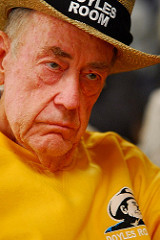
The career of Texas Dolly came to a close with a sixth-place finish in a $10,000 No-Limit 2-7 Lowball Draw Championship at the World Series of Poker as 85-year-old Doyle Brunson officially retired from professional poker.

The tournament marked the end of a more than 60-year career. Brunson confirmed his retirement to multiple poker media outlets, adding that he also no longer will play in the high-stakes cash game at “Bobby’s Room” at the Bellagio in Las Vegas.

“I am going to quit poker because I’ve been married to the most wonderful woman (Louise) in the world for 57 years, and she’s not in very good health, and I’m going to spend our last years together as much as we can,” Brunson said. “I’m 85 myself, so it wouldn’t be any big upset if I didn’t wake up some morning. We don’t have a lot of time, and I would like to spend it with her. That is my priority.”

According to the Las Vegas Review Journal, Brunson was one of the original poker “rounders,” playing in illegal games around Texas before he eventually settled in Las Vegas. His 1978 best-seller, “Super/System: A Course in Power Poker,” is considered the definitive work or No-limit Texas Hold ’em.

Brunson is a two-time winner of the WSOP Main Event (1976 and 1977) and is tied for second all-time with 10 career WSOP bracelets. He was elected to the Hall of Fame in 1988 and was voted the most influential force in poker by Bluff magazine in 2006.

“When I started, you were a second-class citizen,” Brunson told the paper. “If you were a poker player, they equated you with being a drug dealer or some kind of mobster. To see it evolve like this to where people do respect the poker players now as a profession, that’s quite a transition. I’m thankful I was a part of it, and all my buddies—most of them are gone now—we played a big part in building all this. It’s gratifying to see it.”

Juliano Joins del Lago

New York’s del Lago Resort and Casino has brought in industry veteran Mark Juliano to try to right the ship at the struggling Finger Lakes property. But ownership continues to hit rough waters in Albany in its efforts to secure tax breaks to keep the place afloat.

Rochester shopping mall magnate Thomas Wilmot, the resort’s principal backer, met earlier this month with members of Gov. Andrew Cuomo’s budget division. It was at least the second trip to the capital this spring for Wilmot and it doesn’t appear to have been any more successful than his previous visits.

“I think we need some help at this point,” he said after the most recent meeting, “and what the future holds, time will tell.”

Since opening in February 2017, the $440 million del Lago has missed its revenue projections by significant amounts. After coming up $147 million short in its first year Moody’s Investors Service warned that “without a substantial improvement in revenue, del Lago will not be able to achieve a level of performance that can support its existing debt capital structure”.

In March, Wilmot said the casino was paying the bills, but, “Long term, it isn’t going to be sustainable without some help.”

So far, neither Cuomo nor leading lawmakers have been amenable.

“They’re private concerns, and I don’t want to get into the business of bailing out private concerns,” the governor told reporters at the time.

“If they have a beef, it’s with their consultants who did the numbers,” said Assemblyman Gary Pretlow, who chairs the Racing and Wagering Committee in the lower house.

Senate Finance Committee Chairwoman Catharine Young, meanwhile, has introduced legislation that would require del Lago and the state’s three other commercial casinos to disclose a wide variety of information about their vendor contracts, debts and executives’ salaries to an “independent financial monitor” if they want a tax reduction.

“State leaders, and most importantly — taxpayers — have a right to expect full transparency on the part of any casino that is seeking state funds or tax breaks,” Young said.

Like the other casinos del Lago pays the state 37 percent of gross revenue from its machine games and 10 percent of table game revenue.

del Lago operates in a heavily competitive market populated by three Seneca Nation casinos and two racinos to the west and three Oneida Nation casinos to the east, so Juliano will have his work cut out for him.

He brings to the task 30 years of experience, most recently as president of Las Vegas Sands’ Sands Bethlehem in eastern Pennsylvania, that state’s table games revenue leader with a strong focus on Asian play from across the Northeast.

Prior to joining Sands Bethlehem Juliano served as a senior vice president and chief casino officer for LVS’ Singapore megaresort, Marina Bay Sands.

He has also held executive positions at Caesars Palace in Las Vegas and at Trump Entertainment Resorts in Atlantic City.

del Lago COO Aaron Gomes said, “Mark’s pedigree in the resort and casino industry, coupled with his role in economic development initiatives in and around New Jersey, brings the ideal mix of casino and resort operation and community experience. He’s perfectly positioned to support not only the continued growth of our property, but our region, as well.”

TV Networks Look to Cash In on Sports Betting

The May 14 U.S. Supreme Court decision removing the federal ban on sports betting has caused many potential stakeholders in sports wagering to spring into action, but one potential beneficiary of legal sports bets that may not have been on the radar of lawmakers or government officials is just as active—national TV networks.

ESPN and the Action Network were the first to capitalize, launching a new program called I’ll Take That Bet on the ESPN+ streaming platform.

A report in The Sporting News indicates that’s probably only the beginning. Regional sports networks such as SNY in New York also is planning a sports-betting studio show, and Sporting News estimates that national sports cable networks such as Fox Sports 1, NBCSN and CBS Sports Network won’t be far behind—nor will the traditional major television networks.

Sports analyst Danny Sheridan told Sporting News he has already been approached by three different TV networks about contributing or creating content for sports betting shows. The report cites a study by the National Research Group which found that 79 percent of current and potential gamblers said they would watch more sports live if betting were legalized.

“None of (the networks) really know how they want to capitalize on it yet, but there’s a sense of urgency by the networks to cash in on this for ratings and sponsorship money,” Sheridan told the publication. “If they don’t address sports gambling now that it’s legalized, the networks feel they’re going to be left out in the cold. That’s true, and that’s why they’re scrambling.”

Canada Expected To Allow Sports Betting

Toronto Sun journalist Harley Redlick, who specializes in the gaming industry, recently predicted Canada will allow sports betting within two years to safeguard casino jobs and steady the economy. Redlick said, “It is just a shame we always have to react to the U.S. versus proactively doing the right thing when we have the chance.”

Redlick added, “Even though we are the more liberal country in terms of legalizing recreational drugs, our old fashioned sports betting views are about to cost jobs and hundreds of millions of dollars, and will continue to make our underground bookmakers rich.”

Canadian Gaming Association President Pat Burns noted, “Canadians are wagering in excess of over $4 billion per year through offshore online sites and an additional $10 billion through organized crime essentially. And they’ve chosen those routes because that’s the product they want.”

Burns said the CGA has twice before tried to amend Canada’s criminal code to allow single-event sports wagering. He stated the U.S.’s recent legalization of sports betting is an indication the Canadian government should reverse its domestic ban on sports betting.

Under Canadian law, governments may run lotteries but may not allow wagers on single sporting events. The Ontario Lottery and Gaming Corporation in Ontario allows ProLine and sports betting, but only by wagering on multiple events or parlays. Bettors who want to make a legal wager on a Stanley Cup game in Canada also must bet on other games on the same ticket, which lowers the bettor’s chances of winning.

Rhode Island Legalizes Sports Betting

With the approval last week of a sports betting bill, H7200A, by the Rhode Island legislature, it was signed by Governor Gina Raimondo as part of the state budget. The governor had anticipated this by already budgeting $23.5 million in the current budget. For that amount to be collected in taxes the industry would need to take in $900 million in bets.

The betting sites could be operating as soon as October 1.

The bill does not include language for an “integrity fee” that would benefit sports leagues such as Major League Baseball, and in fact specifically bans such a fee: “Under no circumstances shall the state or the division pay an integrity fee to any sports league.” In addition, it only authorizes land-based wagering, not mobile.

Under the bill the Rhode Island Lottery will administer sports betting in cooperation with the state’s two Twin River casinos, tentatively beginning October 1. Lawmakers contend that to extend sports wagering online or on mobile platforms would take a vote of the people.

The host communities, Lincoln and Tiverton, would each collect $100,000 annually for sports betting. The state will collect 51 percent, the vendor (most likely IGT since it was the only bidder for a sports wagering contract) will collect 32 percent and the casino itself will collect 17 percent. That 51 percent is the largest share of sports betting revenue of any state so far and could be a deal-killer.

Eric Ramsey of RK Forum, says he is skeptical that the state will collect that much taxes, noting that Nevada’s world-class, mature sports betting market collects $5 billion in wagers. He wrote, “Rhode Island can expect to take about one-fifth of Nevada’s wagering handle, but it’s hard to imagine numbers that rosy.”

A spokeswoman told the Providence Journal that the estimate was produced without input from Spectrum Gaming Group (which consults for the state.)

Add to that the fact that sports betting won’t immediately be available on mobile or internet platforms.

Other features of the bill are that bets on Rhode Island collegiate teams will not be accepted. A minimum age of 18 is set.

Delaware and New Jersey began offering sports betting this month. Nevada has had it for many years. West Virginia, Mississippi and Pennsylvania will soon offer it.

Springfield, Casino, Brace For Big Opening Traffic

With two months to go before the $960 million MGM Springfield opens, officials of the casino and the city said last week they are discussing how to deal with the huge numbers of people and cars that are expected in the city’s South End the first few days after the August 24 grand opening, when crowding is expected to be at its peak.

These officials made a report last week to the City Council Casino Oversight Committee, predicting the downtown will be impacted by “an extraordinary number of people coming in.”

They haven’t completed their plans, but all parties recognize that communication between the casino, the authorities and businesses in the area will be crucial.

Seth Stratton, MGM Springfield vice-president and general counsel told the group, “We do anticipate a high volume the opening day and the weeks following.”

MGM officials have been meeting with all impacted departments, such as public works and the police. Options that are being looked at are close some streets and setting up temporary parking outside of the area immediately around the casino.

They are deciding ahead of time where to post police, where to locate barriers and set up temporary park and ride locations for workers whose places of employment are near the casino.

One special case is the Caring Health Center, which is across the street from the casino. Plans are to keep the Center apprised of all developments and to continue the free valet parking system that the casino currently funds.

Long before the August 24 opening date the casino will be opening a parking garage with 3,400 spaces.


Encore Boston Harbor

The embattled Wynn Resorts Limited has been in a heightened state of crisis ever since February, when founder and CEO Steve Wynn was forced to resign and sell all of his assets.

That hasn’t let the company off the hook with Massachusetts, where Wynn is building the Encore Boston Harbor (once known as Wynn Boston Harbor) in Everett, across the Mystic River from Boston.

The Massachusetts Gaming Commission continues to subject the company to a corporate colonoscopy to determine if any of the firm’s executives were aware and kept from the MGC details of Wynn’s alleged sexual misconduct during the period when the company was being vetting for its license to operate a casino in the Bay State.

Wynn’s successor is Steve Maddox, an executive from a different generation, who has led an overhaul of the firm’s priorities, including relocating its expansion plans from Las Vegas to Asia, changing the corporate culture to modern its attitude towards women—and to finish the $2.5 billion Boston casino—if the MGC allows it.

The commission could still yank the license, less than a year away from the day when the casino is due to open.

Maddox’s problems have been complicated by a new lawsuit, by one of the minority owners of the 33 acres that Wynn Resorts purchased to build the casino.

At the time the purchase was made, the owners were under scrutiny because of the alleged involvement and secret ownership of a convicted felon, Charles Lightbody. State law mandates that a felon can’t make a profit off of a land sale for a casino, and so Wynn pressured the owners to lower the sale price of the land to market value.

It later turned out that Lightbody had no ownership, secret or otherwise, but one of the land owners, Anthony Gattineri, has sued Wynn, claiming he never agreed to lower the sale price. He further claims that Wynn promised he would pay him $20 million more under the table if Gattineri agreed to the sales price—but that Wynn reneged on the agreement.

According to the complaint in June 2014, before Wynn was awarded the license, Gattineri met with Robert DeSalvio, president of the Wynn Massachusetts casino.

“Robert DeSalvio then made Anthony Gattineri the following offer: if Anthony Gattineri signed the required Certificate and Wynn obtained the casino license for a casino …Wynn would ‘make Anthony Gattineri whole’ by providing him with his percentage of the purchase price reduction (which is $18,676,000).”

Wynn and DeSalvio have refused to honor the agreement, says the complaint. A spokesman for Wynn Resorts, Greg John calls the lawsuit, “an attempt to now extract an additional multi-million-dollar payment from our company beyond what was negotiated and accepted by Mr. Gattineri and his partners in the Everett land transaction.”

John added, “Mr. Gattineri’s claim that a publicly-traded company in a highly-regulated industry would execute a $20 million transaction on a handshake deal, without any documentation or paperwork, is implausible and will be vigorously defended by Wynn.”

Meanwhile some news outlets have reported that Wynn Resorts is trying to get out from under the Encore Boston Harbor by selling it to MGM Resorts. If MGM bought the casino, it would have to divest itself of the MGM Springfield because state law says that no entity can hold more than one license.

Whoever ends up with the Encore Boston Harbor will have a potentially very profitable property. Based on the average price of a hotel room in the city, the Encore could generate $69 million annually from the hotel tower’s 650 rooms.

Using the example of the Mohegan Sun and Foxwoods Casinos in neighboring Connecticut as a benchmark, it is reasonable that the Everett property could collect $550 million annually in gaming revenue.

Bill Would Strip BIA of Tribal Recognition Power

A controversial bill in Congress, H.R. 3744, the Tribal Recognition Act, would remove the authority from the Department of the Interior to recognize a tribe and reserve it to Congress.

Most tribes have already gone on record against the bill, which critics say would further politicize the action of recognizing tribes and putting land into trust.

Rep. Raúl Grijalva, who serves on the House Committee on Natural Resources, which oversees Indian affairs, argued against the bill last week. “The importance of federal recognition cannot be overstated and that is why simply leaving an act of Congress as the only path forward for tribal recognition is dangerous and misguided.”

Grijalva has attached an amendment to the bill that would state that any land placed in trust before February 24, 2009 would be “reaffirmed as trust land.”

That’s a backhanded slap against the notorious (in Indian country) U.S. Supreme Court decision Carcieri v. Salazar of 2009 that ruled that tribes that weren’t recognized in 1934 when the Indian Reorganization Act was passed cannot put land into trust.

Grijalva told Indianz, “Many tribes now face frivolous lawsuits related to the Carcieri decision on land that they have had in trust for years, sometimes decades.”

Grijalva and other allies of Indian country have many times introduced so-called “Carcieri fixes” making it easier for tribes to put land into trust but failed to garner enough support to pass. The recent amendment is the first time such an approach has been supported by the majority.

The struggle has been mainly a Democrat vs. Republican issue, with Democrats largely wanting to provide a Carcieri “fix” and Republicans largely opposing that. This time, though, a Republican, Rob Bishop, chairman of the Natural Resources Committee, supported Grijalva’s amendment.

“It’s not a bad amendment,” said Bishop. “I am willing to accept it, even if the Democrats are still not willing to go along and help us pass the underlying bill.”

Democrats, including Grijalva, have called the Tribal Recognition Act a “Republican Shakedown Disguised as Legislation.”

New Hampshire Raises Bet Limits

A new law, HB 169, has taken effect in New Hampshire, raising the maximum bet for a variety of games from $4 to $10.

According to Jim Rafferty, general manager of the River Casino & Sports Bar, the higher maximum created “a different level of excitement.”

The higher limits are also expected to increase how much money is raised for the Granite State’s charities. Casinos and poker rooms are required to “donate” 35 percent of the profits to a registered nonprofit, while 10 percent goes to the state.

The law doesn’t allow a charity to benefit from more than 10 nights of play annually, which means a bigger pie to divided between a variety of beneficiaries.

The state’s nonprofits were a major factor in the legislature passing the law.

Connecticut and Tribes, Can’t Agree on Sports Betting

For now, it looks like sports betting won’t be legalized in Connecticut, says Governor Dannel P. Malloy, who has been trying to negotiate an agreement with the state’s gaming tribes, but without much hope for success at this point.

The existing tribal state gaming compacts, and the tribes’ insistence that they should have exclusive rights to offer sports betting, makes an agreement hard to achieve, the governor said last week.

The tribes operate Foxwoods and the Mohegan Sun. Malloy has said he won’t sign any legislation that isn’t agreed to by the tribes in advance. Currently the tribes pay the state 25 percent of slots income in return for exclusivity on casino games. That was about $260 million last year.

The tribes claim sports betting is a casino game. The Attorney General, George Jepsen, and many lawmakers, disagree. However, Malloy is not willing to be confrontational.

Other points of contention include online wagering or wagering on Smartphones and other platforms.

Encore Boston Harbor ‘60%’ Done

Officials of Wynn Resorts last week told the Massachusetts Gaming Commission that the Encore Boston Harbor is 60 percent finished and that $1 billion of the projected $2.5 billion has been spent so far. The casino has a scheduled opening of June 2019.

The roadwork in Boston that the casino company has helped fund is expected to be completed in the coming months. The purpose is to improve what is already a heavily congested traffic situation in the city across the Mystic River from the Everett casino.

The Wynn casino in Everett is under its own legal assault. This time by the jilted suitor that didn’t get the license for the Boston metro gaming zone (Region A) in 2014: the Mohegan tribe. The tribe was already enmeshed in a lawsuit against the MGC challenging that decision. However, the scandal involving the founder of Wynn Resorts, Steve Wynn, and multiple sexual allegations in a “Me Too” induced corporate nightmare that forced him to resign as CEO and divest himself of his shares of stock, has given the tribe new hope.

In a new filing to the state court the Mohegans, who operate the Mohegan Sun in neighboring Connecticut, argue “The gaming commission’s failure to uncover the allegations of Steve Wynn’s reprehensible conduct and the lack of corporate controls in its initial investigation of Wynn Resorts is another example of the bias and flaws in the commission’s approach to the Region A licensing decision.”


MGM Springfield

At the MGM Springfield not only casino employees are in training for the planned August 24 opening, so are law enforcement officials of the Massachusetts Gaming Commission who will be overseeing the honesty of the games and dealers.

The MGC’s eyes and ears are known as “gaming agents.” Agent Holly Cantell, a supervising agent, told the Republican that they keep a close watch for small infractions, which can add up. “If a person’s not greedy, and they can get away with one chip a day, they will do it for the rest of their entire career. That’s why we keep track of them.”

Gaming agents ensure that chips don’t leave the roulette table or the craps table unless they are supposed to.

Massachusetts is a new gaming state, so its regulations are informed by the experience of other states that have operated casinos for decades. One such regulation is that players are not able to put their cellphones on the gaming table just in case they might be used to try to electronically influence a game.

These officers have been operating at the state’s first casino, the slots parlor Plainridge Park Casino, for three years now. That casino has 1,200 slots, MGM Springfield will have 3,000, plus 100 tables, a poker room and a VIP gaming area.

Cantell, who is overseeing the training of the agents, has been involved in the gaming industry since 1981, when she got her start at the Golden Nugget in Atlantic City. She has an intimate knowledge of roulette and blackjack, acquired from years as a dealer and pit manager. On the day the Republican watched several hours of training, those were the games the officers and agents were being trained in, along with baccarat, and other carnival games like four-card poke.

They are also being trained in spotting cheats by one of the legendary cheats, Sal Piacente, “The Hitman.”

Besides looking out for crooks, the agents will also listen to complaints from customers claiming the machines don’t pay out correctly. They will also work with local police officers, some of whom are also getting training at the casino. State police will monitor the surveillance cameras.

Good math skills are a plus for a gaming agent, but software engineers are also welcome. There will be from two to three gaming agents on every shift, 24/7.

Bruce Band, who heads of the MGC’s gaming agents, came out of retirement from years working in Atlantic City to take the job. He told the Republican, “Every day you come in, you find the unexpected, and that’s what makes this fun.” He added, “And it’s that way for my gaming agents, my supervisors. You have a cheating scam, you have to watch the film, and try to figure out what this person was doing. And it takes a lot of work, detective work so to speak.”

Agents may learn of a gang of cheaters traveling the globe, hitting different casinos. “You’ll get information they’re in South Africa, then Singapore, and before you know it you’re hearing they’re in California card rooms, and you know eventually know you’re going to see them,” said Band.

Gaming agents and law officers need an intimate knowledge of how the games work and the procedures, which could be something as subtle as a dealer using the wrong hand to pull a card. Fortunately, every action is recorded, 24/7, and the video is kept for 30 days.

One thing that Massachusetts has learned from others’ experience is the importance of all of the agents and police working out of the same office. That includes employees of the Alcohol Beverages Control Commission.

Band notes that there’s a lot of information to be learned from someone’s ID.

“They teach us how to inspect IDs,” he said. “And I didn’t know all these licenses had so many things on them. Simple things, like Maine, in the middle of the moose head, there’s a happy face. And that’s one of the counterfeitings you look out for.”

A Springfield police office with three decades on the force, and who thought he was pretty knowledgeable about blackjack, discovered: “I didn’t really know much about it at all, just the little small things that you don’t know that go on in a casino, that you have to learn to play the game.”

Governor Charlie Baker, who recently toured the casino site, predicted last week that patrons will be impressed when they see it. “This thing is going to be spectacular. … There’s so many items and elements to this thing that are specifically geared toward reminding people this is in Springfield and it’s a big part of Springfield’s history. I think people are going to be blown away by it.” He added, “I can’t wait for it to open and I can’t wait to see what happens next. These folks have been top drawer in everything they’ve done and everything they’ve said they would do right from the beginning, and I’m really looking forward to seeing them put this whole plan into action.”

The casino resort will include a five-story boutique hotel, 125,000 square feet of gaming, a plaza, retails shops and several restaurants.

The governor’s tour included the lobby that includes whimsical elements that led a reviewer to compare them to Dr. Seuss and to note: “A staircase to nowhere. A wall of oversized book spines. A chandelier of vintage hats.” It must be noted that said hat chandelier is in the presidential suite and isn’t a standard feature in most rooms. The Seuss reference is intentional since the good doctor and author of children’s books was a Springfield native. The oversized book spines celebrate Emily Dickinson, among others, who lived in nearby Amherst.

Because the casino incorporates some architectural elements, and even parts of some historical buildings that were salvaged, it’s something of a mashup of various period styles and incorporating both the city’s literary and industrial past.

According to Michael Mathis, president of MGM Springfield, “MGM Springfield will fit seamlessly into the historic character of Downtown Springfield, while creating a landmark destination for entertainment and excitement.” He added, “Our design celebrates what is authentic while spotlighting the iconographs of the region’s past in creative ways.”

The city’s publishing past will be celebrated by a vintage printing press in the lobby. Since Springfield is said to be the birthplace of baseball, there will be a wall of trophies to that sport.

The casino is in the midst of the part of Springfield that was hit hardest by the freak tornado of 2011 that gutted that part of the city.

That recent disaster had a great deal to do with MGM’s bid to build there, according to MGM CEO Jim Murren, who recently told the Worcester Telegram that as soon as he saw the damage that he wanted to do something to assist in the recover.

Several months before he proposed the casino to the city Murren met with a Springfield businessman, Paul Picknelly in an office overlooking some of the damaged neighborhood. “I admit, I lost all interest in Boston at that point,” he said. “And I thought I better see whether I can help this city.”

Murren spoke at the Worcester Regional Chamber of Commerce’s Breakfast Club. He told the club that the casino will employ 3,000, of who 2,000 have already been offered positions. It will pay $25 million annually to the city and spend $60 million with local merchants.

He said, “I like being able to go into a community and make a difference. Boston’s doing great. I want to help Western Massachusetts.”

He also likes opening up his company to diversity. He said he left Wall Street, where he was an equity analyst because of the “boys club,” mindset, only to find that it was even more a part of Las Vegas. “And I find that very disturbing,” he said.

He became the gaming giant’s chief executive officer ten years ago and has made diversity a major goal. He points to the fact that MGM’s board of directors now includes four women.

He noted that since the Supreme Court’s lifting of the ban on sports betting that his company is moving to prepare for that at whatever states legalize it. He does not, however, expect sports betting to become legal in the Bay State.

He spoke of his philosophy about resorts. “I don’t believe an integrated resort is one where everything you need and want to do is within the boundaries of the resort. I think it should be a home base that supports small businesses and supports non-casino development and entertainment,” he said.

Mississippi Casinos Prepare to Launch Sports Betting

Sports betting will be ready to launch in Mississippi by the end of July now that the Mississippi Gaming Commission has promulgated rules and regulations covering the new wagering. Mississippi had quietly legalized sports betting in 2017 when it passed a law regulation daily fantasy sports that included a clause removing penalties on sports betting. Sports bettors in Mississippi will be able to bet on all pro, college and Olympic sports but no betting on politics or high school sports.

Under the released regulations, only licensed casinos can take sports bets and each casino must make a submission to regulators for approval. There will be no mobile wagering, except on devices within the casino property. Mississippi will have an edge in its regional market as no other state has passed legislation allowing sports betting. Louisiana is expected to consider it when its legislature reconvenes next year. Florida sports betting may be delayed as the tribal gaming interests want a monopoly on the activity. And a pending referendum may defer all expanded gaming to votes of the people, which, if passed, would further delay sports betting.

Meanwhile, Mississippi casinos are gearing up for expanded wagering. Caesars Entertainment has recently posted several sportsbook-related jobs on a variety of employment websites. The company is seeking sportsbook managers, supervisors and ticket writers at both Biloxi’s Harrah’s Gulf Coast and Horseshoe Tunica.

MGM Resorts International also has multiple job postings for sportsbook managers, supervisors and clerks at its Beau Rivage Casino in Biloxi and Gold Strike Casino in Tunica. Churchill Downs, which acquired Lacy Luck Casino in Vicksburg from Eldorado Resorts earlier this year, is seeking a corporate director of online gaming development, but has not posted specific openings at its Mississippi properties.

MGM Resorts has announced it will open a sports book in Biloxi’s Beau Rivage on July 21.

Sports Betting Advancing In West Virginia

In March, in anticipation of the U.S. Supreme Court lifting the federal ban, the West Virginia legislature passed a bill allowing sports betting at casinos and racetracks. Since then the West Virginia Lottery has been developing rules and regulations for the state’s five casinos to implement sports betting as soon as possible. General Counsel for Lottery Danielle Boyd said, “Our goal is still to have everybody up and running by football season. September 1 at the very latest.”

Lottery Public Relations Manager Randy Burnside added, “Our goal is to have sports books operational by the start of football season. There’s a lot that needs to be done before we can get to that point, but we know our facilities are looking to aim for that.”

Jeff Morris, vice president of public affairs at Penn National Gaming, owner of Hollywood Casino at Charles Town Races in Jefferson County, applauded West Virginia for proposing “reasonable” tax rates and application fees: receipts will be taxed at 10 percent and casino operators will pay a $100,000 licensing fee. A state-hired consultant estimated West Virginia casinos could produce $5-$9 million in sports-betting revenue in the first year.

Boyd said hopefully sports betting will be available at casinos and also via mobile apps. “Our goal is to ultimately offer both those products and roll them out at the same time. But if it would come to a point where land-based operations were ready to launch and mobile was not, that would be a consideration that we would make.”

Boyd said all five casinos are planning or starting to build sportsbook lounges on their property. “We’re also going allow them to construct temporary facilities so that if their lounges aren’t quite ready for when they can begin accepting wagers by mid-August, we’ll go ahead and approve temporary specifications so that they can begin offering sports betting on premises,” she said.

Boyd concluded, “We’re excited to see West Virginia out in front for once and we’re hoping to really capitalize on the knowledge and experience of the partners that we’re working with, both at the casino level and also the consultants we’ve brought here to West Virginia, to make sure we get the best model and the best structure in place. We’re excited for everybody to capitalize on the revenue opportunities and also so that we can drive traffic into the state and our facilities.”

Kentucky Legislator Proposes Sports Betting Bill

Kentucky state Senator Julian Carroll recently introduced the sports betting measure Bill Request 29 for the 2019 legislative session. It would create a framework for any horse racetrack or off-track betting facility to offer betting on other sporting events. In the last session, Carroll sponsored Senate Bill 22 in anticipation of the U.S. Supreme Court lifting the federal sports betting ban. However, the measure was not brought up in committee. “Because of the General Assembly’s failure to act on this bill, Kentucky is losing revenue daily that could be funding our schools and public employees. And frankly, our residents are now vulnerable to an unregulated sports wagering market,” Carroll said.

The latest bill would direct most of the revenue generated from sports betting to the Kentucky Employees Retirement Systems Non-Hazardous and Kentucky Teachers’ Retirement Systems, as well as the Kentucky Educational Excellence Scholarship. The remaining revenue would go to horseracing development funds. The money would come from a 3

Carroll’s legislation also would also ban athletes, coaches, referees and

professional sports team owners and shareholders from betting on their own contests. It also would make it a felony crime with a 5-10 year prison sentence to impact the outcome of a sporting event.

Meanwhile, state Rep. Jason Nemes announced he has assembled a 9-member bipartisan sports betting committee to write regulations authorizing sports betting operations at the state’s horse racetracks and off-track betting venues for professional sports, limited college sports and no high school sports. State Senator Morgan McGarvey, a panel member, said, “We have a draft bill already started that we’re working through and there are a lot of things we have to work out. Who’s going to oversee it? How much is going to be taxed? What’s the state’s take going to be?” He said the panel, made up of five Republicans and four Democrats, will release an early version of the bill for public input.

Nemes said sports betting is “a way that we can bring more money into the state’s coffers to pay for much-needed programs, but it also increases the freedom of our citizens to direct their entertainment dollars where they think they ought to.” He estimated, depending on the tax rate, sports betting could bring in an additional $5.5-$26 million annually. Those figures indicate Nemes’ panel is likely to propose a high tax on sports gambling revenue.

“We should expand gaming and allow sports betting to come to Kentucky. We already have parimutuel wagering on horses, and I think this is the next step and it’s appropriate to do that. There are things that we are going to need to do to make sure we don’t have a Wild West in gaming,” Nemes said.

Kentucky Baptist Convention Executive Director and Treasurer Dr. Paul Chitwood said, “Gambling, legally or illegally, has benefited none of Kentucky’s families or children but has delivered huge payouts in pain. What family or community is stronger or healthier because of gambling? Are there more vexing issues we have to face than sports betting? Of course. But if you’re asking me had I rather be bitten by a Black Widow or a Brown Recluse, my answer is neither.”

Governor Matt Bevin has opposed gambling but has indicated support for sports betting. He noted the state already allows bets on horseracing and he also filed an amicus brief in the New Jersey suit that led to the Supreme Court decision. “Whether this ultimately results in any change for Kentucky is something that will be determined by our legislature and in a future legislative session,” he said.

Vince Gabbert, president and chief executive officer at Keeneland racetrack in Lexington, said, “From our standpoint, sports betting provides an opportunity to open more doors for people to get exposed to our product. Racetracks are uniquely situated to be able to handle this form of wagering because we are already set up from a technology and security standpoint.” However, he noted the racing industry wants to be in the loop as lawmakers write sports gambling legislation.

Still No Takers for PA iGaming

Two months after the Pennsylvania Gaming Control Board began its first 90-day application window for receiving online gaming applications from the state’s brick-and-mortar casino licensees, the state has received a total of… zero.

As of last week, a gaming board spokesman told Online Gaming Report, the state has received no Interactive Gaming Petitions. It may be due to the fact that the first 90-day application period is dedicated under the gaming expansion law only to combined licenses for online poker, slot games and table games (and only from current licensees).

A combined license comes with a $10 million fee. After the initial 90-day period, individual slot, table and poker iGaming licenses will be accepted, at a fee of $4 million apiece.

When assessing why licensees are not storming the PGCB gates for iGaming licenses, most observers point to an onerous tax on licenses for online slot games, which are by far the most profitable in current iGaming states New Jersey and Delaware. The expansion law set the online slot revenue tax at 54 percent, the same as the land-based slot tax. By comparison, New Jersey taxes all online gaming revenue at 15 percent.

Should no current operators apply for individual iGaming licenses in the next application window beginning in mid-July, the applications will open up to entities outside of the state.

Michigan House Passes Online Gambling Bill

The Michigan House of Representatives recently voted 68-40 to pass three internet gambling bills that could pave the way for legalizing sports betting. In particular, HB 4926, sponsored by state Rep. Brandt Iden, includes language that would allow the Michigan Gaming Control Board to create regulations for internet and mobile sports betting. “We all know that sports betting is coming and this sets the framework for the gaming commission. But realistically, I don’t think they’ll do that that until we have laws for the brick-and-mortar casinos in place,” Iden said.

Iden’s bill would require Detroit’s three casinos and 23 tribal casinos to pay $100,000 for an online gaming license application, then pay license fee of $200,000 and make annual payments of $100,000. The casinos would pay an 8 percent tax on gross gaming revenue from online gambling. Players would be required to be at least age 21 to register with a Michigan casino and gamble from its website.

The legislation also would establish a new division within the gaming commission dedicated to internet gaming and licensing. “People in Michigan are already gambling over the internet, but they are doing so at risky and illegal websites. The Michigan websites will have strict state oversight, unlike the illegal and unregulated sites our resident use now, at great risk to their finances and personal information,” Iden said.

Iden said he and his colleagues plan to use the summer recess to refine sports betting legislation that both chambers could pass when the legislature reconvenes this fall. Iden stated he also will work with tribal leaders throughout the state.

State Rep. Robert Kosowski, who also sponsored sports betting legislation in the House, estimated sports betting would generate $300-$500 million for the state. “I think there’s enough push for lawmakers because even if they don’t like sports gambling, maybe with this revenue we don’t raise taxes,” Rep. Kosowski said.

Iden said he also wants to talk to professional leagues regarding the integrity fee the National Basketball Association and Major League Baseball have been promoting. So far, no state has included the fee in sports betting legislation. “At the moment, I think the integrity fee is a non-starter. It’s important that all the states do something similar and I don’t want Michigan to be different or put Michigan at a competitive disadvantage.”

Michigan lawmakers also will have to address the issue of pro sports team owners who also own casinos. For example, Illitch Holdings currently owns both the National Hockey League’s Detroit Red Wings and MLB’s Detroit Tigers, as well as the MotorCity Casino. New Jersey handled the same issue by amending its sports betting law to allow wagering on sports except on the NBA at the Atlantic City casino owned by Houston Rockets owner Tilman Fertitta.

The Michigan Senate is expected to vote on HB 4926 in September. If it’s approved and signed by the governor, Michigan could become the fifth state to allow online gambling, along with Nevada, New Jersey, Delaware and Pennsylvania.