Archives: Articles

This is the example article

Study Evaluates Proposed Louisiana Casino Impact

In a recently released report, the New Orleans-based Convergence Strategy Group stated a casino on the Lake Pontchartrain waterfront near Slidell, Louisiana area most likely would have a “moderately positive to negligible impact on surrounding businesses.”

Commissioned by the St. Tammany Corporation, the economic development agency for the parish, the report stated, “Through the research we see moderately positive impacts from similar developments across the country all the way down to just no impact, but we have not been able to uncover the negative impacts that many communities have feared.”

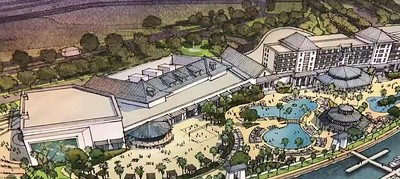
Peninsula Pacific Entertainment has proposed a $329 million casino resort, Camellia Bay, on vacant land near the Interstate 10 twin spans. St. Tammany Parish voters will decide the fate of the casino in a December referendum.

The anti-casino group, Stand Up St. Tammany, called the study “propaganda.” Spokesperson Chris Jean said, “They are not objectively doing the research for the community. Instead, they are a hired gun to tell you what St. Tammany Corp and P2E need you to believe going into the upcoming vote.”

Parish residents have expressed concerns that the casino would cause property values to decline and crime to rise. They have cited a National Association of Realtors report that projected a 4.6 percent drop in property values in Springfield, Massachusetts, following the opening of the MGM Springfield casino in 2018. However, the CSG study disputed that, noting Springfield property values actually rose 21.4 percent, compared to 2.3 percent to 14.3 percent growth in the surrounding area.

Suzanne Leckert, an author of the CSG study, added it showed sales tax revenue would increase. She said the study found no pattern of business closures or bankruptcies after casinos opened. CSG also analyzed the proposed casino’s impact on small businesses, tourism, crime and marriage/divorce rates.

CSG used data from the Bureau of Labor Statistics, the U.S. Census, municipal governments and interviews with local leaders. It also reviewed studies from other casino communities and included a review of past studies. CSG found casinos have “a range of impacts on host communities, from positive to non-discernable.” However, the study stated researchers found no recently developed casino markets had negative correlations.

St. Tammany Corp. Chief Executive Officer Chris Masingill, said, “The community impact study provides an abundance of data and information for St. Tammany residents to take into consideration to help them make an informed decision about this project. This project has really been reviewed, has been scrutinized from every single angle. We know that there’s a significant campaign of misinformation and distortions and we want people to have all of the information.”

Louisiana Regulator Approve Louisiana Downs Sale

The Louisiana Racing Commission recently gave final approval for the sale of Harrah’s Louisiana Downs horse racetrack and casino in Bossier City to Rubico Gaming for $22 million. The Louisiana Gaming Commission previously approved the deal.

Rubico President Kevin Preston said, “We are prepared to bring this iconic track back to its iconic status.”

Caesars Entertainment Senior Vice President Joe Morris said the sale is expected to close November 1. “We’re completely committed to making the transition as smooth as possible,” Morris said.

The racetrack opened in 1974. In its prime in the early 1980s, up to 1.3 million fans attended the track throughout the racing season. Preston said Rubico will continue to operate the racetrack and the 12,000-square foot casino, and plans to apply for a sports betting license. Preston told regulators Rubico will add an RV park and make significant upgrades to both the casino and the racing campus.

The Gaming Control Board also voted unanimously to grant FanDuel a fantasy sports license, joining DraftKings which has been operating in Louisiana for several months.

Iowa’s Last Greyhound Track to Close

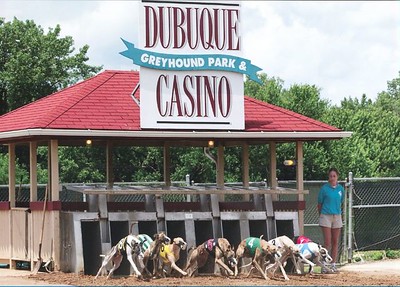
The Iowa Racing and Gaming Commission said the Iowa Greyhound Association has asked to drop the number of meets at Iowa Greyhound Park in Dubuque to 18 days and also to end greyhound racing after the season in 2022. The last remaining dog racetrack in the state, Iowa Greyhound Park has survived this long due to payment obligations made by other tracks.

IRGC Administrator Brian Ohorilko said, “As part of the original greyhound cessation legislation that was passed approximately seven years ago, the two racetracks that offered greyhound racing, Q-Casino and Horseshoe Casino, could opt out of greyhound racing and pay a fee over seven years. Those payments have been coming in every year and the last payment would be made in 2022.”

Dog races began at the Dubuque Greyhound Park June 1985, followed by Bluffs Run in Council Bluffs in February 1986 and Waterloo Greyhound Park in October 1986. Following the closure of Iowa Greyhound Park, if the greyhound industry remains the same, only three dog racetracks will remain operational in the U.S.: Mardi Gras Casino and Resort and Wheeling Island Hotel-Casino-Racetrack in West Virginia and Southland Park Gaming and Racing in Arkansas. Florida, once the capital of greyhound racing, banned the sport late last year.

In May, a bipartisan group of members of the U.S. House of Representatives introduced to ban greyhound racing. U.S. Rep. Tony Cárdenas of California stated, “Greyhound racing is cruel and must end. These docile animals are kept in stacked cages for 20 hours or more a day and are subjected to brutal training practices and races, facing the risk of injury and death at every turn.”

Indiana Casino Winner Faces Challenge

The Indiana Gaming Commission will announce its choice of developer for the Vigo County casino in Terre Haute at its November 17 meeting, but will not be able to issue a casino license “as a practical matter,” said IGC Deputy Director Jenny Reske.

She said commissioners will be able to “evaluate the applicants and make a selection, but issuing a casino license is complicated by the fact that there is a Lucy Luck appeal pending and a stay has been granted by the administrative law judge.”

In June, the IGC voted unanimously to not renew the casino license issued to Lucy Luck Gaming LLC, which was planning to partner with Hard Rock to build a Rocksino by Hard Rock casino in Terre Haute. However, the commission denied the license renewal due to concerns about funding and staffing. Lucy Luck, formerly Spectacle Jack, appealed the commission’s denial. Administrative Law Judge Elizabeth Gamboa has set a status hearing regarding Lucy Luck’s appeal for November 16; a formal hearing is scheduled for early December.

The IGC also reopened the license application process with a September 22 deadline. Four developers responded: Hard Rock, which has a resolution of support from Vigo County; Churchill Downs Inc.; Premier Gaming Group/Terre Haute Holdings LLC; and Full House Resorts, which recently announced it signed an agreement with a general contractor for its proposed $250 million American Place casino and hotel, should it be selected by the IGC.

Alex Stolyar, senior vice president and chief development officer for Full House Resorts, told about 55 people at a recent public presentation, “We will use local contractors. It is a big project and want to make sure it is built right.”

He said the property would include a 100,000-square foot casino with 1,000 slots and 50 table games, a 100-room hotel with a spa and a glass “greenhouse” restaurant. The project would create 1,800 construction jobs and 800 permanent jobs, and would generate $58 million in revenue for the county, city and other groups over five years. Full House would open a smaller, temporary casino in the Haute City Center mall while the permanent facility is built in 18-24 months.

Churchill Downs Details Louisville, Kentucky Project

Although Churchill Downs has not yet purchased the old U.S. Bank building in Louisville, the company recently submitted plans to invest $6.35 million to transform it into the proposed Derby City Gaming Downtown casino. According to documents filed with the Louisville Metro Planning and Design Services, that’s just the initial cost and only applies to the building’s exterior.

Inside, Churchill Downs officials said the venue initially will offer 500 historical horseracing machines, a “fresh-air” gaming area, three bars including a main-level sports bar, plus a premium bourbon library and a wine and charcuterie lounge. The facility also will offer an expanded outdoor patio area, a design feature highlighting the fabled Garland of Roses and a large outdoor video sign on the building’s corner. Altogether, the 19,000-square-foot project will include 2,844 square feet of new construction.

MGM Picassos Bring in $100 Million in Vegas Auction

A collection of 11 works by Pablo Picasso sold for more than $110 million at a recent auction organized by Sotheby’s. The works had been on display at the Bellagio’s Michelin-starred restaurant Picasso, named for the Spanish artist.

According to CNN, the auction coincided with the artist’s 140th birthday, and according to MGM Resorts, was the “largest and most significant” fine art sale ever to take place in Las Vegas.

The star of the show was a 1938 portrait called “Femme au Béret Rouge-Orange,” which depicts Picasso’s lover and muse Marie-Thérèse Walter.

Initially pegged to sell for $20 million to $30 million by Sotheby’s, it was eventually auctioned off for more than $40 million.

“Homme et Enfant,” or “Man and Child,” which Sotheby’s said reflected his later spontaneous style and his role as a father, sold for just over $24 million.

The auction also included a sculpted white pitcher with three faces carved onto its surface. The work, produced by Picasso in 1954, was valued at between $60,000 and $80,000 but sold for $315,000.

In an August press release, MGM said the auction would help in “deepening diversity and inclusion” within its art collection. Some of the proceeds will be invested back into the art market, according to Sotheby’s.

An MGM spokesperson said via Sotheby’s that the group’s collection still contains 12 other Picasso artworks that will replace the auctioned items at the Bellagio’s “Picasso” restaurant.

California Tribe Shares Plans for Vegas Resort

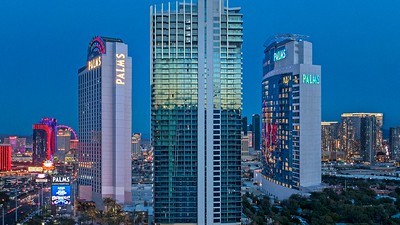
On October 15, the San Manuel Band of Mission Indians shared future plans for the Palms in Las Vegas, which they recently bought from Red Rock Resorts for $650 million.

The Southern California tribe, which recently rebranded its San Manuel Casino to Yaamava’ Resort and Casino, plans to focus on locals gaming.

The off-Strip casino closed in the spring due to Covid. The tribe hopes to reopen it early next year. Before it can do that, its development arm, the San Manuel Gaming and Hospitality Authority, must obtain regulatory approval from the state.

The Palms is the tribe’s first resort venture off Indian land. Tribal Chairman Ken Ramirez said in a statement: “San Manuel is a successful casino operator who brings values and principles to the communities we serve.” He added, “If you want to do business with us, you always find us to be a willing partner, one who works every day to be the best in all we do. We want to set a higher standard for tribal governments, gaming operations, hospitality and philanthropy.”

Although a possible name change may be in the offing, it will reopen as the Palms, according to Laurens Vosloo, a member of the authority’s management committee, who was interviewed by the Las Vegas Review-Journal.

Regarding food and beverages, Vosloo said most of the food court vendors will stay, but added, “Maybe (with) one or two, we’ll take a look and see if we can do something fresh and new and different over there.

The tribe will also update the sportsbook while downsizing its physical footprint. The back of house will get special attention too, said Vosloo, who observed, “It looks like it hasn’t been touched since 2001. It’s not just always about making money, right? It’s about taking care of the people that help them get there.”

Illinois Track Closes to Make Way for NFL

Churchill Downs Inc. CEO Bill Carstanjen says he is filled with remorse about the company’s decision to sell Arlington International Racecourse to the Chicago Bears football team. But he doesn’t feel bad enough to squelch the deal, which would reap $197 million for the track operator, according to the Chicago Sun-Times.

“Although we are sad to close Arlington Park and would have loved to continue racing and investing in the region, we believe that the Chicago Bears will ultimately develop this prime real estate into a world-class stadium and development, with numerous amenities for fans and residents to enjoy over the coming decades,” Carstanjen said during a quarterly earnings call.

The Bears outbid a group that included the former track president who wanted the races to continue. Da Bears haven’t owned up to anything except performing due diligence on the possibilities of a new field on the 326-acre tract.

The sale won’t close anytime soon. Late 2022 at the earliest, and even then, it depends on da Bears obtaining necessary approvals. Another factor in this soap opera is the $87 million the team would be on the hook for if they break their lease at Soldier Field.

Chicago Mayor Lori Lightfoot wants the team to stay put, but she is adamant that a sportsbook is out of the question as she works to lure a full-scale casino.

New Jersey Celebrates $1 Billion Sports Betting Month

New Jersey’s sports betting machine crossed a major threshold in September. Thanks, in large measure to college football and the NFL, the state took in more than $1 billion in handle, the first state in the U.S. to reach that mark, according to the Associated Press.

After winners were paid and expenses accounted for the nine casinos and three tracks kept $82 million as revenue, with the Meadowlands Racetrack outside New York, responsible for half the total.

“New Jersey has always been a strong gaming market,” said Casey Clark, senior vice president of the American Gaming Association, the casino industry’s national trade group. “Crossing the $1 billion handle mark in September is an impressive indicator of the appetite of New Jerseyans and Americans across the country who have embraced legal, regulated sports betting.”

Nevada comes closest to the $1 billion plateau reaping a handle of $659 million in October 2020. Illinois crossed the $600 million mark in March 2021 and Pennsylvania did so in January of this year.

Gambling fared well overall in September, based on figures released October 18 by the New Jersey Division of Gaming Enforcement. Casino, internet, and sports betting revenue added up to $453.5 million, up more that 40 percent from September 2020, when casino gaming in person still operated with limited capacities due to the coronavirus pandemic.

The prior record for the most money wagered on sports in a month occurred in December 2020, when New Jersey recorded $996 million.

“New Jersey reaped the benefit of being an early adopter of sports betting,” said Jane Bokunewicz, director of the Lloyd Levenson Institute at Stockton University, which studies the gambling industry. “By embracing mobile sports books and making sports betting more accessible than even Nevada, New Jersey has now achieved an important milestone.”

Revenue at brick-and-mortar casinos rose 30 percent to $248.5 million compared with a year ago, and internet gambling jumped almost 40 percent to $122.5 million, even with casinos at full capacity. All nine properties enjoyed double digit increases, with Borgata up 75 percent with $111 million taken in.

Tropicana won $34.8 million, up over 33 percent; the Ocean Casino Resort won $32.1 million, up 8.5 percent; Harrah’s won $27.8 million, up 42.5 percent, and Caesars won $21.6 million, up just over 14 percent. Resorts won $17.7 million, up over 27 percent; Bally’s won $14.5 million, up nearly 13 percent from when it was under different ownership last year; and the Golden Nugget won $13.1 million, up almost 15 percent from a year ago.

Among internet-only entities, Resorts Digital won $41.5 million, up nearly 68 percent; Golden Nugget Online Gaming won nearly $31 million, up over 18 percent, and Caesars Interactive NJ won $10.1 million, up 22 percent.

The return of various sports in May, along with pent-up demand, led to a doubling of bets to $117.8 million and an upward trend that never quit the rest of 2020.

December 2020 produced $996.3 million in wagers, but January 2021 couldn’t quite measure up, this time at $958.7 million.

The first “rebound month” for New Jersey gambling in 2020 was that $668 million in bets that August. In August 2021, the figure was $664.7 million.

If the sports and the betting continuum continue between September and January, New Jersey should be able to close in on the $1 billion mark four times in that time span, and maybe eclipse the figure in March 2022, thanks to March Madness and the NBA and NHL playoffs, according to NJ Online Gambling.

Enjoy it. When New York State rolls out mobile gambling, New Jersey’s handle should go down, maybe a lot. Industry experts say as much as 25 percent of New Jersey wagers come from New Yorkers.

Florida, Louisiana Roll Out Sports Betting

Dan Marino didn’t place Florida’s first mobile sports bet. There were no balloons. No champagne. No broadcast. No press conference. No fanfare.

But on November 1, the Seminole Tribe began taking sports bets online throughout the state, part of the compact approved with the state in May. The Hard Rock Sportsbook—the Seminoles own Hard Rock International—made an app available for download by Florida residents, which let bettors deposit funds and wager on games, according to the News Service of Florida.

While the app enters the market, legal challenges to the compact continue to roll through the courts both in Florida and in Washington D.C.

The tribal-state established a hub-and-spoke sports betting system that runs through computer servers on tribal lands. As an aside, the compact also permits the Seminoles to add craps and roulette to their casinos. All this will be worth about $2.5 billion to the state over five years, maybe more.

Another part of the deal requires the tribe to enter agreements with pari-mutuels to market sports betting in exchange for 60 percent of the profits. So far, the Seminoles have contracted with the Palm Beach Kennel Club; Hialeah Park Casino; Ocala Gainesville Poker and Ocala Breeders’ Sales Co.; Tampa Bay Downs; and TGT Poker & Racebook in Tampa.

Meanwhile, a federal judge heard a case November 5, in which Florida’s Magic City Casino and Bonita Springs Poker Room challenged portions of the compact. The suit seeks redress from the U.S. Department of the Interior and Secretary Deb Haaland.

At that hearing, U.S. District Judge Dabney Friedrich gave the U.S. Department of Justice until November 9 to explain whether the sports-betting provision in the compact is in keeping with the Indian Gaming Regulatory Act (IGRA), which governs tribal gaming.

According to Yahoo News, Friedrich spent the first 30 minutes of a two-hour hearing arguing with Rebecca Ross, a lawyer with the DOJ’s Indian Resources Section, about the government’s “unwillingness to take a position on the issue at the crux of a lawsuit” filed by the two parimutuels. In August, the federal Bureau of Indian Affairs, which Haaland oversees, allowed a 45-day review period to end with no action on the compact, effectively allowing the compact to take effect.

Magic City Casino in Miami-Dade County and Bonita Springs Poker Room in Southwest Florida say the sports betting plan is a “legal fiction” because federal law does not authorize bets that occur off tribal lands. They say the deal will have a “significant and potentially devastating impact” on their businesses.

Lawyers for Haaland said the case should be dismissed because the plaintiffs lack “standing” to challenge her actions.

Friedrich asked Ross whether the government believes that mobile sports betting that takes place outside of tribal casinos is actually occurring on tribal lands.

“We don’t have an answer to that question for you today,” Ross said. But she also said the “gaming that’s contemplated is occurring entirely on Indian lands.”

Meanwhile, DraftKings and FanDuel have anted up $10 million each to a political committee in support of a proposed constitutional amendment that would legalize sports betting at professional sports arenas, pari-mutuel facilities and statewide via online platforms. If the committee collects enough signatures, the proposal would be on the November 2022 ballot.

Not sitting back and watching, the tribe launched an expensive multimillion-dollar TV and online ad campaign urging Floridians to oppose the proposals.

Critics point out that three years ago, the Seminoles went all in to support a constitutional amendment—Amendment 3—that requires statewide approval for future gambling expansions, yet voters were not asked to weigh in on the current compact.

The deal prohibits any casino from opening within 100 miles of the tribe’s gaming resorts. The Las Vegas Sands-backed Florida Voters in Charge political committee would allow pari-mutuels that are at least 130 miles from the Seminoles’ casinos and would include blackjack and craps. That could effectively translate into adding casinos in North Florida, such as Jacksonville.

“The tribe is prepared to spend whatever it takes to protect the compact, the billions of dollars guaranteed to the state and the tribe’s Florida businesses,” said Seminole spokesman Gary Bitner said.

Bob Jarvis, a professor specializing in gaming law at Nova Southeastern University’s Shepard Broad College of Law, said anything is dead on arrival when it comes to legal action, according to Sports Handle. Under IGRA, the tribe can offer retail sports betting at its seven brick-and-mortar locations on tribal land, but these challenges relate to statewide mobile wagering throughout Florida off-reservation. IGRA became law in 1988, before internet use became widespread, when mobile betting applications were unheard-of.

The first state where tribes offered off-reservation mobile wagers was Michigan. Those tribes chose not to enter into a compact with the state, but are both regulated and taxed by the state. Connecticut’s tribes also agreed to be regulated by the state and pay an 18 percent tax on digital gross gaming revenue and 13.75 percent on retail GGR. Arizona’s tribes pay the state to cover regulatory fees for off-reservation mobile wagering, and their operators pay a 13 percent tax on gross gaming revenue to the state.

The Seminoles have a revenue share with the state but not an outright tax, and sports wagering will not be regulated by the state. The other states also don’t have Amendment 3, requiring that any proposed expansion of gaming goes before the voters, even though sports betting isn’t specifically mentioned.

“Who drafted Amendment 3?” Jarvis said. “The Seminoles. They wouldn’t do anything to hurt themselves. They are very smart, and Jim Allen (CEO of Seminole Gaming) is a tremendous leader.”

Jarvis points out that the amendment only gives voters the “exclusive right to authorize casino gambling in the state of Florida.” Those games are then defined as “any of the types of games typically found in casinos,” which at the time, did not include sports betting.

“This is all getting done on past technicalities,” said Brendan Bussmann, gaming consultant and partner at Global Market Advisors. “Clearly three years ago, the Seminoles believed the best way to get gaming expanded was through the people, and now that no longer matters, and that’s not right. My angst over it is that the Seminoles should have gone to get the compact updated (in 2018) with sports betting included. There was a window in good faith to go negotiate the compact and add that in.”

According to IGRA, “you’re only supposed to take bets if you’re an Indian tribe, and then you can only take bets that are on Indian lands,” Jarvis said. “When a court faces a situation involving a decision legislators made when they couldn’t have foreseen the future … it is supposed to ask itself how the legislators would have voted had they been able to see the future. IGRA was designed to pull the tribes out of poverty. Congress, if it had foreseen the advent of the internet, would have explicitly authorized the hub-and-spoke model.”

Should the legal challenge be dismissed, the pari-mutuels could then turn to an appellate court, which has a three-judge panel. And if an appellate court dismisses, then the pari-mutuels could appeal to the U.S. Supreme Court, though it accepts just a small fraction of appeals filed.

Until November 1, the pari-mutuels could not show “irreparable harm” in a business sense because the tribe had not launched sports betting. Magic City and the Bonita Springs Poker Room claimed in both lawsuits that allowing the tribes to offer wagering as laid out in the compact would cause financial duress and potentially force them to close their doors. But without live wagering, they could not prove that.

“We’re living in the Seminoles’ world,” Jarvis said. “That’s the deal that was struck. And everyone else will get the crumbs. The Seminoles have been working toward this kind of deal since the 1990s.”

Louisiana also launched sports betting October 31, and went with fanfare.

Former New Orleans Saints quarterback Bobby Hebert placed the first bet when he wagered $1,100 on the Saints to cover the point spread against the Tampa Bay Buccaneers. The bet occurred at the Caesars Sportsbook at Harrah’s New Orleans, according to station WVUE.

Caesars also opened a sportsbook in the Horseshoe Casino in Bossier City. The Boomtown Casino in Harvey and L’Auberge Baton Rouge received sports betting licenses as well.

The Paragon Casino in Marksville took bets beginning October 6. The Tunica-Biloxi Tribe of Louisiana owns the property and is not regulated by the state.

“We believe because of the great food, music and culture we can attract people to Louisiana that come spend a week here for major sports events because they have that ability to bet legally here now,” said Lt. Governor Billy Nungesser, who cut the ribbon at Boomtown Casino. “Hopefully, we’re really going to see this be a shot in the arm as we grow tourism in the gambling industry for those people who do want to gamble.”

In New Hampshire, Nashua voters opted-in to allow sportsbook retail operations. The vote was 7,387 to 6,207, according to New Hampshire Public Radio. But in Portsmouth, voters narrowly defeated KENO at restaurants and other businesses. The difference was just 121 votes.

California Tribes: No Compromise on Sports Betting

In California, gaming industry insiders recently speculated that talks were afoot between commercial sports betting companies and California gaming tribes, and suggested the two sides could reach a compromise on their separate sports-betting ballot measures.

Not so. On October 29, the tribes came out four-square against two competing proposals—one from the online sportsbook companies, and one from the state’s card rooms—that could go up with theirs at the polls next November.

Two tribal coalitions, whose members include the Agua Caliente Band of Cahuilla Indians, the Morongo Band of Mission Indians, the Pechanga Band of Luiseño Indians and the San Manuel Band of Mission Indians, issued a statement of opposition to the two measures, each of which must garner at least 1 million voter signatures to make the ballot next fall.

Another measure, backed by the tribes, has already qualified for a referendum. It would permit in-person betting at casinos and racetracks, but exclude card rooms and other entities, including mobile sportsbooks.

The card-room initiative would allow tribes, licensed horse racetracks and professional sports teams along with their own operations to offer in-person, online and mobile sports betting, according to the Orange County Register. That measure also would let card rooms offer more types of games and would set a 15 percent tax on sports betting profits, with revenues going to help the homeless, public education and mental health.

The other measure, supported by online sportsbooks including DraftKings, would allow in-person betting at tribal casinos, which could offer online betting through partnerships with online betting companies. It includes a 10 percent tax on online betting profits and also would earmark the money for the “California Solutions to Homelessness and Mental Health Support Account.”

Supporters of the card-room measure have until April 18, 2022, to collect the necessary number of signatures. Supporters of the sportsbook measure are still waiting for permission from the California attorney general’s office to gather signatures.

In a statement, the California Nations Indian Gaming Association (CNIGA) and the Tribal Alliance of Sovereign Indian Nations (TASIN) said the measures backed by card rooms and online sportsbooks would “seriously undermine tribal sovereignty and the voters’ repeated support for Indian gaming in California.”

“These deceptive measures were written by and for the sole financial benefit of their corporate sponsors and funders,” said Anthony Roberts, chairman of Yocha Dehe Wintun Nation. “These measures would be bad for California and bad for tribes. We are prepared to wage a vigorous and well-funded campaign to educate the voters and ensure the measures are defeated.”

Both measures opposed by the tribes “would authorize the largest expansion of gaming in the state’s history, disrupting the commitment that California voters have made to Indian tribes for over two decades,” the statement read, adding that tribal casinos employ almost 125,000 people in the state and generate $20 billion for California’s economy.

“Don’t be fooled,” said Chairman James Siva of the California Nations Indian Gaming Association. “These measures are not a fix to homelessness, but rather a massive explosion of gaming that will directly undercut tribal sovereignty and self-sufficiency.”

“We remain committed to responsible sports wagering at tribal casinos that have a proven track record of operating safe, regulated gaming in this state,” said Chairman Greg Sarris, Federated Indians of Graton Rancheria. “We are prepared to make our case to the voters, just as we have in previous elections, to oppose these deceptive and risky propositions.”

The field just got more crowded, according to the Sacramento Bee, with yet another proposal in the mix. This month, the Rincon Band of Luiseno Indians, the Federated Indians of Graton Rancheria and Wilton Rancheria sent a letter to all federally recognized tribes in the state, asking them to consider a new proposal that would consolidate control over in-person and online sports betting into tribal hands.

According to the letter, the “California Tribal Government Mobile & Retail Sports Wagering Act of 2022” would allow in-person and online sports betting only through federally recognized tribes. Online bets would be made through servers on tribal lands. Under the initiative, horse racetracks, commercial card rooms, sports franchises, corporate online operators or others would not be eligible to offer sports wagering.

The tribes said they intend to file the measure with the Secretary of State this week.

“If the DraftKings Measure or the Cardrooms Measure passes in November 2022, tribes would lose their exclusivity to class III gaming in California,” the letter said. “Such passage would accelerate the legalization of online gaming by non-tribal interests, threatening the existence of Indian gaming as we know it.”

The three tribes that introduced the latest measure, Rincon, Graton and Wilton, all partner with out-of-state gaming companies to run their casinos. Tribal lobbyist David Quintana took issue with those relationships.

“This should never be called a tribal proposal,” he said. “It should be called what it is: a proposal by out-of-state operators with tribal stalking horses.”

DraftKings Calls Off Entain Deal

Think of it this way. DraftKings just saved $22 billion with its decision not to buy U.K.-based Entain. For all the revenue coming into its coffers, DraftKings has struggle to turn a profit, given its marketing budget.

Jason Robins, DraftKings CEO, co-founder and board chairman explained why he called off the stock and cash deal.

“After several discussions with Entain leadership, DraftKings has decided that it will not make a firm offer for Entain at this time. Based on our vertically-integrated technology stack, best-in-class product and technology capabilities and leading brand, we are highly confident in our ability to maintain a leadership position and achieve our long-term growth plans in the rapidly growing North America market.”

Vertically integrated technology stack. How’s that for a catch phrase? Sounds like something you’d order at IHOP in the 22nd century.

One way to interpret Robins comment is that the company changed its mind about the acquisition. We’re doing well. Very well. We’re leaders of the pack. And there’s the silver lining that the announcement caused DraftKings’ stock to rise 4.12 percent.

Joseph Greff, an analyst with JP Morgan isn’t shocked by DraftKings’ decision to cut and run, according to CDC Gaming Reports.

“We viewed this deal as just too complicated to close from the start,” he said, rattling off the approval needed by MGM Resorts as a result of the partnership with Entain when it came to sportsbook BetMGM; the tech sharing issues involving BetMGM; and the amount of equity needed to complete the deal.

“What remains unanswered to us, at least, is why DraftKings launched this in the first place,” said Greff, who expects the upcoming third quarter results from the company to at least hint at the reason. When it pitched the offer on September 22, DraftKings saw the potential for expansion into new markets, product growth and lots of innovations.

Still, according to the Financial Times, the decision to abandon the bid had taken some by surprise. The newspaper said sources indicated the two sides couldn’t agree on the value of the equity. For its part, Entain cited 23 consecutive quarters of double-digit online revenue growth. In other words, they didn’t get no respect from DraftKings, despite an offer that doubled what MGM Resorts offered earlier this year.

MGM Resorts offered $11 billion, after an original bid of $10 billion in all cash was turned away despite the strength of the combination.

An MGM-Entain merger could create one of the few large gaming companies in the world with a significant online and bricks-and-mortar presence, according to the Wall Street Journal. Entain operates several European online gaming brands, including bwin, PartyPoker, Ladbrokes, Coral, and FoxyBingo. MGM Resorts operates more than two dozen properties in six states, including 10 on the Las Vegas Strip. MGM also has a joint venture in Macau.

What’s not to like about that deal? Well, here’s what Entain didn’t like: “that the proposal significantly undervalues the company and its prospects.” Entain kicked that offer to the curb as well.

Unlike the MGM Resorts-Entain possibility, the DraftKings deal still had BetMGM as a sticking point. Would MGM Resorts agree to the purchase? And if so, would Entain agree to sell its half of BetMGM, according to SBC News.

That’s all off the table for now. Based on the takeover rule in the United Kingdom, DraftKings cannot entertain an offer to Entain for six months. Not that the company would be eager to return with another offer.

Despite the aforementioned pull back, a merger and acquisition may not be a dead horse when it comes to Entain, especially if MGM Resorts makes a bid for the other half of BetMGM and decides to up the bid for the entire company, according to Reuters.

David Katz, of Jefferies Research believes MGM makes the most sense as a potential buyer in spite of their prior suitor relationship.

If nothing else, MGM CEO Bill Hornbuckle has said he would be interested in taking full control of the online venture known as BetMGM, according to Asia Gaming Brief.

DraftKings is not likely to sulk and lick its wounded ego. The company will concentrate on technology and expansion into new categories and international markets, Chad Beynon of Macquarie said.

NFL Provides Record Grant to NCPG

The National Football League, as part of its high-profile campaign to support responsible gambling, has given the National Council on Problem Gambling (NCPG) a three-year grant totaling $6.2 million, the largest donation in the organization’s nearly 50-year history.

The grant, awarded through the National Football League Foundation (NFLF), will enable NCPG to significantly upgrade its National Problem Gambling Helpline, provide grants to nonprofit organizations across the country for problem gambling prevention programs, and launch communications initiatives that focus on responsible gambling and where to get help for gambling addiction, including public service announcements and the new website responsibleplay.org.

“NCPG’s Board of Directors looks forward to working with NCPG staff to maximize the opportunities this partnership with the NFL provides,” said NCPG Board President Maureen Greeley.

“Broadening our awareness, outreach, and innovative prevention efforts with partners across the country allows us to help people understand that gambling is a recreation with risks. Understanding the risks is key to keeping gambling fun. When gambling becomes a problem, knowing the resources for help is crucial. This support from the NFL helps us elevate our responsible gambling programs and meet our goals to reach those we serve.”

Since the U.S. Supreme Court’s decision in 2018 repealing a federal ban on sports betting, more than 30 states have authorized sports betting and more will likely follow in the future. Couple this with the pandemic and recent public opinion surveys, and the need to do more in responsible gambling and problem gambling is clear, the NCPG said in a press release. For instance, earlier this year NCPG released results from The National Survey on Gambling Attitudes and Gambling Experiences (NGAGE) 1.0, which can be found at ncpgsurvey.org. Among the findings were:

  • Sports bettors exhibit far more “problematic play” indicators than non-sports bettors, including “lied to hide gambling” and “relied on others to pay debts or bills.”
  • Younger players (under age 35) appear to be at higher risk for gambling problems.
  • Many people who gamble do not understand the way gambling works.

“The National Council on Problem Gambling advocates for the strongest possible responsible gambling and problem gambling measures to be enacted,” said Keith Whyte, NCPG executive director. “However, because the federal government doesn’t use any of the more than $7 billion in federal taxes from gambling operators to treat or study this hidden addiction, our capabilities have been somewhat constrained. Thanks to our groundbreaking relationship with the NFL, we now have more resources to significantly boost our efforts.”

In addition to the NFL’s grant to NCPG, the league is launching an integrated campaign that encourages people to play responsibly by sticking to a game plan, including setting a budget to know their limits, using licensed, regulated operators and asking for help if they need it.

The core message of the campaign’s creative is “Stick to Your Game Plan. Always Bet Responsibly.” The advertising will encourage sports bettors to visit NCPG’s responsibleplay.org site. In addition, the NFL has agreements with its official sports betting partners (Caesars Entertainment, Draft Kings, and FanDuel) to collaborate on information sharing and support the NFL’s responsible gaming efforts, which include developing their own robust responsible gambling programs.

“We are thrilled to expand our partnership with the National Council on Problem Gambling to advance responsible betting support and prevention across the country,” said Anna Isaacson, NFL senior vice president, social responsibility. “The NFL has a long history of community engagement and advocating for issues that impact the NFL family and the broader society at large. It is critical that we use the NFL’s platform and resources to support the NCPG’s mission as they expand and upgrade their impactful, nationwide services.”

The NFLF funding that is earmarked for the National Problem Gambling Helpline (call or text 1-800-522-4700 or go online at ncpgambling.org/chat) will help modernize operations by improving call center technology, data collection, reporting, training and certifications.

The application process for Agility Grants for problem gambling prevention programs is under development. The goal is to fill in gaps for areas that currently have no such services, as well as bolster promising efforts in existing programs.

Maryland Sports Betting Stalled Again

Maryland’s painful process of reviewing and approving applications for in-person sports betting was once again delayed last week. The commission set up to review applications announced at last week’s meeting—the first since September—that approvals will be delayed at least two weeks as the panel seeks more information from applicants.

Following an amendment to the state constitution overwhelmingly backed by Maryland voters in November 2020, Governor Larry Hogan signed the state’s sports betting legalization bill in May of this year.

The Sports Wagering Application Review Commission (SWARC) meeting had been expected to see approval of five Maryland casinos for sports betting licenses, which would send the applications to the Maryland State Lottery and Gaming Control Agency (MLGCA) for internal control systems verification, the final step before sports betting licenses are awarded.

However, following a nearly two-hour closed session to the public, the panel announced it is requesting supplemental ownership information from the five casino applicants. SWARC Chairman Tom Brandt said the commission received written legal advice and has asked for additional information from the applicants.

Brandt said action on the five applications likely will be taken at SWARC’s next meeting on November 18.

The five applicants awaiting approval are Horseshoe Casino in Baltimore (Caesars), Live! Casino and Hotel in Hanover (FanDuel), MGM National Harbor in Oxon Hill (BetMGM), Hollywood Casino in Perryville (Barstool), and Ocean Downs Casino in Berlin (TwinSpires). All were included among the 17 entities designated for sports betting in the law passed last year and ratified by voters in the November election.

Illinois Lawmakers Vote to Allow College Sports Betting, Remote Signups

On October 28, both houses of the Illinois legislature—with super majorities—passed an amendment to the state’s sports betting law allowing wagers on college contests.

House Bill 3136 now awaits the signature of Governor J.B. Pritzker. Because the bill passed with such a majority it will become law the moment the governor’s signature dries.

The vote came one day before the General Assembly was due to adjourn for 2021.

Sports betting was approved in 2019. Now any sportsbook licensee will be able to take college game wagers—but only retail. Not online. The bill creates a pilot program that would need to be extended after July 1, 2023.

Only bets on the final score of final outcome of an event are allowed—not on an individual’s performance in game held within the state.

Bill sponsor Rep. Bob Rita told an interviewer: “We did hear in our testimony that there could be some negative consequences to our Illinois players.” He added, “And that’s why we just looked at outcome rather than player performance.”

Also in the bill, in-person registration for online sports bets will come to an end March 5, just before the fan-favorite NCAA men’s basketball tournament. An amendment to HB 3136, which includes an expiration date for the controversial requirement, has passed each chamber by wide margins, according to Sports Handle.

In addition, Wintrust Arena—home of the recently crowned WNBA champion Chicago Sky—becomes eligible to offer a sportsbook even though the seating capacity falls under the 17,000 threshold.

The accessibility to mobile registration factored into Illinois generating more than $4 billion in handle this year through August. When figures are released for September, Illinois should join the rarefied air of $6 billion in all time handle occupied by New Jersey, Nevada, and Pennsylvania.

“Right now, there are only six sportsbooks,” said Joe Boozell, lead analyst with PlayIllinois.com. “I expect that number to double by the end of 2022 because no sportsbook really wants to launch if there is not an online registration.”

Seminoles Reach Deal With Florida Parimutuels

Despite legal challenges, the Seminole Tribe of Florida is moving ahead with the legalization of sports betting under a compact negotiated with the administration of Governor Ron DeSantis. Part of the deal is that the tribe was required to negotiate an agreement with the state’s parimutuels allowing them to market sports betting and turn over 60 percent of the profits to the tribe.

Last week, the tribe announced an agreement with five Florida parimutuels, who will be able to participate in the state sports betting regime. The tribe said it has reached agreements with the Palm Beach Kennel Club; Hialeah Park Casino; Ocala Gainesville Poker and Ocala Breeders’ Sales Co.; Tampa Bay Downs; and TGT Poker & Racebook in Tampa.

The agreements, however, leave out some significant potential partners, most glaringly the two parimutuels that filed suits challenging the compact. Magic City Casino in Miami-Dade County and Bonita Springs Poker Room in southwest Florida had filed a federal lawsuit that claims the compact violates federal law, which was denied by a judge in Washington D.C. who said the plaintiffs had no standing because they had not shown their businesses would be harmed

Also absent are some of the major racetrack casinos in South Florida, including the Caesars-owned Isle of Capri casino at Pompano Park, and the Casino @ Dania Beach.

In the Magic City lawsuit, the plaintiffs claimed major damages to their business..

“The 2021 compact will significantly harm plaintiffs’ businesses by introducing online gaming into Florida and granting the tribe the exclusive right to engage in it,” the lawsuit said. “As a result, anyone physically located in Florida, including plaintiffs’ customers, will be able to engage in sports betting online with the tribe from their home or from any Florida location where they have access to an internet connection. This approval will therefore have a significant and potentially devastating competitive impact on plaintiffs and the brick-and-mortar businesses who depend for their profits on individuals coming into their businesses to engage in gaming activities.”

Jim Allen, the CEO of Seminole Gaming and Hard Rock International, disagrees.

“Today’s announcement follows through on the tribe’s commitment to include pari-mutuel marketing partners in Florida sports betting,” Allen said in a statement. “They are an important component for the coming launch of sports betting throughout the state of Florida.”

At the same time, the Seminoles wrote a check for the first payment under the compact to Florida for $37 million.

“Not only will this compact bring a guaranteed $2.5 billion in revenue over the next five years, but it also brings together Florida parimutuel businesses from across the state in a creative partnership with the Seminole Tribe providing increased access to safe and transparent sports betting in Florida,” DeSantis said.

Nonetheless, the tribe’s monopoly over sports betting in the state is far from a sure thing, in spite of the compact.

The compact negotiated grants the Seminoles exclusive rights to sports wagering in exchange for giving the state $2.5 billion in sports betting revenue over the first five years. And although sports wagering has been legal since October 15, no bets have been placed and the Seminoles have not announced a launch date.

That’s because of challenges on several fronts. One involves a federal lawsuit that will be heard in Washington, D.C. on November 5. The suit claims the compact violates federal laws by illegally authorizing off-reservation sports wagering; specifically, the compact allows statewide sports wagering with bets processed through servers on Seminole land.

Among the parties in the federal lawsuit is No Casinos, the group behind Amendment 3, which gives voters the final say on expanded gambling in Florida. No Casinos President John Sowinski said the compact should be nullified, and he expects the judge to rule against it.

“It gives the tribe forms of gambling that are illegal otherwise within the state so, this is in defiance of federal law, number one. Two, it’s in defiance of Florida’s constitution that gives voters a final say.” Sowinski said he’s confident the Seminoles’ grip on sports betting will be rejected. “I think it’s pretty uphill because more voters are turned off than turned on by it,” he stated.

On another front, DraftKings and FanDuel have invested $10 million each in the Florida Education Champions, a political organization that’s working to gather nearly 900,000 signatures by February 2022 to get a sports betting amendment on the November 2022 ballot. The amendment would allow any legal sports betting platform to offer sports betting. It also would require any sports wagering revenue to go to the Florida Educational Enhancement Trust Fund.

Florida Education Champions spokesperson Christina Johnson said, “We believe the Seminoles should not have a monopoly on the online gaming that is now available in Florida. We have about 250,000 petitions that are out there right now at various local supervisors and elections offices waiting to get validated.” She added the amendment could “generate hundreds of millions of dollars towards education.”

The Seminole Tribe is fighting back with an expansive, $10 million advertising campaign telling Floridians to protest citizen initiatives that would expand gaming beyond tribal lands. “Don’t sign the gambling petitions,” the ads state.

Sports Betting Applications Multiply in Maryland

Maryland regulators have received sports betting applications from Hollywood Casino and Ocean Downs last week, bringing to five the number of applicants that have shown they meet the requirements for sportsbook licensing.

The casinos were among the venues stipulated in the state’s sports betting law that automatically qualify for licensing under the framework bill approved in April. However, the Maryland Sports Wagering Application Review Commission is still operating under emergency regulations put in place last spring.

The Maryland Lottery and Gaming Control Agency (MLGCA) must still review public comments received on proposed permanent regulations. The agency had planned to publish permanent rules before the end of October, but consideration of the rules were not on the agenda for last week’s regular monthly meeting. The MLGCA meets next on November 18.

Hollywood Casino, in Perryville, will use the Barstool Sportsbook platform for both online and retail books. Barstool will soon be wholly owned by the casino’s parent company, Penn National Gaming. Ocean Downs will use the TwinSpires platform from Churchill Downs.

Horseshoe Casino is partnered with Caesars, Maryland Live! has a deal with FanDuel, and MGM National Harbor will use its BetMGM digital platform.

There were 17 entities identified by the law to be licensed, which includes all six of the state’s casinos. That state could eventually have 60 licensees, including professional sports stadiums and arenas, bingo parlors, sports bars and other venues.

The state had planned to have live sports betting up and running by the end of the year, but the entire process now awaits the publishing of final regulations. “No one is pushing harder than I am to get sports betting up and running here in the state of Maryland,” said Governor Larry Hogan, according to Sports Handle.

“We’ve approved five facilities and our work is ongoing,” said Maryland Lottery and Gaming Director John Martin in a press release. “We’ll continue sending applications to the SWARC so that it can make awards and sports wagering can launch by late fall. It’s what the public wants and expects, and we’re doing everything we can to deliver it.”

Massachusetts Sports Betting Proponents Frustrated

Proponents of a Massachusetts sports betting bill, led by Senator Eric Lesser, are frustrated by the state’s inaction on the measure. Lesser says the bill is a “top-tier issue,” but his sentiment is not shared by Senate President Karen Spilka.

Lesser, chairman of the state’s Economic Development Committee, has been working on passage of the bill for three months. He characterizes its status as “live and under active conversation and negotiation” as it is currently being reviewed by the Senate Ways and Means Committee.

“We’re doing our best to balance, obviously, the fun of sports betting with some of the elements that we have to keep mindful of and be mindful of when you’re talking about a gambling product,” Lesser said on a virtual forum. “Like any bill, you’ve got a process of working with the duly elected members of the chamber on their different issues and their concerns. When there’s a consensus, when we feel like we’ve gotten to that point, I do feel confident that something will move forward.”

Other issues that are of higher priority include a redistricting map and a surplus and federal aid spending bill.

Lesser added, “It’s been something that many of us have been working on an almost-daily basis and there’s very active conversations going on. It’s very much a live issue.”

He wouldn’t predict whether the Senate would act by the end of 2021. One issue still to be settled is whether players will be allowed to use credit cards to make bets. Lesser’s bill doesn’t allow that, while the House version does.

Lesser commented, “The idea that somebody somewhat impulsively could rack up massive credit card bills from their couch who might have an addiction issue or otherwise have a gambling problem—that’s a big concern, and it’s a big concern to our caucus.”

The House bill allows bets on college sports, although not on individual athletes. Lesser’s version doesn’t allow any college game wagers. House Speaker Ronald Mariano argues that dropping college sports from the bill would cost the state $35 million annually. He calls excluding it “a deal-breaker.”

Governor Charlie Baker, a booster of sports betting from the start, worries that surrounding states will legalize sports betting and leave Massachusetts in the dust. He told a radio talk show, “There are a whole bunch of states that are pretty far around the bases, down the field. I know people who live in Massachusetts who drive to New Hampshire just to do it. I don’t know why we wouldn’t just incorporate the very basic framework that’s been adopted by most of these places so that people in Massachusetts can play and generate the revenue associated with it and make sure some of it gets put to good use to help people who are dealing with gambling issues and other issues like that.”

It’s well-known that state residents like to place sports bets. DraftKings, the Boston-based sportsbook giant, has estimated that 30 percent of its New Hampshire business comes from Massachusetts residents crossing the state line to make wagers.

Connecticut Now 9th Largest Sportsbook Market in the U.S.

The first week of sports betting in Connecticut, beginning October 19, rocketed it past Colorado to become the 9th largest sportsbook market in the U.S. This, despite the fact that Colorado has 2.2 million more residents.

During that first week 1.2 million transactions were recorded, many of them from nearby states, such as New York, that don’t yet offer sports betting—but could after the first of the year.

A data analysis done by the Canadian firm GeoComply Solutions Inc., which tracks sports betting in 19 jurisdictions, noted that the focus of gaming activity—about 38 percent— is in southwestern Connecticut, and coming from New York. That is the state’s Interstate 95 Corridor. The data shows a “definite appetite for legal, regulated betting options in the region, particularly from New York,” it said.

The report added, “Rather than flocking to New Jersey and Pennsylvania to gamble, people are taking full advantage of Connecticut, the newest New York City metropolitan area state to enter the legalized sports betting market.”

GeoComply’s vice president of global relations, Chad Kornett, said, “We’ve learned from the New Jersey experience that New Yorkers are clearly motivated to travel locally to bet on sites where proper consumer protections have been put in place that safeguard the integrity of their wager.” He added, “Connecticut looks to be quickly following a similar pattern: Easily accessed from the New York City area.”

A lot of volume has also been seen in Stamford and Bridgeport and other entry points along the New York/Connecticut state line.

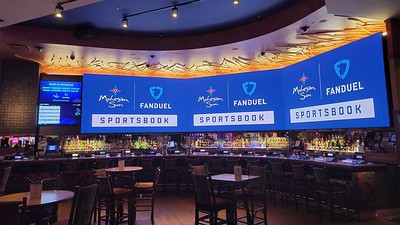
Sports betting in the state are offered by the Connecticut Lottery Corp., the Mohegan Tribe and the Mashantucket Pequot Tribe through their Mohegan Sun and Foxwoods casinos.

Their online gaming partners include Rush Street Interactive, FanDuel and DraftKings.

Bally’s, Nashville Predators Ink Partnership

Bally’s Corp. has become the official sports betting partner with both the Nashville Predators and the Bridgestone Arena. The deal also includes a free-to-play availability. The deal marks both Bally’s first with an NHL team and its first in Tennessee.

The partnership, which continues through 2025, grants access to Bally’s intellectual property, and provides the gaming operator entrée to team logos and content, according to CDC Gaming Reports.

“The Nashville Predators occupy a special place in sports fans’ hearts across Tennessee and their Bridgestone Arena provides a unique and electric atmosphere,” said Bally’s Interactive COO Adi Dhandhania in a statement.

The initial action will be the free-to-play game Smashville Selector, featuring five predictive questions before select Predators’ games. Prizes will be awarded to the top competitor each game, with a grand prize given to the highest cumulative scorer at the end of the season.

“From the moment sports betting launched in Tennessee, we’ve wanted to align with dynamic companies that will help us bring the best fans in sports even closer to the game we all love,” said Predators Executive Vice President and Chief Revenue Officer Chris Junghans in a statement.