Archives: Articles

This is the example article

MSG Networks Launches Trio of Sports Betting Shows

On October 20, MSG Networks unveiled its presence in sports betting content, well ahead of the launch of mobile sports betting in New York.

Gamblers in New York City and North Jersey can catch three new shows devoted to wagering on sport, according to U.S. Bets.

“The Bettor Half Hour” is described as “a fast-paced, energetic show that will give an inside look at the sports betting landscape.” Host Alex Monaco teaches betting strategies, while analyzing storylines. The program airs Monday through Thursday at 5 p.m.

“The Betting Exchange” follows. Also, a half-hour, the program debuted as a weekly show in September with hosts Katie Mox and Jeff Johnson, with related news and analysis. Former Giants wide receiver David Tyree leads a rotating mix of New York-area athletes as recurring guests, such as Erik Coleman, Minty Bets, Alex Glaze and Sean Little.

The third show, “Odds With Ends,” airs for an hour starting at 11 a.m. each Sunday during the football season. Hosted by Tyree and former teammate Mathias Kiwanuka, the program offers betting analysis, picks, and predictions.

“David and I will provide fans with a unique perspective around sports betting that only former players can give,” Kiwanuka said. “We will chop it up and deliver analysis that will be helpful for NFL fans betting on games each week.”

For MSG Networks, it’s a way to bring fans into the sports betting culture, said Kevin Marotta, senior vice president of marketing and content strategy for the network. “We will significantly increase our sports betting presence with the launch of these fun and energetic shows, which will uniquely position us to become one of the premium destinations.”

Everi Digital Releases Games in Connecticut

Everi Digital, the iGaming division of Las Vegas-based slot supplier Everi Holdings, announced that its titles are now available at online casino sites in Connecticut for the first time.

“Our growing partnerships with iGaming operators have allowed us to deliver top-performing content to online players currently across a total of nine states and provinces in the U.S. and Canada,” said Everi Executive Vice President of Sales, Marketing, and Digital David Lucchese in a statement. “Everi’s strong and growing digital game presence continues to resonate with players in all of the markets where we are live. We are pleased to be a day-one launch partner in the state, and we are confident our distinct games will be popular with online players in Connecticut as we continue to grow our online presence.”

Everi Digital has been growing its online footprint through its proprietary Spark remote game server. The company’s digital catalog now features more than 50 titles, and in addition to Connecticut, is now live in Michigan, New Jersey, Pennsylvania and West Virginia, as well as British Columbia, Manitoba, Ontario, and Quebec in Canada.

Scientific Games Enters Live Casino Market

Scientific Games Corporation has acquired Authentic Gaming, a leading provider of premium live casino solutions, which marks the company’s first move into the live casino market and significantly enhances the SG product portfolio.

This acquisition marks another milestone in Scientific Games’ strategic plan as the company continues to execute its vision to become the leading cross-platform global game company.

Scientific Games continues to invest in strategic growth opportunities to focus on game diversification and expansion in a growing U.S. iGaming market as it becomes a digital and content-led growth company.

Globally, the live casino market comprises approximately 30 percent of the iGaming market and is a key product vertical for players. The acquisition strengthens Scientific Games in-house development capabilities to build world-leading live casino products that will provide immersive experiences for players globally and allow the company to further leverage its content IP, land-based relationships and leading OpenGaming platform for accelerated growth in the online channel.

Based in Malta, Authentic Gaming has provided the European iGaming market with a range of live casino products that have been shaped with player preferences and market trends in mind. The company is currently integrated with over 30 European operators, including leading brands Entain, 888, Betway Group, LeoVegas, Mr Green and many others.

Authentic has built a reputation as specialists within live roulette, bringing casino experiences to players on desktop and mobile devices. These include cutting-edge titles that are streamed directly from a state-of-the-art studio and the floors of some of the world’s most luxurious casino resorts, as well as a range of innovative auto-roulette games. The provider recently improved its portfolio with the addition of live blackjack, while baccarat features in its upcoming product roadmap.

Scientific Games has strong ambitions to further extend Authentic Gaming’s product offering across the U.S. market. This includes creating new studios based in the U.S., enabling the company to offer a localized product for operators across the region.

“We are thrilled to have Authentic Gaming join the Scientific Games family and expand our premium product portfolio as we execute on our vision to become the leading cross-platform global game company,” said Barry Cottle, CEO of Scientific games. “The collective power of Authentic, our proven table games titles and our OpenGaming platform allow us to capitalize on a growing U.S. market opportunity with our unique omni-channel approach.”

Dylan Slaney, CEO iGaming at Scientific Games, added, “As a result of welcoming Authentic to Scientific Games, we will be uniquely positioned to continue to excite and entertain players to capture both the growth opportunities that exist within live casino and the convergence of players globally across digital and land-based channels by providing leading immersive experiences. We are excited to work with the talented team at Authentic to enhance our iGaming proposition for both operators and players.”

Jonas Delin, CEO and founder of Authentic Gaming, said, “Scientific Games’ leading position in the U.S., their focus on quality games content, and market-leading iGaming platform make them the ideal home for Authentic to expand our footprint in the U.S. and European markets. Our proven technology and live dealer platform is ready for scale and now, as part of Scientific Games, we are able to embark on our studio expansion and game diversification strategy in full force.

“Our strategy is driven by a relentless focus on delivering premium quality live dealer content where attention to detail, customer customization and innovation are the cornerstones that our unique live dealer games are based on. This partnership will propel this mission and be a game-changer in the fastest growing segment in the gaming industry.”

Rush Street Launches ‘RushArena’

Rush Street Interactive, Inc. (RSI), which operates the BetRivers, PlaySugarHouse, and RushBet online casino and sportsbook brands, has launched “RushArena,” an innovative multi-player tournament engine to allow players to compete head-to-head on their own time.

Building off of RSI’s success with its popular bingo games, RushArena was created to offer unique and pioneering peer-to-peer promotional games that extend players’ experiences and offer more opportunities to win.

RSI’s initial execution of RushArena is “RushRace,” a best-in-class slot tournament that advances players’ online gaming experience beyond the classic land-based casino tournament. While traditional slot tournament players start at the same time with the same balance and limited game selections, RushRace offers the following benefits:

  • Permits players to join at any time in the tournament window
  • Tournaments are designed so players can choose from a wide number of game selections
  • Players can switch games during the tournament to try their luck at a different title
  • Players can start with different balances and win based on a wide range of different outcomes
  • Players can adjust wager amounts based on desired strategy
  • Leaderboards and player positions are updated in real time and can be viewed while competing
  • Tournament entries may be awarded by a wide range of methods, including purchases from RSI’s proprietary bonus store using bonus store points

RSI has always offered various ways to award players with more opportunities to win and earn rewards. Scratch Cards, Wheel Spins, instant animated awards and RSI’s proprietary Bonus Store are some of the rewards players can choose.

These rewards have always revolved around opportunities to win with games of chance between the player and RSI. Now RushArena extends RSI’s relationship with its casino players by offering fun tournaments and other experiences where casino players can compete against each other for rewards and prizes.

“Enhancing the player experience remains our top business strategy,” said Richard Schwartz, CEO of RSI. “We listen to our customers, and by owning, building and innovating the framework, we can tailor our games to deliver what our casino players, or insights obtained from them, have told us they want. We use these groundbreaking game mechanics to create new experiences, which is consistent with our goal to increase retention, loyalty, and business KPIs.”

RSI’s framework will also allow for the addition of new head-to-head contests and much more in the future. The engine used to create RushArena and its RushRaces will also soon be employed to create peer-to-peer competition events, which will allow BetRivers.com, PlaySugarHouse.com and RushBet patrons to challenge each other in fun and rewarding battles.

Greentube Goes Live in Holland

Greentube, the interactive division of Austria’s Novomatic AG, has officially launched in Holland, as iGaming giant 888 was temporarily forced out of the newly regulated online gaming market.

The comprehensive Greentube portfolio being made available to Holland Casino players includes a wide range of Novomatic’s casino classics. Titles such as Book of Ra Deluxe and Sizzling Hot Deluxe are now available, which complement digital conversions of AWP titles which have long proven popular in the market, such as Club 2000, Gemini Twin, Grand Slam Casino, Mega Slam Casino, Random Runner, Random Runner 15 and many more.

The operator is the first B2B partner to benefit from Greentube’s games offering since the newly regulated market in the Netherlands opened for business October 1. Holland Casino operates under a Dutch operator license and has a long-established working relationship with Novomatic’s land-based division. Greentube is able to offer its games through a Dutch supplier license, which includes all requisite game certifications.

“We are happy to team up together with Novomatic’s long-term partner Holland Casino and go live in the Netherlands, which is a market we see holding plenty of potential,” said Markus Antl, head of sales and key account management at Greentube. “This is definitely a milestone for us, and we are looking forward to a successful partnership.”

Jeroen Verkroost, digital transformation director at Holland Casino, added, “Dutch players have long relished the opportunity to play their favorite games online in a safe, controlled and secure environment. By offering them classic slots including Book of Ra and Sizzling Hot as well as a wide selection of popular AWP titles, we are sure that this partnership with Greentube will mark the latest chapter in our long history of success with Novomatic.”

Kindred Group Will Block Dutch Players

The Kindred Group, an online gaming operator, has announced that it will block residents of the Netherlands from playing its online games until it obtains a Dutch license. It hopes to do that in the second quarter of next year.

Just before the legal regulated online Dutch market went live—at the end of September—Kindred announced that it would temporarily block players from that country while it obtained legal guidance.

The legal guidance advised it not to accept any Dutch players, even if it didn’t market directly to them.

Kindred announced, “Kindred is prepared for the Dutch licensing process under the Remote Gambling Act, and has been working on the preparations for a Dutch license application including successful completion of the required external audit.”

Take Over at Atlantic City’s Ocean Casino Resort

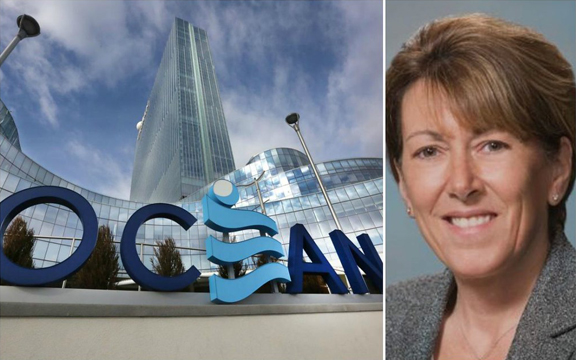
After bringing Ocean Casino Resort back from the brink of bankruptcy, CEO Terry Glebocki resigned abruptly last week after two years. She apparently saw the handwriting on the wall, because the next day, Detroit MotorCity casino owner Ilitch Holdings received an interim casino authorization on October 14 from the Casino Control Commission to take over management of the property. Ilitch, which also owns Little Caesar Pizza and the Detroit Tigers, purchased as much as 50 percent of Ocean for $175 million. Any decisions will be a joint effort between Ilitch and Luxor Capital Group, a hedge fund which owns the other half.

Funded by Ilitch, Ocean will spend some $75 million in the next year including adding 360 new hotel rooms and 100 suites on 14 floors that were previously unfinished.

Glebocki guided the former Revel to profitability after years of losing money.

“Glebocki has three decades of financial management experience, which navigated Ocean’s course to financial stability,” the casino said in a statement. “Terry is leaving the property as a leading casino resort in Atlantic City.”

Glebocki also left her post as president of the Casino Association of New Jersey, the trade association for the properties in Atlantic City.

Under Glebocki, Ocean cut expenses but still performed renovations to the casino floor, and added amenities for upscale gamblers, which helped grow its revenue from both casino play and non-gambling sources. In April, the company spent $15 million on interior work, as well as renovations to pools, cabanas, and its beachfront.

For the first six months of this year, Ocean posted a gross operating profit of almost $25 million, while during the same period a year ago, the company had an operating loss of $12.4 million in the same period a year ago.

During her financial career in the industry, Glebocki worked for Bally’s, Trump Plaza, and Tropicana Entertainment.

To listen to a podcast conducted in August with Terry Glebocki click here.

The Renaissance Project Latest Proposal for Bader Field

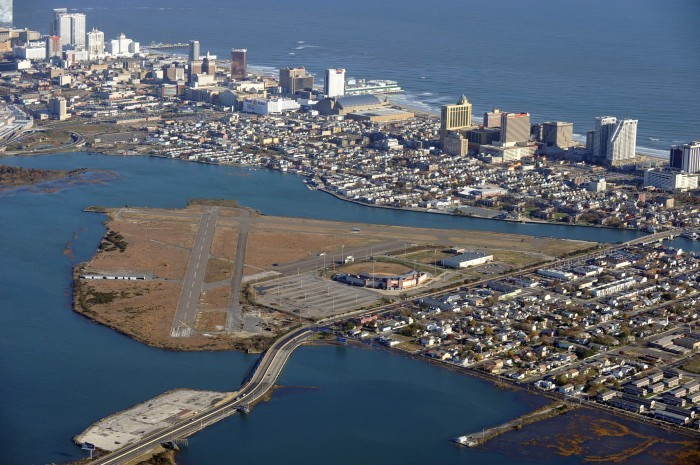
In 2008, Penn National Gaming offered Atlantic City $800 million to develop a casino at historic, long-vacant Bader Field, one of the nation’s earliest municipal airports, closed since 2006. The company planned to partition the 140 acres so other gaming companies could be part of the package. But the state came in and nixed any deal unless it went out for a public bid.

What would have happened had Penn National carried out the plan? Would it have built its own casino resort, even if there were no other companies in the mix? In 2008, the year a good many AC development deals went south, would the tanking economy have sunk any and all plans?

The economy improved, then soured again in the wake of the Covid-19 pandemic. Now, arguably, it’s back on the mend.

But Bader Field remains much as it was in 2008: empty. Pop-up festivals, musical and otherwise, have taken place there, as well as concerts. Development proposals have come and gone.

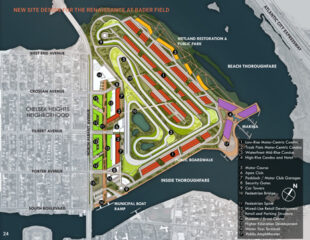
The latest comes from DEEM Enterprises, with a multi-functional residential project revolves around… cars. The literal centerpiece of the company’s proposed plan will consist of a Formula 1-style driving course.

“Our project is far different than anyone else’s,” said Michael Binder, the M in DEEM.

The project, known as Renaissance at Bader Field, is an imaginative one, for sure. If it comes to fruition, it will create jobs and tax revenue at a site that has been fallow for 15 years. There will be 423 condo units encircling the track, and another 372 apartments and 34 townhomes along Albany Avenue, many for rent. Plans down the road call for a couple of high-rise condos and eventually a brand-name hotel. There will also be 340,000 square feet of auto-centric and other retailers. Shops and restaurants will line Albany Avenue, some with housing on top.

The proposal also includes a museum and event center, an educational component and a waterfront amphitheater. “We anticipate having an array of different events focused on all things automotive, the latest sustainability technologies, documentary film making, talks, small concerts, guest appearances, and general interest,” Binder said. “These elements will coincide with the overall buildout of the site.”

These are lofty proposals. But Atlantic City is littered with lofty proposals that never left the drawing board. What makes this one different?

“I looked at the site five or six years ago,” Binder said. “I knew what it could be. The opportunity to change Atlantic City is right in front of us.”

The two E’s in DEEM, Erick Feitshans and Eric Harryman, are involved in the entertainment industry in Los Angeles. The D is for Daniel Gallagher, a local lawyer.

The cost for Renaissance would come to $2.7 billion, and DEEM has the money in hand, Binder said, including “$50 million of our own money involved.”

The development would be phased in according to demand for the housing. Purchase prices would also be based on demand. The plan sets aside 20 percent of the project along Albany Avenue for affordable housing; the variety of housing sizes and mix of market-rate and affordable rentals would boost options in the Chelsea Heights neighborhood, Binder said.

The plans haven’t left gambling behind, and DEEM has a couple of ideas on that front. One has to do with creation of a mobile sportsbook at some point. “According to our gaming consultant you do not have to be on a particular casino property in order to have a sportsbook license. The ‘special license’ is called a skin which can be purchased directly from a casino. The question I’ve just asked is can more than one skin be purchased to include all casinos in Atlantic City.”

The New Jersey Division of Gaming Enforcement confirmed that any online sports wagering entity can partner with a casino or racetrack for a skin. “But each casino and racetrack are limited to three skins total,” said Christopher Glaum, chief of investigations for the DGE.

Developers also hope to get into what many call the next big thing in gambling: esports. That could be an avenue to sports betting, too.

“Competitions that are approved for wagering can occur anywhere, provided they are approved by the division,” said DGE spokesman Leland Moore. “In-person wagering may only occur at approved casinos or racetracks, though mobile wagering can take place anywhere inside the state.”

Then there’s the 2.44-mile track. It may look like a racecourse, but it isn’t, Binder said. Residents and guests who love cars could get behind the wheel on the track. If this whole auto/residential mix seems a little odd, you haven’t heard of the Thermal Club (left) in Thermal, California. It has many of the same features planned by DEEM, including the racecourse.

“The paramount concern of the motor sport development will be safety,” Binder said. “The course will be used by highly trained residents who will have to pass rigorous safety requirements before driving the course. Additionally, the membership will be limited to individuals who are not merely auto enthusiasts but motorsport lifestyle participants. We will have availability for guests to participate but they must go through the same safety protocols.”

Binder said noise from the track would not be a problem given the design of the Renaissance at Bader Field, which would be bordered by condominiums with sound-absorbing building envelopes. Don’t forget the multi-layered landscape design beyond the condos. And the housing along Albany Avenue.

Seeing Renaissance at Bader Field go from drawing board to reality will take more than money. DEEM has to jump through several hoops to get the approvals it needs. The city and Mayor Marty Small Sr. seem to be on board, though Small’s office did not respond to a request for comment. But that’s only one part of the permit puzzle.

• The Casino Reinvestment Development Authority (CRDA) has to approve the plan, as Bader Field is located in Atlantic City’s Tourism District. That includes the site plan, subdivision and variances, spokeswoman Karen Martin said.

• The state Department of Community Affairs (DCA) must also pass judgement on any proposal for the site. “The DCA has oversight and reviews all contracts, meeting minutes, resolutions and ordinances that the city may approve,” Martin said.

• The state Department of Environmental Protection (DEP) has to issue a Coastal Area Facilities Review Act permit, among others, especially since the project involves much-needed dredging of nearby channels and depositing the spoils on the site to build it up as a buffer against storms. For more than six months, the DEP has had monthly discussions with Atlantic City officials and the CRDA regarding potential use of the site as an upland confined disposal facility for material dredged from Gardner’s Basin. “The material would serve as a cap to remediate low levels of contamination and raise the level of the site for redevelopment,” DEP spokesman Larry Hajna said.

The channels are “clogged with silt and impassable in many areas,” Binder said. That sludge would be mixed with debris and gravel for a sublayer. Binder expects 2.5 million cubic yards of sludge to be dredged up for the project.

For all the obstacles, Binder believes the needed approvals will come, and the city’s largest tract of vacant, prime real estate will be OK’d for development. But until DEEM has formal site control of Bader Field, the company will not make any submissions to the CRDA for use approvals.

“We’re confident they will see the merits of the project and the massive benefits to the city, county, and state,” the developer said. “It takes political will and a full understanding of the positive impact of this project on Atlantic City and coastal development in general.”

NJ’s Second-Chance Jobs Program a Model for Other States

The post-Covid era has rung in one of the most contradictory employment pictures in memory: plenty of jobs, but chronic labor shortages; millions laid off, but many declining to reenter the job market.

In a phenomenon called the “Great Resignation,” almost 3 percent of Americans left their jobs in August, the highest number since December 2000, according to the Department of Labor. Despite higher hourly wages and big hiring bonuses, many people are bypassing jobs in the hospitality professions—restaurants, bars and hotels—in part due to concerns about the delta variant.

But the same factors could open the door to other job-seekers. And in Atlantic County, New Jersey, home of nine Atlantic City casinos, the search just got easier for people once shut out of gaming industry jobs.

Last year, the state passed legislation enabling the Casino Control Commission (CCC) to issue key casino licenses to people convicted of certain non-violent drug offenses. Prior to that, anyone with such a conviction was ineligible to hold a casino job.

New Jersey Governor Phil Murphy signed the bill into law in January 2021, and with the onset of Covid-19, the opportunity quickly vanished. Now it’s back and being actively touted at job fairs and recruitment events. According to commission Chairman Jim Plousis, the gateway could be game-changing and even life-changing for participants. “It means they can start at the bottom, in whatever casino job, and work their way up,” even to the executive level.

An Open Door

According to the Atlantic County Reentry Task Force, the majority of incarcerated people are released into low-income communities, where they “struggle to find employment, overcome addiction and avoid criminal associations.”

As a 40-year law enforcer, who’s logged time as a beat cop, sheriff, U.S. marshal and head of the state parole board, Plousis has seen the cycle first-hand. “I’ve arrested a lot of people, and 10 to 20 percent of the people in jail should stay there for very long time. But 80 percent of the people we dealt with either had a substance abuse problem or bad influences in their lives, and just needed somebody to get them on the right track.

“When I ran the county jail for 17 years, that was always my philosophy: help people get a second shot, get the tools, the skills or job or trade they need to succeed when they’re released.”

In 2017, when he became commission chairman, Plousis was approached with a plan to amend the Casino Control Act, “to allow people who successfully complete drug court—or recovery court, as they call it now— to qualify for a license.” He was all for it.

Dues Paying

Recovery court isn’t quick or easy, he pointed out. The website of the New Jersey Courts system describes the multi-year program as “rigorous, requiring intensive supervision based on frequent drug testing and court appearances, along with tightly structured regimens of treatment and recovery services.”

But for those willing to put in the time and effort, it comes with big payoffs: “an opportunity to overcome alcohol and drug dependencies and resolve related criminal charges against them.”

There’s no question about the value of the program, Plousis said. “If a person can’t make a living, they could go right back to a life of crime.” Asked if he got any resistance from the casino industry, he said, “The industry has been very receptive, none of them gave me any pushback. I was pleasantly surprised.”

The program has also been well-received in the community, with recent job events bringing out as many as 175 people. “And I know some people were hired on the spot,” Plousis said.

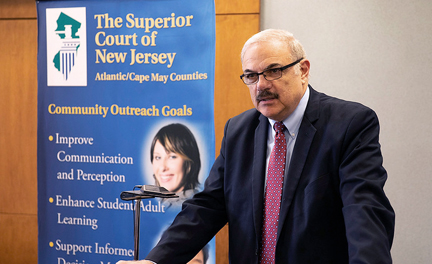
In June 2021, 30 people graduated from the Atlantic County recovery court program. At the time, Superior Court Judge Jeffrey Waldman said participants “will be re-entering the workforce and life in general with a new skill set and a new appreciation of life. Opportunities abound for these recovery court graduates, who are fortunate that this achievement coincides with the lifting of Covid restrictions.”

Setting the Example

Joe Jingoli, part owner of the Hard Rock Casino Hotel on Atlantic City’s fabled Boardwalk, said the city’s newest casino considers itself “part of a community, part of the neighborhood. My personal belief is that we have a responsibility to the people there, and should give them a second chance and an opportunity to make a living.

“It’s been proven and it’s a fact that (employment) reduces recidivism and improves our communities. And that can only help our businesses,” Jingoli said. “The greatest social program out there is a decent job.”

Since its inception, New Jersey’s reentry program has attracted attention from other states and the District of Columbia, where lawmakers are considering a similar approach.

“This is one of the most regulated industries in the world, and New Jersey is the gold standard,” said Plousis. “So if this industry can take a chance on somebody, it sends a powerful message to other industries that it can work for them too.”

It also sends a message to former offenders, he said: “If you do the right thing and pay your dues to society after getting in trouble, you get a second chance.”

Jim Plousis is the author of Jersey Lawman: A Life on the Right Side of Crime, a rollicking inside look at a life spent in law enforcement, co-authored with George Ingram. Proceeds benefit the U.S. Marshals Survivors Benefit Fund. For more information, visit JerseyLawman.com or go to the authors’ Facebook page.

In-State College Betting No Slam Dunk in NJ

In addition to choosing a governor, New Jersey voters will be asked whether to expand sports betting to include New Jersey colleges or any collegiate event held in the state. March Madness, for example.

Former state Senator Ray Lesniak, who led the push to get sports betting at the tracks and casinos, isn’t optimistic about its chances.

“I’m thinking that it probably won’t pass,” Lesniak told NJ Online Gambling.

A Fairleigh Dickinson University poll released in July supported his concern. The prohibition the referendum seeks to overturn applies to events involving state schools, or the occasional in-state event held between two out-of-state schools. Lesniak said that he believes that a targeted advertising campaign funded by large sportsbook operators in the state could have been quite effective.

“I think that would put it over the top, but apparently those interests don’t consider this important enough,” Lesniak said. “The biggest disappointment will be for Rutgers fans like me.”

The state has only one top-tier football program—Rutgers—and that university also was the only one in the state to qualify for March Madness in 2020. That meant that 65 of the 67 men’s college tournament games were up for wagers in New Jersey in 2020, as Rutgers won its opening-round game before being eliminated.

The ballot question itself is clearer than the FDU poll query:

“A ‘yes’ vote supports this constitutional amendment to allow wagering on postseason college sport competitions held in N.J. and competitions in which a N.J.-based college team participates.

“A ‘no’ vote opposes this constitutional amendment, thus continuing to prohibit wagering on postseason college sport competitions held in N.J. or involving a N.J.-based college team but allowing wagering on other college competitions.”

The decade-old ballot sports betting question, which passed by a 2-to-1 margin, did not include in-state college betting, Lesniak said, because of concerns expressed by state lawmakers and the perception that voters also might not be comfortable with such wagers.

Caesars, Spiegelworld Join Forces in Vegas, AC, New Orleans

Caesars Entertainment last week announced a deal with Spiegelworld, a Las Vegas-based entertainment company, that will invest nearly $75 million to create three, all-new live entertainment experiences at Caesars resorts in Las Vegas, Atlantic City and New Orleans. Spiegelworld already produces thee Las Vegas shows, Absinthe at Caesars Palace, Atomic Saloon Show at the Venetian and Opium at the Cosmopolitan.

The two companies’ expanded relationship will see a new permanent production open in the fourth quarter of 2022—DiscoShow at The LINQ Hotel + Experience in Las Vegas. DiscoShow will be followed by a brand-new theater and resident show at Caesars Atlantic City, opening in the first quarter of 2023, and a third new theater and show is planned for Caesars New Orleans in 2024.

The idea was born in the middle of the pandemic when Anthony Carano, in his first week as president and chief operating officer of Caesars Entertainment, scheduled a lunch at Beijing Noodle No. 9 in Las Vegas with Ross Mollison, CEO of Spiegelworld.

Ross Mollison recalls, “We were in the middle of a crisis with all of our shows shut down, and here I was eating delicious hand-pulled noodles, talking about doubling the size of our company and creating a national footprint. It takes vision to be talking to a rambunctious circus company about expanding the entertainment offerings at your resorts around the country, while simultaneously developing gaming, sports and headliner acts, and so, I raise a glass to Caesars Entertainment’s senior leadership for their incredible energy and commitment to making Caesars the country’s greatest gaming and entertainment company.”

“From the recent launch of Caesars Sportsbook and its innovative way to enjoy sports betting, to the Caesars Rewards loyalty program that redefines how our members can play, stay and earn rewards, we, at Caesars Entertainment, are constantly working to evolve our offerings to satisfy our guest’s appetite for new and dynamic reasons to visit our resorts,” says Carano. “Las Vegas, Atlantic City and New Orleans are the country’s modern-day entertainment and sports capitals, and as we roll out our vision for the incredible reinventions of our properties in New Orleans and Atlantic City, we are delighted to add Spiegelworld’s eye for creative experiences to our plans. Spiegelworld’s proven record of long-term success with Absinthe at Caesars Palace Las Vegas makes them the perfect partner as we bring to life new concepts in Atlantic City, transform Harrah’s to Caesars in New Orleans and augment our entertainment portfolio in Las Vegas.”

“We create emotion, energy and unforgettable personal memories,” said Mollison. “The three new, custom-built venues and productions will signal the future of live entertainment as imagined by Spiegelworld. What drives us is combining genre-defying live entertainment, integrated dining, outstanding beverage programs and specially commissioned art to create an intimate, immersive, surprising total night out which is unique to each city. We want to create shows with Las Vegas, Atlantic City and New Orleans that will first and foremost excite locals and be something they are proud to show off to visitors.”

After three years of development, the DiscoShow will find its Las Vegas home at the new Spiegelworld Glitterloft, to be built on the Strip at The LINQ Hotel + Experience, opening in late 2022. Set inside a transformative space, this live show will be unlike any other entertainment in Las Vegas. The audience will be invited to step inside the action with the characters who were there at the birth of disco; into their lives; on the streets; at the club; encouraged at every moment to lose themselves in the music and on the dancefloor. The creative team includes acclaimed director Steven Hoggett (Harry Potter and The Cursed Child).

In an exciting development for Atlantic City, Spiegelworld will resurrect the historic Warner Theatre incorporating its heritage 1929 façade that sits at the center of the boardwalk at Caesars Atlantic City. Just as Spiegelworld’s birth on Pier 17 in New York City in 2006 gave new life to South Street Seaport, Spiegelworld’s arrival in Atlantic City will help to reaffirm the city’s reputation as an entertainment destination for the entire East Coast and beyond. As part of Caesars Entertainment’s $400 million commitment to its Atlantic City resorts, the Spiegelworld Theatre is expected to open in early 2023.

Finally, building on Spiegelworld’s creative evolution that began with Absinthe, a brand-new show for Caesars New Orleans will further push the boundaries of adult circus-comedy entertainment, opening as part of the property’s $325 million renovation in 2024.

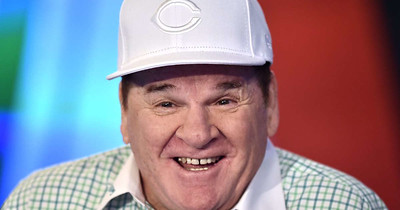
Pete Rose Debuts Sports Betting Podcast

Has Pete Rose come full circle?

In 1989, Major League Baseball banned Rose for betting on the sport. The ban included entry into the revered Hall of Fame. Here we are 32 years later, and the all-time hits leader has his own sports betting podcast on Quake Media.

A premium podcast service, the show will air six times a week, with Rose giving his insight on bets from baseball playoffs to horse racing, along with co-host WSiN’s Ben Wilson. Fans can sign up for “Pete Rose’s Daily Picks” on the Quake Media website or through Apple Podcast subscriptions for $2.99 a month, according to Barrett Sports Media.

“I watch baseball every day. If it’s not baseball season, I watch another pro sport every day,” said Rose in the Quake Media announcement. “This is going to be a fun chance for me to talk about the sports I love. I’ll share how I think about games with Ben and the fans; then we can watch and learn together. There are some insights, I believe, that only an old guy like me may think of. I’m excited to share my winning predictions with my fans.”

To drive home the point even more, Rose will make the inaugural table bet at the reopening of Hard Rock Casino in Cincinnati on October 29. Hard Rock replaces Jack Casino.

The reopening also includes a performance by Earth, Wind & Fire, and a ceremonial guitar smash. Tickets are on sale for the performance at HardRockCasinoCincinnati.com.

“We know our Grand Opening will be a big hit with the Hit King Pete Rose and Earth, Wind & Fire here to celebrate with our guests,” George Goldhoff, president of Hard Rock Casino Cincinnati, said in a press release, according to WCPO.

These days, Rose, 80, a former Cincinnati Red, spends a lot of his time in Las Vegas.

Genting Plows $150 Million into NY Resorts

Last week, Genting Malaysia announced that it had injected another $150 million of equity into Empire Resorts, which owns and operates Resorts World Catskills and Monticello Raceway, both in Sullivan County, New York.

Forbes magazine reported that the company, controlled by billionaire Lim Kok Thay, will use the funds to repay Empire’s existing debts of about $365 million amid signs of recovery in the U.S. gaming industry. In response, Fitch upgraded its credit rating for Empire by one level to B+ and raised the outlook for company to stable from negative.

“The proposed equity injection will also allow Genting Malaysia to reinforce its position and grow its market presence in the New York State gaming market by leveraging synergies between Resorts World New York and Resorts World Catskills,” Genting Malaysia said. “There will also be joint marketing initiatives with Genting’s Resorts World Las Vegas integrated resort that recently opened in June.”

Like other U.S. casinos, Resorts World Catskills was hard hit by the Covid-19 pandemic, with the $1.2 billion casino and entertainment complex closing for five months in 2020. Business has improved since its reopening in September 2020, with Empire reporting a positive EDITDA of $3.5 million in the second quarter of this year, Genting said. “Resorts World Catskills experienced a strong rebound in its operational performance as pandemic-related restrictions were progressively eased and fully lifted by June 2021 in the New York State,” it said.

“While the international travel market has shown signs of revival, the recent Covid-19 developments will continue to pose uncertainties to the outlook of tourism, leisure and hospitality sectors,” Genting Malaysia said in August as it announced its first-half results. “The regional gaming market is expected to remain challenging in the short-term.”

Genting owns also owns casino resorts in Malaysia, Singapore and the U.K. Lim has a net worth of $2.55 billion and was ranked No. 11 on the list of Malaysia’s 50 Richest in June.

According to MSN, Genting injected the funds via a subscription agreement to subscribe up to US$150 million of additional Series L. Genting injected $40 million in capital into the resorts in March 2020, at the start of the pandemic, and added $150 million in September 2020 and $20 million in March 2021.

Locals + Stimulus Checks = Big Nevada Wins

Nevada’s gaming industry racked up $1 billion-plus in revenues every month for the past six months, with the credit going to locals, drive-in gamblers and federal stimulus checks.

“I was shocked,” Michael Lawton, senior economic analyst for the Gaming Control Board, told Nevada Newsmakers. “If you would have told me at the end of 2020 or even at the beginning of 2021, that we would be here today talking about this streak of $1 billion in gaming win, I would have laughed at you. I didn’t see it coming.”

With the big win, the state is now nearing the record for consecutive months with the gaming win at or above $1 billion.

“The all-time record is eight, so this is the second longest record, all time,” Lawton said. “The longest streak was back in November of ’07 through May of 2008. So we’re at an historic rate of gaming win.

“If we finish the year with that average continuing, we’ll hit $12 billion, obviously,” Lawton said. “That has only happened three times, 2006, 2007 and 2019. So we are really on a historic run.”

Lawton told show host Sam Shad the current streak is being driven by the locals market and drive-in customers from nearby states, as well as federal stimulus money from the American Rescue Plan Act.

“There was a lot of federal stimulus in the market, too, that was pumping up the economy,” Lawton said.

Slot machines were the favorite games, he added. “The slot play is 11 percent over 2019 levels. It is setting all sorts of records. So that’s what is really driving these numbers.”

Markets that rely on locals and drive-ins “were at pre-pandemic levels very quickly,” Lawton said. “Washoe County, the Las Vegas locals, South Lake Tahoe all got off to a strong start. Mesquite, Elko. too. That’s how it was playing out.”

The end of federal subsidies “could bring us back down,” he pointed out. “The Delta variant, we’re still not out of the woods on that …The traditional spending patterns are not back yet because everything is not yet back on line.”

According to the Las Vegas Review-Journal, rising Covid cases due to the Delta variant slowed foot traffic at the nation’s casinos in September, but analysts are expecting a solid fourth quarter, especially in Las Vegas—despite the cancellation of dozens of Southwest Airlines flights on October 10. Southwest canceled 1,900 flights across the country that weekend, due to what it called “air traffic control issues and disruptive weather” as well as labor shortages.

David Katz of Jefferies Securities noted that September foot traffic in Las Vegas, dropped 8 percent from August, but was far less than the 24 percent decline from July to August.

“We believe rising daily cases of the coronavirus experienced in Nevada during the mid-to-late summer likely impacted results, as normal seasonal trends suggest September would be better than August,” Katz said.

Bank of America analyst Shaun Kelley said Las Vegas peaked in July, but has leveled off since then by hitting “a snag due the Delta variant with group cancellations and room-rate data slowing.” But fourth-quarter room rates are currently 6 percent above 2019 levels, he said, an indication of higher demand. “Vegas remains a solid way to play the U.S. leisure recovery,” Kelley said.

PA’s Meadows Casino Changing Name

The Meadows Racetrack and Casino, south of Pittsburgh in Pennsylvania’s Washington County, officially changed its name on Friday to Hollywood Casino at the Meadows.

The change brings the property in line with the flagship brand of Penn National Gaming, which took over operation of the casino in 2019 when it was purchased by REIT Gaming and Leisure Properties.

“This is more than a name change,” said Vice President of Marketing Rahul Kaushik in an interview with Washington County’s Observer-Reporter. “This is a key milestone in the transition to our re-branding… Penn National is putting its flagship on this property. This proves we are here to stay.”

Along with the name change came additional amenities, including a retail Barstool Sportsbook. (Penn National will soon acquire 100 percent of Barstool.)

Also, the food court is being transformed into The Eatery by Fabio Viviani, with four different restaurants: Mercato, which features Italian cuisine; The Classic, which offers a selection of burgers, chicken tenders and other bistro food; Joe & Dough, a spot for snacks or sweet treats and handmade deli sandwiches; and Zen Noodle, featuring authentic Hong Kong cuisine.

The property hosted celebrations on Friday including a Pink Out and Family Fun Night from 4 to 7 p.m.; and on Saturday with live local entertainment, food trucks and sweepstakes drawings at the outdoor racetrack. Other promotions related to the changes are scheduled for the remainder of the month.

“We put a lot of promotions behind it,” Kaushik said of the new name to the Observer-Reporter. “We want to celebrate with people. We want to recognize people that got us to this place. I’m really excited. I’m hoping people will like (the promotions).”

The name of the racetrack, which opened in 1963, will remain the same.

“The history and tradition of this being The Meadows will continue on,” Kaushik said. “It’s part of our DNA. It’s part of our core. That was very important.”

Potawatomi Lawsuit Could Derail Illinois Casino Selection

When the city of Waukegan, Illinois requested applications for a casino license after the legislature approved it as one of the locations for a new casino, the Forest County Potawatomi Community submitted a proposal. It claimed Lake County and the Waukegan area were part of its ancestral home.

The tribe’s application was rejected. Operators of a lucrative casino in Milwaukee, which attracts Lake County residents, the tribe filed a lawsuit against the city of Waukegan, Illinois in U.S. District Court in Chicago in 2019. The lawsuit contends Waukegan officials rejected the tribe’s proposal because it used incorrect information presented by its casino consultant. But city attorneys said the suit is invalid and that the consultant what information was available at the time.

Some discoveries and depositions have taken place for the lawsuit. Meanwhile, the contenders for the Waukegan casino have dwindled to Las Vegas-based Full House Resorts and Lakeside Casino LLC, aka Northpoint, led by former Democratic state Senator Michael Bond. Late last month, the Churchill Downs and Rush Street Gaming partnership, group, which operates Rivers Casino in Des Plaines, withdrew its proposal for a Waukegan casino after the Chicago Bears announced the team would purchase Arlington International Racetrack in Arlington Heights.

The casino will be built on the 28-acre city-owned Fountain Square site. A recent economic study indicated 10 jobs would be created for every $1 million spent, an estimated, 2,800 jobs when the casino is operational. In addition, revenue generated by gaming, sales and lodging taxes, plus food and beverages, would total nearly $24 million.

If the Potawatomi are successful in court, a federal judge could determine the city’s selection process was not valid and toss out all of the applicants, forcing the city to start from the beginning. Or, the judge could reject the entire lawsuit.

At a recent Waukegan city council meeting, tribal consultant Ray Vukovich said, even though the tribe is suing the city, “the Potawatomi are still very much interested in partnering with Waukegan to bring a casino to the city. Potawatomi has reviewed the state gaming law and firmly believes it is not too late for Waukegan to send Potawatomi to the gaming board and let the experts decide what would be best for Waukegan and Illinois.”

Representatives of the two finalists will present their proposals to the Illinois Gaming Board in a public meeting this week. The board could announce its decision by the end of the year. But observers said, keep an eye on the Potawatomi lawsuit.

Dream Hotel-Casino Moving Forward in Vegas

On October 6, Clark County, Nevada commissioners voted 6-1 in support of a $500 million casino-hotel on five acres near McCarran International Airport. The 20-story, 527-room project, called Dream Las Vegas, will be located on the southern edge of Las Vegas Boulevard.

According to the Las Vegas Review-Journal, developers David Daneshforooz and Bill Shopoff hope to break ground by the third quarter of 2022 and open in 2024.

Commissioner Ross Miller cast the sole “no” vote, questioning a decision to “allow for casino-hotels directly on top of our airport.”

Shopoff said Dream will be a departure from the typical mega-casino, and will “find its following” among visitors looking for a different experience.

The investors first announced their plans in February 2020, just before Covid-19 arrived on U.S. shores, and was put on the back burner at that time. But the virus wasn’t the only obstacle in its path. As outlined in county documents, the proposal raised “safety and security concerns” about McCarran operations, and project plans were sent to agencies including the FBI, the Department of Homeland Security and the Secret Service.

The Transportation Security Administration issued an assessment stating the project is near an area of the airport “used for high-level individuals, special operations and military aircraft parking,” and the resort “would increase risk to both the aircraft and the passengers due to active shooters and the ability to throw things over the fence intended to cause harm” to people and planes, county documents show.

The TSA also said the hotel’s proposed service road would make its border with the airport “more susceptible to Vehicle Borne Improvised Explosive Device attacks delivered by vendor or garbage truck,” and that open areas planned for the third and ninth floors “provide a direct line of sight for laser flashing and long gun attacks” against aircraft and the airport, county documents say.

Airlines including Southwest, Delta, American and United all raised concerns about the project, citing such issues as illegal drone activity, lasers, and lighting and billboards that “could potentially be a source of flash blindness.”

As a result, a number of design changes were implemented, including a “nine-foot tall, double-reinforced security wall” with guard rails and wrought-iron fencing at the perimeter of McCarran.

A security checkpoint will allow only authorized vehicles onto the service road that rings the property, and grates or spikes will be installed on the other side of the building to prevent drivers from avoiding that checked entry, according to Celeste.

More importantly, he told commissioners, sightlines to McCarran have been “dramatically reduced.”

The parking garage will be enclosed; the hotel’s pool deck will have a “decorative” 10-foot security wall; all of the guest-room balconies were scrapped; and each room will have a “glass-break detector system” that will alert security if anyone tampers with the windows, Celeste said.

Rosemary Vassiliadis, Clark County director of aviation, told commissioners that officials “appreciate the commitment” from the developers to adhere to a range of preconditions, which she said “should mitigate the severity of the security and safety concerns” but not eliminate them.

“Pilots like open, vacant space,” she said, “so with that, they will not support a project like this.”

Vassiliadis also said that the Federal Aviation Administration did not find “any obstruction impact” to airport operations stemming from Dream’s proposed height, currently 234 feet.

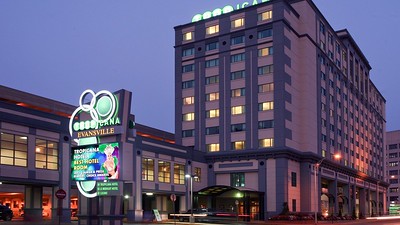
Tropicana Rebrands to Bally’s Evansville Indiana

It’s official: On October 13, Tropicana Evansville in Indiana official became Bally’s Evansville Casino & Hotel.

Bally’s Corp. purchased the property from Caesars Entertainment Inc. in June from Caesars Entertainment Inc. The deal had a total value of $480 million. Bally’s acquired the casino for $140 million, including rights to the casino’s sports betting operation. An affiliate of Gaming & Leisure Properties acquired the casino’s real estate for $340 million and is leasing it to Bally’s for $28 million a year.

The 79,000-square-foot gaming area includes 45,000 square feet of casino floor, four restaurants, a race and sportsbook, plus 11,000 square feet of convention space and the Riverfront Event Center across the street. The property also features a 243-room hotel tower and 95-room boutique hotel.

The property-wide rebranding is expected to be completed in the first half of 2022, said, Bally’s Corp. President and CEO George Papanier. It will include replacing interior and exterior signage, plus new Bally’s dice, cards, gaming chips and table game layouts, as well as implementing the all-new Bally Rewards players club program.

Papanier said, “We are proud to bring the Bally’s brand to Evansville, and it’s an exciting time for our customers and team members. I’d like to thank the state of Indiana for its collaboration throughout this process, and I’d also like to recognize our team members for their contributions to this significant endeavor.”

All existing Bally’s Rewards will be transferred to members’ new Bally Rewards cards. The all-new, 4-tiered Bally Rewards program includes tier status, exclusive offers, gift giveaways, casino multipliers and more.

Special promotions will celebrate the rebranding, including a $200,000 Ballyverse Cash & More Giveaway, chances to win up to $1,000 in free slot play or a $100,000 grand prize.

Indiana Officials Support Hard Rock Proposal

Indiana Gaming Commission (IGC) Executive Director Greg Small recently received letters from the three Vigo County Commissioners, the seven Vigo County councilmembers, Terre Haute Chamber of Commerce President Kristin Craig and 2021 Terre Haute Chamber Chair John Collett, urging the commission to select Hard Rock to operate Vigo County’s future casino. The IGC said it will make a decision regarding the Vigo County casino license on November 17.

Hard Rock Terre Haute LLC is one of four companies competing for the county casino license. The other applicants include Louisville-based Churchill Downs Inc., Las Vegas-based Full House Resorts and a joint venture of Mississippi-based Premier Gaming Group.

Hard Rock’s $200 million Rocksino Terre Haute would offer a casino with 850 slot machines and 35 table games, plus a 175-room hotel, six restaurants and bars, a 300-person entertainment venue and a 1,000-squar- foot retail Rock Shop. The project would create 2,058 construction jobs and 674 permanent jobs, and generate $50 million in annual county and state tax revenue.

The commissioners’ and chamber officials’ letters stated Hard Rock would “provide the best economic opportunity for Vigo County and the West Central region.” They cited the November 2019 referendum, in which 63 percent of Vigo County voters supported the casino project and all five letters noted Hard Rock could begin construction almost immediately.

Furthermore, the letter from the Vigo County council noted a “local member” involved in Hard Rock Terre Haute LLC had a “long history of community involvement, community investment, and charitable giving” in Vigo County. Observers said that individual is local businessman Greg Gibson, a partner in the proposed casino. Gibson owns Lucy Luck Gaming, which previously held the Vigo County casino license. However, the Indiana Gaming Commission would not renew Lucy Luck’s license following an “extensive review and considering all statutory and regulatory qualifications for renewal.”

Regarding Gibson, Hard Rock issued a statement: “We are glad to be in this joint venture with our partner Greg Gibson, a Terre Haute native. Hard Rock would be honored to expand our presence in this region and continue to be loyal community stewards to the people of Indiana.”

One of the other competitors, Full House Resorts, has proposed the $250 million American Place Terre Haute. Full House is the only company that proposed a temporary location while its main building is under construction. Officials said the permanent facility would create 1,800 construction and 800 permanent jobs. It would offer a gaming floor with 1,000 slots and 50 tables, plus a 100-room hotel. Full House Resorts owns five casinos in four states, including Rising Star Casino and Resort in Rising Sun, Indiana.

Churchill Downs’ proposed Queen of Terre Haute Casino would create 1,000 construction jobs and 500 permanent jobs, officials said. The gaming floor would offer 1,000 slots and 50 table games. An on-site hotel would have 125 rooms.

Premier Gaming officials said their proposed casino would create 300 construction jobs and 400 permanent jobs. It would offer a gaming floor with 800 slot machines and 20 table games.

Alabama’s Marsh Won’t Sponsor Gambling Bill

After years of trying to bring a lottery, casinos and sports betting to Alabama, state Senator Del Marsh recently said he will not sponsor a gambling bill in the next legislative session.

In a radio interview, Marsh said, “I think the lottery issue is one that is popular with the people. I think it is one people want to address and have an ability to vote on it. I’ve seen the polling numbers on that. It’s heavy across the lines for the Democrats, Republicans, men, women. I’m a little surprised, quite honestly, that the bills the Senate has passed in the past have not reached the House for a vote. I don’t plan on bringing one next session.”

However, Marsh said the legislature could take up gambling anyway.

“It’s always possible. I haven’t heard of anything, but something could easily come up in the House or the Senate. It’s not out of the question,” he said.

In the past session, Marsh introduced a gambling bill that included allowing casinos at the state’s four dog racetracks, legalizing sports betting, authorizing a lottery and negotiating a compact with the Poarch Band of Creek Indians. The bill passed a House committee but failed to make it to the full House floor.