Author: Frank Legato

Cordish Companies: Betting Big on PA

These days, you won’t see many stories about operators busily building out new properties and looking forward to grand openings. But one operator in the thick of such a scenario is Stadium Casino, the Pennsylvania casino licensee owned by Baltimore-based Cordish Companies.

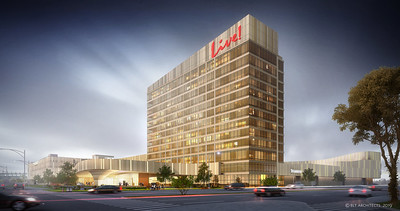
Stadium Casino is in the midst of finishing construction on two properties in Pennsylvania—the Live! Hotel & Casino Philadelphia and its connected Category 4 satellite licensee, Live! Casino Pittsburgh.

While there were a couple of Covid-19-related fits and starts, both projects are in line to open fairly close to initially projected completion dates.

Cordish Companies has Live! entertainment districts and sports-related attractions around the country, but lately, the brand has appeared on a growing number of gaming properties, headed by the flagship Live! Casino & Hotel Maryland, that state’s largest casino, combined with a hotel and a varied lineup of dining outlets, ranging from celebrity chefs like Bobby Flay to local favorite Phillips Seafood.

The Maryland Live! property, located adjacent to the sprawling Arundel Mills Mall in the center of the Baltimore-Washington corridor, provided a model for Cordish’s subsequent expansion into Pennsylvania.

Cordish has already made a huge investment in Pennsylvania—first, by buying out its original partner in Stadium Casino, Greenwood Gaming and Entertainment. Greenwood, owner of the Parx casino and racetrack in nearby Bensalem, formed the Stadium partnership with Cordish in 2014 to go after the second casino license for the city of Philadelphia. After a fierce competition, the partnership won the license for a $600 million property in the middle of South Philadelphia’s Stadium District, home to all four of the city’s professional sports teams.

According to Joseph Billhimer, senior vice president of Pennsylvania operations for Live! Casino Hotel, Cordish officials had their eyes on the South Philly location for a long time.

“It’s an ideal location, for sure,” Billhimer told GGB News. “We’ll be the only gaming property located in a sports district, with four major-league teams. I’ve been looking at this location and this market for 20-plus years, and we have the ideal location, with I-76 and I-95 nearby, and just great demographics in the city of Philadelphia and the surrounding area.”

Late in 2018, Cordish bought out Greenwood’s stake in Stadium Casino for an undisclosed sum. Last November, Cordish broke ground and began what was estimated to be a year-long construction period.

By the time that groundbreaking took place, Cordish’s second investment in Pennsylvania was already well under way. In January 2018, bidding began for Category 4 casinos, created under Pennsylvania’s 2017 expansion law as satellites to existing casinos in areas currently underserved by gaming. Category 4 casinos, commonly called mini-casinos, are restricted to 750 slot machines and 40 table games.

Stadium Casino won the second satellite casino auction, with a hefty bid of $40.1 million to license a Category 4 casino in the Pittsburgh area, giving the operator coverage in the state’s two largest metropolitan regions.

What will be called Live! Casino Pittsburgh is under construction in the location of a former Bon-Ton anchor store in the Westmoreland Mall, around 30 miles east of Pittsburgh in Hempfield Township, Westmoreland County.

According to Billhimer, Stadium Casino was able to work through Covid-19-related delays to keep both projects moving forward. He says the Pittsburgh project will probably open first. “Our project in Westmoreland is moving along at a great pace; we’re getting into the final straws there,” he said. “Hopefully, we’ll be looking at an early winter, latter part of this year opening. In Philadelphia, we’re moving along, and looking for an opening sometime in early 2021.”

Billhimer said both projects lost time to the pandemic, but were able to ramp back up quickly. “In Westmoreland, we lost a little bit of time during the initial Covid shutdown, and in Philadelphia, we were able to get a waiver to continue construction,” he said. “But the teams in both projects got ramped up pretty quickly some months back.”

In the end, both projects will open several weeks after the original target dates, with the Philadelphia project set to take advantage of what’s bound to be a better professional sports picture next year.

“As we look toward Philadelphia opening in early 2021, we hope we open in a post-Covid world,” said Billhimer, “but we’re closely monitoring that, and as time goes on, we’ll make appropriate plans. Our No. 1 concern is the safety of our team members and the guests coming through our facility. We’re not going to sacrifice any safety protocols just to get open.

“We’re taking all the safety protocols into consideration as we set up. For Westmoreland, we’re looking very strongly at our Covid-19 safety plans through our Play It Safe program that was established in Maryland. I think it’s been a model of safety and protocol not only for our properties, but for the industry.”

Play It Safe, launched in Maryland in May, is an enhanced health and sanitation program that allows for ample social distancing, reduced occupancies and vigorous hygiene and health measures for all guests and employees. Capacity is limited by disabling slot machines, all gaming chips and furniture is sanitized constantly, and hand sanitizer stations are located throughout the property.

Looking to Open

As Stadium Casino puts the finishing touches on what will be a 100,000-square-foot casino at Westmoreland Mall, Billhimer predicts customers will be surprised at the finished product when it’s unveiled in the fall.

“You won’t recognize that it’s a former Bon-Ton,” Billhimer said. “We’ve put together all the elements of a proper casino. We don’t even use the term ‘mini-casino’ internally in our day-to-day dialogue.”

He added that Cordish knows a thing or two about operating gaming near a mall. “Our Maryland Live! casino is adjacent to a mall, so we’re pretty adept at understanding mall traffic, and the amenity set to build within that environment,” he said. “And (at Westmoreland), we have a great location, with a great community around us. We’re looking forward to folks seeing what a Category 4 facility can look like.”

As in Philadelphia, the location will be a key to success in Westmoreland, said Billhimer. “It’s about 30 miles from the center of Pittsburgh. It’s an area where most people identify with as being from Pittsburgh. I’ve spent a great deal of time there; it’s a fantastic area. Westmoreland draws from east, west and south, so it should do very, very well.”

Meanwhile, in Philadelphia, the Live! FanDuel sportsbook is set to open before the brick-and-mortar facility is complete. “It’s a fantastic partnership with FanDuel, and it gave us the ability to launch the sportsbook ahead of the bricks-and-mortar being done,” Billhimer said. “We’re looking forward to that, and looking forward to the restart of sports throughout the U.S.”

Billhimer credits his entire team for bringing both Pennsylvania projects to fruition. “We have some tremendous partners in our construction team, who go through the hoops to maintain the safety protocols that are necessary to continue construction in these unprecedented times,” he said.

Cordish isn’t done in Pennsylvania. The operator indicated it will bid on the Category 4 license in Big Beaver, near the Ohio border, which was vacated when original holder Mount Airy was unable to secure financing. “We’re excited to explore the opportunity to bid on the Category 4 license that will be available in September, and the potential to invest further and create more jobs in the commonwealth,” Billhimer said.

The auction will be held September 2, with an opening bid of $7.5 million. Stay tuned.
Atlantic City Ocean Resort CEO Details Long-term Plan

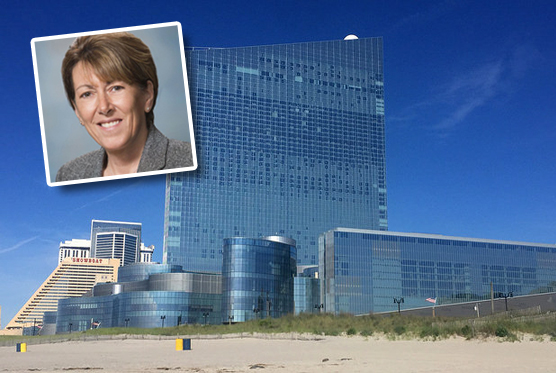
Terry Glebocki had been a finance executive in the casino industry for more than 30 years when, in December, she was elevated from chief financial officer to chief executive officer of Atlantic City’s Ocean Casino Resort.

With the storm that was soon to come, there arguably was not a better time for that financial expertise to come into play.

Within a few months of becoming CEO, Glebocki, like her counterparts across the industry, was faced with the life-and-death challenge of sustaining her property through unprecedented months of idleness, thanks to the Covid-19 shutdown.

Last week, Global Gaming Business (Casino Connection’s parent company) interviewed Glebocki as the property completed preparation for this week’s long-awaited reopening. As workers returned for retraining in the “new normal,” Glebocki lauded her team for the efforts that brought them to the point of a safe reopening—not to mention the property’s long-term survival.

New Jersey Governor Phil Murphy ordered casinos and other non-essential businesses to close on March 16. At the time, Glebocki was already working on the financials needed to sustain liquidity and ultimately preserve, for the long term, some 3,000 jobs.

“One of the things we had to do—and we did it as a team—was to ask, what expenses can we turn off right away?” Glebocki said. Fees under long-term contracts, such as participation fees on leased slot machines, were among the first. “Slot manufacturers were fabulous in understanding that these machines aren’t being played, so we don’t need to pay for them,” said Glebocki.

The operator also had to negotiate new terms with lenders, since, with 3,000 employees, Ocean didn’t qualify for federal PPP loans or the Federal Reserve’s Main Street Lending program.

“Our lenders were very helpful, and our vendors were very helpful,” Glebocki said. “Unfortunately, we couldn’t keep our employees on payroll for too long a period. We paid them for two weeks, and we continued to cover their benefits through the end of April. But we did let go over 90 percent of our workforce, and we have been very selective and thoughtful in who we bring back when, to try to maintain that liquidity.”

Glebocki estimates that close to 2,000 of those 3,000 Ocean team members will be back to work by Thursday, July 2, after Murphy issued a long-awaited approval to reopen with restricted conditions, at 25 percent capacity.

“We’re doing training, so we’ve brought a lot of people back already,” she said. “Not knowing who was coming back, and when, has been one of the most challenging parts of this restart.”

Safe Return

Ocean team members have had to train on all the safety measures put in, which in many cases are more restrictive than in neighboring states like Pennsylvania, Maryland and Delaware. (For instance, those states opened at 50 percent capacity, not 25 percent.) In fact, at press time, casinos were still awaiting official, final safety guidelines from the state. According to Glebocki, Ocean’s requirements are designed to meet any of the state’s requirements at opening.

Those requirements include requiring everyone in the building—customers and employees—to wear a mask. Employees will go through a temperature sensor when entering the property, and the property is ready to go should the state decide patrons need to be screened for temperature. Every other slot machine is disabled to effect social distancing between players. There are Plexiglas barriers at the front desk, cage and other locations where contact with staff is required but social distancing is difficult.

Games and equipment will be cleaned and sanitized at least once every four hours. At the tables, cards will be change out at least every four hours, and dice will be cleaned between shooters.

The property has doubled its “Ocean Clean Team” staff on the casino floor to sanitize machines between uses, and has placed more than 200 fixed hand-sanitizer stations across the casino floor. “Also, in every encounter you have with someone in a fixed location, there will be a pump hand sanitizer available there as well,” Glebocki said.

The property also purchased electrostatic sprayers and misters to aid in cleansing the air, and since Ocean is the newest ground-up building on the AC Boardwalk, it already had a superior air filtration system. “We recently changed out over 1,500 air filters across the property, including air filters in every guest room,” said Glebocki. “We have 100 percent fresh air. We’ve been working with our mechanical engineers to understand the air quality here, and they say it’s better than most hospitals, and it’s far superior to what you’re experiencing in the big-box stores.”

Glebocki says that while New Jersey’s safety requirements are strict, the safety of employees and guests is paramount, the restrictions are not permanent, and Atlantic City operators are simply happy to get the nod to reopen, which happened weeks after operators in many jurisdictions.

“I am just thrilled that we have an (opening) date,” she said. “That was the important thing. We needed a date. We have protocols that I believe the state is going to find very acceptable, and I think our guest are going to be happy with those protocols.

“New Jersey had a tough time through this, and we realize that. It was a difficult decision for the governor to make. But I think as the numbers continue to improve, they’ll probably open us up a little bit more.”

Happy Returns

As Glebocki notes, Atlantic City operators are happy the governor kept his pledge to open by the Fourth of July weekend. While opening on Atlantic City’s busiest weekend of the year at 25 percent capacity is certainly a challenge, Glebocki says Ocean is taking measures to create a pleasant experience, even for overflow crowds outside. For instance, there will be food trucks lining the casino’s porte cochere on the holiday weekend.

Inside the resort, there will be plenty to do. Glebocki notes that the sheer size of the Ocean property will make for a positive guest experience, social distancing and all. “We’re very fortunate here at Ocean,” she said. “It’s a huge building. We have over 6.4 million square feet. There are plenty of places to go. The building was built for social distancing, so space is not our enemy here; it’s our friend.”

While indoor dining had been planned, Murphy canceled that possibility this week, due to crowds that packed New Jersey beach bars last weekend, mostly without masks. However, takeout will be available from 12 of the property’s restaurants. “And because we have so much opening through a lot of our open areas,” said Glebocki, who adds that there also are 15 picnic tables on the outdoor mezzanine Sky Garden, which offers fire pits and views of the Atlantic Ocean.

Elsewhere, there will be plenty of non-gaming amenities. The spa will be open. There will be outdoor pools plus the Eclipse Pool, which is an indoor-outdoor pool. “We have over 100 day beds and cabanas that are available,” said Glebocki. “We’re working on making sure people have a private, relaxing experience when they are here.”

Marketing Magic

The promotional wheels are already turning under Mike Donovan, senior vice president of marketing. In fact, they began turning before a reopening date was even known. The casino contacted members of its idle database and asked for stories of special occasions they would have held at Ocean that they missed because of the pandemic. The top 100 stories would get a free room on reopening night, July 2.

“We were watching on social media, and we were hearing so many of our guests saying how disappointed they were that they weren’t able to come and celebrate their special occasions,” explained Glebocki. “It would be someone’s 21st birthday, or anniversary—big milestone events that got put on hold. The thought was to do an outreach and talk to these people, and we were overwhelmed with the response.

“Over 2,500 people wrote to us about their special occasions they missed. So we will be recognizing 100 of them, inviting them in as my guests.”

Other events will be added developments in the Covid-19 pandemic allow. Entertainment, though, will have to wait out the pandemic before returning full-force. “It’s difficult to say when it would be safe for indoor large gatherings to begin, and we’ve rescheduled a lot of acts in Ovation Hall to 2021 at this point,” Glebocki said. “But we’re looking at new, smaller music venues that could provide great live entertainment to our guests.”

She also says she welcomes more development on the northeast end of Atlantic City’s Boardwalk, where the Ocean, Hard Rock and Resorts properties possibly could be joined by an ambitious indoor water park developer Bart Blatstein has announced for the Showboat property.

“I’m excited about the energy,” Glebocki said. “This section of town is called North Beach. I think any new amenities that are added to this North Beach section are fabulous. We encourage all of it, and I think we all work well together.”

As far as the longer-term picture in Atlantic City, Glebocki and other operators hope to recapture the hot streak they were on before the industry shut down. “Again, these are unique times, and no one really knows, but I’m optimistic,” she said. “Before we shut down, we had tremendous momentum here. We’d had double-digit growth eight months in a row.

“And Atlantic City is resilient. We’ve had challenging times before; we adapt and meet the challenges of not only today, but tomorrow.”

Slot Stars Bring New Audience to the Gaming Floor

Gambling in a casino traditionally was an anonymous activity. Players didn’t want to be known, to the point that many have resisted joining slot clubs to retain their anonymity. Consequently, outside of planned marketing, casinos traditionally forbade customers from even taking pictures inside a casino.

In general, you won’t get thrown out of a casino for snapping a cellphone photo of a slot jackpot these days, although in most places, it’s still officially frowned upon—and some casinos still forbid even a simple Instagram moment.

However, as more casinos warm up to the benefits of social media, those old traditions are beginning to fade. Some casinos now not only permit pictures, but a once-unthinkable practice—random video of gambling inside a casino.

The rise of YouTube and other social networks led to a new type of celebrity—the “YouTube star,” also called a “social media influencer.” These are people who establish credibility in a certain activity or industry and develop a large audience of followers on a social network. The No. 1 YouTube channel is Pewdiepie, run by Swedish comedian Felix Kjellberg, who hosts videos to more than 100 million followers worldwide in which he introduces and plays video games.

It was only a matter of time before the YouTube phenomenon reached casinos, where a number of channels are now run by “slot influencers” who pick a slot game and stream iPhone videos of themselves spinning reels, getting bonus rounds and winning jackpots. They host the sessions as if they were hosting a TV show or sporting event, doing play-by-play for every spin and getting excited like a sports announcer when big wins hit. And YouTubers eat it up, with slot-influencer YouTube videos garnering hundreds of thousands of views.

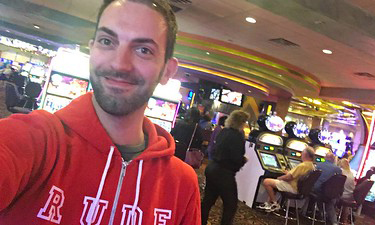
Some of the slot influencers are like rock stars on a casino floor, with instant recognition from fans who spend hours watching videos introducing the newest slot games. One of the most popular is Brian Christopher, whose BCSlots YouTube channel boasts more than 200,000 subscribers and more than 4 million views per month.

In the three years since Christopher began using an iPhone to film his own slot play, his fans have amassed 124 million views of his videos. The majority of Christopher’s fans are aged 18 to 44. Two-thirds are male, and most watch on their phones. In other words, Christopher’s followers are in the sweet spot of the younger demographic casinos are beginning to court to eventually replace the older female demographic that’s dominated the slot floor traditionally. And many casinos are beginning to welcome him with “open filming policies.”

Christopher, a former actor, launched his YouTube channel as a hobby in 2016. It’s now his full-time job. He tours casinos across the country, drawing crowds as he streams video of slot games in action. He even has an executive assistant who provides a second camera angle. Fans cheer him on as he plays, and thousands watch online. His YouTube channel hosts more than 1,700 videos, and they also are available on bcslots.com, his website. He has more than 10,000 email subscribers.

Casinos are taking notice. Mohegan Sun recently flew Christopher to Connecticut for that property’s first-ever live stream of slot play. While most big Las Vegas Strip casinos still forbid video, Christopher and other influencers are welcomed at the Cosmopolitan of Las Vegas because he brings his fans in the door with him, and his business is beginning to spread across the country as the pre-internet barriers begin to tumble.

“I wasn’t the first person to upload my slot play,” Christopher told GGB News. “There are a few channels that had already started doing that, but after my channel started, it definitely started going in a whole new direction.

“Cosmo is the only location on Strip that has an open filming policy. A few others have allowed some filming on occasion, including the Linq, Wynn, Aria and MGM, but it’s not necessarily the rule. I have yet to start visiting local casinos, but we have commenced reaching out to them recently. We have worked with multiple casinos in Michigan, Indiana, Atlantic City, Maryland, Oklahoma, Reno, Vegas, California and New York—around two dozen casinos and growing.”

Christopher says the growth of his fan base was 100 percent organic. “It was word of mouth, mainly,” he said. “I was completely shocked when my numbers started rising so fast at the beginning, because I was new to the whole YouTube world. And it just keeps growing, and whenever I see fans, most of them say, ‘Oh my sisters or my husband used to watch you all the time and now I watch.’”

Slot influencers also are the only people who can actually make a living playing slot machines, through ads on their YouTube pages, subscriptions, and swag sold on their websites. “Sometimes we’ll have sponsors for some videos, and there are other ways of generating income,” Christopher said.

While the number of casinos that allow folks like Christopher to do their thing is growing, he says San Manuel Casino in Highlands, California and the Cosmopolitan and Plaza in Las Vegas are currently his biggest hosts.

“Social media influencers have been around since the early days of blogging,” Peter Arcao, general manager of San Manuel Casino, told GGB News. “I have always been on the lookout for positive influencers in our industry. I get excited when I see people having fun in videos from our floor and enjoying the thrilling atmosphere that our team works very hard to create for our guests.

“Working with influencers allows us to show how much fun our casino can be for slot players. Some audiences prefer to receive information through the lens of a person that they have come to trust and whose content they enjoy, rather than content published directly from a casino. Allowing an influencer to convey their perspective and their experience to their audience is just another way for us to reach those people.”

“I can absolutely say that the Cosmopolitan was the first in Vegas to embrace the slot filming community,” said Kevin Sweet, vice president of slot operations and marketing at the Cosmopolitan of Las Vegas, in an interview with GGB News. “There was always a stigma that filming in a casino was completely illegal, which simply wasn’t true. We live in a social age. It’s 2019, and everyone has a cellphone. We can’t run from technology or the world around us. It was common sense from my perspective to find a way to let this type of activity happen in our casino.

“I’ve been pretty active with the slot influencer community since early 2016. I am in full support of anything that increases the popularity and reach of casino gaming, and slot-playing videos being posted on YouTube or live-streamed certainly do that.”

Sweet said there are simple ground rules, such as limiting filming to handheld devices and limiting videos to a player and one machine, but the activity boosts business, so it’s welcome.

The influencers appreciate it. “At the San Manuel and the Cosmo, anyone can just record their slot play if they want to or take photos, and they’re encouraged to do so,” Christopher said. “I was stopped by a security guard at the Cosmo and he said, ‘I just wanted you to know that what you’re doing is totally fine with us.’ And because of that, all my fans go to those two casinos.”

San Manuel’s Arcao says the influencer phenomenon has broadened the casino’s audience. “It has widened the audience of people who have become familiar with the San Manuel Casino brand,” he said. “People from as far away as Hawaii have talked to me about Brian. In fact, my cousins in Hawaii have told me that they watch his videos and can’t wait to visit the casinos that Brian has featured.

“We’ve done controlled tests, and in one case allowed Brian to host an event that was attended purely by his audience. The results were great, which is why we continue to work with influencers.”

Sweet reports similar results at the Cosmo. “For every one complaint or issue we encounter in this space, there are 25 interactions where a customer asks a member of my slot team about a machine location because they saw their favorite streamer playing it at my casino and now they want to go play it,” he said. “I don’t think it’s attracting any one particular demographic. This isn’t a millennial play, in my opinion. This is a play for people who like gambling, who like to see nice slot jackpots, and for people who share an interest and want to belong to a larger community.”

According to Christopher, while there is still widespread resistance to filming or even photographing slot play, things are slowly changing. “I know fans who have been removed from casinos because they didn’t want to delete a (jackpot) photo off their phone. And, I’ve been removed from the casino once before because I filmed a bonus.

“We’re slowly breaking down those barriers. We just filmed in Palm Springs, and it was the first time that they allowed such a thing, and part of it was due to the fact that they had some new people coming in because of social media. They recognize the power of an influencer.”

“Some of these influencers themselves partner with cruise lines and bring hundreds of people out for weeklong cruises; it’s very impressive,” said the Cosmopolitan’s Sweet. “Maybe I should hire them as casino hosts.”

Live! Philadelphia: Built to Last

The location is sweet.

Stand at the epicenter of the site that next year will be Cordish Companies’ $700 million Live! Casino & Hotel Philadelphia, and you’re directly in front of Citizens Bank Park, home of Major League Baseball’s Philadelphia Phillies.

Look in another direction, and there’s Lincoln Financial Field, the stadium of the NFL’s Philadelphia Eagles. Across a parking lot from that is the Wells Fargo Center, the arena that’s home to the NHL’s Philadelphia Flyers and the NBA’s Philadelphia 76ers.

And near the Wells Fargo Center is the Xfinity Live! dining and entertainment center, developed through a partnership of Comcast, Inc. and Baltimore-based Cordish. It’s one of many Live!-branded venues run by Cordish, parent company of Stadium Casino, the venture that won Philadelphia’s second casino license. Cordish is partnering with Comcast to build an eSports arena as an extension of the Xfinity Live! attraction.

This is the heart of South Philadelphia’s Stadium District, which is typically mobbed with people, particularly on game day for one (or often two) of the city’s professional sports teams. To many observers, it’s the best site for a casino resort in the crowded Philadelphia region. Cordish officials feel it may be among the best sites in the country.

According to Joseph Weinberg, CEO of Cordish Gaming Group and senior partner of Cordish Companies, that’s why the company’s owners had their eyes on the South Philly location before 2012, when they joined with Parx owner Greenwood Gaming to jointly apply for the license (originally pegged for Foxwoods, which couldn’t arrange financing).

After years of appeals and court challenges by losing bidders for the license were exhausted, pre-construction and demolition work began in 2018. Cordish bought out Greenwood’s stake in Stadium Casino in November 2018.

“This is really one of the most spectacular locations in the country,” Weinberg told GGB News. “We have I-76, which dumps right into the site. We have two exits from I-95 that access the sports stadium district. It’s highly visible from the highways. There’s a tremendous residential population that’s complemented by a huge visitor population as well.”

Weinberg’s comments came just before he hosted Thursday’s topping-off celebration for Live! Casino & Hotel Philadelphia. The traditional ceremony observes the completion of a building’s superstructure. Dignitaries and company executives signed the final beam for the structure, which workers then hoisted into place to mark the construction milestone.

Weinberg and other Cordish executives celebrated—only a few months after ground was broken on the structure—along with officials of Gilbane Building Company, the general contractor managing the project, and several city and state government officials, including Philadelphia Mayor James Kenney, City Councilman Kenyatta Johnson and state Senator Larry Farnese.

At the press event, Reed Cordish, principal of Cordish Companies, recalled his early meetings with late Comcast Chairman Ed Snider in the partnership that created Xfinity Live!, in which he told Snider Xfinity Live! would only be the start of huge developments in the Stadium District.

“We certainly are beginning to realize that vision,” Cordish said. “It’s a great moment in South Philly. We are creating together what will be one of the great sports and entertainment districts not only in the United States, but in the entire world. This facility will be a premier hotel and gaming destination on par with any other facility, and a great complement to what’s happening in the Stadium District. People will visit from across the region and across the country, and when they do they will get to experience one of the great cities in America, Philadelphia.”

Cordish also gave a nod to the construction team for its hard, fast and efficient work, and Weinberg, in his remarks at the event, also praised the contracting team, along with city and state officials, for the speed with which the project is taking shape.

“This project just started going vertical this summer,” Weinberg said, “and to achieve this kind of progress in such a short period of time takes a tremendous partnership between the public and private sides, and between our construction crew and our neighbors here in the sports Stadium District.”

Zed Smith, chief operating officer for Cordish Companies, added in his remarks that such a public/private partnership is rare. “This is a very proud moment for us as a company,” Smith said. “This is the true essence of a public/private partnership. You have the state of Pennsylvania, the city of Philadelphia and a public company coming together and doing something very spectacular.”

State Senator Farnese and Mayor Kenney both lauded the jobs and economic impact the project is bringing to South Philly. It is creating approximately 2,000 new permanent direct and indirect jobs, and approximately 3,000 direct and indirect jobs during construction. Job opportunities will be available in every field, including hotel operations, finance, marketing, human resources, information technologies, food and beverage, facilities, security and surveillance, and casino operations. Hiring preference will be given to local residents first, then surrounding communities. Recruitment efforts will commence in early 2020.

The developer also is committed to supporting local, regional, minority, women-owned and veteran-owned businesses by providing them access to contract opportunities for a variety of goods and services.

“Projects like this, that support the union workers in our city and in the surrounding areas, allow people to maintain family-sustaining jobs,” said Farnese. “These jobs put food on the table for families, provide access to quality health care, and help get their kids through school.” He also commended Cordish for ongoing infrastructure projects and other projects to help the surrounding community.

“Soon, the new Live! Casino & Hotel will bring hospitality and entertainment to the growing sports complex,” said Kenny. “Now, fellow sports fans can book a hotel at the Stadium casino right near the games they plan to attend. Philadelphia’s tourism and hospitality sectors are thriving, and are a vital component to our growth and reputation as a world-class city.”

The casino itself will feature 2,200 slots and electronic table games, more than 150 live table games, both retail and online sportsbooks, an upscale, 12-story, 200-plus room boutique hotel, nationally recognized restaurants and live entertainment venues, valet parking and a new structured parking facility.

The project will generate approximately $2 billion in economic stimulus to the city of Philadelphia, along with $100 million in tax revenues during its first five years of operation, including $25 million to the Philadelphia School District.

A groundbreaking Community Benefits Plan with the city includes goals in minority and local construction and hiring initiatives, a commitment to living wages for all employees, more than $15 million in grants in the first 10 years to support improvements and enhancements to the local community, and the creation of a Community Advisory Committee.

“A big measure of our success is how we positively impact the communities where we do business,” said Weinberg. “We have an unprecedented program in place with the city of Philadelphia that will bring meaningful opportunities to the people, businesses and organizations that make Philadelphia the vibrant city we are so proud to call our new home. Just as one example, we are well on our way to achieving over 50 percent participation in the construction of this project with minority and women-owned businesses.”

“One of the things we’re always proud of—and this is part of our DNA, it’s not a corporate line, it’s who we are—is embedding ourselves within the community,” Rob Norton, president of Cordish Gaming Group and Live! Casinos, told GGB News. “If you recall, before Live! opened our casino in Maryland, there was a lot of angst and concern about what the casino would do to the community. Almost every one of those detractors is now a supporter.

“We’re real people; we’re a family-run organization. We believe in community, and we will be part of the community as we stand this process up, and I expect the same kind of results we had in Maryland.”

In this case, Cordish is fitting into the community with a property that could be a category-killer in Pennsylvania. “This is going to be by and far the best-in-class facility in the region,” Weinberg told GGB News. “We’re the only one in the Philadelphia market that has a hotel, and this is going to be a true sports, entertainment and gaming hospitality resort destination.

“What is one of the things people in this country love most? Sports. And they now have the ability to come to any major-league sporting event, to be able to stay overnight in the casino hotel, dine in one of dozens of restaurants in the district, and then get up and do it again the next day. It’s really going to be a one-of-a-kind opportunity.”

“There are literally millions of people and hundreds of events that bring people to the Stadium District,” added Norton. “And that’s beyond the draw that we’ll create. It’s an opportunity to really cross-merchandise between all these different incredible entertainment facilities, and maximize everybody’s results.”

Live Casino & Hotel Philadelphia is slated to open in the fourth quarter of 2020. Meanwhile, Cordish is about to break ground on Live! Casino Pittsburgh, in a former anchor department store of the Westmoreland Mall outside that city. Weinberg says the operator will cross-market between the three facilities, with a single customer-reward system that will give players points that transfer among the three properties.

“We are operating in two premier locations now, and with the Pittsburgh facility, it’s three great cities we’ll be opening in,” said Norton. “We anticipate this is going to be highly sought after as far as being able to go between the three facilities, and being able to experience all the nuances of the Live! brand.

“We’re extremely pleased with where we are, and our opportunities going forward, and building the quality of facility that we are in the process of building makes it that much better.”

Ocean Resort Ups the Ante

Once upon a time, a beautiful, new resort property on Atlantic City’s Boardwalk—the first new casino in two decades—opened, operated for two years, closed, and was left for dead.

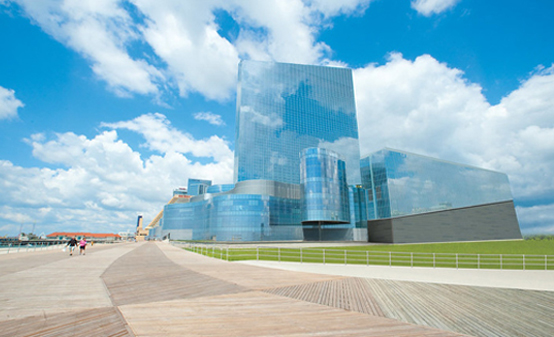
That was the Revel, and as subsequent owners hatched various schemes to revive the property that never materialized, current owner Luxor Capital appears poised to finally allow the resort—reopened in summer 2018 as the Ocean Resort Casino—to realize the revenue potential of what is, in the end, one of the most beautiful beachfront hotels on the East Coast.

The name was changed earlier this year from Ocean Resort Casino to Ocean Casino Resort, which may appear to be a small change, but is in fact key to how Ocean has been repositioned as a unique entity—a luxury resort that offers a fair deal to the gambler, a rarity in Atlantic City or anywhere else.

The rebirth of Ocean Casino is now returning dividends in the form of successive months of positive results. It is a rebirth that gained steam when former Tropicana marketing executive Mike Donovan was brought in as chief marketing officer of Ocean in March.

Donovan has led a transformation of Ocean into a gambler-friendly property. Where former owners downplayed the casino in plugging the property as a luxury resort that happened to offer gaming somewhere down the list of amenities, the new Ocean Casino is concentrating on rewarding its loyal casino players in new ways.

The new marketing position is already changing the way players look at the Ocean Casino. The property was named Best Casino in Atlantic City in a Press of Atlantic City poll, and, in this year’s annual reader survey by Casino Player magazine, readers voted Ocean the awards for Best Comps, Luckiest Casino and Best Rooms.

This week, Ocean’s revival enters a new phase with the rollout of a newly revamped player’s club, dubbed Ocean WOW Rewards. In addition to adding a top “Chairman” tier, the new club jacks up the loyalty perks for all levels. For Chairman-level players, the casino has, for the first time, partnered with outside entities to offer special perks.

“We always had a great property; nobody can deny that the product is amazing,” Donovan told GGB News. “We wanted to combine with that the best offers people can get, anywhere.

“We went from weekly marketing to daily marketing; we added the entire Revel database—people the prior regime weren’t talking to at all—and we’ve really tried to create a lot of value for people, from added dining comps to added free-play offers, added gift days, gift cards, giveaways, promotions… We’ve really tried to step it up on the casino side.”

Among the benefits of the new Ocean WOW Rewards club—effective Tuesday, October 1—are 1:1 comps on dining, shopping or hotel says; 2:1 awards for free slot play; same-day free play; and the new five-tier club system (Blue, Gold, Platinum, Black and Chairman), with the top Chairman level including special Chairman invitation-only events, complimentary cabanas at the Poseidon Pool, complimentary suite upgrades, an annual $500 celebration dinner, and a choice at the end of each year of an “Annual WOW Gift,” the list for which includes a Carnival cruise, trips to tropical islands, and a one-year lease for a Mercedes-Benz.

“We looked at this as an opportunity to go from the worst benefits in town to what are the best benefits in town,” Donovan said. “Formerly, we had no outside partners that people could use, so we’ve added those at certain levels. Also, we’ve added that next level, the Chairman’s tier, that a lot of higher-end players expect, and we’ve given them benefits that other national brands have, but no one in Atlantic City has.

“If you’re a Chairman-level customer, we’re going to give you something tangible at the end of the year. Because you’re a quality customer, we want to reward you, whether that’s a one-year lease on a Mercedes-Benz, luxury jewelry items, $10,000 in gift cards, $7,500 in free play or a lot of other options. If you are that high-end, Chairman-tier customer, we’re going to give you something that nobody else in town will.”

Player-Friendly

The Ocean WOW Rewards program is the latest in a string of player-friendly features added to Ocean this year under Donovan. New casino elevators whisk hotel guests directly to the casino floor. Wayfinding around the property points to the best attractions on the floor.

The casino has added new games like Mississippi Stud and Texas Hold ‘em Flush, as well as new side bets such as the popular Lucky Ladies. On the slot side, 250 of the latest slot games from several manufacturers were added at the beginning of the summer.

“Additionally, in the past, we weren’t introducing a lot of these great food-and-beverage outlets to our casino players,” Donovan said. “You might have come in before but never visited America’s Cut, our phenomenal steakhouse. Now, if you’re a quality player, we send you weekly dining comps for that.

“And we’ve comped a lot more rooms compared to what they were doing in the past. Even during the slow season, we’ve just pushed a lot more casino comp rooms, and gotten people used to the great product this is. Because once you get people in here, and they’ve had a great experience, it’s going to be tough to go back to where you were before.”

With Ocean, Donovan has accomplished what is arguably the most difficult task in marketing—recapturing business from former customers—by getting them back in to see what the property now offers. “You’re going to have to give somebody more than what the guy down the street’s giving him—to get them in the door and really make it worth their while,” he said.

“We’ve done that for about six months now, and we’ve seen tremendous impact over the summer. Our slot revenues have grown dramatically, and that was really the piece of the business that the place was missing before. We’ve built that up to where our slot revenues, year over year, are now gaining 35-50 percent over last year.”

Donovan points to the recent awards the property as evidence the property has successfully changed its identity with the playing public. “We deliver, more than anyone else, that combination of value for your money and a luxury product that is going to be tough to get anywhere else,” Donovan said.

“It’s expensive for us, but not nearly as expensive as not having the players in. I would rather have players here all day and give them tangible reasons to come play with us versus somewhere else. At the end of the day, for the right customers, it’s always worth it.”

New Day at Delaware Racino

For much of this decade, investing in any of Delaware’s three racinos would have been unthinkable. Before last year, the state’s three racetrack casinos—Dover Downs, Delaware Park and Harrington Raceway—struggled to turn a profit for years under the twin weights of state taxes and competition from Maryland and Pennsylvania.

Officials of Dover Downs Hotel and Casino, the state’s only publicly traded gaming property, were the most vocal about the difficulties of operating under Delaware’s onerous revenue taxes, which raked 43.5 percent of slot win and 29.4 percent of table-game win. Former Dover Downs officials suspended capital improvements and threatened mass layoffs because of the shrinking profit margin as Maryland Live!, MGM National Harbor and the nearby Philadelphia-area casinos siphoned off more and more of the property’s revenue.

Last year, the state passed a bill that reduced the tax burden on the casinos by some $16.8 million, cutting the state’s share of slot revenues to a sliding scale that was as low as 40.5 percent, and slashing the table-game revenue tax nearly in half, to 15.5 percent. The state also eliminated the annual table-game license fee.

For Rhode Island-based Twin River Worldwide Holdings, Inc. (TRWH), the timing couldn’t have been better. Already in expansion mode, the operator took note of the decreased cost of doing business in Delaware and, in particular, saw potential in Dover Downs.

TRWH, owner of the Twin River Casino Hotel in Lincoln, Rhode Island, had been hedging its bets against coming competition for years, as its own region became increasingly saturated with new properties in Massachusetts and elsewhere. In 2014, the company acquired the Hard Rock Hotel & Casino Biloxi from Leucadia International for $250 million. The following year, the operator bought out its local competition, buying the Newport Grand racino, which would close in 2018 with the license going to Twin River’s new Tiverton Casino Hotel near the Massachusetts border.

When Delaware relaxed its tax regime, the operator still was in an aggressive expansion mode. Last January, the company agreed to buy three casinos in Black Hawk, Colorado from Affinity Gaming. But with Dover Downs, the company saw both profit potential and one other opportunity—to take TRWH public, which it accomplished in March through a reverse merger with Dover Downs Gaming & Entertainment, the parent company of the Dover Downs Hotel & Casino.

According to Phil Juliano, senior vice president and chief marketing officer of Twin River Management Group, the lower cost of doing business was only one attraction leading to the merger.

“What put Dover on the radar was an opportunity to go public,” Juliano told GGB News. “The reverse merger left the shareholders of Dover with 7.75 percent of Twin River. It was a good deal for them and a good deal for us, because that’s the way we got to ring the bell on the New York Stock Exchange.”

But Twin River also saw huge opportunity in the facility itself. “They were capital-constrained, and we saw an opportunity—the facility has great bones,” Juliano said. “It’s become a destination property for gamblers from five states, and it also has the convenience factor for the locals in this region. With our ability to generate capital, we thought we could improve the operations.”

The lower tax was a bonus, he added. “We are prideful on our ability to operate in high-tax jurisdictions, as we have proven in New England with Twin River and Tiverton,” said Juliano. “We work there with a 72 percent tax on slots, so we consider ourselves somewhat expert in that aspect.”

Twin River closed on the Dover Downs merger at the end of March, and started making improvements immediately. Gaming, which provides around 95 percent of the property’s revenues, was first on the list. The operator began a refresh of the games on the slot floor first—a process that is still ongoing—in addition to a retooling of the marketing behind the games.

Juliano says improving the slot floor in Delaware is a refreshing change from the operator’s Rhode Island home base, where TRWH has been involved in a very public dispute with the Rhode Island, which governs the casinos, over the percentage of machines supplied by manufacturer IGT—some 84 percent of the floors at the two casinos.

Twin River officials have complained about the preponderance of games from the one supplier—which also supplies the system and tickets for the lottery—when state law provides that no manufacturer should supply more than 50 percent of the games on casino floors.

Juliano says the Delaware Lottery has been much more of a partner in its creation of a diverse slot floor. “We found the lottery to be fabulous here—great, great partners,” he said. “In New England, but it’s a tougher buy-in than it is here, and we’re competing with Encore, Plainridge operated by Penn National, MGM in Springfield, and the two Connecticut properties.”

The slot floor at Dover Downs is full of new games from several manufacturers, including Scientific Games, which also provides its casino management system including a marketing tool Juliano says is invaluable—the iVIEW Display Manager system and Elite Bonusing Suite (EBS), which opens up slot marketing through bonuses, tournaments and other player rewards right at the slot machine.

“This property was somewhat of a learning experience for us,” said Juliano. “We have 1,100 units here that have the latest version of iVIEW 4, which allows the EBS bonusing at the machines. At the same time we were looking at the situation here, we installed EBS on all 1,000 machines at Tiverton. So, we have EBS technology in Tiverton, and consequently we use it as a marketing tool and reward system.

“With this system, if you play more, you get more, so you’re tempted to keep playing.”

The retooling of the slot floor is accompanied by new games and a new marketing strategy for the table games. The company has added Asian games beginning with mini-baccarat, and is using time-tested marketing strategies to promote them.

“We’re making a move into the Asian market with our mini-baccarat, and we’re exploring binging in new hosts and junket reps,” noted Nick Polcino, vice president and general manager of Dover Downs Hotel and Casino, who adds that the table-game operation at Dover offers player-friendly marketing. “We have the best table-game limits in Delaware right now, and we’re advertising that,” Polcino said. “We offer 10X odds on craps, blackjack with a $5,000 maximum bet, mini-baccarat up to $10,000, and $5 blackjack during the week.”

The company also is adding an Interblock electronic table game stadium—another advantage, since Delaware taxes ETGs at the lower table game rate.

“Another thing we do is a marketing calendar for tables,” Juliano said. “We use a lot of different tools. We use gifts, we do tournaments. We’re adding to our entertainment. We have some synergistic opportunity there, because I’m buying entertainment for three properties, so therefore, I can route an entertainer through all three properties. We have 2,000 seats here in the event center. So, that’s an opportunity that will help table games.”

Hotel, F&B, Meetings

TRWH also immediately turned its attention to improving the 232-room Dover Downs Hotel and Conference Center, a high-end facility including an indoor pool, sauna, fitness center and ballroom which opened in 2002 and is still the only hotel among Delaware’s three casino properties.

The operator has renovated every room, and has added food and beverage facilities to augment the original Michelle’s gourmet restaurant.

“We’re focusing on the holistic property experience,” said Polcino. “There are a lot of different outlets and venues, so we’re trying to introduce some new influences in several areas. That’s why we’re bringing in Jerry Longo’s Meatballs and Martinis, which we think can be a marketing driver for our customers—introducing Italian cuisine that’s scrutinized even in western Rhode Island, where you can get great Italian food everywhere you go. We think that will be a really positive addition to the property here, and we can cross-utilize that for marketing events.”

Jerry Longo is South Philly-raised, an Atlantic City guy, a celebrity-focused guy,” added Juliano. “He actually appeared on the last episode of The Sopranos. He’s a famous table-games guy who ended up in New England, and knows everybody in New England that plays the tables.

“That’s one goal of our marketing—to bring in a destination restaurant that rings loud and clear to the table-game customers. And this individual has this cachet and allure to attract table-game players.”

Among other improvements will be a renewal and rebranding of the property’s lobby bar. “Previously, when you walked into that lobby, the lobby bar always was closed,” Juliano said. “We’ve turned it into a restaurant, and it will eventually be open seven nights a week. It will come out into the lobby a bit, and have that feel like the Coliseum Shops restaurants. That will bring life to the lobby all the time.

“We believe if you can prove your efforts are incremental, you go for it. You don’t chase a false margin that has been achieved by cutting costs in some other area to get to a margin that everyone loves. Because you can’t put margin in the bank. You can only put money in the bank. That was taught to me by Jack Binion, and it makes all the sense in the world. So, if we think we can take an action that will drive an incremental dollar, we take it.”

Marketing for Dover Downs employs a broad brush—not only for casino and hospitality customers, but the property’s popular horse and motor sports tracks, for which many hotel guests have a killer view out their hotel-room windows. The property runs harness races 80 nights a year and, through a separate company, three major motor sports events, including two big NASCAR races.

According to Juliano, the property employs a two-pronged marketing strategy. “We define an inner market and an outer market,” he said. “The style of marketing we do is called precision marketing. It’s behavioral based. We understand behavior; we understand visitation patterns. It’s our secret sauce. We take the same approach in all of our properties.

“What’s the No. 1 thing an outer-market customer needs? A place to sleep. So, we have that, whereas our two competitors right and left of us don’t have it. We have slot and table customers all week, but on the weekends, our best customers show up. And then at the same time, we’re not going to neglect our local customers on the weekend. There has to be a promotion, a program or event to attract those people.”

For Twin River Worldwide Holdings overall, the expansion mode continues. In July, the company agreed to acquire the Isle of Capri Kansas City and Lady Luck Casino Vicksburg from Eldorado Resorts.

“It’s definitely an exciting time to be with Twin River Worldwide holdings,” said Paul Juliano, vice president of corporate hotel operations for TRWH. “We are aggressive with our capital development in all our properties, so in everything we do, we look for a demonstrative return on our investment. But specifically here at Dover Downs, we’ve got about eight capital projects in the pipeline right now that will happen between this year and the end of next year.

“We are always looking for a measurable return on investment, always understanding who our core customer is, and how to cater to them.”

“Our management team has done a great job diversifying our revenue base and creating sustainable growth,” said Phil Juliano. “The Dover Downs acquisition and New York Stock Exchange listing mark the beginning of a new chapter for us by adding to our geographic base, providing us currency for strategic steps, and eventually leading to liquidity for stockholders.”

PA Casino Auction a Bust

The Pennsylvania Gaming Control Board held an auction September 4 to accept bids on five remaining licenses for Category 4 satellite casinos, also known as mini-casinos.

There were no takers. It was the second consecutive Category 4 auction that failed to draw a single bid.

Pennsylvania’s 2017 gaming expansion law authorized up to 10 Category 4 casinos as a way to gain revenue from areas of the state where there are no current casinos. The mini-casinos are limited to 750 slot machines and 30 table games, with an additional 10 tables by petition after opening. Under the law, the casinos must be at least 25 miles from any other casino.

The original Gaming Expansion Act of 2017 called for auctions for the licenses, first limited to current casino licensees. It provided that unclaimed licenses could later be bid out to other qualified entities, including operators outside the state with no current Pennsylvania casinos. The law provided for a minimum bid of $7.5 million, payable as a license fee upon approval.

Penn National Gaming, owner of Hollywood Casino at Penn National Race Course outside Harrisburg, lobbied hard against the Category 4 provision, and after it passed, filed a federal lawsuit seeking to block the provision. Penn asserted in the lawsuit that its Hollywood Casino was “uniquely vulnerable” to cannibalization of its revenues by the new mini-casinos, since, because of its relatively isolated location, most of its customers came from outside the 25-mile exclusion zone.

The lawsuit was filed on the eve of the first Category 4 casino auction held by the board January 9, 2018. Penn decided to hedge its bets, bidding on the license in a defensive move to protect its market. The operator submitted a $50.1 million bid, winning the first license for a mini-casino in York County.

It ended up being the largest bid submitted. The second license went to Stadium Casino, then a partnership between Parx Casino owner Greenwood Gaming and Baltimore-based Cordish Companies, for a bid of $40.1 million. Mount Airy Casino Resort won the third for $21.2 million, and Greenwood Gaming won the fourth for $8.1 million.

Penn National was the only bidder for the fifth Category 4 casino, winning the license for a bid of $3 over the $7.5 million minimum. The subsequent auction drew no bidders, which, under the original law, technically opened up the bidding to “other qualified entities” outside of current Pennsylvania licensees.

However, earlier this year, the Pennsylvania legislature passed Act 20, which provided for the board to conduct up to five additional auctions restricted to current Pennsylvania casino license holders, and extended the exclusion zone to 40 miles from a current casino.

That law also provided that no further auctions be held if an auction failed to generate a bid.

“The original language from 2017 did include permitting any ‘other qualified entity’ in additional auctions,” said gaming board spokesman Doug Harbach in an email to GGB News, “but when language was passed this year to have us conduct more auctions, the law specifically stated ‘eligible bidders shall only be slot machine licensees.’”

Harbach said the September 4 no-bid means the Category 4 process ends with the current five mini-casino licensees. “The legislature could pass something to reinitiate the process in the same or altered form., but I cannot answer for what they may or may not do,” he said.

The state raised $127 million in fees for the state from the five Category 4 licenses. Construction has begun on only one, in the former Bon-Ton department store in Westmoreland Mall outside of Pittsburgh. To be called Live! Casino Pittsburgh, it is under the $40 million license won by Stadium Casino, now owned solely by Cordish.

Construction on the second satellite casino is expected to begin soon in the space of another former department store, the former Sears anchor store at the York Galleria mall—the license for which Penn shelled out $50 million.

The other three are still in the process of planning, public hearings and local approvals. They are Mount Airy’s planned casino in Western Pennsylvania’s Beaver County, Greenwood Gaming’s planned facility in Cumberland County in the west-central part of the state, and Penn’s second license, for Berks County in eastern Pennsylvania.

Following the failed auction, officials commented that the market for new casinos in Pennsylvania is officially tapped out, due to market saturation not only within the state but in the entire Northeast.

Hard Rock AC to Open June 28

Star-studded entertainment lineup announced

The highly anticipated Hard Rock Hotel & Casino Atlantic City has set June 28 as its grand opening date. The announcement of the completion of the transformation of the bones of the former Trump Taj Mahal into the new Hard Rock property was made by Jim Allen, chairman and CEO of Hard Rock International, at a simulcast three-city press conference last week.

Allen conducted the conference from New York’s Hard Rock Café in Times Square, appearing in a video simulcast in Atlantic City and Philadelphia. He reflected on his first meeting with his partner in the project, New Jersey developer Jack Morris, when the two considered the Atlantic City market. “The question was, can Atlantic City take the next step? We were 100 percent convinced that it can.”

Hard Rock put its own substantial resources behind that bet—after purchasing the shuttered Taj Mahal out of bankruptcy from Carl Icahn for $50 million, the operator pumped nearly 10 times that into the project, spending nearly $500 million to create a totally new property on the bones of the Taj. “We wanted to make sure we built something world-class,” Allen said. “We come back to Atlantic City with the idea of growing the market… We certainly had nothing but a welcome mat to create these 3,000 jobs, an expanding tax base and an economic boost.”

Allen added that Seminole Hard Rock Entertainment, the operating entity owned by Florida’s Seminole Tribe, funded the project with $400 million in cash—the new facility will bear no debt.

Allen justified the expense by noting that the Atlantic City market has already defied all odds with three straight years of growth, including a 22 percent increase last year. “They were actually predicting the opposite,” he said of industry pundits. “They were actually projecting that by this year, the market would be less than $2 billion. It’s actually at $2.7 billion, and it is still the second-largest gaming market in the United States.”

The Hard Rock Hotel & Casino Atlantic City will bear absolutely no resemblance to the former resident of its 17 acres on the Atlantic City Boardwalk. The former Taj was gutted and stripped to its frame, its rooms not even using any of the former fixtures or plumbing. Standard rooms with Hard Rock’s signature “Sleep Like a Rock” bedding and “Rock Spa” bath products will feature Boardwalk and ocean views, with four different styles of suites offering panoramic views from floor-to-ceiling windows.

The 167,000-square-foot casino will be more akin to Las Vegas mega-resorts than anything in Atlantic City, including a marble pathway throughout the gaming floor and, of course, Hard Rock’s signature rock memorabilia spread amid the 2,100 slot machines and 120 table games.

But according to Allen, the casino is not the main draw of the new property. Hard Rock Atlantic City, he said, will be more about entertainment than anything else. The expanded former Mark G. Etess Arena—named for the late Trump marketing executive who died in a 1989 helicopter crash—will now accommodate 7,000 seats (the space formerly seated fewer than 6,000), and will be known as Hard Rock Live at Etess Arena. (Allen said he personally called Etess’ brother, Mohegan’s Mitchell Etess, to tell him his brother’s name will be retained on the venue.)

Additionally, the property will feature a separate 2,000-seat venue, yet to be named, built on the frame of a facility that was rarely used by the Taj, as well as the central Hard Rock Café, which will feature an enlarged stage.

“Hard Rock is not about gaming; it’s about entertainment,” Allen said at the three-city press event. “The Hard Rock brand is not a gaming brand. The name of the company is Seminole Hard Rock Entertainment.”

Allen said tickets for 60 entertainment acts at the Hard Rock went on sale Friday, and so far, the operator has booked more than 300 shows. “When’s the last time any individual property, whether it be in Macau, Singapore or Las Vegas, booked 300 acts in one year? It shows the commitment that we, as an entertainment brand, as a hospitality brand, have made to the city of Atlantic City.”

Allen said the Hard Rock will feature some kind of entertainment every day of the week. Acts already booked run the gamut of A-list artists, epic bands and headlining comedians. Among the first year’s featured entertainers will be Third Eye Blind, Florida Georgia Line, Rascal Flatts, Stone Temple Pilots, Frankie Valli and the Four Seasons, Counting Crows, Chris Young, Toby Keith, Steely Dan and Kid Rock.

In addition to music of every genre, the new property will feature the Howie Mandel Comedy Club, with periodic performances by its namesake as well as stars from across the comedy spectrum.

“The Grand Opening of Hard Rock Hotel & Casino Atlantic City will set the tone for a new era of entertainment in Atlantic City,” Allen said. “Our $500 million, newly reimagined property will offer something for everyone, and we’re thrilled to welcome our first guests in June.”

He added that the debut of the Hard Rock may inject new energy into the entire industry. “We are very excited that the other casinos in Atlantic City are reinvesting in their product,” he said.