Archives: Articles

This is the example article

Trump Administration Discouraging Off-Reservation Casinos

The Trump Administration is slowing if not reversing an Obama Administration policy that did not discourage tribes from applying to put lands far removed from their reservations into trust for tribal casinos.

The administration is proposing changes to the land-into-trust process that often takes as a long as decade to go from application to decision. It is proposing that tribes be informed up front of their actual chances, so they won’t spend time and resources on the attempt.

John Tahsuda of the Kiowa Tribe, who is a recent addition to the Trump administration as acting assistant secretary for Indian Affairs, last week told the Senate Committee on Indian Affairs: “For instance, in the case of off-reservation land-into-trust efforts, the commitment of time and resources required can be exorbitant, particularly if that proposal is denied. Therefore, we believe it is important to be upfront about proposals that may not be acceptable.”

Tahsuda recently announced a fast-moving schedule for implementing the new proposal, including scheduling the first consultation with tribes in about a week, followed by three more in November.

In 2008 the Obama Administration reversed a policy of the Bush Administration which had used a “commutable distance” standard to reject many requests to put land into trust off the reservation. Now it appears that the Trump Administration may restore that old standard, or at least partially reverse the Obama standard.

In his testimony to the Senate committee Tahsuda conceded that the “commutable distance” standard will be considered. Another possibility is that tribes will need to submit maps showing where their reservations are in relation to the new land they want to put into trust.

Just showing that a casino could be lucrative for the tribe won’t be enough to satisfy the new requirements, said Tahsuda. “Things like employment opportunities, ability to host cultural activities, community activities in the facility, those should be part of the considerations that are impacted from the distance from a reservation.”

Tribes may also be required to show how the proposed acquisitions will impact state and local governments.

The new policy against off-reservation applications had been strongly hinted at since March when Ryan Zinke took office as Secretary of the Interior. At that time Zinke removed the power to make such decisions away from regional BIA offices and reserved them to himself or other political appointees—rather than career officials.

A critic of the new approach is U.S. Senator Tom Udall of New Mexico, vice chairman of the committee. He says the policy would violate Trump’s state goals of easing regulatory burdens on business and of promoting new jobs. He pointed out that the land-into-trust policy would add new steps to a process that already takes several years and called it adding “regulatory obstacles.”

The committee also heard from the chairman of the Forest County Potawatomi Tribe, which opened the first off-reservation casino in 1990 in Milwaukee, Wisconsin. Harold “Gus” Frank told lawmakers, “We have a diverse set of business that allow us to create opportunities for our people and local communities, including two casinos.”

The Bureau of Indian Affairs is accepting writing comments on the new proposal until December 15, as well as holding the listening sessions and tribal consultations.

Post-Bankruptcy ― All Hail Caesars

Its indebted past behind it, Caesars Entertainment is looking to a future rich with growth―$2 billion worth, to be exact.

“With reduced leverage, increased free cash flow and the new REIT structure, we are positioned with a solid foundation to pursue a diversified growth strategy,” CEO Mark Frissora said last week in announcing the long-awaited emergence from bankruptcy of the gaming giant’s largest subsidiary, Caesars Entertainment Operating Co.

The announcement coincided with the introduction of a new board of directors under a new chairman, James Hunt, a 10-year Walt Disney Company veteran.

Hunt, for his part, praised Caesars’ “strong brands, first-class properties and talented people” and said, “I am committed to working tirelessly with our board colleagues and our management team to drive long-term value creation.”

Next up, Frissora said, is execution on a corporate-wide strategy “to unlock new growth opportunities,” underlying which is the successful restructuring of CEOC, which took two years of difficult give and take with lenders under the supervision of U.S. Bankruptcy Court.

CEOC voluntarily filed for Chapter 11 protection in January 2015, buried under more than $18 billion of debt, a legacy of the 2008 leveraged buyout of Harrah’s Entertainment by private equity giants Apollo Global Management and TPG Capital.

The agreement that was finally hammered out and approved by a bankruptcy judge in Illinois earlier this year eliminates roughly $10 billion of CEOC’s debt, principally by giving creditors majority ownership of its 21 resorts through a newly created real estate investment trust, VICI Properties. As part of the agreement, Caesars Entertainment is merging with its Caesars Acquisitions Co. affiliate, which will be 32 percent owned by CEOC’s lenders. The enlarged parent, consisting of 26 U.S. and international resorts, will be VICI’s sole tenant and operate and manage the REIT portfolio.

The conglomerate will still carry more than $9 billion of debt, a vast improvement over the $25 billion-plus it carried prior to the bankruptcy filing, and it now boasts an enterprise value of approximately $20 billion, including the $2 billion cash war chest.

Frissora, who guided the company through most of the bankruptcy, remains an executive member of the board. Along with Hunt the other new directors joining him are: Thomas Benninger, John Boushy, John Dionne, Matthew Ferko, Don Kornstein, David Sambur, Richard Schifter, Marilyn Spiegel and Christopher Williams.

Aftermath in Vegas

A woman who was among the nearly 500 Las Vegas Strip concert-goers wounded in the worst mass shooting in U.S. history is suing MGM Resorts International in what is expected to be the first of many filed against the casino giant in the aftermath of the massacre.

Paige Gaspar, a 21-year-old Texas native attending school in California, claims MGM failed to provide adequate security for the outdoor event and did not respond quickly enough on Sunday night, October 1, when Stephen Paddock unleashed on the crowd a 10-minute barrage of automatic weapons fire from a suite on the 32nd floor of Mandalay Bay, killing 58 and wounding 489 before shooting himself as police closed in.

The suit, filed October 10 in Clark County District Court, also faults Mandalay Bay, alleging the hotel did not properly monitor guests and adequately train and supervise employees, a failure that allowed Paddock to hole up in the room for days with an arsenal, the suit says.

MGM owns Mandalay Bay and the open-air venue, the 15-acre Las Vegas Village, where the concert, the Route 91 Harvest country music festival, was held.

Also named in the action are Live Nation Entertainment, organizer of the concert, which drew 22,000 attendees, Slide Fire Solutions, a company that manufacturers a device Paddock used to convert his semiautomatic weapons into fully automatic ones, and the estate of the 64-year-old gunman, a resident of Mesquite, Nev., some 80 miles to the north, who was known to several Las Vegas casinos as a frequent video poker player.

Gasper was shot in the chest and underwent multiple surgeries, according to news reports citing a page on the website GoFundMe.

“Paige loves Las Vegas and went to the Route 91 concert expecting to have the wonderful time people are accustomed to having here in our city,” her attorney Nathan Morris said. “She wanted us to take action to address the safety failures that happened to her, and together we believe that through this action we can make Las Vegas as safe as it should be, so that it remains a world-class destination that we know it is. We have to maintain our reputation as the safest place on the planet.”

MGM declined to respond, according to news reports. Chairman and CEO James Murren has said the company is “working with law enforcement and will continue to do all we can to help all of those involved,” including donating $3 million to assist the victims, their families and first-responder organizations.

Beyond that the company said it was deferring all communication on the case to the FBI and Las Vegas police, a standard procedure, according to security experts, in the aftermath of crises of this magnitude.

However, MGM has questioned a revised timeline the Clark County Sheriff’s Department released concerning the events surrounding the shooting. The new timeline, which may figure prominently in the Gaspar suit and the others that are likely to follow, suggests a Mandalay security guard was shot by Paddock six minutes before he began firing on the crowd, not in the middle of the ambush, as originally reported.

“We believe what is currently being expressed may not be accurate,” an MGM spokesman said.

Interviewed last week on Fox News Sunday, two days before Gaspar filed her suit, Steve Wynn weighed in to say Paddock’s behavior would have raised red flags at his resorts.

“The scenario that we’re aware of would have indicated that he didn’t let anyone in the room for two or three days,” the chairman and CEO of Wynn Resorts said. “That would have triggered a whole bunch of alarms here, and we would have―on behalf of the guests, of course―investigated for safety.”

Inquiries are launched at Wynn properties when a guest has a “Do Not Disturb” marker on their room for more than 12 hours, he said. But a spokesman for Wynn said that the policy had only been implemented after the shooting.

Concluding back in 2015 that Las Vegas was susceptible to this kind of attack, Wynn said he brought in security consultants to ensure his Strip resorts, Wynn Las Vegas and Encore, were safe as could be. Doors are guarded at all times and there are magnetometers “at every employee entrance and at every place of human collection like the nightclubs,” he said.

Despite these claims of discreet magnetometers, visitors to Wynn were wanded by security officers before entering any entrance to the property on the day after the shooting. Subsequent days saw security cordons relaxed.

“Under most circumstances, it’s unnecessary to wand people or to do any kind of invasive procedure,” he said. “The things we’re looking for, that represent potential threats, are much more obvious and allow us a great deal of freedom in allowing us to not interfere with the normal flow of people.” He didn’t elaborate.

Nevada Gaming Control Board Chairman A.G. Burnett has taken a somewhat different tack, saying there was little, if anything, any casino could have done to prevent the tragedy.

He added that he’s called on his agency to deploy extra plainclothes security in the state’s resorts but provided no details.

“I’m not sure myself exactly which casinos they’re going to be in and when,” he said. “And I don’t want anybody to know.”

Amid concerns the shooting might scare off the convention trade that is the lifeblood of the Strip, Murren appeared at the Venetian last Tuesday to address attendees of IMEX America, the world’s largest gathering of professionals in the meeting and convention industry, telling them how much the people of Las Vegas depend on them.

“They have a job because of you. And without you, they don’t have a job,’’ he said. “You are doing what you can do. You are coming here supporting this destination and helping those families take care of themselves.’’

Joined by U.S. Travel Association President Roger Dow, Las Vegas Convention and Visitors Authority President Rossi Ralenkotter and IMEX Group Chairman Ray Bloom, Murren spoke briefly and somberly. “The meetings and convention business―that is the backbone of this entire business model. Without that, everything else falls away,’’ he told the audience.

About 12,000 people were expected to attend IMEX America, including 3,000 exhibitors from 150 countries. The show ran through Thursday at Las Vegas Sands’ Sands Expo and Convention Center.

LVS and the family of chairman, CEO and majority shareholder Sheldon Adelson said they’ve established a $4 million relief fund. Caesars Entertainment has organized $2 million in donations and said it will be making additional contributions along with entertainers Celine Dion and Ringo Starr, who have pledged to donate show proceeds to aid the victims. The company also is providing support by delivering food and supplies to hospitals for staff and victims’ families, lodging for volunteers and coordinating blood drives to help replenish the city’s depleted supply.

An online drive on the GoFundMe site organized by Clark County Commission Chairman Steve Sisolak and Sheriff Joe Lombardo has raised an additional $10 million or more. That effort, launched in partnership with the National Compassion Fund and supported by the foundations of several casino companies, is ongoing.

Supreme Court Sets December Hearing on New Jersey Sports Betting Case

Lawmakers in Maryland are talking about introducing a sports betting bill

New Jersey gets its day in the U.S. Supreme Court on December 4 as it seeks to challenge a federal ban on sports betting.

New Jersey has made several unsuccessful court challenges to the Professional and Amateur Sports Protection Act of 1992 before, but this is the first time the state will argue before the High Court.

PASPA banned sports betting in all but four states—most notably Nevada—that already had some form of sports betting in place. New Jersey has challenged the constitutionality of the act, but lost in federal court. Appeals of that challenge were not heard by the Supreme Court.

The state then tried an end run by voting to allow self-regulated sports betting at its casinos and racetracks. The state was acting on lower court rulings that suggested that PASPA only bans state-regulated sports betting. That law was also overturned in federal court after being challenged by the professional sports leagues and the NCAA.

However, this time New Jersey’s appeal to the Supreme Court was accepted and the court will conduct the hearing in December. The court’s willingness to hear this challenge has many analysts predicting the court is interested in whether the federal government is infringing on state’s rights with the ban, an issue that has not gotten New Jersey much sympathy from previous courts. More than 20 states have filed briefs in support of New Jersey with the court.

Meanwhile, several states have already begun preparing for sports betting should New Jersey prevail and the Court overturns PASPA. According to a report in cdcgamingreports.com, 15 states have already taken some legislative action to allow sports betting.

Connecticut and Mississippi have passed legislation to allow sports betting should PASPA be overturned and 13 other states have introduced similar legislation.

While the chance of a repeal has spurred interest in sports betting—especially among states looking for new revenue—analysts point out that until a ruling and guidance from the court, it’s difficult to say what shape, if any, sports betting could take.

Meanwhile, David Rebuck, director of the New Jersey Division of Gaming Enforcement, commented that he is optimistic the state will win its case at the U.S. Supreme Court challenging its right to institute a sports-betting program. Rebuck said his agency and the New Jersey Casino Control Commission are already drafting sports-betting regulations in case of a victory.

After a Global Gaming Expo educational session on “Global Regulation: What Gaming Regs Should Be,” Rebuck made the comments to CDC Gaming Reports. “I’m always optimistic I am going to win,” Rebuck said. “If I didn’t think we would win, why would we be in this?”

The Supreme Court is expected to begin hearing oral arguments in December in the case, which challenges the 1992 federal Professional and Amateur Sports Protection Act, or PASPA. A decision is expected to be rendered by June 2018.

“My position is, we prepare to regulate with a big victory,” Rebuck told CDC Reports. “It may not be that way. We could lose. We could have a split opinion that interprets the decision in a way that goes in a different direction and allows a limited amount of sports wagering. You can’t predict what the Supreme Court is going to do. Nobody knows. We will prepare as best we can for a future which envisions sports wagering in New Jersey. If we are successful, we will be ready, and if we’re not, we will continue to figure out a way to try and get sports wagering in New Jersey.”

He added that the state is looking at both the Nevada sports-book model and the European model, which relies on online gaming. “Our strategy in New Jersey is very simple,” Rebuck said. “We’re going to have land-based and online, and in order to do that we need to take the best of both worlds. We need to steal from Nevada and what they’ve done great for 40 years, and we want to steal from Europe for what they do well for regulation.”

Also, lawmakers in other states are preparing for a possible repeal of PASPA if New Jersey wins its case. The General Assembly’s Joint Committee on Gaming Oversight last week heard testimony on sports betting from Sara Slane, a lobbyist for the American Gaming Association.

“Right now, there’s more momentum for repealing PASPA than ever before,” Slane told the panel. “I would urge you and other legislators to get out in front of this, because when it does happen, you’re going to have states ready to go in first position… to open up sports books.”

Joe Weinberg, president of the Cordish Companies, owner of the Live Casino outside of Baltimore, told the Baltimore Sun that he is “all in” for the push to legalize sports betting at the state’s six casinos, and Del. Frank Turner, who co-chairs the House gaming committee, says it might not pass next year if New Jersey wins its case, but lawmakers will continue the push for a law. “If we don’t move on it in ’18, we can move on it in ’20,” he said. The effort need to be successful in an election year because it would be a constitutional amendment requiring a statewide vote.

Like New Jersey’s Rebuck, Weinberg of Cordish stressed being ready if and when PASPA is overturned. “If we wait for 100 percent clarity on federal law, we will be two to three years behind the surrounding states,” he told the Sun, noting that it is important to continue offering “a full suit or gaming services” to remain competitive with other states.

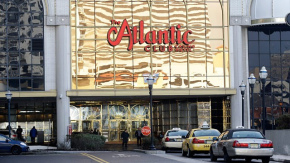
Report: Former Atlantic Club Casino in Atlantic City Close to Being Sold

One of Atlantic City’s vacant former casinos could soon be sold, the owners of the former Atlantic Club casino told the local Press of Atlantic City.

Dale Schooley, director of acquisitions for Florida-based TJM Properties, which owns the Boardwalk property, said the company has a contract with a group and is waiting for “hard money” for the deal. He did not name the company, the Press reported.

Schooley did say a number of potential buyers have been interested in the property.

Atlantic City Mayor Don Guardian also told the paper that he has talked with to two developers who are interested in the property, but again did not name them.

Florida-based TJM purchased the Atlantic Club from an affiliate of Caesars Entertainment Corp. in May 2014 for $13.5 million. In April, a deal by a local development group to buy the closed casino and redevelop it as a water park and family resort fell through.

In January 2016, another potential deal failed when TJM Properties asked Pennsylvania firm Endeavor Property Group to close on the casino, which has stood dormant since January 2014. Endeavor said it needed more time to secure financing, according to the Press.

In another Atlantic City story, it was reported that the resort has exceeded its limit of borrowing due to declining property values. The drop is due to a payment in lieu of taxes plan enacted by the state for the city’s casinos.

The plan essentially removed the casinos more than $3 billion in value from the city’s bond limit calculations, according to the Press. The state’s local bond law provides that a municipality’s net debt cannot exceed 3.5 percent of the equalized assessed valuation of its property-tax base, subject to certain exceptions and conditions.

The state, which oversees the city’s finances, recently approved bonding more than $148 million to pay off casino tax appeals, putting the city over the bonding limit, the report said.

Tropicana’s Beer & Whiskey Festival

Join the party when Tropicana Atlantic City casino hosts a Beer & Whiskey Festival on Saturday, October 14 in the Grand Exhibition Center. Guest will enjoy sampling a wide selection of 60 beers and 30 whiskeys, plus live entertainment featuring John Eddie and His Dirty Ol’ Band. 

Ticket Price $35 day of and $30 advance. Must be 21
Saturday, October 14, from 2 p.m. to 8 p.m.
For tickets and information Visit: tropicana.net

Hurricane Relief Dance Party at Resorts

Cooper Levenson is holding a dance party to raise much-needed funds for Puerto Rico residents in the aftermath of Hurricane Maria. The fundraiser is a Latin Dance Party to be held at Resorts Casino on Wednesday, Oct. 18, from 6 p.m. to 10 p.m. There will be a pre-event Latin dance lesson at 5:30 p.m. The minimum donation to attend the event is $25 per person. One hundred percent of the proceeds will go to Puerto Rico.

“Our hearts are with the people of Puerto Rico, who are facing insurmountable odds to rebuild their lives,” said Ken Calemmo, chief operating officer, Cooper Levenson. “We wanted to do what we could to help.”

Cooper Levenson has several staff members with family in Puerto Rico. They have had no contact from them since the storm.

Sponsors for the event include AtlantiCare, the Greater Atlantic City Chamber of Commerce, the Press of Atlantic City, SNJ Today, Argyle Interactive, and WEMG-MEGA 105.7 FM and 1310 AM. Sponsorships are available and range from $500 to $1,500.

For questions on sponsorships or tickets or if you cannot attend the event, but wish to make a donation, call Angela Robinson at (609) 572-7642 or email arobinson@cooperlevenson.com.

Report: Global Online Gambling Market hit $44 Billion in 2016

A report titled “Global Online Gambling Market” from Technavo covering online gambling for the 2016-2022 period reported that online gaming hit $44.16 billion in 2016 and is estimated to reach $81.71 billion by 2022.

The report noted that the use of mobile devices for online gambling purposes is increasing and also that growth for the industry is very geography specific, according to an analysis at yogonet.com.

More than 80 nations have legalized online gambling with Europe as the largest online gambling market in the world. In the Asia Pacific region, the online gambling sector has shown slow growth as many Asian countries such as Singapore have banned online play, the report said. African countries have also been slow to legalize online gambling.

Also, despite the growth in online gaming, land-based gambling still dominates the gambling market, but a major driver for online play could be is the opening up of new markets in countries such as the U.S. where three states now offer online gambling.


Death in Vegas

It’s the moment Las Vegas officials have feared for years. As the capital of decadence and excess, it’s long been assumed that it was almost inevitable that Las Vegas would be targeted by extremists. The fact that several of the 9/11 perpetrators had cased Las Vegas casinos just months before that event was cause for their concern. And just weeks ago, following the Barcelona incident where a truck mowed down several dozen people in a pedestrian mall, Las Vegas officials speeded up plans to install stanchions along the Strip sidewalks.

But no one could have predicted who and how mass murder would visit Las Vegas. And the why still remains a mystery.

Stephen Paddock did not fit the profile of a terrorist of a mass murderer. Paddock, 64, was a retired real estate investor and a gambler. He brought almost 20 weapons into a room he checked into at Mandalay Bay four days earlier. The room overlooked the site of the Route 91 country music festival that had been running for three days, and was scheduled to end around 10 p.m. on Sunday, October 1.

Just before 10 p.m., Paddock broke two windows in the suite he was occupying and opened fire with automatic weapons from his perch on the 32nd floor of Mandalay Bay. With 22,000 people attending the festival, Paddock sprayed bullets throughout the crowd. It took a few minutes before the crowd realized what was happening, and began to scurry for the exits. In the end, 59 people were slain and almost 500 injured. Not all the injuries were gunshot wounds, some victims were trampled.

SWAT teams were directed to the shooter’s suite by a Mandalay Bay security guard who had been shot in the leg by Paddock, who killed himself before police could halt him.

Las Vegas hospitals were overwhelmed with victims who arrived via ambulances, pickup trucks, cars and taxis. Heroic efforts protect fans and to remove victims from the festival site were later recounted by the media and witnesses.

Many casinos on the Strip advised guests to shelter in place, while those closer to the shooting moved guests into safe locations.

MGM issued a statement following the shooting the next day and announced a $3 million donation to victims and families.

“There are simply no words to express our grief and outrage over this senseless and horrific attack on our community,” said Jim Murren, chairman and CEO of MGM Resorts. “Yet in this devastating time, we are inspired. From the heroic stories of victims on the ground who placed the safety of strangers and loved ones before themselves, to the incredible bravery of first responders who rushed in when others were rushing out and who surely lessened the damage, to the knowledge of so many good and incomplete works done by those we lost—we are collectively drawing strength and faith to meet the difficult days ahead. With this donation, we hope to make a difference to those who were harmed and those who are left behind.

“We also wish to recognize the awesome contributions of first responders, not just here in Las Vegas but around the U.S., who give so completely of themselves when disaster strikes. On behalf of our Las Vegas community, I wish to say thank you to our global community who remind us from moment to moment that we are not alone.”

Still unknown—and something that may never be known—is the motive of the shooter. Although ISIS claimed responsibility for the violence, officials contend there is no evidence that Paddock had been radicalized. No note or letter has been found, and there has been no information yet about contents of his computer or his home. His Mesquite, Nevada, home was quickly locked down.

It quickly became know that Paddock was a known gambler, sometimes reportedly winning or losing $100,000 or more in a session. A video poker player, he had played in the Mandalay Bay high limit slot room just days before the shootings. It’s unknown at this time whether the suite Paddock was using was comped or not.

Paddock lived in Reno for several years where he met his girlfriend who had been a slot host at the Atlantis casino hotel.

The reaction from the Las Vegas community was extraordinary. A GoFundMe campaign for victims and their families raised more than $6 million in two days, far exceeding the $2 million goal. Blood donation centers had six-hour waits. President Donald Trump visited the victims in hospitals and praised first responders.

The incident’s long-term impact on Las Vegas is uncertain. Short term, a gun show planned for Boyd Gaming’s Cannery casino hotel in North Las Vegas was cancelled. All advertising was immediately halted, according to R&R Advertising, creators of “What Happens Here Stays Here” campaign.

“It would be completely insensitive to go out with a sort of carefree, have fun, let loose kind of message,” R&R CEO Billy Vassiliadis told the Las Vegas Review Journal. “At this point, especially while we still have people clinging to life, we still have victims’ families coming here, while we still have people here who were at the concert—we’ve canceled all of our current advertising for now.”

Instead, Vassiliadis said a social media campaign stressing the #VegasStrong hashtag was launched.

“We’re going to let people know that we are strong, and that we’ll be coming through this and coming out of this in a strong fashion,” he said. “A lot of people spent a lot money and a lot of years building this world-class destination. We’re not going to let one lunatic ruin it.”

Gros, Meitzler Win AGEM Awards

Global Gaming Business and GGB News Publisher Roger Gros received the 2017 Peter Mead Memorial Award Honoring Excellence in Gaming Media and Communications at last week’s Global Gaming Expo; and Rick Meitzler, president of Novomatic Americas, received the Jens Halle Memorial Award Honoring Excellence in Commercial Gaming Professionalism.

The awards were granted in a ceremony hosted by AGEM Executive Director Marcus Prater at G2E.

AGEM previously announced the creation of this unique annual awards program to acknowledge the lasting impacts on gaming by Halle and Mead, two distinctive industry veterans who died unexpectedly in 2015.

Now nearly four decades into a gaming career that started as a dealer in Atlantic City in 1979, Gros, 66, is the undisputed dean of North American gaming journalists. He started chronicling the gaming industry as a co-founder of Casino Journal magazine in 1983 as well as Casino Player magazine in 1988 that went on to become the leading source of information for casino visitors.

In 2002, he founded Global Gaming Business magazine, and has been publisher for the past 15 years for the leading trade publication that has the official endorsement of both AGEM and the American Gaming Association. His Casino Connection International company also publishes the Tribal Government Gaming, Casino Style and G2E Preview industry journals.

In addition, Gros is president of one of the leading marketing affiliates in the U.S. iGaming industry, iGamingPlayer.com. Gros also was a co-founder of the Southern Gaming Summit in Biloxi, Mississippi, and has organized hundreds of informative panel discussions for G2E, G2E Asia and other trade shows and conferences.

“Roger’s collective history and knowledge of the industry has been shaped by diverse and unique viewpoints that have made him one of gaming’s greatest communicators and steadfast supporters,” said Prater. “His written words and dedication to the trade journal and trade show segments of our industry have kept all of us informed and engaged as gaming has expanded globally over the past 30 years. He remains a go-to commentator for the mainstream media and supports gaming with a commitment to accuracy based on decades of experience and observation.”

Currently celebrating his 40th year in the gaming industry, Meitzler, 59, began his career as an assistant game designer for Bally Gaming in Chicago in 1977 and now serves as president and CEO of Novomatic Americas, a subsidiary of Austrian technology powerhouse Novomatic Group.

In his distinguished career with Bally spanning more than 33 years and dozens of jurisdictions around the world, Meitzler held more than 10 different positions, primarily in the areas of sales and customer service. In 2007, he assisted Australian company Ainsworth Game Technology’s U.S. entry as senior vice president of North American operations. Meitzler assumed his current position with Novomatic in 2015, and oversees a growing team dedicated to expanding the company’s overall presence in North America.

“How very deserving and appropriate it is for Rick Meitzler to receive this award named for his mentor and friend Jens Halle,” said Tom Nieman, president of AGEM. “If you read through the nominating criteria that captures the spirit of Jens and his career, you could just as easily be talking about Rick. He has succeeded in his career by taking care of his customers around the world with a smile on his face and a high level of integrity that makes him one of our industry’s most respected and popular figures.”

Halle, a longtime Bally and Novomatic executive in Europe who was most recently CEO of Gauselmann Group’s Merkur Gaming based in Florida, died suddenly on May 20, 2015 at the age of 57. Mead, the founder and publisher of Casino Enterprise Management magazine, died suddenly in Las Vegas on June 24, 2015 at the age of 54.

Current gaming professionals were nominated for these memorial awards based on the following criteria that aim to capture the unique attributes displayed by Halle and Mead during their storied careers:

Ainsworth Game Technology founder and current Executive Chairman Len Ainsworth and Golden Entertainment Director of Corporate Communications and former Las Vegas Review-Journal gaming columnist Howard Stutz were the initial recipients of the AGEM memorial awards program in 2016.

Caesars Back in the Game

Regulators in Missouri and Louisiana have signed off on the court-supervised restructuring of Caesars Entertainment Operating Company, the stage is set for the return of the Caesars conglomerate as a leading force in gaming.

The approvals―the last that Las Vegas-based parent Caesars Entertainment needed from the states where CEOC, its largest subsidiary, operates―enabled the company to target October 6 for CEOC’s exit from U.S. Bankruptcy Court protection.

The announcement came with a statement from Caesars promising a “stronger company” ready to embark on a nationwide strategy of “growth and investment.”

“The conclusion of CEOC’s restructuring leaves Caesars Entertainment with an expected enterprise value of approximately $20 billion based on yesterday’s closing prices. With reduced leverage, increased free cash flow and the new REIT structure, we are positioned with a solid foundation to pursue a diversified growth strategy,” said Mark Frissora, president and chief executive officer of Caesars Entertainment. “Throughout the restructuring process, Caesars has invested significantly to upgrade and renovate its facilities. Total capex from 2015-2017 is expected to exceed $1.5 billion, which will benefit the company going forward. We are also executing hundreds of initiatives to generate incremental revenue, as well as to enhance operational efficiency, guest experiences and employee engagement through technology-driven innovation and process improvement.”

That view got a hearty endorsement from Wall Street in the form of a successful placement by Caesars of $1.7 billion in junk bonds at 5.25 percent to help fund the restructuring―well under the 5.4 percent average yield for similarly rated bonds, according to Bank of America Merrill Lynch data.

Caesars cited five points it will pursue now that bankruptcy is behind it.

Leveraging Significant Presence in Growing Las Vegas – Caesars Entertainment will continue to update its room product in Las Vegas in line with its positive long-term outlook for this market. In addition, the Company is advancing the development of a convention center and other opportunities to monetize large, underutilized commercial scale properties adjacent to the Las Vegas strip in its real estate portfolio.

Pursuing Network Expansion Opportunities – Caesars Entertainment anticipates unlocking new opportunities for organic and inorganic growth across global markets supported by a strong free cash flow profile following CEOC’s emergence from bankruptcy.

Building on Proven Management Execution – Caesars Entertainment is primed to further improve its financial and operating performance with hundreds of discrete projects under the Company’s Office of Continuous Improvement and through the deployment of new best-in-class, secure, cloud-based enterprise-wide technology solutions.

Enhancing the Strongest Loyalty Program in the Gaming Industry – With more than 50 million Total Rewards members, Caesars Entertainment is driving revenue growth through technology enhancements in its marketing and engagement channels, such as the application of machine learning to customer behavioral data.

Taking Advantage of New Capital Structure – With approximately $2 billion in cash, and growing cash flow, Caesars Entertainment is well positioned to invest in future growth.

Most analysts expect investors to come return.

“In a hot market, memories become short and all past sins are forgiven,” Mike Terwilliger, a portfolio manager at Resource America, told International Financing Review.

It’s a herald of what analysts and industry observers see as a new era for the casino giant, and Caesars doubled down on it with the appointment of a new 11-member board of directors chaired by James Hunt, who joins the company from Walt Disney Parks and Resorts Worldwide, where he served as executive vice president and CFO.

What’s significant about the pricing of the bonds, say analysts and investors, is that it points to a belief in the essential strength of Caesars’ far-flung operations―47 casinos owned or managed in 13 states and five international jurisdictions.

Rather what hobbled the company, they say, was the 2008 leveraged buyout engineered by private equity giants Apollo Global Management and TPG Capital that saddled Harrah’s Entertainment, as the company was then known, with $28 billion of debt right at the onset of the Great Recession.

As one leveraged finance banker explained to IFR, “The issue with Caesars was always the capital structure, not the business.”

In the years that followed, with interest payments gobbling up earnings that might have gone into reinvestment and expansion, management began maneuvering the company’s best-performing assets into new, healthy subsidiaries to shield them from the trip to Chapter 11 that appeared increasingly inevitable. CEOC’s creditors, who were left holding the bulk of the debt, some $18 billion, were infuriated, they sued, and the rancor spilled over into Bankruptcy Court when CEOC failed to make a December 2014 interest payment and, as long expected, filed for Chapter 11 protection in January 2015.

Within six months, Chairman and CEO Gary Loveman, who had overseen the Apollo-TPG buyout and the subsequent asset shifts, was removed from operational control of the company. Frissora, the chief executive of Hertz, took over and 18 months of contentious negotiations ensued that finally were resolved with Caesars’ decision to sell its lucrative online business and package the cash as compensation for CEOC’s lenders.

A restructuring of both CEOC and parent Caesars Entertainment was devised and approved by a U.S. Bankruptcy judge in Illinois in January of this year. It will see Apollo and TPG reduced to minority shareholders in a publicly traded real estate investment trust that will own CEOC’s casinos and lease them to a separately listed operating company. Lenders will own a majority share of both entities through a combination of cash and stock equivalent to $10 billion of CEOC’s debt load. They also will control a reconfigured Caesars that will merge with Caesars Acquisition Company, giving them a lucrative stake in one of the strongest of the subsidiaries.

Report: Sports Betting Would Quickly Spread If New Jersey Wins

If New Jersey is triumphant in its case to allow sports betting being heard by the U.S. Supreme Court, as many as 32 states would approve sports betting in the next five years, according to a report by Eilers & Krejcik Gaming, LLC.

The company tracks state-by-state gambling legislation and predicts a sports betting market worth $6 billion and as much as $7.1 to $15.8 billion if every state allowed it.

The report notes that Americans are already betting up to $60 billion at offshore sites and bookies, said Chris Grove, managing director for the firm. Sports betting that generates about $3 billion in revenue each year from U.S. customers.

“We estimate that a properly regulated market could be worth nearly five times that amount, resulting in a financial windfall for sports betting operators, sports leagues and media and state governments alike,” Grove said.

The illegal market studied does not include office pools and “social” or “casual” bets among friends.

New jersey is currently challenging the federal Professional and Amateur Sports Protection Act, which currently bans sports betting in all but five states. Should the court rule in the state’s favor, the study predicts 14 states would offer sports betting within two years: Colorado; Connecticut; Delaware; Indiana; Massachusetts; Michigan; Mississippi; Montana; New Jersey; Ohio; Nevada; Pennsylvania; Virginia; and West Virginia.

Within five years, it predicted 18 more would join: Arizona; California; Idaho; Illinois; Iowa; Kansas; Kentucky; Louisiana; Maine; Maryland; Missouri; New York; North Carolina; North Dakota; Oklahoma; Vermont; Washington and Wyoming.

And within seven years, another dozen could offer it as well: Alabama; Arkansas; Florida; Georgia; Minnesota; Nebraska; New Hampshire; New Mexico; Oregon; Rhode Island; South Dakota and Wisconsin. The remaining states might never offer sports betting, the Eilers & Krejcik Gaming report said.

The study took into account whether a state already has pending legislation; if there are constitutional obstacles to expanding gambling; whether their gambling industry is united or divided; the general legislative attitude toward gambling as it exists now in a particular state, and how badly a state needs extra money, the report said.

The professional and collegiate sports leagues oppose New Jersey’s effort to legalize sports betting, saying it would threaten the perceived integrity of the games.

Colorado-based Company Named as Potential Revel Atlantic City Buyer

The fate of the closed Revel Atlantic City casino—now rebranded as TEN—remains mysterious, as another possible buyer has filed an agreement of sale for the property with Atlantic County New Jersey.

But according to the Press of Atlantic City, which reported the filing, property owner Glen Straub again denied a deal was in place and even said he had never heard of the company filing the agreement.

Still, analysts pointed out in several published reports that it would be unlikely a company would make the filing without a signed deal, though the deal could be subject to some conditions such as financing and regulatory approval. Sources tell GGB News that regulatory review for the new owners is under way, and that wouldn’t happen unless a deal signed by both sides had been filed with the Division of Gaming Enforcement.

The agreement was filed on August 31, and states that Straub has agreed to sell the property to a group associated with Mile High Dice MGR, LLC, based in Colorado, the Press reported. The sale agreement includes both the casino property and its on-site power plant.

The documents name Bruce Deifik as the manager of Mile High Dice. If the sale goes through, Deifik will be manager of the purchaser TEN RE ACNJ.

Deifik is founder, president and chief executive officer of Integrated Properties, Inc., a company formed in April 1990 to handle acquisition, development, asset management, property management, leasing and disposition of commercial properties under the ownership of Deifik and his investment partners. Projects by the company include the Hyatt Grand Champions Resort in Palm Springs as well as numerous office and retail centers in the Denver and Phoenix metropolitan areas, the Press reported. He is also the former head of the Nevada-based Greenspun Corp., owner of the Las Vegas Sun newspaper.

The agreement filing does not name a price for the former casino and Deifik declined to comment on the filing to the paper.

Straub, however, denied the sale was in the offing.

 “I have no idea. I’ve never talked to them,” Straub told the paper. “They are doing this just so they can tie up our property. People can file anything.”

Also, another firm, Keating & Associates LLC, a New York-based private investment firm, recently confirmed it has made a $225 million offer for the property recently. The company issued a statement after the story on the filing broke saying they remained committed to purchasing the property and praised Straub for keeping the closed property in prime condition.

Straub, however, has repeatedly denied he is close to selling the property and told Philly.com he has not been in talks with Keating either.

Straub has announced grand plans for the former casino he bought for $82 million out of bankruptcy court, but he has also missed several announced opening dates for the property.

Straub remains embroiled in a legal battle with the state on whether he needs a full casino license to lease casino space at the property. Straub maintains that he doesn’t, but the state Casino Control Commission is requiring Straub get a full license. Straub said he is waiting for his appeal on the commission’s ruling to be settled before considering selling the property.

Straub wants to lease the casino space to Connecticut developer Robert A. Landino to run as Ten casino resort. According to a report at Philly.com, Landino formed Ten RE ACNJ—named as the potential buyer in the filed agreement—in December. Mile High Dice MGR LLC manages Ten RE ACNJ.

Ten RE ACNJ’s formation documents were amended by Deifik last month to incorporate provisions of New Jersey’s Casino Control Act, indicating that the company may intend to seek a gambling license in the future, the Philly.com report said.

MBCA’s 27th Annual Installation and Awards Gala

The Atlantic City Metropolitan Business and Citizens Association (MBCA) has been in existence for over 25 years and continues to grow and prosper with the continued support of their members.

MBCA has grown to include in its membership 12 casinos, over 350 local businesses, 50 nonprofit groups and over 100 citizens. They are an all inclusive organization that strives to serve and represent all of the Greater Atlantic City area. MBCA works for the betterment of its neighborhoods and strives to be a constructive force to the society by working with and supporting other nonprofit groups, supporting civic events and awarding scholarships to local individuals.

The event includes the Community Spirit Award Recipient 2017 which will go to Tropicana Atlantic City. Tropicana casino is a premier east coast destination which recently invested over $90 million to bring more innovative and non-gaming excitement to its guests and local community. This investment created hundreds of jobs during its construction and currently employs over 3,000 employees.Steve Callender, General Manager of Tropicana Atlantic City, will be accepting the MBCA Community Spirit Award.

Tickets to the event are $110 per person.
To register visit: https://form.jotformpro.com/71944775284974

3rd Annual HBSF Golf Tournament

Come celebrate the life of Howard Bacharach and support local students at the 3rd Howard Bacharach Scholarship Foundation Gold Tournament, Friday, October 6 at Linwood Country Club. The tournament includes a BBQ & Awards Luncheon.

The Howard Bacharach Scholarship Foundation (HBSF) was formed to raise funds for students pursuing a career in the hospitality, culinary and tourism fields, which was Howard’s passion as Executive Director of the AC Hotel & Lodging
Association. Since April 2015, the HBSF has distributed $36,000 to students pursuing a career in the hospitality,
culinary or tourism fields.

Call Ronnie Bacharach at 609-992-7449 or visit: https://linwoodcountryclub.com

The Palm Atlantic City presents “A Bewitching Murder”

The Atlantic City Palm Restaurant at Tropicana Casino presents “A Bewitching Murder”, Friday October 27, 2017.

It’s been a rough year for Darrin at his new advertising firm, Sterling, Draper, Draper, and Draper, but Samantha is determined to congratulate him tonight on a job well done.  However, the unwelcome arrival of her mother and Uncle Arthur make the evening turn tense, and a Bewitching Murder could be in the air!

When: October 27, 2017 @ 7:00pm
Tickets: $85 per person includes Three Couorse Dinner and Show
Reservations are required: Please call Barbara Bermel 609-344-0483


Lunch and Learn with Wolfgang Puck

Join Wolfgang Puck American Grille’s Executive Chef, Aram Mardigian, October 7, 2017 at 11:30 a.m. for a 3-course lunch with wine, while learning how to create several of his classic autumn dishes.

Wolfgang Puck American Grille at the Borgata Casino and Spa
Tickets: $65
Visit: www.theborgata.com

The Disco Ball: Celebrating the 40th Anniversary of Saturday Night Fever

Come celebrate The Greatest Disco era ever Saturday, November 4th, at 9:00pm in the Event Center at the Borgata Hotel Casino and Spa

Grab your platforms and don your glitter for the 2017 Disco Ball!  This promises to be an extravaganza full of throwback disco jams, featuring a dynamite bill lead by KC and the Sunshine Band, The Trammps, France Joli, Jackie Moore, Musique, Norma Jean and Luci Martin formerly of Chic. 

Tickets: $59.00 – $125.

Visit:  www.theborgata.com

The 40th Annual American Finals Rodeo

The American Professional Rodeo Association is proud to announce the return of The 40th Annual American Finals Rodeo to the prestigious Boardwalk Hall in Atlantic City for two exhilarating nights, October 20th and 21st at 7:00Opm.

This event will be presented by the American Professional Rodeo Association (APRA) which sanctions rodeos throughout the northeast. The top contestants in bareback riding, steer wrestling, breakaway roping, barrel racing and bull riding compete at the American Finals Rodeo. The event will feature competitors from all over the world

The American Finals Rodeo is the capstone to the entire rodeo season for the American Professional Rodeo Association. The top 12 competitors in each event vie for the #1 spot. Rodeo contestants from all over the Northeast earn points with each placement towards the season’s standings.

The American Finals Rodeo is the oldest and largest finals rodeo in the Northeast. The iconic Boardwalk Hall in Atlantic City is one of the most prestigious venues in America. This is where it all comes together to decide which cowboys and cowgirls will get awarded the American Finals Rodeo Championship buckles!

Tickets: $9.00-$48.00

Visit: americanfinalsrodeo.com

Atlantic City Comedy Festival

For its eighth consecutive year The Atlantic City Comedy festival returns to Boardwalk Hall, Columbus Day Weekend, October 7th & 8th at 8:00 pm.

For two days, ten of the entertainment industry’s hottest comedy headliners will front the 8th annual Atlantic City Comedy Festival. Atlantic City prepares to experience humor on an unprecedented level as the festival returns to Boardwalk Hall.

The stage has been set for top comics to thrive in their element. Atlantic City serves as the backdrop for an extraordinary weekend of laughs. The festival returns to feature the biggest comedy circuit contenders of 2017. The scheduled performers is as follows.

Saturday, October 7th, 2017
Sommore
Earthquake
Tommy Davidson
Michael Blackson
TuRae

Sunday, October 8th, 2017
Mike Epps
Don DC Curry
Adele Givens
Arnez J
George Wilborn

Visit: www.accomedyfestival.com