Archives: Articles

This is the example article

Hard Rock Temporarily Relocates Hollywood Restaurant

Starting April 17, Council Oak Steaks and Seafood at the Seminole Hard Rock Hotel & Casino in Hollywood, Florida will open in a temporary location. The move is part of the property’s $1.5 billion expansion, including a 450 foot, 640-room guitar-shaped hotel tower, set to open in summer 2019, a new indoor retail and dining area where Council Oak ultimately will be located.

Council Oak’s signature Sunday brunch now will be served at Kuro, a high-end Japanese eatery, and the price has been increased from $69 to  $79, said Seminole Hard Rock Hollywood Director of Restaurants Pablo Astardjian. He explained the price hike is due to several more expensive cuts of sushi and sashimi now offered in the brunch buffet. The lavish brunch includes unlimited mimosas, Bloody Marys or sparkling wine, plus 10 food stations: sushi; raw bar with Alaskan king crab legs, shrimp and oysters; omelets, waffles, pastas, charcuterie and salads; and a carving station with Beef Wellington, lamb chops and pork belly. Pastry Chef Ross Evans will present a rotating dessert selection.

“Kuro is one of the areas that we are not going to touch,” Astardjian said. The restaurant features an open kitchen and sky-lit bar overlooking the resort pool. The Bol, Hard Rock Café, Blue Plate and the food court remain open for now, but resort officials said other changes could occur. “Who’s coming, who’s staying, it’s too early to say. Everything is up for conversation. We’re seeking to elevate our dining offerings and service, comparable to what guests find in Las Vegas or anywhere in the world,” Astardjian said.

In its temporary new location, Astardjian said Council Oak built 180-seat dining room, a private dining room and a full bar, and moved more than 4,000 bottles of wine. “Everything on that side of the hotel is new: new kitchens, new banquet space. We spent more than $1 million on renovations to make it feel like you’re not sitting in the middle of a ballroom,” Astardjian stated. He noted all key Council Oak staffers have remained at the restaurant.

Rich Get Richer

Sheldon Adelson and Caesars boss Mark Frissora scored super paydays in 2017.

Las Vegas Sands more has more than doubled Adelson’s total compensation to $26.1 million as part of a new employment agreement awarded its 84-year-old chairman and CEO.

The package includes potential cash bonuses up to $12.5 million and $5 million in salary for 2017, plus $4.21 million in equity awards and taxable perks worth $4.38 million, most of it for personal security.

But all that pales before the more than $1 billion he was paid in dividends on his LVS shares and those held by his wife and various trusts benefiting family members, according to data compiled by Bloomberg. Collectively they own more than half the stock.

Adelson’s LVS shares are by far the single greatest source of his roughly $36 billion fortune, the 20thlargest in the world, according to the Bloomberg Billionaires Index.

As for Frissora, Caesars Entertainment’s successful emergence from a protracted and complex Chapter 11 restructuring has proved massively lucrative.

The company awarded its CEO $29.4 million in total compensation for 2017. He received $2 million in salary, a $4.5 million cash bonus, $16.5 million in retention-restricted stock, a long-term cash award of $6 million and $400,000 for re-priced options, the Las Vegas-based gaming giant said in a regulatory filing.

The re-priced stock options were granted in the midst of the restructuring. Caesars reduced the strike price for more than 1 million options granted to Frissora, CFO Eric Hession and two other top executives to $9.45 a share from prices ranging from $11.51 to $21.18.

While not considered a laudable corporate practice by investor watchdog groups, Caesars said the re-pricing was necessary to keep executives in the fold during the company’s bankruptcy woes, allowing it to offer equity-based pay without granting new awards, which were limited while the restructuring was in the works, according to the filing.

New Jersey Casino Control Commission Overrules DGE

In an unusual move, the New Jersey Casino Control Commission granted a key employee casino license to a former Louisiana casino manager despite a recommendation of disqualification by the state Division of Gaming Enforcement.

The commission granted Anthony C. Patrone’s application for an initial key license. Patrone, 53, of Margate, filed his application in February 2017. He has worked in the casino industry for nearly 31 years including employment at Atlantic City casinos, according to the Press of Atlantic City.

The disqualification stemmed from a 2016 arrest while he was general manager of the Cyprus Bayou Casino Hotel in Charenton, Louisiana. Patrone’s Alford plea in the case—a guilty plea where the defendant does not admit to the accused offense—on a lesser charge prevented him from “clearly and convincingly demonstrating his good character, honesty and integrity” as required by the Casino Control Act, according to the division.

The commission, however, voted in favor of granting Patrone’s application due to a 45-page decision issued by Vice Chair Sharon Harrington in February. That report investigated Patrone’s arrest for felony theft, computer fraud and obstruction of justice on Feb. 17, 2016, following an investigation by Louisiana State Police.

According to the Press, the investigation centered around the alleged manipulation of the Cyprus Bayou’s personnel database in order to secure an annual bonus. However, Harrington’s report noted Patrone simply failed to receive formal written approval from the governing tribal council, resulting in the Alford plea to the misdemeanor charge of unauthorized use of a movable object without intent to deprive Oct. 5, 2016. Patrone’s record was expunged several months later.

Atlantic City Casinos See 22.5 Percent Profit Increase in 2017

Atlantic City’s seven casinos saw a collective 22.5 percent increase in profits to $723 million for 2017 according to figures released by the state Division of Gaming Enforcement.

Only Harrah’s Atlantic City showed a profit decline, down 2.7 percent to $115.8 million, but all seven casinos reported profits. The Borgata had the highest profit at $292 million, up 19.5 percent from 2016.

Casino net revenue, including online gaming, increased to more than $2.67 billion for 2017 up from about $2.5 billion in 2016. Gross operating profit reflects earnings before interest, taxes, and other charges.

According to an analysis by the Associated Press, Caesars showed a profit of $92 million, also up 19.5 percent from a year ago; Tropicana’s profit was about $92 million, representing a 71 percent increase over 2016; Bally’s profit was $42.1 million up 8.1 percent; the Golden Nugget had a $40 million profit, up 38.3 percent; and Resorts had a $23.1 million profit, up 23.6 percent.

Among online only companies, Resorts Digital reported a $14 million profit, up from a $791,000 loss in 2016, and Caesars Interactive-NJ had an $11 million profit, up $12.7 percent.

The city’s casino hotels also saw an increase in occupancy rates and average room rates in 2017 compared to 2016. The 12-month occupancy rate increased from 85.2 percent in 2016 to 86.9 percent in 2017. The average room rate last year was $108.35, up from $106.71 in 2016.

James Plousis, chairman of the New Jersey Casino Control Commission, said the figures show that the Atlantic City casino market is strong.

 “The industry is on the verge of a significant expansion this summer which will create a new array of attractions and attract a lot of additional visitors to the city,” Plousis said in a press statement, “That expansion may put pressure on the current operators, but I think the industry is well positioned to deal with the new competition.”

The city is expecting two formerly closed Boardwalk casinos to re-open under new brands this summer. Hard Rock Atlantic City is scheduled to open on the site of the former Trump Taj Mahal casino and the Ocean Resort will, open on the site of the former Revel casino.

Regulators also released fourth-quarter figures for 2017, which saw the seven casinos report a gross operating profit of $161.4 million for the final three months of the year, up 36.5 percent from the same period a year ago.

The Borgata had the most expensive average hotel rooms in 2017, at $133.04; the Golden Nugget had the least expensive at $83.38. The citywide average was $108.35.

Caesars had the highest average occupancy rate at 91 percent; Golden Nugget had the lowest at 77.8 percent, according to the AP.

Pennsylvania Mini-Casino Auction Another Bust

In a bad sign for Pennsylvania’s plan to increase revenues with satellite “mini-casinos” tied to current licensees, last week’s auction by the Pennsylvania Gaming Control Board of a license for a satellite casino was the second such event to pass with no bidders.

Category 4 mini-casino licenses, created with passage of the state’s November gaming expansion bill, authorize up to 750 slots for a minimum bid of $7.5 million, with up to 30 table games authorized for an additional $2.5 million fee. The first license auctions were open only to current land-based Category 1 (racino) and Category 2 (large stand-alone) casino licensees, and at first, it appeared the new licenses would be very expensive—Penn National Gaming won the first license, in a defensive move to protect its current land-based property outside of Harrisburg, for a bid just north or $50 million.

Bids shrunk from there, and after no bidders emerged for the fifth license, Penn won its second license with a bid just $3 over the $7.5 million minimum. Last week’s auction was opened to smaller Category 3 resort casinos as well as the larger licensees.

With no bidders at last week’s auction, the Pennsylvania gaming board could opt to make the next auction open to out-of-state operators and other entities without current licenses in the state. Or, regulators could decide to fold the program with the five successful bids, and their total of $127 million in fees to the state.

The semi-weekly auctions had been slated to continue through May 16.

Miss America Pageant to Stay in Atlantic City through 2018

The Miss America Pageant will stay in Atlantic City for at least one more year as the New Jersey Casino Reinvestment Development Authority approved a $4.325 million subsidy for the 2019 Pageant—to be held in 2018.

The authority’s board approved the payment through an $11 million, three-year agreement with the organization and Dick Clark Productions, which has produced the pageant telecast in the past. A date for the pageant has not been announced. Though called the 2019 pageant, the pageant usually airs in September of the preceding year.

 “The CRDA is encouraged by the Miss America Organization’s description that the 2019 competition will be updated to include a focus on women’s empowerment and other related programs,” said Robert E. Mulcahy III, authority board chairman.

The pageant’s future in the resort has been in question after a scandal in December that led the removal of CEO Sam Haskell, Chief Operating Officer Josh Randle, board Chairwoman Lynn Weidner and several other board members.

A series of emails from Haskell were made public revealing conversations he had with board members and employees about past contestants’ weight and sexual history as well as conversations about how to hurt some former pageant winners post-Miss America careers. The scandal caused Dick Clark Productions to break its affiliation with the pageant.

It also led to many local politicians to question whether the city should keep subsidizing the pageant, including the 2019 pageant which is the last covered under the authority’s contract with the pageant organization. That $11 million deal was signed in 2016. Many critics of the pageant say it does little to help the city’s economy and does not generate enough publicity to justify the payment.

The organization said in a press statement it was pleased with the authority’s decision and advised fans to stay tuned for more announcements regarding the future of the pageant.

“The Miss America Organization is pleased with CRDA’s action today to reserve funds to advance an iconic women’s empowerment program,” the organization said in a statement. “The vote signifies a partnership between MAO, CRDA and the state of New Jersey to work together to produce the next generation of female leaders. Today’s action is the first step in more announcements to come soon about a new Miss America.”

Former Fox News host and Miss America Gretchen Carlson now heads the organization which now also includes several other former pageant winners on its board. They have promised a total revamp of the pageant’s goals and presentation.

In another Atlantic City story, Tropicana Atlantic City announced it will debut its renovated Chelsea Tower in time for Memorial Day weekend, including a new Skybridge, new dining and bar options and a rooftop pool.

“The Chelsea Tower is a welcome addition to Tropicana Atlantic City,” said Tony Rodio, Tropicana president and CEO in a press release. “We were able to take a closed property on the Boardwalk, reinvigorate it, and incorporate it as part of the resort options at Tropicana Atlantic City.”

The new amenities will be open to the public and resort guests beginning May 25. Tropicana’s Memorial Day weekend celebration will continue with a Boardwalk Block Party and fireworks on May 26, the release said.

Pro Players Chime In on Sports Betting

William Hill CEO: Bet on New Jersey winning at SCOTUS

The players’ unions for the four major U.S. professional sports leagues—the NFL, MLB, NBA and NHL—issued a statement last week urging a seat at the table when discussing who will benefit from legal sports betting, once the federal ban imposed by the 1992 Professional and Amateur Sports Protection Act (PASPA) is lifted.

With predictions increasing that PASPA will be repealed—either by the U.S. Supreme Court in New Jersey’s challenge to the ban or by congressional action—the more than 20 states that have introduced legislation to regulate legal sports betting have been targets of lobbyists for the leagues, who are pushing for an “integrity fee” ranging from 0.25 percent to 1 percent of all wagers on their leagues’ sports.

Last week’s statement from the players’ unions supports legalizing sports betting with a fee to the leagues, as long as the players get a piece of the action.

“Given the pending Supreme Court decision regarding the Professional and Amateur Sports Protection Act (PASPA) … The time has come to address not just who profits from sports gambling, but also the costs. Our unions have been discussing the potential impact of legalized gambling on players’ privacy and publicity rights, the integrity of our games and the volatility on our businesses,” the Players Associations said in the joint statement.

“Betting on sports may become widely legal, but we cannot allow those who have lobbied the hardest for sports gambling to be the only ones controlling how it would be ushered into our businesses. The athletes must also have a seat at the table to ensure that players’ rights and the integrity of our games are protected.”

Sports betting advocates headed by the American Gaming Association have criticized the proposed integrity fees as a cash grab by the leagues that could end up costing sports betting operators the ability to offer odds competitive with those offered by illegal bookmakers.

Dr. Laila Mintas of Sportradar, a company that works with the officials and players of several leagues to deter scandals, supported the players’ unions in an interview with CNBC. “All relevant stakeholders, including player unions, need to have a seat at the table as we approach this potential landmark change in the sports betting landscape in the United States,” Mintas said. “Maintaining the integrity of sport must be a key cornerstone of the discussions.”

The NBA is on board with the players’ request for a seat at the table. “We welcome the involvement of our players in this process and believe there is an alignment of interests of everyone involved in professional sports to protect the integrity of our competitions,” NBA spokesman Mike Bass told CNBC.

The head of the Professional Golf Association also made a statement last week in favor of legalized sports betting and the opportunities is would present his sport. PGA Tour Commissioner jay Monahan said in an interview with USA Today that legal sports betting would “better ensure the integrity of your competitions,” adding that wagering would help the PGA tour reach a “much broader audience.”

“The point some people will make is that we are now actively supporting legalized gambling,” Monahan said. “Well, yes, we are.”

Meanwhile, the argument that legal sports betting should effectively compete against illegal bookmakers was made last week by Tim Donaghy, formerly an NBA official for 13 years, in an interview with a Michigan radio station.

“It’s big business for the mob in regard to bookmaking,” Donaghy told David “Mad Dog” Demarco of 730AM The Game in Lansing, Michigan. “It’s something they very much have their hands in and if it’s taken away from them, it’s going to hurt a little bit. It’s another reason to legalize it, not only for the tax dollars, but also get it out on the open and have it regulated.”

The Supreme Court is expected to issue its decision in the New Jersey case, Christie (Murphy) v. NCAA, sometime this spring. Last week, a prominent New Jersey attorney predicted that the court will decide for New Jersey and invalidate PASPA.

“All signs point to New Jersey prevailing,” Daniel Wallach, a gaming lawyer at Becker & Poliakoff, told Bloomberg. Wallach predicted that Atlantic City casinos will take bets by the start of the NFL season in September.

According to the Bloomberg report, traders on political odds market PredictIt give PASPA a 27 percent chance of surviving.

Elaine Wynn Settles Suit, Influences New Board Appointments

Elaine Wynn last week dropped a six-year old lawsuit against Wynn Resorts, the former CEO and ex-husband Steve Wynn and corporate General Counsel Kim Sinatra. A statement from Steve Wynn said that he “has resolved all outstanding legal issues with his former wife, Elaine Pascal Wynn. Mr. Wynn expressed gratification that he was able to put all of the personal unpleasantness of the last few years between he and Ms. Wynn behind him.”

After the sale of equity owned by Steve Wynn and the resolution of a suit with former shareholder Universal Entertainment of Japan, Elaine Wynn is the largest shareholder in the company, owning 9.26 percent equity. The lawsuit began when Elaine Wynn was ousted as a as a director in 2015, a move she claimed was orchestrated by her ex-husband when she complained about restrictions on her selling her shares without the approval of Steve Wynn. The stipulation was resolved last month.

Meanwhile—and possibly influenced by the withdrawal of the lawsuit—Wynn Resorts has named three new members to the board of directors, all women, as the embattled casino giant strives to turn the page on the sexual harassment scandal that toppled founder and industry icon Steve Wynn.

The three are Dee Dee Myers, executive vice president for worldwide communications and public affairs at Warner Bros. Entertainment; Betsy Atkins, a three-time CEO and corporate governance advocate; and Wendy Webb, CEO of Kestrel Advisors, which advises corporations on growth initiatives, governance, investor relations and strategic issues.

The appointments are the first in what many expect to be an overhaul of the board following Wynn’s resignation as chairman and chief executive. Wynn quit in February in the wake of a flood of accusations by women who worked for the company’s Las Vegas resorts that he pressured them to perform sexual favors.

Two longtime directors, Ray Irani and Alvin Shoemaker, have since stepped down, with Shoemaker leaving when his term ends in 2019. Another director, J. Edward Virtue, plans to leave in May.

In a letter to the board prior to the new appointments, Elaine Wynn had called for a restructuring of the board and reopening the nomination period to add new members. Her voice is expected to carry a lot of weight in the likely event of a shakeup, and sources tell GGB News that Sinatra is likely to depart soon, possibly followed by CEO Matt Maddox.

“Because all of the candidates I nominate would, by definition, be new to the board, they would not be in a position to have their independence questioned due to excessively long tenure—unlike some of the incumbent directors who have served for over 15 years,” she said in the letter.

Maddox, said the additions represent “meaningful change” for the company.

“These appointments signify a turning point for us, and I look forward to working with each of our new directors as we usher in a new era at Wynn.”

Maddox’s tenure has seen the creation of in-house initiatives to promote gender equality and inclusion and ensure a safe workplace for employees. But questions remain whether Sinatra and/or Maddox knew about a $7.5 million settlement with a former employee who Steve Wynn allegedly attacked.

Elaine Wynn also asked in the letter the board that the rumored sale of the Massachusetts property be postponed until a new, reconstituted board was in place, and asked that the board respond by April 24.

Steve Wynn, who was the company’s largest shareholder, has since sold his entire financial interest, but regulatory investigations into his alleged misconduct continue in Nevada and Massachusetts, where the company is developing a $2.4 billion gaming resort outside Boston. It’s believed that authorities in both states are examining what the board may have known about the accusations of misconduct by its former chairman, of which at least two resulted in large private cash settlements with purported victims.

Maddox has said the company is open to selling the Boston project. MGM Resorts International has been named as a potential buyer (see USA Gaming).

The appointments of Myers, Atkins and Webb bring the number of directors to 11 and the board’s female representation to four, including Pat Mulroy, a former Nevada Gaming Commissioner and one-time head of the Southern Nevada Water Authority and Las Vegas Valley Water District.

“To be clear, this is the first step in our effort to refresh the board,” said Chairman D. Boone Wayson, a close associate and family friend of Steve Wynn’s. “We intend to add additional new directors in the coming months. The board is committed to enhancing value for our shareholders, delivering superior experiences for customers and creating a supportive and inclusive environment for all of the company’s employees.”

The three bring a wealth of corporate experience, not to mention diversity and independence, to a board rated last year as the worst for corporate governance by advisory firm Institutional Shareholder Service.

Myers, who served as press secretary in the first Clinton administration, was the first women to hold that post. She is the author of the best seller Why Women Should Rule the World.

Atkins, who serves on the boards of several major companies, is a founder of Baja Corporation, an independent venture capital firm focused on technology, renewable energy and health care. Previously, she was CEO of NCI, a creator and manufacturer of health foods whose products include the PowerBar brand, and is a former CEO of Clear Standards, which develops enterprise level software for energy management and sustainability. She is the author of Behind Boardroom Doors: Lessons of a Corporate Director.

Webb’s experience includes 20 years as a senior executive at the Walt Disney Co. and the Walt Disney Company Foundation, the company’s philanthropic arm. She has held executive positions with Ticketmaster and investment firm Tennenbaum Capital Partners and currently serves on the boards of ABM Industries and software developer 9 Spokes. She is co-chair of the non-profit Women Corporate Directors in Los Angeles.

New Jersey Governor Seeks to Roll Back State Control of Atlantic City

New Jersey Governor Phil Murphy is moving to end the designation of former state attorney general and U.S. Sen. Jeffrey Chiesa as controller of the city’s finances.

Murphy’s office said the move is part of a “review and recommendation process” that include reverting Atlantic City government functions back to the Department of Community Affairs and ending the designee’s role within 30 days, according to a press statement.

The state took control of the city’s finances under legislation passed in 2016. While Timothy Cunningham, the state Local Government Services director, was given governing powers over the city, he and the administration of former Governor Chris Christie appointed Chiesa as his designee in the role.

Cunningham will continue in his role as the primary point person for the administration said Lisa Ryan, spokeswoman for the state Department of Community Affairs—the division is within the DCA—and he will work with Atlantic City business administrator Jason Holt, Atlantic City state monitor Richard Richardella, and the DCA Commissioner’s Office, according to a report in the Press of Atlantic City.

“The Department is thankful for the efforts the Chiesa law firm has put forth to date in helping stabilize Atlantic City’s finances,” Ryan said in a statement. “We used the change in administration as an opportunity to take stock of the situation in Atlantic City and this is how we are choosing to move forward.”

Murphy appointed former U.S. Treasury undersecretary Jim Johnson in February as special counsel to review the state’s involvement in the city and to provide recommendations to return the city back to local control. Ending Chiesa’s role is part of the review and recommendation process, the press statement said.

“The economic revitalization of Atlantic City is critical to advancing our overall state economy,” Murphy said in the statement. “The actions we are taking today will ensure we are working in full partnership with the city to ensure economic growth and empowerment for all Atlantic City residents.”

The announcement also said that “business development efforts will be handled by state agencies,” and that some litigation matters would remain with Chiesa’s law firm, Chiesa Shahinian & Giantomasi PC, while others would be handled by the Attorney General’s office or outside counsel. The DCA will also work with other agencies such as the New Jersey Economic Development Authority to help promote economic development in the city, Ryan said.

Atlantic City Mayor Frank Gilliam “applauded” the move while City Council President Marty Small said in a statement that the announcement showed the administration’s confidence “in Atlantic City’s governing body.”

“We need to continue to work hard with the state on all business pertaining to the good people of Atlantic City,” Small’s statement said.

Chiesa’s time in control of the city’s finances was notable for several deals he made with city casinos to reduce tax appeal judgments against the resort and moves to rework union contracts with city workers.

Tropicana Sold In Three-Way Deal

More consolidation in the gaming industry is ahead as billionaire hedge fund manager Carl Icahn’s casino operator, Tropicana Entertainment Inc., is sold for $1.85 billion in cash to Gaming and Leisure Properties Inc. and Eldorado Resorts Inc. Gaming and Leisure will pay $1.21 billion for most of Tropicana’s casinos and will lease the properties to Eldorado, which will pay the remaining $640 million of the purchase price. The deal has been approved by the three companies’ boards of directors.

In a statement, Icahn said: “Icahn Enterprises first acquired an interest in Tropicana in 2008. Tropicana was bankrupt and desperately needed new leadership. At that time, we identified this undervalued asset as being a perfect situation to deploy our modus operandi, by which we seek to acquire undervalued assets, nurture, guide and improve their condition and operations, and to ultimately greatly enhance value for all shareholders. By hiring a great CEO in Tony Rodio and a great management team, and by reinvesting every single penny of profits back into the company, we turned Tropicana into a great casino company.”

Tropicana President and Chief Executive Officer Tony Rodio added, “I am incredibly proud of what the entire Tropicana team has been able to accomplish over the past eight years, taking Tropicana from bankruptcy to one of the industry’s success stories.”

Four years ago, Eldorado held two gaming properties and shared ownership of a third. When the Tropicana acquisition is completed by the end of the year, it will own 26 gaming facilities in 13 states, including seven Tropicana properties in six states: Tropicana Casino and Resort, Atlantic City; Tropicana Laughlin Hotel and Casino and the MontBleu Casino Resort & Spa in South Lake Tahoe, Nevada; Tropicana Evansville in Indiana; Belle of Baton Rouge Casino & Hotel in Louisiana; Trop Casino Greenville in Mississippi; and Lumière Place in Missouri.

Eldorado Resorts Chairman and Chief Executive Officer Gary Carano said, “The acquisition of seven Tropicana Entertainment properties will allow Eldorado to enter two new gaming jurisdictions and deliver additional financial and geographic diversity to our operating base. Ultimately, we believe that the addition of the highly complementary Tropicana Entertainment assets to the Eldorado Resorts family of properties will result in attractive near- and long-term growth for Eldorado and another opportunity to create new value for shareholders.”

In total, the properties include about 7,900 slot machines, 265 table games and 5,400 hotel rooms plus dining, retail and entertainment amenities. When the sale is closed, Eldorado’s property portfolio will feature about 26,800 slot machines and VLTs, more than 800 table games and more than 12,500 hotel rooms.

Last May, Eldorado purchased Isle of Capri Casinos Inc. for $1.1 billion. In another more recent transaction, Eldorado agreed to buy the Grand Victoria Casino in Elgin, Illinois for $327.5 million in cash from MGM Resorts International and its venture partner. Bloomberg Intelligence Analyst Brian Egger said, “The combined transactions increase the company’s geographic diversification, add to earnings and free cash flow and do so at a multiple, after cost savings, well below the average” for regional casino deals.

Upon the announcement, Eldorado had its biggest intraday rally since it began trading on the Nasdaq in September 2014 with shares climbing as much as 21 percent to $43.15. Eldorado shares already had gained 7.7 percent this year through April 13’s close. Gaming and Leisure shares increased as much as 4.7 percent and Tropicana shares rose as much as 30 percent.

Tropicana shareholders must approve the transaction, Icahn Enterprises said in a regulatory filing, which noted if either side terminates the agreement, it would be subject to a $92.5 million fee.

The transaction does not include Tropicana’s Aruba assets, which will be sold as a condition of closing, nor the MontBleu Casino Resort & Spa in South Lake Tahoe, Utah.

Gaming and Leisure Properties Inc. acquires, finances and owns real estate property that it leases to gaming operators in triple-net lease arrangements. With this latest deal, GLPI will become the landlord for all six St. Louis area casinos.

Icahn Enterprises, which buys undervalued assets, improves their operations and ultimately sells them at a profit, acquired Lumière Place from Pinnacle Entertainment in 2013 for $260 million. Pinnacle sold the property to satisfy Federal Trade Commission concerns about competition in the St. Louis market when it acquired Ameristar Casinos. Last December, Penn National Gaming owner of Hollywood Casino and Casino Argosy Alton, announced it will buy Pinnacle Entertainment, operator of Ameristar and River City casinos both in the St. Louis area. That deal has not yet been completed; it required Ameristar in St. Charles to be sold to Boyd Gaming Corporation.

The top-performing casino in the St. Louis market, Lumière posted adjusted gross gaming revenue of $13.1 million in December, an increase of more than 15 percent over December 2016. Revenue increased 9.6 percent to $148.5 million for all of 2016.

Eldorado’s other significant purchase, of Grand Victoria Casino in Elgin, Illinois, about 40 miles west of downtown Chicago, “will allow us, upon closing, to focus on enhancing the guest experience and operating results without the need to undertake capital investments. As we work toward closing this acquisition by the end of 2018, we look forward to welcoming the team at Grand Victoria to the Eldorado family,” Carano said.

He added Eldorado has no immediate plans to renovate the Grand Victoria, or any of the Tropicana acquisitions.

MGM Resorts said it will receive its 50 percent share of the proceeds after certain transaction costs, or around $162 million. The company inherited its half interest in Grand Victoria when it acquired Mandalay Resort Group in 2005.

Grand Victoria features 1,088 slot machines, 30 table games and a 12-table poker room, plus four dining options, 7,495 square feet of meeting and banquet space, event and concert facilities, a 1,450-space parking garage and additional surface parking for 600 vehicles.

In 2017 it posted revenue of $168.7 million, up from $163.5 million in 2016, according to the Illinois Gaming Board. Its revenue has steadily declined since 2007 after a peak of $436.7 million, and employees have decreased from 2,500 to 800.

Hard Rock AC to Open June 28

Star-studded entertainment lineup announced

The highly anticipated Hard Rock Hotel & Casino Atlantic City has set June 28 as its grand opening date. The announcement of the completion of the transformation of the bones of the former Trump Taj Mahal into the new Hard Rock property was made by Jim Allen, chairman and CEO of Hard Rock International, at a simulcast three-city press conference last week.

Allen conducted the conference from New York’s Hard Rock Café in Times Square, appearing in a video simulcast in Atlantic City and Philadelphia. He reflected on his first meeting with his partner in the project, New Jersey developer Jack Morris, when the two considered the Atlantic City market. “The question was, can Atlantic City take the next step? We were 100 percent convinced that it can.”

Hard Rock put its own substantial resources behind that bet—after purchasing the shuttered Taj Mahal out of bankruptcy from Carl Icahn for $50 million, the operator pumped nearly 10 times that into the project, spending nearly $500 million to create a totally new property on the bones of the Taj. “We wanted to make sure we built something world-class,” Allen said. “We come back to Atlantic City with the idea of growing the market… We certainly had nothing but a welcome mat to create these 3,000 jobs, an expanding tax base and an economic boost.”

Allen added that Seminole Hard Rock Entertainment, the operating entity owned by Florida’s Seminole Tribe, funded the project with $400 million in cash—the new facility will bear no debt.

Allen justified the expense by noting that the Atlantic City market has already defied all odds with three straight years of growth, including a 22 percent increase last year. “They were actually predicting the opposite,” he said of industry pundits. “They were actually projecting that by this year, the market would be less than $2 billion. It’s actually at $2.7 billion, and it is still the second-largest gaming market in the United States.”

The Hard Rock Hotel & Casino Atlantic City will bear absolutely no resemblance to the former resident of its 17 acres on the Atlantic City Boardwalk. The former Taj was gutted and stripped to its frame, its rooms not even using any of the former fixtures or plumbing. Standard rooms with Hard Rock’s signature “Sleep Like a Rock” bedding and “Rock Spa” bath products will feature Boardwalk and ocean views, with four different styles of suites offering panoramic views from floor-to-ceiling windows.

The 167,000-square-foot casino will be more akin to Las Vegas mega-resorts than anything in Atlantic City, including a marble pathway throughout the gaming floor and, of course, Hard Rock’s signature rock memorabilia spread amid the 2,100 slot machines and 120 table games.

But according to Allen, the casino is not the main draw of the new property. Hard Rock Atlantic City, he said, will be more about entertainment than anything else. The expanded former Mark G. Etess Arena—named for the late Trump marketing executive who died in a 1989 helicopter crash—will now accommodate 7,000 seats (the space formerly seated fewer than 6,000), and will be known as Hard Rock Live at Etess Arena. (Allen said he personally called Etess’ brother, Mohegan’s Mitchell Etess, to tell him his brother’s name will be retained on the venue.)

Additionally, the property will feature a separate 2,000-seat venue, yet to be named, built on the frame of a facility that was rarely used by the Taj, as well as the central Hard Rock Café, which will feature an enlarged stage.

“Hard Rock is not about gaming; it’s about entertainment,” Allen said at the three-city press event. “The Hard Rock brand is not a gaming brand. The name of the company is Seminole Hard Rock Entertainment.”

Allen said tickets for 60 entertainment acts at the Hard Rock went on sale Friday, and so far, the operator has booked more than 300 shows. “When’s the last time any individual property, whether it be in Macau, Singapore or Las Vegas, booked 300 acts in one year? It shows the commitment that we, as an entertainment brand, as a hospitality brand, have made to the city of Atlantic City.”

Allen said the Hard Rock will feature some kind of entertainment every day of the week. Acts already booked run the gamut of A-list artists, epic bands and headlining comedians. Among the first year’s featured entertainers will be Third Eye Blind, Florida Georgia Line, Rascal Flatts, Stone Temple Pilots, Frankie Valli and the Four Seasons, Counting Crows, Chris Young, Toby Keith, Steely Dan and Kid Rock.

In addition to music of every genre, the new property will feature the Howie Mandel Comedy Club, with periodic performances by its namesake as well as stars from across the comedy spectrum.

“The Grand Opening of Hard Rock Hotel & Casino Atlantic City will set the tone for a new era of entertainment in Atlantic City,” Allen said. “Our $500 million, newly reimagined property will offer something for everyone, and we’re thrilled to welcome our first guests in June.”

He added that the debut of the Hard Rock may inject new energy into the entire industry. “We are very excited that the other casinos in Atlantic City are reinvesting in their product,” he said.

Cuba Libre Restaurant & Rum Bar Is The Place to Celebrates Mother’s Day

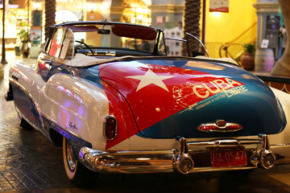
Cuba Libre Restaurant & Rum Bar, located in The Quarter at Tropicana Casino & Resort in Atlantic City, will offer its tempting a la carte brunch menu with festive specials from 11:30 a.m. to 4 p.m. this Mother’s Day.

Mom will be impressed by Executive Chef Kevin Couch’s featured specials, which include the Tortilla Española del Mar, Spanish omelette with shrimp, bay scallops, crabmeat, potato and fire roasted tomato salsa, served with a watercress and baby spinach salad, priced at $13.  Chef’s a la carte menu featuring modern Cuban dishes prepared on their unique stainless steel, wood-burning grill. 

Menu highlights include Pineapple Guacamole Cubano with avocado, grilled golden pineapple, roasted jalapeños, fresh lime juice and extra virgin olive oil, served with crisp plantain chips; Arroz con Pollo with saffron long grain rice, boneless chicken, green peas, Manzanilla olives, hard-boiled egg, asparagus, Palacios chorizo, and roasted piquillo pepper salad; Churrasco a la Cubana with all-natural Black Angus grilled skirt steak, roasted garlic boniato-potato mash, parsley, lemon and onion sauce, served with a watercress salad and red wine vinaigrette; Rancho Luna Salad with Murray’s Lancaster Farm chicken, Napa cabbage, romaine lettuce, organic grape tomatoes, red onion, seedless cucumber, crispy wontons, and a chinita mustard dressing, and the El Cubano, pressed Cuban sandwich, Ybor City-style, with sour orange marinated pork loin, Genoa salami, ham, provolone and Swiss cheese, yellow mustard-pickle relish, served with tropical chips and Cuba Libre salsa.  A la carte brunch items range in price from $7 to $29.75. 

For the perfect pairing, Cuba Libre will offer a Classic Champagne Mojito made with Champagne, fresh pressed sugar cane (guarapo), lime juice, mint, and splash of soda, priced at $11, as well as a premium cocktail selection highlighting a wide variety tropical fruits and juices.  Cocktails include the Mule Del Sol with Tito’s handmade vodka, muddled cucumber and basil, lime juice, and Barrow’s Intense Ginger; Paloma Ahumada with Pelotón de la Muerte mezcal, grilled jalapeño honey syrup, St. Elder natural elderflower liqueur, fresh ruby red grapefruit juice, and club soda; Pineapple-Basil Caipirinha with Velho Barreiro cachaça, Licor 43, pineapple juice, and fresh basil, and the Grilled Watermelon Mojito with Brinley Gold Shipwreck spiced rum and fresh watermelon juice.  These libations range in price from $10 to $13.25.

WHEN: Sunday, May 13 from 11:30 a.m. to 4 p.m.
WHERE: 
Cuba Libre Restaurant and Rum Bar is located in The Quarter at Tropicana Casino & Resort at 2801 Pacific Avenue, Atlantic City, New Jersey 08401; Phone (609) 348-6700.  

For additional information or reservations please visit www.cubalibrerestaurant.com.  

Bacon Week at Atlantic City’s Tropicana Casino

Atlantic City’s premier bacon event is back by popular demand at Tropicana Casino Resort from Sunday, April 15, 2018 – Saturday, April 21, 2018. Indulge in unique bacon dishes including bacon cocktails, desserts, and more.

A Dam Good Sports Bar

  • Bacon Wrapped Jalapeno Shrimp $12
  • BBQ Bacon Cheeseburger $10
  • B.L.T. Sliders $8
  • A Dam Big B.L.T  $8
  • Three Little Pigs Sandwich (BBQ Pork, Bacon, Ham, Cheddar, Swiss, Coleslaw)  $12

Bacon Bites

  • Follow your snout to the Bacon Bites booth in The Quarter where you’ll find a variety of bacon specialties including pretzels, potato chips and a variety of chocolate covered bacon flavors. Also try the 6 lb. Bacon Pigs, Bacon Pigettes, Slab Bacon, Bacon Peanut Butter Cups and the Bacon Pizza. Choose from a selection of novelty items including plush pigs, bacon t-shirts, pig noses and more.

Broadway Burger Bar

  • Salad – Spring Mix, Candied Bacon, Cantaloupe, Toasted Pecans, Shaved Parmesan, Bacon and Ramp Vinaigrette.
  • Savory Sweet Burger – 8 oz Prime Beef Burger, Applewood Smoked Bacon, American and Cheddar Cheese on a Glazed Donut Bun. $13
  • Bacon Wrapped Shrimp, 5 Shrimp with Spicy Red Pepper and Goat Cheese Sauce. $15
  • Cheesy Bacon, Spinach and Roasted Artichoke Dip, served with house made Tortilla Chips. $14
  • House Made Crostini’s, Bacon Jam, Dried Fig Slices. $12 
  • Beer Pairing Bacon – Applewood Smoked, Peppered, Praline Candied, and Jalapeno-Lime. Bacon are each paired with a specific beer in a 4 oz. tasting glass. $8 

Carmine’s

  • Classic Carbonara – a blend of pasta with Eggs, Cheese, Bacon and Black Pepper. $30.50
  • Pomodoro is a fresh Plum Tomato Sauce made to order with White Wine, Tomatoes, Garlic, Prosciutto, and Herbs over your choice of pasta. $29.50
  • Saltimbocca features Chicken or Veal pounded thin and covered with Prosciutto, Sage Butter, and Mozzarella in Spinach and thickened Marsala Sauce. Chicken – $33.50 Veal – $39.50

Casa Taco & Tequila Bar

  • Bacon infused vodka Bloody Mary.
  • Bacon Wrapped Sweet Plantains – ripe Plantain wrapped in Bacon and Topped with sweet Dulce de Leche Sauce.
  • Bacon Poppers – 5 jalapeno Peppers filled with Bacon, Cream Cheese, and Cheddar Cheese, served with Chipotle Ranch.
  • Bacon Wrapped Atlantic Salmon – Salmon Fillet wrapped in Bacon and served with Coconut Rice, Arugula Salad and Vidalia Onion Cream Sauce.

Chickie’s & Pete’s Crab House and Sports Bar

  • Mussels Bacon & Bleu – a heaping pile of Mussels with Bacon, Blue Cheese, Escarole, and Onion. $13.95
  • Half Pound BLT – a half-pound of Bacon with Lettuce and Tomato on a Seeded Roll. $9.95

Cuba Libre Restaurant & Rum Bar

  • Pork Belly Slider with grilled Berkshire Pork Belly, Crispy Bacon and Chipotle-Onion Marmalade. Served on a Sesame Brioche Roll with Vigorón Slaw. $5 

Hooters

  • Bacon Wrapped Wings 

il Verdi 

  • Steamed Peroni Clams or Mussels – Steamed in Peroni Beer and Natural Juices with Pancetta, Garlic, Onion, Calabrian Chili , Fresh Parsley, Plum Tomatoes $14
  • Grilled Garlic and Rosemary Veal Chop with a Roasted Tomato Pancetta Cream, mixed Mushrooms and Hand-Cut Fettuccine $48 
  • Chocolate Bacon Lava Cake with Vanilla Gelato $8

La Petite Creperie

  • Breakfast – Bacon, Egg, and Cheese Crepe $7.95
  • Meat Lovers Crepe (Eggs, Bacon, Ham, Sausage, Red Onion, American Cheese) $8.95
  • Clubbin’ (Chicken, Smoked Bacon, Lettuce, Tomato, Chipotle Mayo) $8.95

LICK Candy Store

  • Known for its zany, sweet treats, LICK will not disappoint. Their bacon inventory includes bacon cotton candy, bacon gum balls, bacon toothpicks, bacon jellybeans, bacon lollipops and even bacon breath mints. Prices range from $3.95- $10

Mrs. Fields

  • Muffin Top – Freshly baked, covered with a Maple Glaze and sprinkled with pieces of Bacon.

Olón

  • Marcona Almond Stuffed Bacon Wrapped Dates with Cabrales Espuma $12

Palm

  • Thick-Cut Applewood Smoked Bacon (Maple-Glazed, served with house-made Steak Sauce)  $16

Seaside Cafe 

  • Bacon Blueberry Pancakes $10.50
  • Bacon Grilled Cheese with Tomato Jam for $9.95
  • Super 1 Pound BLT $10.50
  • Beer Cheese Jalapeno and Bacon Burger $12.95

Zeytinia

  • Yummy and crispy BLT wraps. $6.99

Visit: https://tropicana.net/events/bacon-week-2

2018 Run/Walk for the Animals 5K

Celebrate Marine Mammal Stranding Center’s 40th Anniversary and having responded to over 5,000 stranded whales, dolphins, seals and sea turtles! This 5K Run/Walk, taking place May 19, is one of the best races at the Jersey Shore. The race is baby stroller friendly and dog friendly!

Close to everywhere. Just 8 minutes from the Harrah’s, Borgata and Golden Nugget Casinos in Atlantic City. 

Awesome post-race buffet by Laguna Grill and Rum Bar. The best post-race buffet of any race in New Jersey!  ($5 fee for buffet for non-participants).  Plus, ticket auction for Beautiful Baskets and gift items.

This is a 5K Race with Chip Timing and Results Kiosks by SpectaSport – “Contemporary Timing for a Connected World”.  Results available on kiosks instantly upon finishing!  Online results published and updated while race is in progress!
 
Marine Mammal Stranding Center T-Shirt available for all entries!  Walkers welcome (must finish in 50 minutes or less to get official time, but you are still welcome even if you walk slower than that).  They are aiming for 225 participants this year.

HOW TO RACE FOR FREE:  Become a Fundraiser when you enter.  Fundraisers who raise at least $200 in online donations get their entry fee refunded!

Race Date: Saturday May 19, 2018 at 9:00 am (Registration/Packet Pickup begins @ 7:30)

Location: Laguna Grill & Rum Bar, 1400 Ocean Ave., Brigantine

Prizes: First Overall Male and Female, plus top three in Age Groups (M/F) for 14 & Under, 15-19, 20-29, 30-39, 40-49, 50-59, 60-69, 70+ (walkers welcome, but you must finish 5K within 37 minutes (approximately) to be eligible for awards)
 
Race Central located at Laguna Grill, 1400 Ocean Avenue, Brigantine, NJ  08203
 
After May 10, registration increases to $30.  On-site race day registration $35 (cash or credit) and begins at 7:30 am.  Save money by clicking “Sign Up” (above) to enter now.

For registration and information visit: https://runsignup.com/Race/NJ/Brigantine/MMSCRunfortheAnimals

A Clean Shave: St. Baldrick’s Event at Borgata

The St. Baldrick’s Foundation, the largest private funder of children’s cancer research, will host one of its signature head-shaving events at Borgata Hotel Casino & Spa on April 27th where team members, guests, and friends will shave their heads to raise money for lifesaving childhood cancer research.

Every 2 minutes a child is diagnosed with cancer worldwide, and in the U.S. one in five kids diagnosed won’t survive. Those who do survive often suffer long-term effects from treatments too harsh for their developing bodies. As the largest private funder of childhood cancer research grants, St. Baldrick’s is leading the charge to take childhood back from cancer. From its beginnings, St. Baldrick’s has believed that kids deserve the chance to be kids – fun-loving, carefree, refreshingly honest, and always a little goofy – and deserve the chance at a healthy future. That’s why donations raised at events like this have made it possible for St. Baldrick’s to fund more than $232 million to support the best childhood cancer research, wherever it takes place.

The event will be held throughout the day at The Barbershop inside Borgata’s award-winning Spa Toccare. Shavees who raise a minimum of $50 in donations may schedule their appointment any time between 9am and 8pm on April 27th. Friends and family are encouraged to attend, enjoying the spa’s facilities as well as complimentary sweets by Executive Pastry Chef Thaddeus DuBois.

More information about the event – including how to volunteer or donate – is available
here.

Stars Group Readies for Launch of PokerStars India

The Stars Group will launch PokerStars India on April 17, the company announced.

The site will be available to players in the majority of Indian states, the company said in a press release. It will be offered through a partnership with Sugal & Damani Group, a conglomerate active in lottery and gaming. PokerStars.in will be operated by Sachiko Gaming, a Sugal & Damani subsidiary of Sugal & Damani with The Stars Group licensing its brand and supplying certain support services.

“The popularity of poker in India is growing and we are excited to build the market with the support of the global leader in online poker,” Sugal & Damani chief executive Kamlesh Vijay said in the release.

The site will be available on desktop and mobile devices with Indian Rupees as the main currency. It will feature localized versions of PokerStars’ most popular tournaments and events.

Players in some Indian states, however, will not be able to access the site due to undefined rules on real money gambling. They include Assam, Odisha and Telangana.

Sugal & Damani operates a network of 25,000 lottery point of sale terminals in the states of Punjab Maharashtra, Sikkim, Mizoram, Goa and Arunachal Pradesh. Through a subsidiary, it is also active in the African lottery market under the Winlot brand, with 15,000 terminals operating on the continent.

In another story involving PokerStars, the UK Advertising Standards Authority has ruled that the gambling site cannot air a TV ad and warned PokerStars against portraying gambling in a socially irresponsible manner or in the context of recklessness.

The authority said it received complaints that the ad in question sought to exploit inexperienced poker players by suggesting that they could easily excel at the game and make large winnings.

According to SBC News, the ad featured a voice-over which prompted the complaints by stating: “Here you are, the moment when bluffing is the only way to win, you’re freaking out kiddo, but think about all those times you bluffed yourself. Like the pull-up bar waiting for you to get back in-shape, that book you’re definitely going to read, your parents never ever had sex. Use that talent because if you can bluff yourself, you can bluff anyone. PokerStars, you’re already a great poker player”.

In its ruling the authority said viewers could interpret the advert to mean that if they could bluff through the real-life experiences shown in the broadcast, they could become great poker players.

PokerStars disputed the ruling saying the ad didn’t suggest that players could win a lot of money, but only humorously suggested the main protagonist was an individual in possession of one of the skills necessary to play poker and how it was used in other aspects of life.

Live Online Dealers Coming to Philippines

Philippines-based iGaming operators may soon apply to offer live-dealer online casino games.

The state-owned Philippine Amusement and Gaming Corp. announced that one-year, renewable permits will cost PHP1 million (US$19,220) per term. A PHP250,000 (US$4,792) accreditation fee also must be renewed annually at the same cost.

The content/streaming provider must be certified by a gaming laboratory that its product is blocked from any Philippine IP addresses other than those accredited by PAGCOR, reported Asia Gaming Brief.

PAGCOR Chairwoman Andrea Domingo said the regulator expects to double the revenue it receives from online gaming licenses once a new audit platform is established.

Philippine residents play online games at hundreds of internet cafes in the country. CalvinAyre.com reports that online operators must ensure that their live-dealer games cannot be accessed by Philippine residents outside the cafes or be made available to holders of Philippine Offshore Gaming Operator licensees.

Online Gaming, Casino Bailout Axed from N.Y. Budget

State budget negotiators in New York have agreed on a spending plan for the new fiscal year that does not include online gaming or tax relief for a fledgling commercial casino industry that is struggling to meet its revenue goals.

It’s the second year in a row that i-gaming proponents came away from the negotiations empty-handed, and again it happened in spite of strong support in the state Senate, which has passed legalization bills in each of the last three years and included online poker and sports betting in its version of the 2018-19 budget, which covers the period from April 1 to March 31 of next year.

And, as in previous failed attempts, it was the Assembly that chose not to act. The Senate’s budget provision failed to come to a vote in the lower house, where Mt. Vernon Democrat Gary Pretlow, who occupies a key position as chairman of the Racing and Wagering Committee, declined to throw his support behind it.

Governor Andrew Cuomo also has expressed reservations and that, coupled with a host of regulatory complications, doomed the issue for purposes of the budget, where controversial or otherwise politically divisive proposals tend to get left on the shelf.

That said, considerable hope remains that the Legislature will move quickly to regulate remote betting on sports, provided the U.S. Supreme Court acts favorably on New Jersey’s challenge to a 25-year-old federal law that bans sports wagering in all but four states.

The impetus come could, ironically enough, because lawmakers refused to include a casino rescue in the new budget.

New York’s densely crowded gaming market has proven a greater competitive challenge than expected for the three privately owned casinos that opened between December 2016 and February 2017. All have fallen well short of first-year revenue projections, which means they’re generating considerably less money for the state, which taxes them at a rate of 37 percent of slot revenue and 10 percent of table game revenue.

del Lago Resort and Casino in the Finger Lakes missed its first-year forecast by more than $100 million, prompting General Manager Jeff Babinski to announce his resignation at the end of the last month. Rivers Casino & Resort in Schenectady, whose first general manager, Mary Cheeks, quit last November, missed the top end of its forecast by nearly $70 million. Both sought tax relief in the new budget. Both were rebuffed.

del Lago, which is surrounded by six tribal casinos, should have taken the competitive landscape into account, said Pretlow, who opposes any bailouts. “I think it was a bad business decision to move there in the first place, but they knew what they were doing when they got into it. They made their bed, basically.”

Of the other two new casinos, Tioga Downs Casino, located near Binghamton on the Pennsylvania border, has missed its initial projections by similar margins. The newest of the group, Resorts World Catskills, which opened last month near Monticello, is reported to be generating revenues in the same range as del Lago and Rivers, which doesn’t bode well either, given that it’s the largest of the four and was the costliest to develop.

Cuomo, a Democrat, was an early and enthusiastic supporter of commercial casino expansion, and it could cost him politically if the experiment backfires. In addition to the disappointing tax haul the expansion has sparked a dispute with the Seneca Indian Nation that is costing the state and several cities tens of millions of dollars in lost revenue from the tribe’s casinos. Facing what is likely to be a tough bid for re-election in November the governor is under mounting pressure to distance himself from the industry. Not surprisingly, he opposes talk of a bailout.

As he put it recently, “The upstate gaming casinos are private concerns. They bid, they made an investment, and some of them will say they’re not doing as well as they hoped or would have expected but they’re private concerns, and I don’t want to get into the business of bailing out private concerns.”

Which is why sports betting is starting to look good for all concerned. The Senate bill currently under consideration is designed specifically to benefit the four casinos by establishing a regulatory framework for them to take bets both on-site and remotely via computer and mobile phone. But it covers a major political concern as well by giving racetracks, racinos and OTBs a piece of the action, allowing them to partner with the casinos in offering affiliate betting stations and registration for their patrons to access the online and remote platforms.

The bill’s author is John Bonacic, who chairs the Judiciary and Racing, Gaming and Wagering committees and is a leading voice in the Republican-controlled upper house. As sponsor of the 2013 constitutional amendment allowing commercial casinos, and representing a district that includes the Catskills, he, too, has some political capital on the line.

Whether it proves enough to get Pretlow on board remains to be seen. So far, he’s reacted positively.

“I want to make sure the off-track betting and racinos were able to participate, and the way this legislation is worded makes that possible,” he said.

Pennsylvania Gives Some Skins

Skins must identify land-based casino

The Pennsylvania Gaming Control Board last week approved and posted temporary regulations for the licensing and operation of internet gaming in the state, and the rules finally address what has been a contentious issue—the number of “skins,” or online casino domain sites, permitted each iGaming licensee.

The regulations follow the iGaming rules in New Jersey, in that they allow each land-based licensee to operate an unlimited number of domains—with one proviso. Each “skin” must clearly identify the land-based casino with which it is affiliated. In New Jersey, skins such as Partycasino.com and Palacasino.com do not generally display their affiliated casinos.

Under Pennsylvania’s rules, the domain must display its affiliated casino, and the site must be linked to the casino’s own website.

“What the Pennsylvania Gaming Control Board did at its public meeting of April 4, 2018 was to approve temporary regulations that enable a very open and competitive market for internet gaming, while at the same time assuring transparency and accountability for the consumers,” said PGCB Executive Director Kevin O’Toole in a press release. “Under these temporary regulations, there is no limitation on the number of skins that a slot machine licensee may employ to deliver games, but every ‘skin’ that a casino offers must be branded in a manner that makes it clear that it is offered on behalf of the slot machine licensee consistent with the language of the act.”

The decision was a setback for operators of the Parx Casino and Hollywood Casino at Penn National, which had lobbied the regulators to limit skins to one domain per operator.

In addition to clearing up the issue of multiple skins—which had been left out of the gaming expansion bill provision authorizing iGaming—the regulations hold that to operate a skin, operators will have to somehow be functionally tied to a casino web domain or some entity owned by the casino:

“Interactive gaming operator licensees are not permitted to offer interactive games in this Commonwealth independent from an interactive gaming certificate holder and the interactive gaming certificate holder’s webpage or the webpage of an entity within the interactive gaming certificate holder’s organizational structure.

“Interactive gaming certificate holders and interactive gaming operator licensees acting on behalf of an interactive gaming certificate holder may only offer interactive gaming in this Commonwealth through the interactive gaming certificate holder’s webpage or the webpage of an entity within the interactive gaming certificate holder’s organizational structure.”

The regulations say also hold that casinos and platform providers can have as many relationships they want:

“(g) Nothing in this section is intended to prohibit interactive gaming certificate holders from entering into interactive gaming operation agreements with multiple licensed interactive gaming operators to offer interactive games the Board has authorized the interactive gaming certificate holder to conduct.

“(h) Nothing in this section is intended to prohibit interactive gaming operator licensees from entering into interactive gaming operation agreements with multiple interactive gaming certificate holders to offer interactive games the Board has authorized the interactive gaming certificate holder to conduct.”

The new rules also establish guidelines for player account registration, funding and closure; rules for confirming player identity and protecting privacy; and protocols for responsible gaming safeguards, including voluntary self-exclusion provisions.

All temporary regulations approved by the Pennsylvania gaming board can be found under the “Regulations” tab on the board’s website, gamingcontrolboard.pa.gov.

The Pennsylvania Gaming Control Board will begin accepting applications for interactive gaming licenses April 16. The first applicants among current land-based operators will be offered a $10 million package of licenses for online slots, poker and table games. The second round of applications will be accepted for individual games.

Meanwhile, the Pennsylvania Department of Revenue (DOR) released a set of temporary regulations for online lottery games (iLotto) last week. While the first online casino sites are not expected to go live until at least November, the state-run Pennsylvania Lottery could begin selling tickets online within the next several weeks.

Pennsylvania’s iLottery framework will mimic the system in place in Michigan, which launched its own successful online lottery back in 2014. To play PA iLotto, gamblers must meet the following requirements:

• Must be at least 18 years of age (compared with 21+ for online casinos)

• Must be physically geo-located within the state

• Cannot be directly related to an officer or employee of the DOR

There’s no language suggesting that PA iLotto players be residents of the state in order to play. Instead, it’s only indicated that they be inside the borders of the commonwealth to do so. (Some states require players to be residents.)

Initially, the game selection will be limited to electronic instant-win tickets. Officials say draw games like Powerball and Mega Millions could be added later.

Wynn Boston Harbor ‘At Risk’

Although the $2.4 billion Wynn Boston Harbor continues to rise towards its planned mid-2019 opening, it does so under an “at risk basis,” according to the Massachusetts Gaming Commission. While that sword hangs over the project’s neck the commission’s investigators continue their months long investigation to find out whether Wynn Resorts was in on the effort to hide the sexual harassment charges against Steve Wynn and the payments he made as a result. Wynn has publicly denied all of the charges made against him, saying, “The idea that I ever assaulted any woman is preposterous.”

It makes a difference whether it was Wynn only who kept that secret, or whether the company that bears his name colluded to keep the commission from finding out when it was deciding what company to award a gaming license to for the Boston metro gaming zone.

Meanwhile, now that Wynn has resigned and has sold off all his stock interests, the company is trying to move forward. Although few think the casino won’t be completed, there is a definite possibility it could be finished by another developer and the almost certainty that it won’t be called Wynn Boston Harbor when it opens for business.

The company continues to operate two prime properties in Las Vegas and three in Macau.

Regarding the ultimate fate of the casino last week Commission Chairman Stephen Crosby stated, “I have said repeatedly that for now we must proceed with the Everett project as planned and be thoughtfully mindful of the thousands of people whose jobs may be affected by this issue and of the long-term economic benefits envisioned by this project, but as a practical matter… Wynn Resorts proceeds with this project on an at-risk basis.”

The casino is more than half completed. While the company could operate the high-rise hotel and convention center without the casino license, it wouldn’t be a fully completed resort. In that event Wynn would probably sell the building—possibly at a loss— and property to another casino company that would be able to get the commission’s approval.

Meanwhile, the company is moving towards changing the casino’s name. Last week the casino’s President Robert DeSalvio told the commission “We are absolutely considering a re-branding of the project, and we’ll have an announcement on that at a later date. It’s under active consideration right now.”

Last week the commission held one of its regular quarterly reviews of the project’s construction. Commissioner Edward Bedrosian reminded those present that giving this a pass wasn’t the same thing as a “prejudgment” on the investigation, which he said he expects to conclude by the summer.

That investigation was sparked by a Wall Street Journal report in January that said many Wynn employees had spoken of “behavior that cumulatively would amount to a decades-long pattern of sexual misconduct by Mr. Wynn.” One accusation was that in 2005 Wynn forced a manicurist to have sex with him and later paid her a $7.5 million settlement.

In a follow up story last week, the Journal reported that high ups in the company “enabled” Wynn’s activities.

DeSalvio told the panel that the project is on schedule for a June 2019 opening but that it needs financing. That may not have been helped by Crosby’s “on an at-risk basis,” comments.

One of the possible branding names under consideration may be a variation on “Encore,” a company that is also owned by the Wynn company.

On the question of whether high ups in the company knew about Wynn’s sexual accusations, Wynn’s ex-wife Elaine Wynn told a court hearing last week that in 2009 she had given the Wynn Resorts general counsel information about the rape accusation. The attorney denies this. Investigators for the commission attended the hearing.

There have been repeated public calls for removing the Wynn name from the company, including an opinion piece published by Attorney General Maura Healey and a public statement by Governor Charlie Baker.


MGM Springfield

MGM Resorts International is pulling out all the stops in its efforts to fill positions in advance of the September opening of its $960 million MGM Springfield. Last week the developer posted more than a thousand job openings on its website.

The casino developer has committed to hiring more than a third of the workforce from Springfield. This could make a dent in the city’s 6.6 percent unemployment, which compares to 4 percent for the state.

Most of the listings are in food and beverage, such as cooks and servers, cooks and chefs, bartenders, waiters, hosts, managers, kitchen staff and a banquet manager. But there is a “wide range” of jobs available, according to vice president of human resources Marikate Murren, including locksmiths, carpenters and painters. Needing employees are the hotel, restaurants, a bowling alley, cinema, spa and retail shops. Most of the jobs are fulltime. Most of them will be union-friendly. The average annual salary for the jobs is $40,000.

Last week MGM held an open house where potential workers met representatives of the restaurants and other vendors who will be selling food and beverages at the casino such as Cal Mare restaurant, Chandler Steakhouse, TAP Sports Bar and the South End Market, which is sort of a large food court. That included Anthony Caratozzolo, vice president of food and beverage for MGM Springfield, and executive chef Nate Waugaman.

MGM spokesman Saverio Mancini told the Republican, “There was a lot of enthusiasm, a lot of excitement. People are eager and looking forward to the job opportunities. People can’t wait to apply and we’re excited for them.”

One of the more public hires has been veteran Springfield police officer Sgt. John Delaney, who was once an undercover drug cop and now, after 35 years on the force, will be a top security executive in the casino’s. He started on April 2.

On the day of his retirement Springfield Mayor Domenic J. Sarno proclaimed “Sgt. John Delaney Day.” The retired cop served from the age of 19 in 1980 to the present. He told an assembled crowd, “I wanted to be a cop ever since I was 11 years old. I never wanted to be anything else.”

Some of his career was high profile and was chronicled in the Springfield Daily News. Others was under the radar as an undercover detective living among the lowlifes. Working under eight chiefs and commissioners, eventually Delaney earned titles like “Hometown Hero,” from the American Red Cross and “Friendliest Cop” from the local newspaper. He eventually became an executive aide and spokesman for one commissioner who had once been his partner until a few years ago when the commissioner retired.

The casino project in the city’s South End will cover three city blocks, including 2 million square feet of new construction mixed with restoring and renovating historic structures or parts of structures.

It will offer 125,000 SF of gaming space, a 250-room hotel, cinema, bowling alley, dining and retail.

None of the hiring that MGM does is haphazard. Before MGM was awarded the license to build in Springfield it analyzed the labor market to determine where it would hire the 3,000 workers it would need.

It noted, for instance that the area has a higher than normal percentage of single parents and people with criminal records. In response MGM included a day care center in the resort and asked lawmakers to amend the law that authorized gaming in the state to make it easier to hire ex-cons. As result many classes of jobs were exempted from the ban on former offenders being hired by casinos. It also started a school for poker and blackjack dealers because the area had few who had experience in that line of work.

MGM also sent recruiters to area senior centers, veterans clubs, vocational schools and even churches to drum up interest. They even studied unemployment data and layoffs to find potential recruits.

One of the primary reasons the city got behind the MGM casino was to revive a city that had been badly mauled by a 2011 tornado and a long decline in manufacturing.

That’s a cause MGM President Michael Mathis can get behind. Last week at the Massachusetts Casino Career Training Institute gaming school, which is on the ninth floor of MGM Springfield’s administrative offices, Mathis declared, “We’re looking for a renaissance.”

He watched while students who ranged in age from early 20s to 70s, learned how to deal blackjack. One of them, a 71-year old Springfield resident born and raised, says he always wanted to work in a casino. He told the Boston Globe, “I have a knee issue. But . . . you can just put that aside, take a couple of Tylenol, and we’re all set to go.”

The school is a collaborative effort between MGM and two area community colleges and helps address the casino’s need for 450 table game dealers and 100 poker dealers. One of the colleges also opened a culinary school to address the shortage of cooks in the area after MGM gave it a $500,000 grant.

The casino has been conducting classes for dealers since February. Even so, the school is operating at half capacity. The school’s director told the Boston Globe that this might be because of the “novelty” of the jobs, the fear of math-related jobs and anxiety about background checks. Also, it costs $400 a week to attend, although those who ultimately are hired will be reimbursed.

To further address the cost factor MGM is working with local agencies, such as the New England Farm Works Council, to obtain scholarships for those who can’t afford classes.

Blackjack class takes 160 hours to complete.

Besides learning about such things as where to keep your hands to avoid looking suspicious, students also learn how to develop a friendly “gift for gab” and keep the players entertained.

Says one trainer, “We only want you to be cordial, have fun and enjoy yourselves with the customers. In return, we want that return business. There’s a lot of places people can go. They want to go somewhere where they can enjoy themselves, have fun and become part of the family.”

Good dealers can make two or three times their hourly pay in tips.